
From my perspective as an educator and researcher deeply involved in the field of unmanned systems, the rapid proliferation of drone technology across diverse sectors presents both a remarkable opportunity and a significant challenge. The gap between industry demand for skilled professionals and the current output of educational institutions is becoming increasingly apparent. In this analysis, I will explore the current landscape of the drone application industry, deconstruct its talent requirements, and propose a structured, unified framework for effective drone training. This framework is built upon standardized competencies, a modular curriculum, and progressive practical experiences, all aimed at creating a robust pipeline of talent to fuel sustainable industrial growth.
The application of drones has transcended its initial hobbyist and military origins, embedding itself into the economic and social fabric. In precision agriculture, drones enable variable-rate application of inputs, governed by formulas that optimize resource use. For instance, the required application rate $A_r$ (in liters/hectare) can be dynamically calculated based on multispectral sensor data indicating vegetation health index $V_i$:
$$A_r = k \cdot (1 – V_i) + A_{min}$$
where $k$ is a crop-specific coefficient and $A_{min}$ is a baseline application rate. This level of precision, unattainable with traditional methods, underscores the need for operators who understand both agronomy and data-driven technology. In logistics, drones solve the “last-mile” problem, particularly in topographically challenging regions. The efficiency gain can be modeled by comparing traditional delivery time $T_t$ to drone delivery time $T_d$ for a route of distance $d$ with ground speed $v_g$ and drone speed $v_d$, factoring in loading/unloading times $L$:
$$T_t = \frac{d}{v_g} + L_t, \quad T_d = \frac{d}{v_d} + L_d$$
where typically $v_d > v_g$ and $L_d < L_t$ for suitable packages, leading to $T_d < T_t$. In surveying and mapping, drones equipped with photogrammetric and LiDAR sensors can capture vast areas quickly, generating high-resolution 3D models and orthomosaics. The sheer breadth of these applications—from infrastructure inspection and public safety to environmental monitoring—creates a heterogeneous and urgent demand for specialized talent.
| Industry Sector | Primary Drone Applications | Specialized Knowledge & Skill Requirements |
|---|---|---|
| Precision Agriculture | Spraying, Seeding, Crop Health Monitoring | Agronomy, Pest/Disease Management, Sensor Data Interpretation, Precision Navigation |
| Logistics & Delivery | Last-Mile Delivery, Medical Supply Transport | Route Optimization, Payload Management, Air Traffic Integration, Safety Protocols |
| Surveying & Mapping | Topographic Mapping, Volumetric Calculations, 3D Modeling | Photogrammetry, GIS, Remote Sensing, Geospatial Data Processing |
| Infrastructure Inspection | Power Line, Pipeline, Wind Turbine, Bridge Inspection | Non-Destructive Testing Basics, Structural Engineering Concepts, Close-Proximity Flying, Defect Recognition |
| Public Safety & Emergency Services | Search & Rescue, Firefighting Support, Disaster Assessment | Incident Command System, Operational Planning in Stressful Environments, Thermal Imaging Analysis |
However, the current ecosystem for drone training is fragmented. From my observations, the lack of unified standards means that a graduate from one institution may possess a completely different skill set than a graduate from another, even if they hold the same nominal qualification. This inconsistency forces employers to spend excessive resources on screening and post-hire training. The core problems can be summarized as follows:
| Challenge Area | Manifestation | Consequence |
|---|---|---|
| Non-Standardized Training | Varying curricula, competency goals, and assessment criteria across regions and institutions. | Hinders talent mobility, complicates hiring, and undermines industry-wide professionalism. |
| Outdated or Disjointed Curriculum | Slow integration of new technologies (e.g., AI for autonomous flight, advanced sensors). Fragmented course modules lacking coherence. | Graduates possess obsolete skills, struggle to connect theoretical knowledge to practical applications. |
| Weak Practical Training Link | Limited flight hours, simplistic scenarios, lack of multi-application exposure, outdated equipment. | Students cannot translate theory into operational competence, unfit for complex real-world tasks. |
| Inadequate Instructor Capacity | Instructors often lack current industry experience or cross-disciplinary knowledge (e.g., engineering + domain expertise). | Teaching fails to reflect industry realities, limiting student readiness and innovation potential. |
To bridge this gap, a unified standard for drone training must be established. This standard should serve as a benchmark for all educational programs and define the minimum viable professional. Based on my analysis, it must encompass four pillars: Professional Ethos, Knowledge Architecture, Capability Requirements, and Certification.
1. Professional Ethos: This is the foundational layer. A competent drone professional must possess unwavering safety consciousness and strict adherence to aviation regulations (e.g., airspace classification, NOTAMs). Technical proficiency in operation, maintenance, and troubleshooting is non-negotiable. Furthermore, a sense of responsibility for data integrity and mission outcomes, coupled with an innovative mindset to adapt to new applications, is crucial. The learning agility to continuously update one’s skill set is what differentiates a technician from a professional.
2. Knowledge Architecture: This defines the intellectual scaffolding. The theoretical foundation ($K_T$) includes aerodynamics, flight mechanics, propulsion, materials science, and electronics. The systems knowledge ($K_S$) covers sensors (RGB, multispectral, LiDAR, thermal), communication links (telemetry, RC, FPV), navigation systems (GNSS, IMU), and ground control software. The application-domain knowledge ($K_A$) varies by specialization (e.g., plant pathology for agriculture, photogrammetric principles for mapping). Thus, Total Knowledge $K_{total}$ can be conceptually represented as:
$$K_{total} = \alpha K_T + \beta K_S + \gamma K_A$$
where $\alpha$, $\beta$, and $\gamma$ are weighting coefficients specific to the career track, with $\alpha + \beta + \gamma = 1$.
3. Capability Requirements: This translates knowledge into action. It spans from basic manual piloting skills (takeoff, landing, hovering, maneuvering in various modes) to advanced automated mission planning and execution. Critical capabilities include payload integration and configuration, real-time data monitoring and analysis, and, most importantly, problem-solving under pressure to handle emergencies like signal loss, adverse weather, or system malfunctions.
4. Certification: Formal recognition is key. At a minimum, the Remote Pilot Certificate (or equivalent national license) is mandatory for commercial operations. Beyond this, specialized endorsements or certifications for specific applications (e.g., thermography, precision spraying, industrial inspection) should be integrated into the drone training pathway to validate specialized competencies.
| Pillar | Core Components | Assessment Metrics / Examples |
|---|---|---|
| Professional Ethos | Safety & Regulation Compliance; Technical Rigor; Responsibility & Ethics; Innovation & Adaptability | Pass/fail on regulation exams; Maintenance log accuracy; Ethical case study analysis; Portfolio of novel project proposals. |
| Knowledge Architecture | Theory (Aerodynamics, Electronics); Systems (Sensors, Comms, Navigation); Domain (Sector-specific knowledge) | Standardized theoretical exams; System configuration and troubleshooting tests; Domain-specific scenario analysis. |
| Capability Requirements | Basic & Advanced Piloting; Mission Planning & Automation; Data Acquisition & Processing; In-Flight Problem Solving | Practical flight test in GPS & ATTI modes; Design of a complex automated survey mission; Quality of processed map/point cloud; Simulated emergency response drill score. |
| Certification | Remote Pilot License; Specialized Application Certifications | Possession of valid license; Number and level of additional certifications earned. |
Building upon this standard, the drone training system itself must be reconstructed. I propose a multi-pathway framework focused on integration and progression.
1. Modular Curriculum Architecture: The curriculum should be segmented into stackable, interoperable modules. A Foundation Module delivers core theory ($K_T$) and regulations. A Core Technology Module immerses students in systems knowledge ($K_S$) and basic piloting. Finally, Specialization Tracks (e.g., AgTech, Geo-Spatial, Logistics, Inspection) provide the application-domain knowledge ($K_A$) and advanced capabilities. Students can combine tracks to become cross-disciplinary experts. This modularity allows for easier updating of individual components as technology evolves, keeping the drone training program perpetually current.
2. Progressive Practical Pedagogy: Theory must be cemented through layered practice. The first stage is Basic Operational Proficiency, achieved through simulated and controlled outdoor flights. The second stage is Application-Specific Skill Development, where students train on sector-specific tasks (e.g., programming a precise spraying pattern, conducting a grid survey). The culmination is Integrated Project-Based Learning, where student teams tackle real-world problems from industry partners, managing the entire process from client brief and risk assessment to mission execution and deliverable presentation. The improvement in practical skill $S_p$ over time $t$ through this progressive approach can be modeled as a learning curve:
$$S_p(t) = S_{max} – (S_{max} – S_0) \cdot e^{-k \cdot M(t)}$$
where $S_0$ is initial skill, $S_{max}$ is maximum attainable skill, $k$ is a learning rate constant, and $M(t)$ represents the complexity of training missions over time, which increases stepwise from basic to integrated projects.
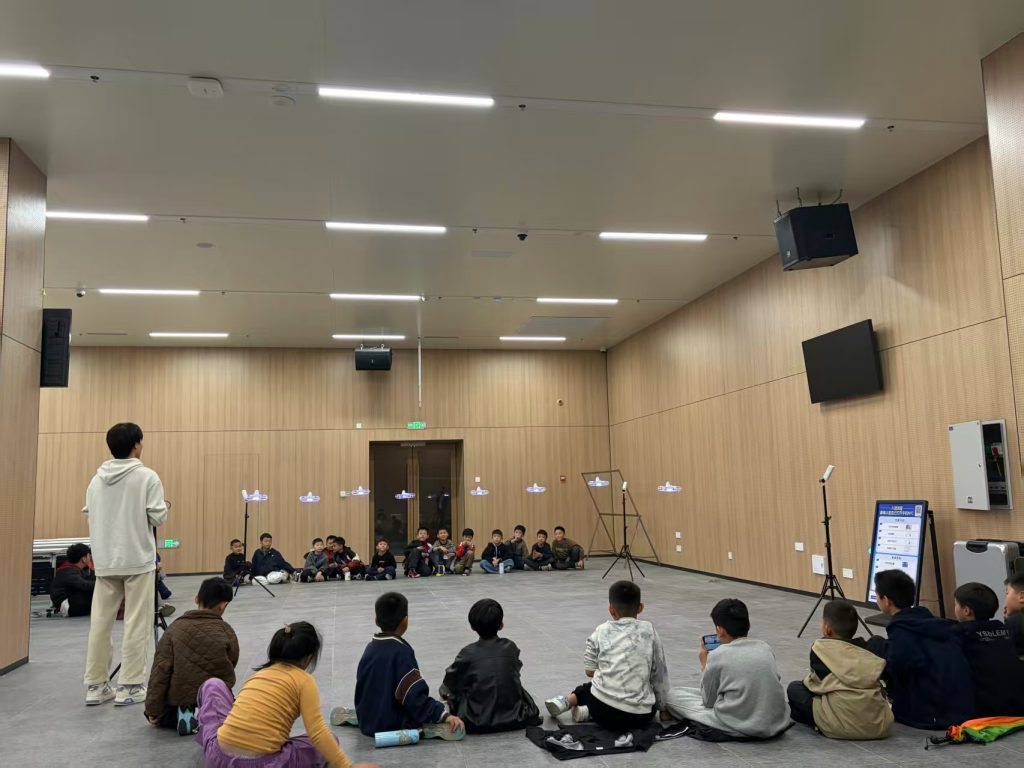
Effective drone training requires resources that mirror professional environments. Modern flight platforms, a suite of sensors (multispectral, LiDAR, thermal), and robust data processing workstations are essential. Crucially, high-fidelity simulation software is indispensable for safe, cost-effective initial training and for practicing high-risk scenarios. These virtual environments allow for the exploration of system limits and failure modes without physical or financial risk.
3. Deep Industry-Academia Fusion: Collaboration is not optional; it is the backbone of relevant drone training. Mechanisms include: establishing Joint R&D and Test Centers on campus; integrating Adjunct Faculty from leading companies into the teaching staff; designing Capstone Projects sourced directly from industry challenges; and facilitating Co-op/Internship placements. This fusion ensures the curriculum remains aligned with technological and market trends and provides students with invaluable networking and experience opportunities.
4. Dynamic Faculty Development: Instructors must be both scholars and practitioners. A continuous professional development (CPD) program is necessary, including sponsored sabbaticals for instructors to work in the industry, regular workshops on new software/hardware, and incentives for obtaining advanced industry certifications. The goal is to build a faculty whose expertise is both deep and current.
5. Multidimensional Assessment Ecosystem: Moving beyond written exams, assessment must mirror the competency standard. A comprehensive evaluation matrix should include: written tests on theory and law; graded practical flight tests under varying conditions; evaluation of mission portfolios and data deliverables; peer/self-assessments on teamwork and professionalism; and finally, the successful attainment of relevant external certifications. This holistic approach provides a true measure of a graduate’s readiness for the workforce.
In conclusion, the strategic importance of structured, high-quality drone training cannot be overstated for the sustainable development of the unmanned systems industry. The fragmented current state must give way to a coherent system built on a unified standard. By implementing a modular, industry-integrated, and progressively challenging framework, educational institutions can transform from mere knowledge disseminators into vital talent incubators. This requires sustained investment in curriculum design, practical facilities, and instructor development. As the technology continues its rapid advance, so too must our approaches to cultivating the professionals who will wield it responsibly and innovatively. The future of the drone application industry depends not just on better hardware, but fundamentally on better, more systematic drone training.