
The rapid proliferation of drone technology across diverse sectors such as agriculture, logistics, emergency response, and infrastructure inspection has created an unprecedented demand for skilled professionals. This demand starkly contrasts with the current supply, revealing a significant talent gap. Industrial colleges, positioned at the crucial intersection of academia and industry, bear a critical responsibility to bridge this gap by cultivating application-oriented talent equipped with both theoretical knowledge and practical prowess. Effective drone training is no longer a luxury but a necessity for sustaining industrial innovation and ensuring the safe, efficient, and ethical deployment of unmanned aerial systems. This analysis delves into the current state of drone training within industrial colleges, identifies key challenges, and proposes a comprehensive, multi-faceted strategy to enhance the quality and relevance of talent cultivation. Our premise is that a synergistic approach combining optimized curricula, robust practical immersion, strengthened faculty, and deep industry integration is essential for producing graduates who can immediately contribute to and lead the evolving drone ecosystem.
The Imperative for Specialized Drone Training
The strategic importance of cultivating drone application technology professionals cannot be overstated. It serves as the primary engine for industry growth, application efficiency, and ecosystem development. The absence of a skilled workforce is a fundamental constraint on innovation. We can formalize this relationship by considering the growth potential (G) of the drone industry as a function of available skilled talent (T), regulatory framework (R), and technological advancement (Tech). A simple conceptual model can be represented as:
$$ G = f(T, R, Tech) \quad \text{where} \quad \frac{\partial G}{\partial T} > 0 $$
This partial derivative indicates that industry growth is positively correlated with the number of skilled professionals, holding other factors constant. Furthermore, specialized drone training directly impacts operational safety and efficacy. The probability of a successful and safe mission (P_s) can be modeled as being dependent on operator skill level (S), equipment reliability (E), and environmental conditions (Env). Enhanced training elevates (S), thereby increasing P_s:
$$ P_s = g(S, E, Env) \quad \text{with} \quad \frac{\partial P_s}{\partial S} > 0 $$
Finally, a robust talent pipeline stimulates the broader industrial chain, creating positive feedback loops in hardware manufacturing, software development, data analytics, and service provision. Therefore, investing in comprehensive drone training is an investment in the foundational infrastructure of a modern, technologically driven economy.
Current State Analysis of Drone Training in Industrial Colleges
Industrial colleges have actively responded to market signals by establishing various models for drone training. Predominant modes include school-enterprise cooperation to build practical training bases, integration of theoretical courses with hands-on operation, and encouraging student participation in competitions and projects. While these represent a positive start, a critical analysis reveals systemic shortcomings that hinder the output of truly industry-ready professionals.
| Training Mode | Typical Implementation | Identified Challenges & Gaps |
|---|---|---|
| School-Enterprise Cooperative Training Base | College partners with a drone company to establish an on-campus lab with donated/purchased equipment. | Equipment may become outdated quickly; training scenarios can be simplistic and divorced from real-world, complex project workflows. |
| Integrated Theory & Practice Coursework | Courses like “Drone Principles” include weekly lab sessions for basic flight practice. | Curriculum often lags behind industry trends, focusing on basic aeronautics rather than applied fields (e.g., photogrammetry, multispectral analysis). Practice is often limited to basic flight skills. |
| Competition & Project-Based Learning | Students form teams to participate in national drone competitions or complete semester-long projects. | Often benefits only a small cohort of top students; lacks continuity and a standardized pedagogical framework for all learners. Projects may be academically focused rather than solving genuine industry problems. |
The challenges can be summarized into four core areas:
- Curriculum Lag: Course content is frequently derived from traditional aviation or mechatronics programs, lacking dedicated modules on emerging applications like drone LiDAR surveying, precision agriculture analytics, or BVLOS (Beyond Visual Line of Sight) operations management.
- Faculty Capability Gap: Instructors often possess strong academic backgrounds but lack extensive, up-to-date industry experience. This creates a disconnect between what is taught and the practical skills demanded on the job.
- Insufficient & Low-Fidelity Practical Exposure: Due to budget, space, and safety constraints, hands-on training is often limited to simple multirotor drones in controlled fields. Students rarely gain experience with diverse platforms (fixed-wing, VTOL), advanced payloads, or in complex, regulated airspace.
- Weak Industry Coupling: Collaborations can be superficial, focusing on equipment donation rather than deep co-development of curricula, joint supervision of projects, or guaranteed internship pipelines. This results in graduates whose skills are misaligned with employer needs.
These issues collectively undermine the effectiveness of drone training, producing graduates who require significant additional on-the-job training.
Comprehensive Cultivation Strategies and Countermeasures
To transform the talent cultivation paradigm, industrial colleges must implement a holistic set of strategies targeting the root causes of the current shortcomings. The following multi-pronged approach provides a roadmap for enhancement.
1. Optimization of the Curriculum Architecture
The curriculum must evolve from a generic engineering foundation to a dynamic, application-tiered structure. We propose a modular system comprising a Core Technology Stack, Application Vertical Modules, and Synergistic Capstone Elements.
Core Technology Stack (Mandatory): This forms the non-negotiable foundation. Courses must cover:
- UAV Aerodynamics, Propulsion, and Structures
- Flight Control Systems and Avionics (including embedded systems programming)
- Navigation, Positioning, and Communication (GPS, RTK, UAV-Ground data links)
- Sensor Technology and Payload Integration (RGB, multispectral, LiDAR, thermal)
- Data Acquisition and Preliminary Processing
- Regulations, Airspace Management, and Operational Safety
Application Vertical Modules (Elective Tracks): Students specialize by choosing tracks aligned with industry sectors. Each track consists of 3-4 courses.
| Track Name | Example Courses | Target Industry |
|---|---|---|
| Precision Agriculture & Environmental Monitoring | Multispectral Data Analysis, Crop Health Modeling, Environmental Sensing. | Agri-tech, Forestry, Conservation. |
| Geospatial Mapping & Surveying | Photogrammetry & 3D Modeling, LiDAR Data Processing, Surveying with Drones. | Construction, Mining, Urban Planning, Archaeology. |
| Infrastructure & Industrial Inspection | Thermography Analysis, Close Visual Inspection (CVI) Techniques, Asset Management. | Energy (Solar/Wind), Utilities, Oil & Gas, Civil Engineering. |
| Logistics & Smart Mobility | UAV Traffic Management (UTM), Route Optimization, Cargo Handling Systems. | E-commerce, Medical Logistics, Transportation. |
Synergistic Capstone Elements: A culminating project course and a dedicated “Industry Practices” seminar series where professionals discuss real-world challenges and trends.
The integration of theory and practice can be quantified by a curriculum balance index (CBI). For a program with T total credits, C_th theory credits, and C_pr practical/ project credits, an ideal balance for applied technology might aim for:
$$ CBI = \frac{C_{pr}}{C_{th}} \approx 0.7 \quad \text{to} \quad 1.0 $$
This signifies that practical credit weight should be substantial, approaching or matching theoretical credit weight.
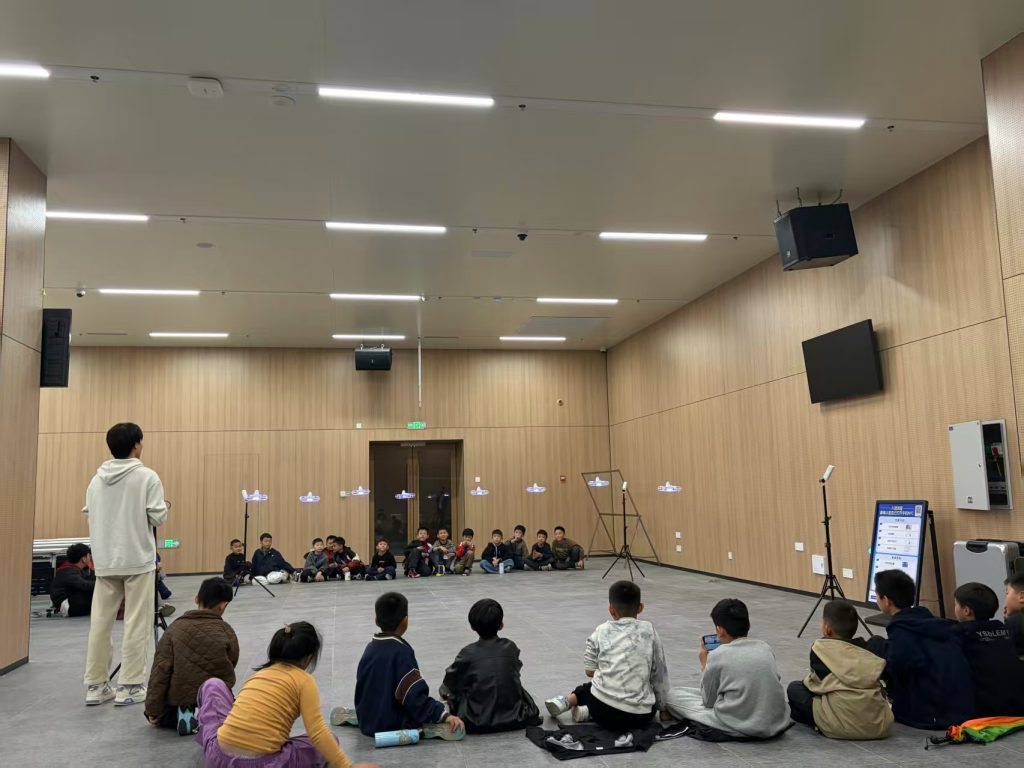
Visual documentation of hands-on drone training is crucial, as depicted above, showing students engaged in practical flight operations and data collection exercises, which bridges the gap between classroom learning and field competency.
2. Revolutionizing Faculty Development
A world-class drone training program requires a faculty that blends academic rigor with cutting-edge industry practice. A dual-track strategy is essential.
Track A: Enhancing Existing Faculty. Implement a structured “Faculty Industry Immersion Program.” Every 3 years, core drone faculty must complete a minimum 2-month full-time placement with a partner enterprise. Their performance and updated knowledge should be evaluated upon return, with outcomes tied to professional development metrics. Furthermore, colleges must incentivize faculty to obtain high-level industry certifications (e.g., FAA Part 107 Instructor, advanced remote pilot certificates for complex operations).
Track B: Diversifying the Instructor Pool. Actively recruit “Industry Professors of Practice” on fixed-term contracts. These are professionals with 5+ years of field experience in roles like Chief Pilot, Mission Coordinator, or Data Analyst. They should teach core application courses and supervise practical projects. Additionally, create a “Modular Expert” network, where specialists from partner companies deliver intensive workshops (e.g., a 16-hour workshop on “Drone-Deployed LiDAR for Volumetric Calculations”).
The faculty capability mix can be modeled over time. Let F_a(t) be the number of academically-focused faculty and F_i(t) be the number of industry-experienced faculty at time t. The strategic goal is to increase the ratio ρ(t) = F_i(t) / F_a(t). A target might be ρ(target) ≥ 0.5 within a 5-year period, achieved through hiring and immersion programs:
$$ F_i(t+1) = F_i(t) + H_i + \eta \cdot F_a(t) $$
where H_i is new industry hires and η is the annual proportion of academic faculty transitioning via immersion (e.g., η = 0.1).
3. Building High-Fidelity, Multi-Tier Practice Ecosystems
Moving beyond basic flight training requires a graduated, multi-environment practical framework.
Tier 1: Foundational Simulation & Labs. Equip computer labs with professional-grade drone simulation software (e.g., DJI Simulator, VelociDrone) for risk-free practice of flight mechanics, emergency procedures, and mission planning. Establish hardware labs for drone assembly, repair, and basic circuit prototyping.
Tier 2: Controlled Field Operations. Develop or upgrade an on-campus “Drone Training Range” with marked zones for manual flight practice, automated mission planning exercises, and payload testing. This environment is for skill consolidation.
Tier 3: Applied Project Environments (The Crucible). This is the most critical tier. Establish long-term partnerships not for donation, but for co-creation. Examples:
- With a forestry company: Students conduct annual forest health surveys, producing NDVI maps and tree count reports for the company.
- With a local government: Students perform seasonal topographic surveys of public works projects or inspect municipal structures.
- With an agricultural research station: Students manage the drone-based data collection for specific crop trials.
These are not simulations; they are real tasks with real stakeholders and real consequences for data quality. This tier should be supported by a mandatory, credit-bearing internship of at least 480 hours with a certified partner organization.
The return on investment (ROI) for industry partners can be framed to encourage participation. For a company investing supervisor time and data access (I_c), the benefits include access to pre-screened talent, low-cost piloting of new techniques by student teams, and completed project deliverables (B_c). The college’s role is to structure partnerships so that B_c > I_c.
4. Leveraging Competitions and Project-Based Learning for Holistic Development
Competitions and projects are powerful tools for fostering innovation, problem-solving, and teamwork under pressure. They must be systematically integrated, not treated as extracurricular activities.
Structured Competition Pipeline: The college should institutionalize participation in major competitions. This involves:
- Forming permanent “Drone Innovation Teams” that recruit across disciplines (pilots, coders, data analysts, business developers).
- Providing dedicated faculty coaching, workshop space, and a modest annual budget for parts and registration.
- Aligning competition themes (e.g., search-and-rescue, automated delivery, precision agriculture challenge) with course projects where possible.
Capstone Project Framework: The final-year capstone must be a keystone of the drone training experience. Projects should be sourced directly from industry partners or address clear community needs. Students work in teams covering the full lifecycle: proposal writing, mission planning, regulatory approval (for actual flights), data collection, processing, analysis, and professional reporting/presentation to the client. The assessment rubric must heavily weight practical outcomes, client satisfaction, and safety compliance over purely academic documentation.
The pedagogical value of project-based learning can be conceptualized as enhancing a student’s integrated competency score (ICS). This score is a weighted function of theoretical knowledge (K), practical skill (P), innovation capability (I), and teamwork (Tw):
$$ ICS = w_K \cdot K + w_P \cdot P + w_I \cdot I + w_{Tw} \cdot Tw $$
where Σw = 1. A well-designed project-based course directly targets and increases P, I, and Tw, thereby raising the overall ICS more effectively than traditional lecture-based courses that primarily impact K.
Synthesis and Forward Path
The cultivation of drone application technology professionals in industrial colleges is a complex, systemic endeavor requiring deliberate and coordinated action across all facets of the educational experience. The proposed strategy—centered on a dynamic and applied curriculum, a industry-infused faculty, a tiered and authentic practice ecosystem, and a culture of competitive and project-driven learning—provides a coherent framework for transformation. The ultimate objective is to graduate individuals who are not merely certificate holders but competent problem-solvers, capable of navigating the technical, regulatory, and operational complexities of the modern drone industry.
The success of this model hinges on the depth and authenticity of industry-academia collaboration. Partnerships must evolve from transactional equipment sponsorships to strategic alliances focused on co-developing talent. By implementing these multifaceted drone training strategies, industrial colleges can decisively shift from being passive responders to labor market trends to becoming active architects of the industry’s human capital foundation. This will not only alleviate the current talent shortage but also fuel the next wave of innovation and responsible application of unmanned aerial systems, delivering significant economic and social value. The continuous iteration of this model, informed by graduate outcomes and industry feedback, will ensure its relevance and effectiveness in the years to come.