
As an observer and researcher in the field of aviation law, I have witnessed the rapid ascent of civilian UAVs (unmanned aerial vehicles) in recent years. These devices have transformed numerous sectors, from everyday social activities to critical disaster relief and scientific exploration, offering a powerful tool for individuals and organizations to “see the world from above.” However, this technological leap has starkly revealed the inherent lag in legal systems. The unprecedented legal issues emerging from the widespread use of civilian UAVs—spanning legislative frameworks, enforcement mechanisms, compliance norms, rights allocation, and liability assignment—present fresh challenges that demand new legal responses. A comprehensive, multi-tiered regulatory system is urgently needed to govern this dynamic domain.
The very definition of a civilian UAV in legal terms is a foundational issue. According to guidelines from aviation authorities, a UAV is an aircraft managed from a control station, either remotely piloted or capable of autonomous flight, also termed a remotely piloted aircraft. In regulatory contexts, civilian UAVs fall under civil aviation administration, distinct from military systems. Legally, aircraft are often classified as special movable property, where registration is required to assert rights against third parties. Yet, whether civilian UAVs unequivocally qualify as “aircraft” under existing law remains ambiguous. This ambiguity creates judicial dilemmas when addressing disputes involving civilian UAVs, as it unclear which legal regimes—whether general tort law, aviation-specific statutes, or new rules—should apply. This uncertainty underscores the need for clear legislative categorization.
The current legislative landscape for civilian UAVs is fragmented. In response to growing use, authorities have issued a series of provisional regulations, such as the “Air Traffic Management Measures for Civil Unmanned Aircraft Systems,” “Light and Small UAV Operating Regulations (Trial),” “Interim Provisions on Issues Related to Civil UAV Management,” “Civil Unmanned Aircraft Real-Name Registration Regulations,” amendments to public security laws targeting UAV disturbances, and “Management Measures for Commercial Flight Activities of Civil Unmanned Aircraft (Interim).” While these documents address aspects like registration, airspace use, and commercial operations, they lack the cohesion of a top-level statute or national standard. The lifecycle of a civilian UAV—from research and development to market deployment, operator qualification to violation penalties—is not governed by an integrated legal framework. To illustrate, Table 1 summarizes key existing regulations and their focus areas, highlighting the patchwork nature of current rules.
| Regulatory Document | Primary Focus | Key Provisions |
|---|---|---|
| Air Traffic Management Measures for Civil Unmanned Aircraft Systems | Airspace integration and traffic control | Establishes basic rules for UAV operations in shared airspace. |
| Light and Small UAV Operating Regulations (Trial) | Operational standards for lightweight UAVs | Defines categories based on weight, sets flight limits, and requires pilot registration. |
| Civil Unmanned Aircraft Real-Name Registration Regulations | Ownership and accountability | Mandates real-name registration of UAV owners to enhance traceability. |
| Management Measures for Commercial Flight Activities of Civil Unmanned Aircraft (Interim) | Commercial use and licensing | Outlines requirements for commercial operations, including operator permits and insurance. |
| Interim Provisions on Issues Related to Civil UAV Management | General administrative oversight | Provides temporary guidelines for manufacturing, sales, and flight approvals. |
Despite these regulations, supervisory gaps persist across the civilian UAV ecosystem. In registration oversight, practical constraints hinder one-to-one matching of operators to devices. Complex flight-zone application processes often deter users from formal registration, leading to unauthorized “non-registered flights” that evade monitoring. The production phase lacks stringent industry standards, national benchmarks, and quality certifications, resulting in uneven product quality. Some civilian UAVs with defects pose risks to public safety once marketed. While policies like the “Guidelines for Promoting and Regulating the Development of the Civil UAV Manufacturing Industry” have spurred growth, the absence of robust market supervision allows incidents of “rogue flights” and “disruptive operations” to proliferate, threatening lives and economic order. Post-market management suffers from insufficient legal backing and experience, leaving the entire sector under-regulated. Coordinating agencies—aviation, industry, public security—to keep pace with the fast-evolving civilian UAV industry is a pressing concern.
Airspace management is a critical area requiring legislative innovation. Currently, civil aviation airspace is categorized into Classes A, B, C, and D. Temporary airspace allocated for civilian UAVs essentially constitutes segregated zones. Under existing aviation regulations, UAV operators can apply for such temporary segregated airspace. I propose refining this by classifying airspace based on UAV mission types rather than solely on weight. For instance, creating a “UAV ultra-low altitude operation airspace” for light and agricultural drones could streamline approvals and enhance efficiency. This zone would be formally designated as a “civilian UAV segregated airspace,” analogous to civil aviation classes, to prevent mixing with manned general aviation and ensure safe utilization. Mathematically, airspace allocation can be modeled to optimize usage. Let $A_{total}$ represent total available low-altitude airspace, and $A_{UAV}$ the portion allocated for civilian UAVs. The allocation ratio $R$ can be expressed as:
$$R = \frac{A_{UAV}}{A_{total}} \times 100\%$$
Factors like population density $\rho$, flight frequency $f$, and safety thresholds $S$ influence this ratio. A simplified model for zoning might be:
$$A_{UAV} = \int_{h_{min}}^{h_{max}} \left( \frac{k \cdot f(h)}{S(h) \cdot \rho(h)} \right) dh$$
where $h$ is altitude, $k$ a constant, $f(h)$ flight demand at altitude $h$, $S(h)$ safety factor, and $\rho(h)$ density impact. This approach supports dynamic airspace management for civilian UAVs.
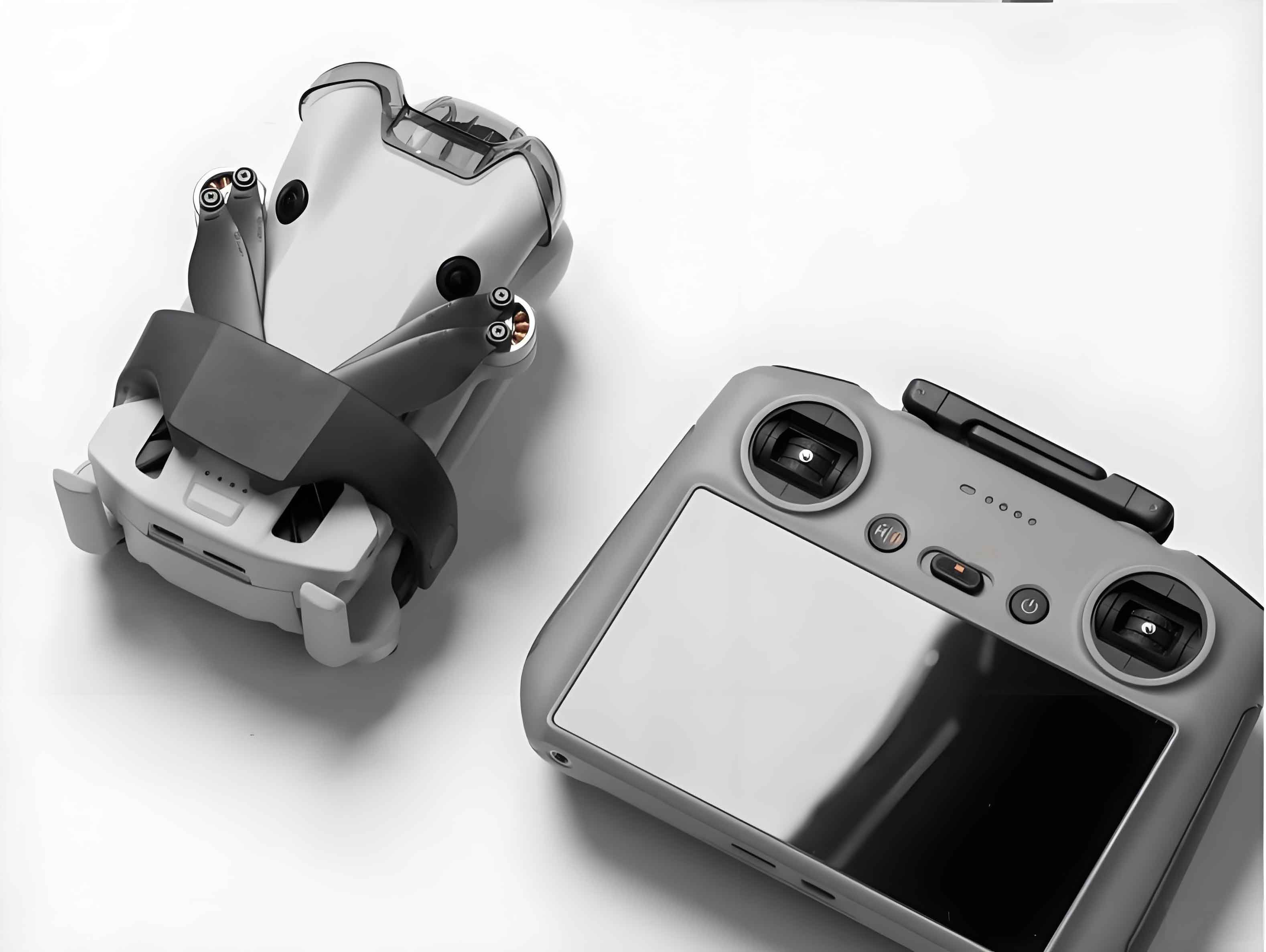
The image above illustrates typical low-altitude operations of civilian UAVs, underscoring the need for clear airspace segmentation. To build a robust legal framework, several steps are essential. First, enacting clear guidelines for the production and sales cycles of civilian UAVs is crucial. Through stakeholder consultations and hearings, industry standards must be continuously refined to elevate technical quality and safety. Products should be graded based on risk parameters—such as weight, speed, and operational range—with tiered management approaches. For example, Table 2 outlines a proposed classification scheme for civilian UAVs, linking categories to regulatory requirements.
| Category | Weight Range | Operational Altitude Limit | Registration Required | Pilot License Needed | Insurance Mandatory |
|---|---|---|---|---|---|
| Nano | < 250g | 50m | No | No | No |
| Micro | 250g – 2kg | 120m | Yes | Basic certification | Recommended |
| Small | 2kg – 25kg | 150m | Yes | Advanced certification | Yes |
| Large | > 25kg | As per specific approval | Yes, with detailed logs | Professional license | Yes, high coverage |
Strengthening intellectual property protection in civilian UAV innovation can spur healthy competition. Second, clarifying rights and liabilities through legislative updates is vital. Clear behavioral norms for all parties—manufacturers, operators, regulators—must be established. Penalties for violations like unauthorized “rogue flights” or interference with manned aviation should be stringent, with fines proportional to risk. For instance, if a civilian UAV operator violates a no-fly zone, the penalty $P$ could be calculated as:
$$P = B \times e^{(\alpha \cdot d)}$$
where $B$ is a base fine, $\alpha$ a severity coefficient, and $d$ the deviation distance from restricted airspace. Preventive measures, such as mandatory geofencing software in civilian UAVs, can be legally mandated to reduce incidents. Third, enhancing monitoring mechanisms is key. Beyond traditional oversight, leveraging technology like networked tracking systems can improve surveillance. Encouraging firms to develop safer civilian UAVs with embedded remote identification (Remote ID) and real-time data transmission to authorities would allow continuous monitoring. Streamlining flight approval processes via mobile apps, coupled with differentiated speed and altitude limits per zone, can boost compliance. For example, in urban areas, the maximum speed $v_{max}$ for a civilian UAV might be:
$$v_{max} = \frac{C}{\sqrt{\rho_{pop}}}$$
where $C$ is a constant and $\rho_{pop}$ local population density. Such tailored rules ensure safety while fostering innovation.
In conclusion, the rise of civilian UAVs presents both opportunities and regulatory imperatives. As I reflect on this landscape, it is clear that a holistic legal approach—encompassing precise definitions, cohesive statutes, proactive supervision, and adaptive airspace policies—is indispensable. By prioritizing these elements, we can harness the benefits of civilian UAVs while mitigating risks, paving the way for a secure and innovative aerial future. The journey toward comprehensive regulation of civilian UAVs is complex, but with collaborative effort and forward-thinking legislation, it is within reach.