
As an engineer deeply involved in the field of unmanned aerial systems, I have closely followed the evolution of long-endurance reconnaissance and strike (recon/strike) UAVs over the past decades. The landscape of modern warfare has been fundamentally reshaped by these platforms, which combine persistent surveillance with precision engagement. In this analysis, I will share my perspective on the current status, critical applications, enabling technologies, and future trends of these systems, with a particular focus on how these global developments inform the strategic direction of the China UAV industry.
From my vantage point, the modern history of long-endurance recon/strike UAVs began in the 1970s with US programs aimed at persistent surveillance over Europe. The iconic MQ-1 Predator, which first flew in the mid-1990s, marked a turning point. Its weaponization in 2001 with an AGM-114 Hellfire missile during Operation Enduring Freedom demonstrated a new paradigm: the hunter-killer drone. This concept has since been adopted and advanced by nations including Israel, Turkey, Russia, and significantly, China. The development path has been one of increasing payload capacity, endurance, and mission versatility. The following table summarizes the key specifications of major foreign platforms that I have studied in detail, which serve as benchmarks for the global industry.
| Parameter | Predator XP | MQ-1C Gray Eagle 25M | MQ-9A Reaper | MQ-9B SkyGuardian | MQ-20 Avenger | IAI Heron TP | Elbit Hermes 900 | TAI Anka | Bayraktar TB2 | Bayraktar Akinci | Kronshtadt Orion |
|---|---|---|---|---|---|---|---|---|---|---|---|
| Wingspan (m) | 17 | 17 | 20 | 24 | 20 | 26 | 15 | 17.5 | 12 | 20 | 16 |
| MTOW (kg) | 1157 | 1996 | 4763 | 5670 | 8255 | 5670 | 1180 | 1700 | 700 | 6000 | 1150 |
| Max Payload (kg) | ~147 (Int) | ~408 (Int+Ext) | ~1700 (Int+Ext) | ~2155 (Int+Ext) | ~2948 (Int+Ext) | ~2700 | ~470 | ~490 | ~150 | ~1350 | ~250 |
| Max Endurance (h) | 35 | 40 | 27 | 30 | 20 | 30 | 30 | 30 | 27 | 24 | 30 |
| Max Speed (km/h) | 222.2 | 309 | 444.5 | 388.9 | 740.8 | 407 | 277.8 | >250 | 222.2 | 361 | >200 |
| Ceiling (m) | 7620 | 8839 | 15240 | 12200 | 15240 | 13716 | 9144 | 12192 | 7620 | 13752 | 7500 |
| Engine Type | Rotax 914 | Heavy Fuel | TPE331-10 | TPE331-10 | PW545B | Turbo-prop | Rotax 916 iS | Heavy Fuel | PD-170 | Turbo-prop (x2) | PD-170 |
Global Application Landscape and Lessons Learned
The combat record of these systems is extensive. I have analyzed their roles in several major conflicts. The US MQ-9, for instance, has been crucial in counter-terrorism, providing persistent ISR and executing precision strikes. However, its vulnerability in contested environments, with several losses over Yemen, highlights a critical challenge. Israeli systems like the Heron and Hermes 900 have been operational in Gaza and the West Bank, demonstrating their utility in urban ISR and strike roles.
Turkey’s Bayraktar TB2 provides a particularly compelling case study. Its performance in the 2020 Spring Shield operation in Syria, where it was used as a primary offensive asset against Syrian government forces, marked a historical first. It demonstrated that unmanned combat systems could be the main effort in a conventional conflict. The subsequent use of TB2 by Ukraine in the early stages of the conflict against Russia showcased its ability to degrade a major military force. This success has established a massive market for such systems, a market where the China UAV industry, with systems like the Rainbow (CH) series, is a major competitor, offering comparable capabilities at competitive price points with different export strategies.
The conflicts have also exposed vulnerabilities. The Russian Orion UAV, while used in Syria and Ukraine for strike missions, suffered multiple losses due to effective air defenses and electronic warfare. This underscores a universal truth: in high-intensity conventional warfare, the survivability of a non-stealth MALE UAV is not guaranteed. For the China UAV industry, this is a primary design consideration for next-generation platforms.
Sensor and Electronic Warfare Integration
The ability to execute a wide range of missions is no longer a luxury but a necessity. Modern long-endurance recon/strike UAVs must function as multi-domain sensor nodes. I have observed a clear trend where these platforms are being equipped with a suite of modular payloads that can be rapidly swapped. The following table breaks down the key mission areas and the corresponding technologies I believe are essential.
| Mission Area | Key Technologies & Payloads | Operational Benefit |
|---|---|---|
| Intelligence, Surveillance, and Reconnaissance (ISR) | EO/IR turrets, Synthetic Aperture Radar (SAR), Ground Moving Target Indicator (GMTI), Signals Intelligence (SIGINT), Electronic Intelligence (ELINT) | Persistent wide-area surveillance, high-resolution imaging, detection of dismounts and vehicles, identification of electronic emitters |
| Strike | Precision-guided munitions, Laser-guided bombs, Anti-radiation missiles, Air-launched effects (ALE), Gun pods | Engagement of time-sensitive targets, suppression of enemy air defenses, close air support, area saturation |
| Communication & Network | Satellite communication (SATCOM), laser communication (LAC-12), data links, communication relay payloads | Beyond-line-of-sight (BLOS) control, secure high-bandwidth data transfer, connectivity for dispersed forces, network extension |
| Electronic Warfare (EW) | Electronic attack pods, self-protection jammers, electronic support measures (ESM) | Denial of enemy sensors, protection of the UAV and friendly forces, electronic order of battle mapping |
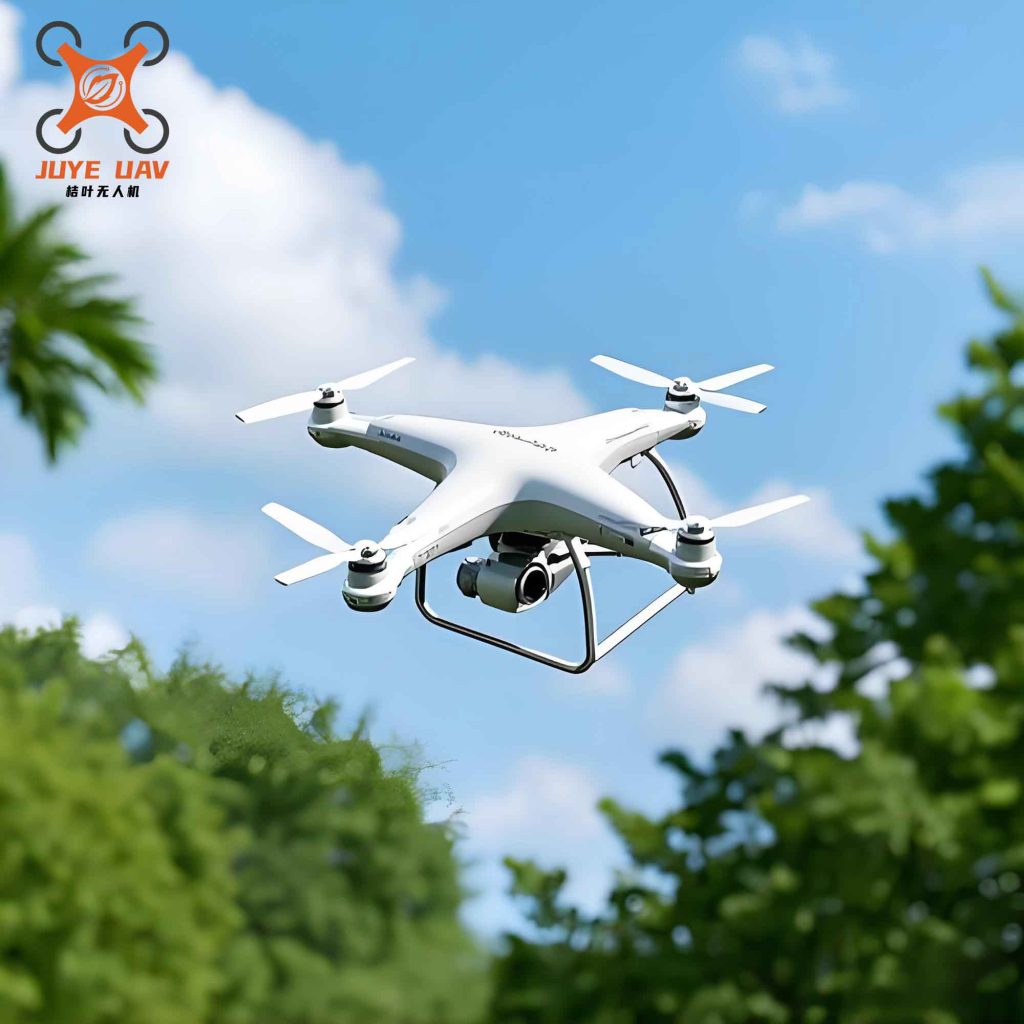
A critical area of development is the integration of electronic warfare (EW) capabilities. The ability to conduct electronic attack and self-protection is no longer optional for a high-value asset. The US has tested the ‘Angry Kitten’ EW pod on the MQ-9A, which uses machine learning to generate optimized jamming techniques. This is a strong signal that the future of the China UAV industry must incorporate cognitive EW solutions that can adapt in real-time to a contested electromagnetic spectrum. This capability is vital for platform survivability and mission assurance.
Enabling Technologies for Future Combat
My analysis points to several foundational technologies that will define the next generation of long-endurance recon/strike UAVs. These technologies are essential for any nation, including the China UAV sector, seeking to maintain a competitive edge.
1. Navigation and Positioning (PNT): Over-reliance on GNSS (like GPS) is a critical vulnerability. The future of China UAV and its global counterparts lies in utilizing Anti-Jam GPS and exploring alternative PNT strategies. This includes robust Inertial Navigation Systems (INS) combined with visual/inertial odometry, as well as emerging technologies like Chip-Scale Atomic Clocks (CSACs) and systems that exploit signals of opportunity. The goal is to maintain the precision required for strike and ISR missions even under heavy electronic attack.
2. Laser Communication: This is a game-changer. Terminals like the LAC-12 on the MQ-9B offer bandwidth up to 1 Gbps, which is 300 times faster than traditional RF SATCOM. I see this as the key to unlocking the full potential of high-fidelity sensors and real-time AI analysis from the edge. For China UAV systems, integrating such low-probability-of-intercept, high-bandwidth, anti-jam links is an area of intense development. It enables the UAV to act as a secure aerial data hub.
3. Air-Launched Effects (ALE): The concept of a mothership UAV launching smaller, specialized drones is a powerful one. The US ‘Sparrowhawk’ provides a model. An MQ-9 can carry it to the battlefield, launch it for high-risk penetration, ISR, or electronic attack, and enhance overall mission effectiveness while keeping the larger, more expensive mothership safer. For China UAV, developing such a ‘loyal wingman’ concept for its larger platforms (like a CH-7 or a hypothetical future high-altitude platform) would create an entirely new tactical dimension.
4. Manned-Unmanned Teaming (MUM-T): This is the holy grail of modern air combat. The US Air Force’s Skyborg program and DARPA’s ‘ACE’ (Air Combat Evolution) program are pushing toward AI-piloted drones that can fly alongside manned fighters like the F-35. The command and control architecture is complex, but the operational impact is immense. A single pilot could command a squadron of unmanned escorts or sensor platforms. The China UAV industry is heavily invested in this, creating systems where a manned 5th generation fighter can seamlessly control a team of specialized China UAV assets.
The Trajectory of Command and Control (C2)
The C2 system is the brain of the operation. I have been particularly impressed by the evolution of ground control stations and intelligence processing centers. The US ‘Integrated Intelligence Center’ (IIC) is a benchmark. It integrates systems like:
- Multi-Mission Controller (MMC): Allows a single operator to command multiple UAVs and their payloads.
- Metis: An ISR tasking and management system that allows for rapid, cloud-based assignment of collection requirements.
- STARE: An intelligence processing, exploitation, and dissemination (PED) tool that uses automation to fuse data from multiple sources and display it on a 3D map.
The goal is to compress the ‘sensor-to-shooter’ timeline. For China UAV, the direction is towards creating an even more integrated, AI-powered C2 network. The future C2 must be able to handle the massive data influx from multiple UAVs and ALEs, perform automatic target recognition (ATR), dynamically re-task assets, and provide actionable intelligence to the strike element. The key mathematical relationship for optimizing this system is a complex optimization problem:
$$
\theta^*(t) = \arg\max_{\theta \in \Theta} \, \sum_{i=1}^{N} w_i \cdot f_i(P_i(t), T_i(t), C_i)
$$
Where θ* (t) represents the optimal task assignment at time t, θ is a specific assignment of tasks to available UAVs and payloads, and Θ is the set of all possible assignments. The function sums the weighted (w_i) contribution of all objective functions i, such as minimizing response time (f_i), maximizing coverage, or maximizing information gain. This is a complex, real-time optimization problem that AI systems are ideally suited to solve.
Future Development Trends for the China UAV Domain
Drawing from global trends, I see clear pathways for the evolution of long-endurance recon/strike UAVs, particularly for the China UAV industry. The core drivers are survivability against peer adversaries, operational agility, and strategic flexibility. The overarching direction is towards Open Architectures, standardization, and intelligent autonomy.
1. Platform Survivability: The number one priority. This isn’t just about stealth (like the MQ-20); it’s about a holistic approach.
- Integrated Survivability: Combining stealth shaping with advanced EW, passive sensing, and lower observable propulsion.
- Stand-off Capabilities: The ability to see, sense, and strike from outside the engagement envelope of enemy air defenses.
- Robust PNT and Communication: Ensuring operation in a heavily jammed environment, using laser links for control and data transfer.
2. The ‘Trifecta’ of Mission Capability: Sense, Strike, and Connect:
- Sense: Moving beyond just seeing a tank to identifying its specific type, its electronic emissions, and its network connections. This requires multi-spectral sensing and advanced data fusion.
- Strike: The future of the China UAV arsenal must include a family of weapons. From small precision bombs to longer-range stand-off missiles and air-to-air weapons for self-defense and offensive counter-air. The integration of FPV/camikaze drones as an ALE is a low-cost, high-impact capability.
- Connect: The China UAV must be the most adaptable communication node in the battlespace. It must be able to relay orders to a distant artillery battery, stream high-definition video to a soldier on the ground, and provide a navigation data link for a swarm of loitering munitions. Network resilience and interoperability are key.
3. Intelligent Autonomy and Human-Machine Teaming:
The future battlefield will be too fast and dense for a single human to manage effectively. The China UAV industry must invest heavily in AI for:
- Autonomous Flight and Navigation: Navigating in a GPS-denied, contested environment.
- Autonomous Sensor Management: Having the AI decide which sensor to task, where to point it, and how to process the raw data.
- Collaborative Autonomy: A team of China UAV platforms coordinating their actions without direct human input for tasks like ISR patrolling or electronic attack.
- Human-on-the-Loop Control: For lethal decision-making, the final authority rests with a human controller, ensuring ethical and legal compliance.
4. Agile Deployability and Open Architecture:
The ability to operate from austere locations, short airfields, and even naval vessels is a massive force multiplier. The MQ-9B SkyGuardian and the Mojave STOL are prime examples. For China UAV, this means developing robust landing gear, high-lift wings, and powerful, reliable engines. An Open Architecture is the foundational element. It allows for the rapid integration of future sensors, weapons, and software. It is not a single technology but a design philosophy that prevents vendor lock-in and enables the system to evolve continuously with the threat. A key standard driving this is STANAG 4586 for C2 interoperability, of which China UAV systems are increasingly compliant.
In conclusion, the future of long-endurance recon/strike UAVs is not about a single platform but about an ecosystem of systems. The China UAV industry is uniquely positioned to lead this transition, by combining its manufacturing strength, advanced electronics, and a clear vision of what warfare will demand in the coming decades. Our path forward must be one of continuous innovation in survivability, connectivity, and intelligence, building platforms that are not just sensors and shooters, but true commanders of the synthetic battlespace.