
In the evolving landscape of law enforcement technology, police unmanned aerial vehicles, commonly referred to as drones, have emerged as a pivotal tool in traffic management. As a key component of policing informatization, drones are increasingly deployed for various警务 activities, including traffic violation evidence collection, accident scene investigation, routine patrols, emergency response, and security for major events. However, the effective integration of drones into these实战 scenarios necessitates a comprehensive and specialized training framework. From my perspective, existing drone training programs often focus on foundational and generic operational skills, leaving a gap in scenario-based applications specific to traffic police work. This article aims to outline a detailed course design for police traffic drone training, emphasizing实战 needs, standardization, and practical applicability. Through this design, I seek to enhance the capability building of police航空 teams and standardize operational procedures, ensuring that drone training evolves to meet the demands of modern traffic management.
The design of drone training courses must be guided by实战 requirements, ensuring completeness,规范性, and practicality. Based on my analysis, several critical factors need consideration to develop an effective curriculum. These factors are summarized in the table below, which highlights the core elements and their implications for drone training.
| Factor | Description | Impact on Drone Training |
|---|---|---|
| Integration with General Knowledge | Drone training must build upon fundamental skills such as法律法规, flight techniques, safety操控, maintenance, and meteorology. Existing licenses (e.g.,公安部 A1/A2/B1/B2, CAAC APOA, UTC) provide basic操控 proficiency but lack交管-specific实战 experience. | Drone training courses should bridge the gap between generic执照 and specialized实战 applications, incorporating advanced topics like communication links and payload配置. |
| Adherence to Standards and Norms | Training must align with industry and local standards, such as GA/T 1382-2018 for accident scene勘查 and GA/T 1505-2018 for traffic patrol systems. Non-compliance can lead to不规范 evidence collection, reducing执法 validity. | Drone training must emphasize standard-compliant操作流程, particularly in image/video采集, to ensure evidence admissibility in legal contexts. |
| Focus on实战 Applications | Drone training should extend beyond basic filming to include任务规划, drone selection, crew配置, software usage, and maintenance. Current培训 often lacks场景化教学, causing a disconnect between证照 and实战. | Drone training programs need to incorporate realistic scenarios and hands-on exercises to foster常态化实战应用, addressing time constraints in driver训练. |
To quantify the effectiveness of drone training, I propose a formula that models training outcomes based on key variables. Let \( E \) represent the training effectiveness, which can be expressed as:
$$ E = \alpha \cdot T + \beta \cdot P + \gamma \cdot S $$
where \( T \) denotes the total training time in hours, \( P \) is the number of practical实战 sessions, \( S \) indicates the adherence to standards (scaled from 0 to 1), and \( \alpha \), \( \beta \), \( \gamma \) are coefficients reflecting the relative importance of each factor. For instance, in police traffic drone training, \( \gamma \) might be emphasized to ensure规范性. This formula underscores that drone training must balance time, practice, and compliance to achieve optimal results.
Building on these factors, the drone training curriculum should encompass both foundational skills and scenario-specific操作流程. The following sections detail the core contents of such a course, structured to enhance drone training for traffic management purposes. The inclusion of tables and formulas will help summarize complex information, making the drone training more accessible and systematic.
The drone training course must begin with a solid grounding in无人机基础知识. This module covers essential concepts that underpin all subsequent实战 applications. Key topics include the definition and evolution of drones, classification of drone systems (e.g., police vs. civilian), hardware and software components, airspace management, and basic操控 skills. To illustrate the technical aspects, consider the flight endurance of a drone, which is critical for traffic patrols. The flight time \( F \) can be approximated by:
$$ F = \frac{C \cdot \eta}{P_{avg}} $$
where \( C \) is the battery capacity in watt-hours, \( \eta \) is the efficiency factor (typically 0.8 to 0.9), and \( P_{avg} \) is the average power consumption in watts. This formula highlights the importance of technical knowledge in drone training, as operators must understand limitations to plan missions effectively. A summary of基础知识点 is provided in the table below to structure this segment of drone training.
| Topic | Key Components | Relevance to Drone Training |
|---|---|---|
| Drone Concepts | Definitions, historical development, and types of drones (multi-rotor, fixed-wing, hybrid). | Provides a conceptual framework for drone training, helping trainees understand the technology’s scope. |
| System Classification | Distinction between police and civilian drones, including payload capabilities and regulatory differences. | Essential for drone training to ensure operators select appropriate equipment for traffic tasks. |
| Hardware and Software | Components like motors, sensors, GPS, and control software; maintenance basics. | Drone training must cover troubleshooting and upkeep to ensure operational readiness. |
| Airspace and ATC | Rules for飞行空域, coordination with air traffic control, and safety protocols. | Critical for drone training to prevent incidents and comply with legal requirements. |
| Basic操控 Skills | Hands-on practice in takeoff, landing, hovering, and manual control under various conditions. | Foundation of all drone training, enabling safe and proficient operation in实战 scenarios. |
The next critical module in drone training involves法律法规及标准. Compliance with regulations is paramount for执法 validity and safety. I have compiled a comprehensive list of relevant policies and standards, which should be integral to drone training curricula. The tables below categorize these documents for easy reference, emphasizing their role in shaping drone training programs. Mastery of these materials ensures that drone operators can navigate legal complexities and adhere to规范性要求.
| No. | Name | Issuing Authority | Issue Date |
|---|---|---|---|
| 1 | Lightweight UAV Operation Regulations (Trial) | CAAC Flight Standards司 | 2015-12-29 |
| 2 | Civil UAV Air Traffic Management Measures | CAAC Air Traffic Management Office | 2016-09-21 |
| 3 | Civil UAV Real-Name Registration Regulation | CAAC Aircraft适航审定司 | 2017-05-16 |
| 4 | Civil UAV Operational Flight Activities Management Measures (Interim) | CAAC Transport司 | 2018-03-21 |
| 5 | Civil UAV Pilot Management Regulation | CAAC Flight Standards司 | 2018-08-31 |
| 6 | Specific Category UAV Trial Operation Management规程 (Interim) | CAAC Multiple Offices | 2019-02-01 |
| 7 | Light Small Civil UAV Flight Dynamic Data Management Regulation | CAAC Air Traffic Management Office | 2019-11-05 |
| 8 | Civil UAV Product适航审定 Management Procedures (Trial) and Risk Assessment Guide | CAAC Aircraft适航审定司 | 2020-05-26 |
| 9 | UAV System Standardization Construction Guide (2021 Edition) | Multiple National Agencies | 2021-09-13 |
| 10 | Civil Micro-Light Small UAV System Operation Identification Concept (Interim) | CAAC Air Traffic Management Office | 2022-03-11 |
| No. | Name | Issuing Authority | Issue Date |
|---|---|---|---|
| 1 | Police UAV Management Interim Regulation | 公安部 Equipment Finance Bureau | 2016-09-12 |
| 2 | Police UAV Pilot Training and License Management Measures (Trial) | 公安部 Police Aviation Management Office | 2017-02-28 |
| 3 | Police UAV Registration Management Measures (Trial) | 公安部 Police Aviation Management Office | 2017-02-28 |
| No. | Name | Standard Number | Implementation Date |
|---|---|---|---|
| 1 | UAV Aerial Survey Safety Operation Basic Requirements | CH/Z 3001-2010 | 2010-10-01 |
| 2 | UAV Aerial Survey System Technical Requirements | CH/Z 3002-2010 | 2010-10-01 |
| 3 | UAV Geo-Fencing | MH/T 2008-2017 | 2017-12-01 |
| 4 | UAV Cloud System Interface Data Specification | MH/T 2009-2017 | 2017-12-01 |
| 5 | UAV System Operation Flight Technical Specification | MH/T 1069-2018 | 2018-11-01 |
| 6 | Civil UAV System Classification and Grading | GB/T 35018-2018 | 2018-12-01 |
| 7 | UAV Cloud System Data Specification | MH/T 2011-2019 | 2020-01-01 |
| 8 | Communication Application Scenarios and Requirements for Civil UAVs | YD/T 3585-2019 | 2020-01-01 |
| 9 | Civil Multi-Rotor UAV System Test Methods | GB/T 38058-2019 | 2020-05-01 |
| 10 | UAV System Terminology | GB/T 38152-2019 | 2020-05-01 |
| 11 | Civil UAV System Model Naming | GB/T 38905-2020 | 2021-02-01 |
| 12 | Civil Light Small UAV System Safety General Requirements | GB/T 38931-2020 | 2021-02-01 |
| 13 | Civil Light Small Fixed-Wing UAV Flight Control System General Requirements | GB/T 38996-2020 | 2021-02-01 |
| 14 | Light Small Multi-Rotor UAV Flight Control and Navigation System General Requirements | GB/T 38997-2020 | 2021-02-01 |
| 15 | Highway UAV System General Operation Technical Standard | T/CECS G:V 50-01-2021 | 2022-03-01 |
| 16 | Highway UAV System Flight Platform Applicability Standard | T/CECS G:V 50-02-2021 | 2022-03-01 |
| No. | Name | Standard Number | Implementation Date |
|---|---|---|---|
| 1 | Police UAV System Part 1: General Technical Requirements | GA/T 1411.1-2017 | 2017-08-28 |
| 2 | Police UAV System Part 2: Unmanned Helicopter System | GA/T 1411.2-2017 | 2017-08-28 |
| 3 | Police UAV System Part 3: Multi-Rotor UAV System | GA/T 1411.3-2017 | 2017-08-28 |
| 4 | Police UAV System Part 4: Fixed-Wing UAV System | GA/T 1411.4-2017 | 2017-08-27 |
| 5 | Road Traffic Accident Scene UAV Survey Technical Specification | DB34/T 2925-2017 | 2017-10-15 |
| 6 | Multi-Rotor UAV-Based Road Traffic Accident Scene Investigation System | GA/T 1382-2018 | 2018-03-26 |
| 7 | Police UAV System Network Management Platform Part 1: General Technical Requirements | T/SSPIA 1.1-2018 | 2018-08-10 |
| 8 | Police UAV System Network Management Platform Part 2: Aircraft Management Interface Requirements | T/SSPIA 1.2-2018 | 2018-08-10 |
| 9 | Police UAV System Network Management Platform Part 3: Video Image Information Transmission, Exchange, Control Requirements | T/SSPIA 1.3-2018 | 2018-08-10 |
| 10 | UAV-Based Road Traffic Patrol System General Technical Conditions | GA/T 1505-2018 | 2018-10-01 |
| 11 | Police UAV Appearance System Coating Specification | GA 1732-2020 | 2020-07-01 |
Understanding these regulations is a cornerstone of drone training, as it ensures that operations are legally sound. To reinforce this in drone training, I suggest incorporating formula-based assessments. For example, the compliance score \( C_s \) for a drone operation can be calculated as:
$$ C_s = \sum_{i=1}^{n} w_i \cdot c_i $$
where \( n \) is the number of applicable standards, \( w_i \) is the weight of each standard (based on importance), and \( c_i \) is a binary indicator (1 for compliance, 0 otherwise). This metric can be used in drone training simulations to evaluate trainee performance, emphasizing the need for规范性.
Moving to实战 applications, the drone training course must cover警用无人机交通管理通用技术方案. This module outlines the various scenarios where drones are deployed in traffic management, providing a structured approach to mission execution. The table below summarizes key application scenarios, each requiring tailored drone training to address specific challenges and objectives.
| Scenario | Description | Key Drone Training Components |
|---|---|---|
| Traffic Violation Evidence Collection | Using drones for aerial surveillance to detect and capture violations like illegal lane usage or parking, integrating with ground forces for协同作战. | Drone training should focus on target tracking, image recognition, and evidence upload protocols to ensure执法 validity. |
| Accident Scene Investigation | Deploying drones to quickly survey accident sites, capture multi-angle imagery, and generate digital evidence for reconstruction. | Drone training must include摄影技术, 3D modeling software usage, and evidence chain-of-custody procedures. |
| Routine Road Patrols | Employing drones for日常巡查 to identify hazards like pavement damage or congestion, enhancing警力 efficiency. | Drone training should cover route planning, sensor operation (e.g., cameras, LiDAR), and anomaly detection algorithms. |
| Traffic Emergency Response | Utilizing drones in emergencies (e.g., chemical spills) to access hazardous areas, provide real-time video, and carry payloads like speakers or lights. | Drone training needs to emphasize rapid deployment, payload integration, and safety protocols for high-risk environments. |
| Security for Major Events | Implementing drones for安保巡逻 during large gatherings, enabling automatic巡航 and threat detection. | Drone training should involve航线规划, crowd monitoring techniques, and coordination with ground security teams. |
Each scenario in drone training can be enhanced with mathematical models. For instance, in traffic violation detection, the probability of successful证据采集 \( P_{success} \) might depend on factors like drone altitude and camera resolution. A simplified formula could be:
$$ P_{success} = 1 – e^{-\lambda \cdot A \cdot R} $$
where \( \lambda \) is a constant related to environmental conditions, \( A \) is the altitude in meters, and \( R \) is the camera resolution in megapixels. Such formulas help in drone training by quantifying operational parameters, allowing trainees to optimize mission settings. Moreover, drone training for these scenarios should include hands-on practice, which can be visualized through the following image link inserted to illustrate实战 training environments.
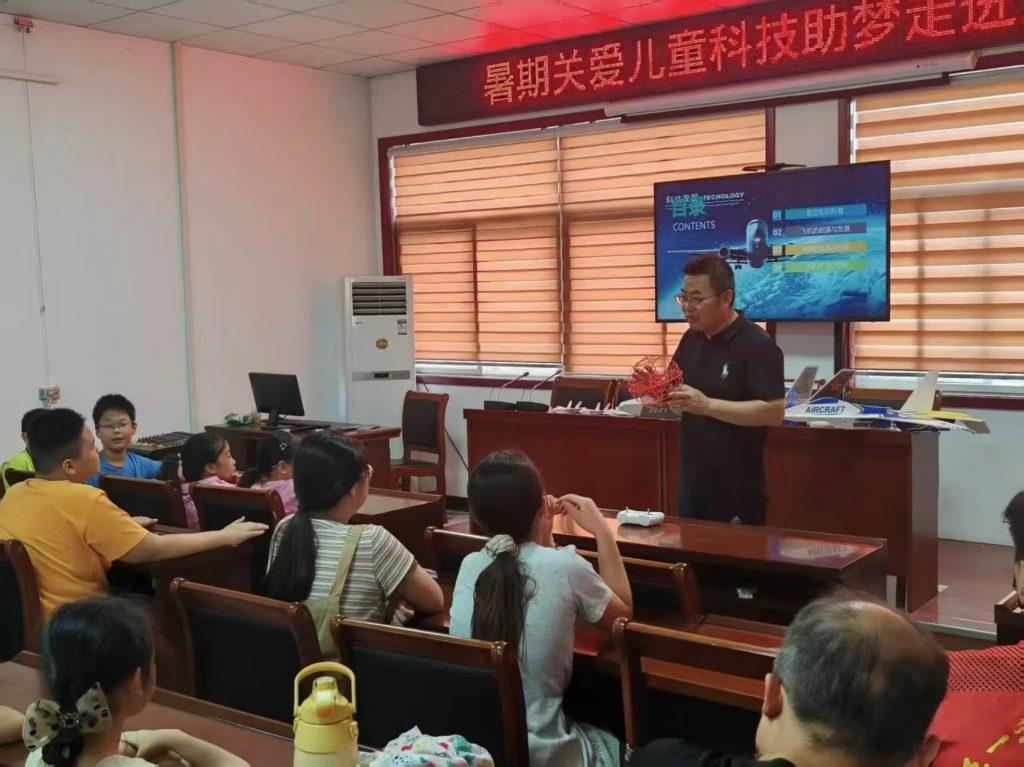
This image represents the practical aspect of drone training, where operators engage in simulated实战 exercises. Integrating such visuals into drone training materials can enhance understanding and retention, making the drone training more immersive and effective.
The core of the drone training curriculum lies in交通管理警务实战操作流程. This module provides step-by-step guidelines for executing missions, ensuring consistency and safety. I will outline a generic流程 for drone operations in traffic management, which can be adapted to specific scenarios. The process can be modeled as a sequence of stages, each with defined inputs and outputs. Let \( M \) represent a mission, which can be broken down into phases \( P_1, P_2, …, P_n \). The overall mission success \( S_M \) can be expressed as:
$$ S_M = \prod_{i=1}^{n} f(P_i) $$
where \( f(P_i) \) is a function representing the success rate of phase \( i \), dependent on factors like training proficiency and equipment reliability. For drone training, this emphasizes the importance of mastering each phase. As an example, consider the流程 for traffic violation evidence collection, which is critical in drone training for执法 applications. The steps are summarized in the table below, illustrating a systematic approach that should be ingrained in drone training programs.
| Step | Action | Drone Training Focus |
|---|---|---|
| 1 | Determine personnel, drone, and payload配置 based on mission requirements. | Drone training should cover resource allocation and team coordination exercises. |
| 2 | Conduct pre-task inspections, including equipment checks and weather assessments. | Drone training must emphasize safety protocols and risk mitigation strategies. |
| 3 | Define the mission area and plan the flight path, considering airspace restrictions. | Drone training should include GIS software usage and regulatory compliance drills. |
| 4 | 操控无人机起飞 and achieve stable hovering at a predetermined altitude. | Drone training needs hands-on practice in control precision under varying conditions. |
| 5 | Execute evidence collection via image/video capture, employing tracking and recognition techniques. | Drone training should integrate AI tools and evidence management systems. |
| 6 | Transmit collected evidence to ground systems for real-time analysis and storage. | Drone training must cover data链路 security and transmission protocols. |
| 7 | Archive evidence and complete post-mission reports, ensuring documentation for legal purposes. | Drone training should include record-keeping and chain-of-custody procedures. |
| 8 | Perform drone返航 and conduct maintenance to prepare for future missions. | Drone training needs to reinforce maintenance skills and equipment longevity practices. |
This流程 highlights the comprehensive nature of drone training, which extends beyond mere flight skills to encompass entire mission lifecycles. To optimize this in drone training, I propose using performance metrics. For example, the efficiency \( \eta_{mission} \) of a drone operation can be calculated as:
$$ \eta_{mission} = \frac{T_{有效}}{T_{总}} \times 100\% $$
where \( T_{有效} \) is the time spent on effective证据采集, and \( T_{总} \) is the total mission time. Drone training can use such formulas to evaluate and improve operator performance, fostering a culture of continuous improvement in drone training programs.
Furthermore, drone training should incorporate实战案例分析 to provide real-world insights. This module can showcase successful implementations by traffic police departments, offering lessons learned and best practices. For instance, case studies on drone usage in pandemic control checks or “helmet and seatbelt” campaigns can enrich drone training by demonstrating adaptability. Analyzing these cases through quantitative methods can deepen understanding. Suppose a case study involves using drones for congestion monitoring; the reduction in response time \( \Delta R \) due to drone deployment can be modeled as:
$$ \Delta R = R_{传统} – R_{无人机} $$
where \( R_{传统} \) is the response time with traditional methods, and \( R_{无人机} \) is with drones. Drone training can use such analyses to justify investments and refine tactics, making the drone training more data-driven and impactful.
In conclusion, the design of police traffic drone training courses is a multifaceted endeavor that requires balancing foundational knowledge with实战 applications. Through this article, I have outlined key factors, core contents, and operational流程 that should shape drone training curricula. The integration of tables and formulas, as demonstrated, can enhance the clarity and effectiveness of drone training, providing structured learning pathways. While challenges remain, such as limited standards for traffic-specific drone use, ongoing innovations in drone technology and regulatory developments promise to expand applications. As drone training evolves towards greater规范化,实战化, and系统化, it will undoubtedly become a cornerstone of科技信息化建设 in traffic policing. By adopting comprehensive drone training programs,公安 departments can harness the full potential of drones, ensuring safer and more efficient roadways for all.
Ultimately, the success of drone training hinges on continuous adaptation to emerging scenarios and technologies. I recommend that drone training institutions regularly update courses based on实战 feedback and technological advancements, fostering a dynamic learning environment. With concerted efforts, drone training will empower police forces to leverage drones as a transformative tool in traffic management, driving forward the future of law enforcement operations.