
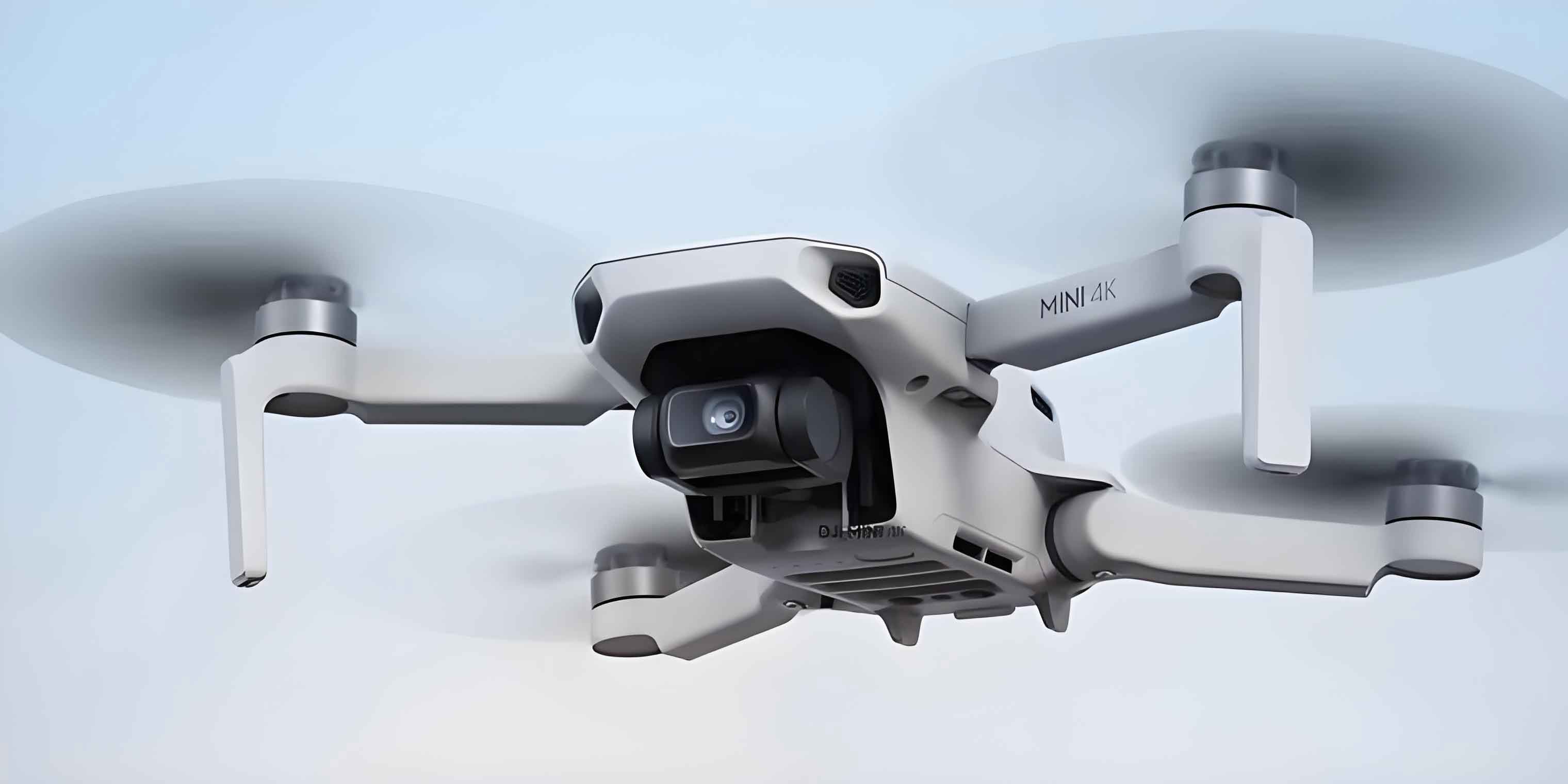
The rapid advancement and proliferation of China UAV drone technology have catalyzed their deployment across a diverse spectrum of civilian and strategic applications. From precision agriculture and logistics to critical infrastructure inspection, disaster response, and wide-area surveillance, the autonomous capabilities of these unmanned systems are being pushed to their limits. At the heart of this autonomy lies the fundamental challenge of intelligent navigation—specifically, the ability to dynamically plan and execute safe, efficient flight paths in real-world environments that are inherently uncertain, partially observable, and populated with both static structures and unpredictable dynamic agents. This article presents a detailed, first-person perspective on a novel reinforcement learning (RL) framework designed to address the core limitations of existing path planning methods for China UAV drones, focusing on the effective utilization of prior information to enhance performance in complex, dynamic settings.
1. Introduction and Problem Landscape
The operational paradigm for modern China UAV drones has shifted from simple remote-controlled flight to sophisticated autonomous mission execution. This shift demands robust onboard intelligence capable of making real-time navigation decisions. The canonical path planning problem involves finding an optimal or feasible trajectory from a start point $S$ to a goal point $G$ within a configuration space $\mathcal{C}$, while respecting constraints such as obstacle avoidance, kinematic/dynamic limits of the drone, and mission-specific objectives. The environment $\mathcal{W} \subset \mathbb{R}^2$ (or $\mathbb{R}^3$) is typically discretized for computational tractability. We define a grid map of dimensions $H \times W$, where each cell $c_{i,j}$ can be in one of several states: free, occupied by a static obstacle, or occupied by a dynamic obstacle.
Traditional algorithmic approaches, such as A*, Dijkstra’s algorithm, or Rapidly-exploring Random Trees (RRT), excel in static, fully known environments. However, they struggle with dynamic elements and partial observability. Meta-heuristic methods like Genetic Algorithms (GA) or Particle Swarm Optimization (PSO) offer flexibility but often lack the real-time reactivity required for dynamic obstacle avoidance. Reinforcement Learning, particularly Deep RL, has emerged as a powerful alternative, enabling a China UAV drone to learn navigation policies directly from interaction with the environment. An agent (the drone) observes a state $s_t$, takes an action $a_t$ (e.g., move north, east, south, west), receives a reward $r_t$, and transitions to a new state $s_{t+1}$. The goal is to learn a policy $\pi(a|s)$ that maximizes the expected cumulative reward.
Despite their promise, standard RL approaches for China UAV drone path planning face two significant bottlenecks: 1) Sparse Reward Problem: Rewards are often given only upon reaching the goal or colliding, providing insufficient learning signal during the long, exploratory phases of travel. 2) Inefficient Use of Information: Most end-to-end RL models rely solely on raw, instantaneous sensor data (e.g., a local occupancy grid), ignoring valuable a priori knowledge often available before mission start, such as partial or complete maps of static infrastructure. This work directly addresses these challenges by proposing an integrated architecture that synergistically combines pre-computed global guidance with real-time local perception within a Deep Q-Network (DQN) framework, specifically tailored for the operational needs of advanced China UAV drone platforms.
2. System Modeling and Formal Problem Statement
We formalize the environment for a China UAV drone operating in a 2D plane, which is a standard simplification for many navigation problems. The environment $\mathcal{W}$ is discretized into a grid of size $H \times W$. Let $\mathcal{C}_s = \{s_1, s_2, …, s_{N_s}\}$ represent the set of cells permanently occupied by static obstacles. The complement set $\mathcal{C}_f = \mathcal{W} \setminus \mathcal{C}_s$ denotes the free space. A connectivity graph $\mathcal{G} = (\mathcal{C}_f, \mathcal{E})$ can be defined over $\mathcal{C}_f$, where an edge $e_{ij} \in \mathcal{E}$ exists if cells $c_i$ and $c_j$ are adjacent (e.g., 4-connected or 8-connected).
Dynamic obstacles are modeled as a set $\mathcal{C}_d(t) = \{d_1(t), d_2(t), …, d_{N_d}(t)\}$, where each $d_k(t) \in \mathcal{C}_f$ and follows a known or unknown motion model. A critical assumption is $\forall t, i, j: d_i(t) \neq d_j(t)$ and $\forall t: d_i(t) \notin \mathcal{C}_s$, meaning dynamic obstacles occupy only free cells and do not overlap with each other or static obstacles at any given time.
The China UAV drone is modeled as a point agent with a simplified kinematic model for the discrete grid world. Its state at time $t$ is its grid position $p_t = (x_t, y_t)$. The action space $\mathcal{A}$ is discrete, typically $\mathcal{A} = \{Up, Down, Left, Right, Hover\}$. The transition is deterministic for a given action unless obstructed.
A valid path $\mathcal{P}$ is a sequence of states $(p_0, p_1, …, p_{T})$ such that $p_0 = S$, $p_T = G$, $p_t \in \mathcal{C}_f \setminus \mathcal{C}_d(t)$ for all $t$ (i.e., the drone never occupies a cell with a static or dynamic obstacle), and $(p_t, p_{t+1}) \in \mathcal{E}$. The optimal path $\mathcal{P}^*$ minimizes a cost function, often the path length $L(\mathcal{P}) = T$, or a combination of length and risk.
$$ \mathcal{P}^* = \arg \min_{\mathcal{P} \in \Omega} L(\mathcal{P}) $$
where $\Omega$ is the set of all valid paths. The China UAV drone’s objective is to execute a policy that approximates $\mathcal{P}^*$ in real-time, using only partial observations of $\mathcal{W}$ and $\mathcal{C}_d(t)$.
3. Methodology: Prior-Information Guided Deep Reinforcement Learning
The core innovation of our approach is a multi-source information fusion architecture that feeds a DQN. The system comprises three main modules: the Global Prior Processor, the Local Perception Processor, and the Fusion-based DQN Planner.
3.1. Global Prior Information Processing
Before mission execution, a China UAV drone often has access to geospatial data, such as building footprints, terrain maps, or no-fly zones. This constitutes the static prior knowledge $\mathcal{C}_s$. We process this to generate a global navigation guide. Using the classic A* algorithm, we compute an optimal path $\mathcal{G}^*$ from $S$ to $G$ considering only static obstacles $\mathcal{C}_s$. A* uses the cost function $f(n) = g(n) + h(n)$, where $g(n)$ is the cost from start to node $n$, and $h(n)$ is a heuristic (e.g., Manhattan distance) to the goal. The resulting path $\mathcal{G}^*$ is not meant to be followed blindly but serves as a high-level directional guide. At each timestep $t$, we extract a local crop of this global guide, centered on the drone’s current position $p_t$, matching the size of the drone’s local sensor view. This crop is encoded as a single-channel image where guide cells are marked with a specific intensity (e.g., 0.5), representing a “suggested” direction.
3.2. Local Perception Processing
During flight, the China UAV drone perceives its immediate surroundings through onboard sensors (e.g., LiDAR, cameras). This yields a local occupancy grid $\mathcal{O}_t$ of size $L \times L$, centered on $p_t$. We encode this rich information into a 3-channel (RGB) image representation for effective processing by Convolutional Neural Networks (CNNs).
| Channel | Color | Encoded Information | RGB Value |
|---|---|---|---|
| Red | Red | Drone’s own position | (255, 0, 0) |
| Green | Black | Static obstacles ($\mathcal{C}_s$) | (0, 0, 0) |
| Blue | Orange | Dynamic obstacles ($\mathcal{C}_d(t)$) | (255, 165, 0) |
| – | Blue | Goal position (if in view) | (0, 0, 255) |
| – | White | Free space | (255, 255, 255) |
This RGB representation spatially preserves the relationships between the drone, obstacles, and the goal, which is crucial for learning effective collision avoidance maneuvers.
3.3. State Representation via Multi-Channel Fusion
The key to leveraging both information streams is fusion. We construct a 4-channel tensor $\mathcal{S}_t$ as the state input to the DQN:
$$ \mathcal{S}_t = \text{Concat}(\mathcal{O}_t^{\text{RGB}}, \mathcal{G}_t^{\text{Guide}}) $$
where $\mathcal{O}_t^{\text{RGB}}$ is the $L \times L \times 3$ local RGB image and $\mathcal{G}_t^{\text{Guide}}$ is the $L \times L \times 1$ global guide crop. Thus, $\mathcal{S}_t \in \mathbb{R}^{L \times L \times 4}$. This architecture allows the neural network to learn to weigh and correlate the persistent guidance from the prior map against the immediate threats and opportunities perceived in the local view.
3.4. DQN Architecture and Hierarchical Reward Design
We employ a Dueling DQN architecture for stable training. The network takes $\mathcal{S}_t$ as input.
- Feature Extractor: Two convolutional layers process the 4-channel input.
$$ \text{Conv1: } \mathbf{F}_1 = \text{ReLU}(\text{Conv}_{k_1, C_1}(\mathcal{S}_t)) $$
$$ \text{Conv2: } \mathbf{F}_2 = \text{ReLU}(\text{Conv}_{k_2, C_2}(\mathbf{F}_1)) $$
$\mathbf{F}_2$ is flattened into a feature vector $\mathbf{f}$. - Dueling Streams: The vector $\mathbf{f}$ feeds two separate fully-connected (FC) streams.
$$ V(\mathbf{f}) = \mathbf{W}_v \cdot \mathbf{f} + b_v \quad \text{(State Value Stream)} $$
$$ A(\mathbf{f}, a) = \mathbf{W}_a \cdot \mathbf{f} + b_a \quad \text{(Advantage Stream)} $$ - Q-Value Aggregation: The final Q-values are combined as per the dueling architecture to decouple state value and action advantage.
$$ Q(\mathbf{s}_t, a; \theta) = V(\mathbf{f}) + \left( A(\mathbf{f}, a) – \frac{1}{|\mathcal{A}|} \sum_{a’} A(\mathbf{f}, a’) \right) $$
The central innovation in the learning signal is the Hierarchical Reward Function, designed to combat reward sparsity by using the global guide $\mathcal{G}^*$.
| Condition at $t+1$ | Reward $r_{t+1}$ | Purpose |
|---|---|---|
| Reaches Goal $G$ | $+R_{\text{goal}}$ (e.g., +500) | Primary success signal |
| Collision (static/dynamic) | $-R_{\text{coll}}$ (e.g., -100) | Strong safety penalty |
| Moves onto a guide cell in $\mathcal{G}^*$ | $+R_{\text{guide}}$ (e.g., +5) | Dense guidance incentive |
| Moves away from guide into free space | $-R_{\text{step}}$ (e.g., -1) | Small penalty for deviation/inefficiency |
| Remains idle | $-R_{\text{idle}}$ (e.g., -0.5) | Encourage progress |
The guide-based reward $+R_{\text{guide}}$ is crucial. It provides a continuous, dense learning signal that “paves” a rewarding highway towards the goal, dramatically accelerating policy convergence compared to sparse goal-only rewards. The China UAV drone learns not just to avoid obstacles, but to strategically deviate from the guide only when necessary (e.g., to avoid a dynamic obstacle) and then return to it.
3.5. Training Protocol
Training occurs in a simulated environment with parameters as below. We use an $\epsilon$-greedy policy for exploration, a replay buffer $\mathcal{D}$ of size $N_r$, and a target network $\theta^-$ updated periodically from the online network $\theta$.
| Parameter | Symbol | Typical Value |
|---|---|---|
| Grid World Size | $H, W$ | 48, 48 |
| Local View Size | $L$ | 14 |
| Replay Buffer Size | $N_r$ | 50,000 |
| Mini-batch Size | $N_b$ | 64 |
| Discount Factor | $\gamma$ | 0.99 |
| Learning Rate | $\alpha$ | 1e-4 |
| Target Update Freq. | $\tau$ | Every 1000 steps |
The loss function for gradient descent is the Mean Squared Error (MSE) of the Temporal Difference (TD) error:
$$ \mathcal{L}(\theta) = \mathbb{E}_{(s,a,r,s’) \sim \mathcal{D}} \left[ \left( r + \gamma \max_{a’} Q(s’, a’; \theta^-) – Q(s, a; \theta) \right)^2 \right] $$
This is standard DQN training, but the state $s$ is our rich 4-channel tensor $\mathcal{S}_t$, and the reward $r$ comes from our hierarchical function.
4. Experimental Analysis and Performance Evaluation
To validate the proposed framework, we conducted extensive simulations comparing our Prior-Information Guided DQN (PI-DQN) against a baseline DQN that uses only the 3-channel local RGB perception (No-Prior DQN).
4.1. Convergence and Learning Efficiency
The integration of prior information profoundly impacts learning speed. The following table summarizes key convergence metrics averaged over 10 independent training runs in a dynamic environment with 5 moving obstacles.
| Metric | PI-DQN (Our Method) | No-Prior DQN (Baseline) |
|---|---|---|
| Episodes to Reach 80% Success Rate | ~1,200 | ~3,500 |
| Average Reward per Episode (at convergence) | ~+420 | ~+380 |
| Training Time (Wall-clock) to Convergence | ~4.5 hours | ~11 hours |
The PI-DQN converges nearly three times faster. The dense guidance rewards provide immediate feedback, allowing the China UAV drone agent to quickly associate the visual pattern of the guide channel with positive long-term outcomes, structuring the exploration process efficiently.
4.2. Navigation Performance Metrics
After convergence, we evaluated the trained policies on 100 random test scenarios with unseen dynamic obstacle patterns. The performance metrics are defined as follows:
- Success Rate (SR): Percentage of episodes where the drone reaches $G$ without collision.
- Path Length Ratio (PLR): $PLR = \frac{L_{\text{actual}}}{L_{\text{A* (static)}}}$, where $L_{\text{A* (static)}}$ is the optimal path length in the static-only environment. A ratio close to 1.0 indicates high efficiency.
- Collision Rate (CR): Percentage of episodes ending in collision.
- Average Time to Goal (ATG): Average number of steps per successful episode.
| Algorithm | Success Rate (SR) | Path Length Ratio (PLR) | Collision Rate (CR) | Avg. Time to Goal (ATG) |
|---|---|---|---|---|
| PI-DQN (Ours) | 94% | 1.074 | 6% | 68.2 steps |
| No-Prior DQN | 82% | 1.215 | 18% | 75.8 steps |
| A* (Replanning) | 71% | 1.101 | 29%* | 62.1 steps |
*A* with frequent replanning fails when dynamic obstacles block all possible paths faster than replanning can occur.
Our PI-DQN method achieves a superior 94% success rate, demonstrating robust safety in dynamic clutter. The path efficiency is excellent, with only a 7.4% average detour from the static optimum (PLR=1.074), significantly better than the No-Prior DQN’s 21.5% detour. This shows that the guide channel not only aids learning but also leads to more optimal final policies. The China UAV drone learns to use the guide as a default efficient route, deviating minimally for obstacle avoidance.
4.3. Ablation Study on Information Channels
We dissected the contribution of each input channel by selectively ablating them during evaluation. The policy was trained with the full 4-channel input but tested by zeroing out specific channels.
| Test Input Configuration | Success Rate | Path Length Ratio | Key Observation |
|---|---|---|---|
| Full 4-Channel (Guide + RGB) | 94% | 1.074 | Optimal performance |
| No Guide Channel (Only RGB) | 85% | 1.198 | Increased hesitation, less efficient paths |
| No Local RGB (Only Guide) | 22% | N/A | Frequent collisions with dynamic obstacles |
| No Dynamic Obstacle Channel | 70% | 1.082 | High collision rate with unseen dynamics |
This ablation confirms the synergistic roles: the guide channel is primarily responsible for global efficiency and convergence speed, while the local RGB channels (especially the dynamic obstacle encoding) are essential for local safety and reactivity. A China UAV drone relying solely on the prior map is blind to immediate dangers, while one without the prior map lacks strategic direction.
5. Discussion, Challenges, and Future Directions for China UAV Drone Applications
The proposed PI-DQN framework presents a significant step towards robust autonomous navigation for China UAV drones. The explicit integration of prior world knowledge into a deep RL pipeline mitigates two fundamental RL weaknesses—sample inefficiency and reward sparsity—leading to faster training and safer, more efficient flight policies. This approach aligns well with real-world operations where mission planners for China UAV drones often have access to high-fidelity static maps (e.g., urban GIS data, digital elevation models).
However, several challenges and future research avenues remain:
- 3D Extension and Complex Dynamics: The current 2D grid model must evolve to full 3D volumetric planning, accounting for altitude, pitch, and roll. The motion model for the China UAV drone must also advance from discrete point kinematics to continuous 6-DOF dynamics, requiring more advanced RL algorithms like Deep Deterministic Policy Gradient (DDPG) or Soft Actor-Critic (SAC).
- Uncertain and Incomplete Priors: Our method assumes accurate prior static maps. Future work must handle noisy, outdated, or incomplete prior information, potentially using probabilistic representations or simultaneous localization and mapping (SLAM) techniques to update the guide channel online.
- Multi-Agent Coordination: Scaling to swarms of China UAV drones introduces the challenge of decentralized multi-agent path planning (MAPF). The prior information guide could be extended to include inter-drone coordination rules or traffic management layers.
- Sim-to-Real Transfer: Bridging the reality gap between simulation training and real-world deployment is critical. This involves training with more realistic sensor models (e.g., LiDAR point clouds, camera images with noise) and employing domain randomization or meta-learning techniques to enhance generalization for real China UAV drone hardware.
- Integration with Mission Planning: Path planning does not exist in isolation. The next step is to integrate this low-level navigation policy with higher-level mission planning tasks, such as target assignment, coverage optimization, or persistent surveillance, creating a fully autonomous decision-making stack for next-generation China UAV drone systems.
6. Conclusion
In this comprehensive review, we have detailed a novel dynamic path planning methodology for China UAV drones that strategically leverages prior environmental information to overcome the inherent limitations of conventional reinforcement learning. By fusing a pre-computed global navigation guide with real-time local sensory perception into a multi-channel state representation and employing a hierarchically structured, guide-informed reward function, the proposed Deep Q-Network architecture achieves remarkable improvements in both learning efficiency and final navigation performance. Empirical results demonstrate superior success rates (94%), near-optimal path efficiency (7.4% average detour), and significantly accelerated policy convergence compared to prior-information-agnostic baselines.
The fusion of symbolic prior knowledge with data-driven learning represents a promising paradigm for developing robust, efficient, and trustworthy autonomous systems. As the operational demands on China UAV drones continue to grow in complexity, such hybrid approaches that combine the strengths of classical planning and modern machine learning will be indispensable. This work provides both a concrete technical framework and a clear roadmap for advancing the state-of-the-art in autonomous navigation, paving the way for more intelligent and capable China UAV drone applications across civilian and strategic domains.