
The air above our cities is no longer just empty space; it has become a dynamic, programmable canvas. As the Lunar New Year approaches, I find myself, along with every team in this business, caught in a whirlwind of activity. The demand for drone light shows has surged to a point where securing the necessary hardware feels like a strategic operation. This phenomenon isn’t just seasonal hype; it’s the most visible tip of the iceberg in the burgeoning field of low-altitude economy. From my vantage point within the industry, this period of “one drone, hard to find” is a fascinating case study in market dynamics, operational logistics, and technological evolution.
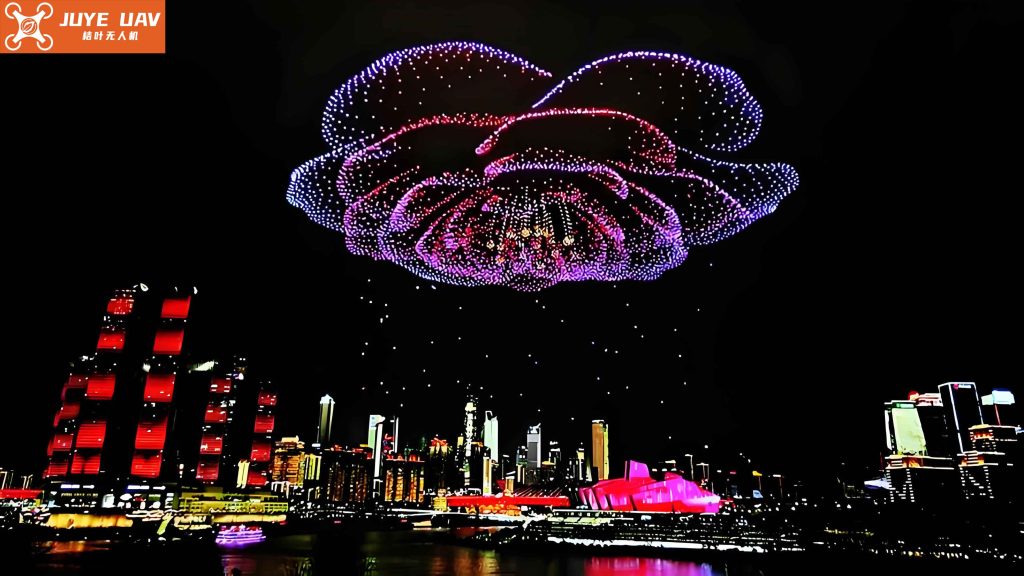
The pre-festival season represents the absolute peak of our operational calendar. It’s not uncommon for a single team to have multiple drone light show bookings on the same night—New Year’s Eve, Lunar New Year’s Eve, and other auspicious dates are perpetually over-subscribed. This creates an acute supply-demand imbalance. Despite our own fleets numbering in the hundreds, the concentrated demand on specific dates forces us into a complex web of inter-team borrowing. The logistical equation is straightforward but stressful: Client Demand (on date D) > Available Fleet (on date D). The solution often involves a decentralized network of resource sharing, where trust and reputation are the primary currencies. The cost of borrowing a single drone for a critical show can be significant, but the true challenge lies in availability itself. I recall instances where we scoured every contact only to secure a batch of drones fresh off the production line, barely tested, to fulfill a last-minute, high-profile contract. This “borrowing economy” underscores the intense pressure and the necessity for deep industry connections and rapid contingency planning.
To understand this frenzy, we must look at the macro-environment. The low-altitude economy, defined by aviation activities below 3,000 meters, has been officially anointed as a new growth engine. Market forecasts are staggering, projecting a trillion-dollar-scale industry within the next decade. This policy tailwind has directly fueled the proliferation of drone light show companies. What began as a novel, high-cost spectacle for major brands just a few years ago has rapidly democratized. The initial market was characterized by limited competition and high willingness-to-pay. A typical show’s cost could be modeled simply as:
$$ C_{initial} = N_{drones} \times P_{high} $$
Where \( P_{high} \) could range between $700-$800 per drone for a show.
Today, the landscape is dramatically different. Dozens of teams now operate, leading to increased competition and significant price compression. The current pricing model reflects this new reality:
$$ C_{current} = N_{drones} \times P_{competitive} + O_{fixed} $$
Where \( P_{competitive} \) has settled around $500 per drone, and \( O_{fixed} \) represents the fixed operational overhead that teams must now optimize ruthlessly. The following table contrasts the market evolution:
| Period | Key Characteristic | Approx. Price per Drone | Market Competition | Client Profile |
|---|---|---|---|---|
| Early Phase (~2021) | Novelty, High Margins | $700 – $800+ | Low (Few Specialists) | Major Corporations, High-Budget Events |
| Current Phase (~2025) | Commoditization, Volume | ~$500 | High (Dozens of Teams) | Corporations, Municipalities, Private Events |
This price erosion pressures profitability, forcing teams to scale operations, improve technical efficiency, and innovate in service offering to maintain margins. The profit for a single drone light show is now a tighter calculation:
$$ \Pi_{show} = (N_{drones} \times P_{competitive}) – (N_{drones} \times C_{maintenance}) – C_{labor} – C_{design} – C_{logistics} – R_{risk} $$
Here, \( C_{maintenance} \) includes battery cycles, repairs, and transport, \( C_{labor} \) covers the team on site, \( C_{design} \) is for animation programming, and \( R_{risk} \) is a crucial factor representing the potential cost of incidentals like a borrowed drone crashing.
Parallel to market forces, regulatory and technological advancements have been critical enablers for this boom. A streamlined approval process has been a game-changer. Regulations now require applying for flight permission one day in advance, with a mandated response within nine hours. This predictability allows teams to plan complex monthly schedules with dozens of drone light show events. Technologically, the hardware has evolved rapidly. Early drones required large, perfectly flat, and clear take-off/landing zones. Modern drones are smaller, more agile, and equipped with advanced obstacle avoidance systems, expanding the possible venues from open fields to areas near architectural landmarks. The reliability factor \( R_{f} \) in our operational planning has improved significantly, reducing the risk variable \( R_{risk} \) in our profit equation.
Managing this peak-season “爆单” (explosive order) period requires military-like precision and youthful endurance. Our strategy hinges on a modular, group-based operational model. The company splits into several fully functional units, each capable of independently executing a drone light show. These units deploy simultaneously across different cities or districts. The scheduling challenge can be framed as a constraint satisfaction problem: we have J jobs (shows) on date D, each requiring T hours of on-site time (including setup, show, breakdown), and K available crewed groups. The goal is to assign all jobs such that travel time \( T_{travel} \) between locations and necessary reset time \( T_{reset} \) for equipment are accounted for. Battery logistics alone are a science, requiring careful management of charge cycles to ensure multiple shows per night are possible. The human factor is vital; the work is nocturnal and physically demanding, often undertaken by teams with an average age in the mid-20s.
Behind the breathtaking 15-minute spectacle seen by the audience lies a week or more of meticulous preparation. The workflow is a multi-stage pipeline:
- Creative Design & Client Alignment: Translating a theme (“Spring Festival,” “Brand Launch”) into a visual narrative.
- Flight Path Engineering: Every frame of the animation is converted into precise GPS coordinates and flight paths. This is the core code, the “choreography” of the drone light show.
- Site Survey & Risk Assessment: Checking for electromagnetic interference from power lines, assessing wind patterns, and ensuring no physical obstacles conflict with the planned flight envelope.
- Simulation & Approval: Running the show in simulation software and submitting flight plans to authorities.
- On-Site Execution: Deployment of ground equipment, final system checks, and the live flight controlled by a flight computer executing the pre-programmed sequence.
This process is resource-intensive. A breakdown of the time investment for a standard show might look like this:
| Phase | Estimated Time Investment | Key Personnel | Output |
|---|---|---|---|
| Concept & Storyboarding | 12-18 hours | Creative Director, Client | Visual Script |
| Flight Path Programming | 24-36 hours | Software Engineer/Animator | Flight Code File |
| Site Logistics & Planning | 6-12 hours | Operations Manager | Risk Report, Layout Plan |
| Regulatory Compliance | 2-4 hours (plus wait time) | Operations Manager | Flight Permit |
| On-Site Setup & Show | 4-6 hours (on the day) | Full Flight Crew | The Live Performance |
As the market saturates, mere execution is no longer enough. Innovation is the new battleground. Audience expectations have soared; a simple geometric formation no longer suffices. The future of the drone light show lies in hybrid experiences and deeper narrative integration. We are actively experimenting with and deploying several advanced concepts:
- Multi-Sensory Integration: Synchronizing the drone swarm with pyrotechnics, ground-based laser systems, or music for a fully immersive experience. The combined effect is greater than the sum of its parts.
- Thematic Depth: Moving beyond logos to tell short stories or create complex, evolving scenes in the sky, connecting emotionally with the audience.
- Interactive Elements: Exploring possibilities where audience input via smartphones can subtly influence the show’s pattern in real-time.
- Geographic Expansion: The market in major cities is competitive. The growth vector now points towards “sinking” into lower-tier cities and regions where a large-scale drone light show remains a rare and marvelous event, often commanding a premium due to its novelty.
Furthermore, we are leveraging digital platforms for client acquisition and service, moving beyond traditional word-of-mouth. Online portals allow for initial consultations, portfolio showcasing, and streamlined booking, effectively expanding our reach.
Looking ahead, the trajectory for drone light show businesses remains positive but requires strategic adaptation. The low-altitude economy will continue to expand, opening new applications (e.g., logistics, inspection) that may divert some investment but also validate the technology further. For the entertainment sector, the formula for success is evolving. It will be a function of artistic creativity (\(A\)), technical reliability (\(T\)), operational scalability (\(S\)), and business model innovation (\(I\)):
$$ Success_{future} = f(A, T, S, I) = k \cdot \frac{A \times T \times S}{C_{market}} + I_{new} $$
Where \( C_{market} \) represents the ever-present competitive pressure, and \( I_{new} \) represents revenue from new service models (e.g., subscription for recurring displays, smaller-scale rental packages).
The current “one drone, hard to find” scenario is a temporary symptom of a seasonal demand spike colliding with a still-maturing supply chain. In the long run, as drone production scales and fleet ownership becomes more widespread among operators, this acute shortage will likely ease. However, the competition for prime dates and for creating the most awe-inspiring aerial spectacle will only intensify. The challenge for teams like mine is not just to survive the Lunar New Year rush, but to use the pressure of this period to innovate, optimize, and elevate the art of the drone light show, ensuring that when people look up at the festival sky, they see not just technology, but magic.