
As an agricultural engineer with years of experience in mechanization and technology adoption, I have witnessed a transformative shift in farming practices driven by the need for efficiency and sustainability. The rapid urbanization and aging rural population have led to a decline in agricultural labor, making it imperative to embrace advanced technologies. In this context, the agricultural UAV, particularly for plant protection, has emerged as a game-changer. This article delves into the promotion, application, and future prospects of agricultural UAVs, emphasizing their advantages, challenges, and the path forward for widespread adoption.
The global agricultural sector faces pressing challenges such as labor shortages, rising production costs, and environmental concerns. Traditional plant protection methods, reliant on manual or ground-based equipment, are increasingly inadequate due to inefficiency and health risks. For instance, operators are exposed to pesticides during prolonged close-contact spraying, leading to potential poisoning incidents. The agricultural UAV addresses these issues by enabling remote, automated operations, thus enhancing safety and productivity. In this analysis, I explore how agricultural UAVs are reshaping crop protection and driving the transition toward smart farming.
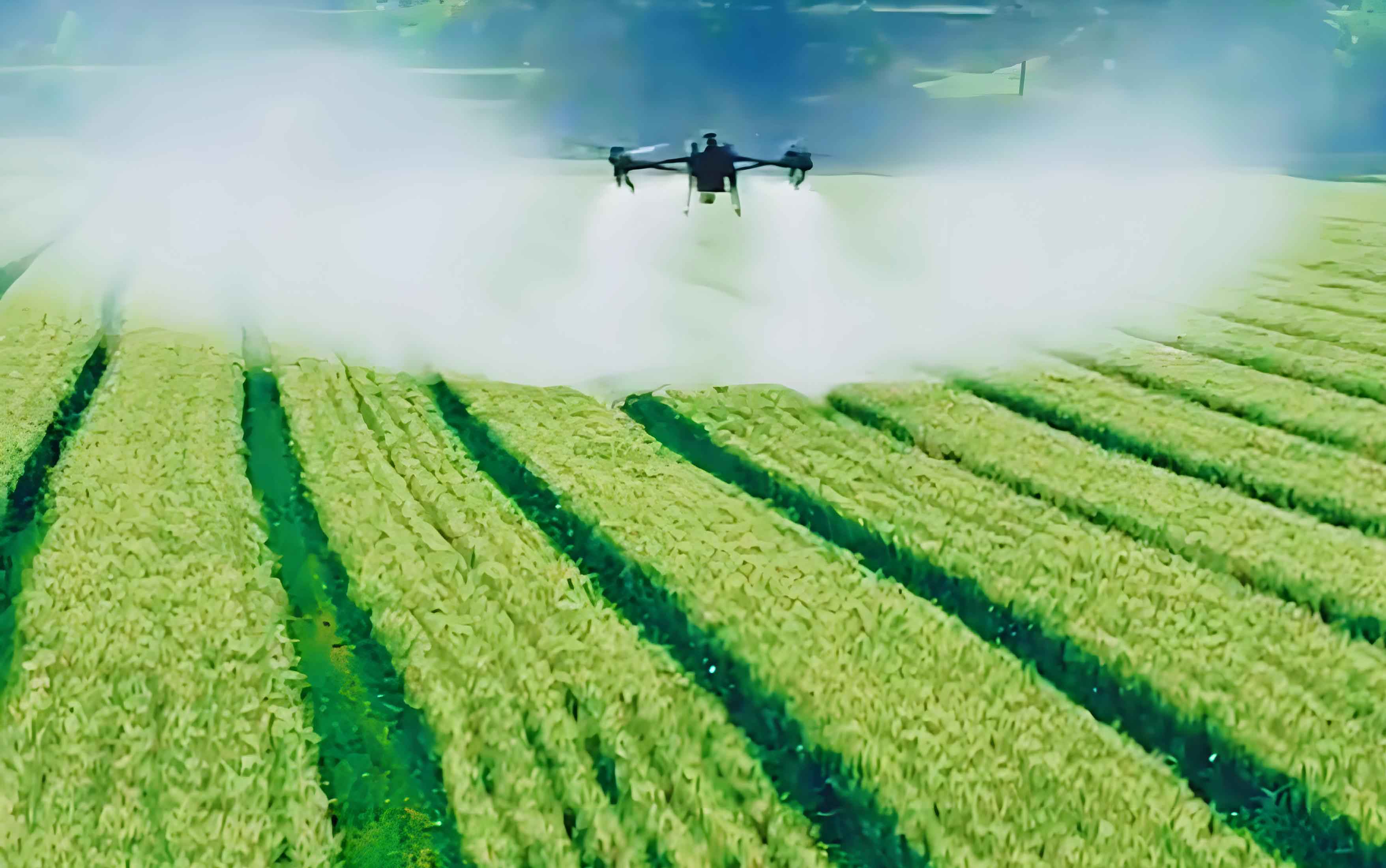
The adoption of agricultural UAVs is not merely a trend but a necessity for modern agriculture. With national policies emphasizing food security and ecological sustainability, technologies that reduce pesticide use and improve precision are gaining traction. From my observations, the agricultural UAV market has grown exponentially, supported by government subsidies and technological advancements. However, barriers such as high initial costs, limited battery life, and regulatory gaps persist. Through this discussion, I aim to provide a comprehensive overview backed by data, formulas, and tables to highlight the transformative potential of agricultural UAVs.
To understand the impact of agricultural UAVs, it is essential to compare them with conventional ground-based plant protection equipment. The following table summarizes key differences, focusing on parameters like safety, efficiency, and cost-effectiveness.
| Aspect | Traditional Ground Equipment | Agricultural UAV |
|---|---|---|
| Safety | High risk of operator exposure to pesticides; frequent poisoning cases | Human-pesticide separation; minimal direct contact |
| Efficiency | Low, typically covering 2-5 hectares per day | High, covering 10-50 hectares per hour depending on model |
| Operational Intelligence | Manual control; limited automation | Remote control and autonomous navigation; real-time monitoring |
| Resource Usage | High water and pesticide consumption; up to 600 L/ha water | Low volume spraying; about 30 L/ha water; reduced pesticide use |
| Environmental Impact | Significant pesticide drift and soil compaction | Reduced drift and soil disturbance; better pesticide targeting |
| Adaptability | Limited by terrain and crop height | Versatile; suitable for diverse terrains including hills and paddies |
The efficiency of an agricultural UAV can be quantified using a simple formula for spraying coverage rate. Let \( E \) represent the efficiency in hectares per hour, \( A \) the area covered, and \( t \) the time in hours. For a typical agricultural UAV with a swath width \( w \) (in meters) and flying speed \( v \) (in meters per second), the efficiency is given by:
$$ E = \frac{w \times v \times 3600}{10,000} $$
where the factor 3600 converts seconds to hours, and 10,000 converts square meters to hectares. For instance, an agricultural UAV with \( w = 5 \) m and \( v = 5 \) m/s achieves:
$$ E = \frac{5 \times 5 \times 3600}{10,000} = 9 \text{ hectares per hour} $$
This showcases the superior performance of agricultural UAVs compared to manual methods, which often achieve less than 1 hectare per hour.
Safety is a paramount advantage of agricultural UAVs. Traditional spraying involves operators carrying heavy equipment, leading to fatigue and exposure. In contrast, agricultural UAVs operate via remote control, ensuring a safe distance. The risk reduction can be modeled using a probability equation. Let \( P_t \) be the probability of poisoning with traditional methods, and \( P_u \) with agricultural UAVs. Based on field reports, \( P_t \) is estimated at 0.05 per season, while \( P_u \) drops to 0.001 due to automated systems. The relative risk reduction \( R \) is:
$$ R = \frac{P_t – P_u}{P_t} = \frac{0.05 – 0.001}{0.05} = 0.98 $$
This indicates a 98% reduction in poisoning risk, underscoring the health benefits of agricultural UAVs.
Intelligent features of agricultural UAVs, such as autonomous navigation and precision spraying, enhance their appeal. These systems use GPS and sensors to map fields, plan optimal routes, and adjust spraying parameters in real-time. The navigation accuracy can be expressed through error margins. For an agricultural UAV with a standard GPS module, the positioning error \( \epsilon \) is typically less than 1 meter, ensuring uniform coverage. The spraying uniformity index \( U \) can be defined as:
$$ U = 1 – \frac{\sigma}{\mu} $$
where \( \sigma \) is the standard deviation of droplet density and \( \mu \) is the mean density. Higher \( U \) values (close to 1) indicate better consistency, which agricultural UAVs achieve through controlled flight paths.
Cost-effectiveness is another critical factor. While the initial investment in an agricultural UAV is higher, operational savings accrue from reduced labor, water, and pesticide use. The total cost of ownership \( C_{total} \) over \( n \) years can be calculated as:
$$ C_{total} = C_{purchase} + \sum_{i=1}^{n} (C_{operation,i} + C_{maintenance,i}) $$
For a typical agricultural UAV, \( C_{purchase} \) ranges from $10,000 to $30,000, but annual \( C_{operation} \) may be only $2,000, compared to $5,000 for traditional equipment. The payback period \( T \) in years is:
$$ T = \frac{C_{purchase}}{\Delta S} $$
where \( \Delta S \) is the annual savings. With \( \Delta S = $3,000 \), \( T \) approximates 3-5 years, making agricultural UAVs a viable long-term investment.
Despite these advantages, agricultural UAVs have limitations, especially multi-rotor models. They are sensitive to wind, which can cause spray drift and uneven application. The drift distance \( d \) in meters under wind speed \( v_w \) (in m/s) can be estimated as:
$$ d = k \cdot v_w \cdot t_{flight} $$
where \( k \) is a drift coefficient (around 0.1 for fine droplets) and \( t_{flight} \) is the flight time. To mitigate this, agricultural UAVs require calm weather conditions or advanced nozzle designs. Additionally, the high concentration sprays may not penetrate dense crop canopies effectively, affecting pest control for diseases like rice sheath blight. This limitation highlights the need for optimized formulations and application techniques.
The development of agricultural UAVs has been rapid in recent years. From零星 adoption in 2016, the fleet has expanded significantly, driven by policy support and market demand. The growth rate \( G \) in percentage per year can be modeled as:
$$ G = \frac{N_{t} – N_{t-1}}{N_{t-1}} \times 100\% $$
where \( N_t \) is the number of agricultural UAVs in year \( t \). In some regions, \( G \) has exceeded 50%, reflecting strong uptake. The following table illustrates hypothetical growth data, mimicking trends observed in various areas.
| Year | Number of Agricultural UAVs | Annual Growth Rate (%) |
|---|---|---|
| 2018 | 50 | – |
| 2019 | 150 | 200 |
| 2020 | 534 | 256 |
| 2021 | 800 (projected) | 50 |
This expansion is facilitated by training programs and management platforms that monitor agricultural UAV operations. For example, digital platforms track flight paths, spray volumes, and area coverage, enabling data-driven decision-making. The integration of such technologies underscores the智能化 potential of agricultural UAVs in precision agriculture.
To promote the rational development of agricultural UAVs, several measures are essential. First, regulatory frameworks must be established to ensure safe operations. This includes setting flight altitude limits, no-fly zones, and certification requirements for operators. A regulatory compliance score \( R_c \) can be defined based on adherence to standards, with higher scores incentivizing best practices.
Second, policy support through subsidies and grants lowers entry barriers. The subsidy impact can be quantified as a reduction in effective cost \( C_{effective} \):
$$ C_{effective} = C_{purchase} – S $$
where \( S \) is the subsidy amount. In many countries, \( S \) covers 20-30% of \( C_{purchase} \), accelerating adoption of agricultural UAVs.
Third, training and awareness campaigns are crucial. Operators must master both UAV piloting and agronomic knowledge to optimize spraying schedules and pesticide selection. The competency level \( L \) of an operator can be assessed through a weighted formula:
$$ L = 0.6 \cdot T_{UAV} + 0.4 \cdot T_{agronomy} $$
where \( T_{UAV} \) and \( T_{agronomy} \) are test scores in UAV operation and crop protection, respectively. Ensuring \( L > 0.7 \) promotes effective use of agricultural UAVs.
Fourth, technological advancements in battery life and payload capacity are needed. Current agricultural UAVs often have flight times of 10-30 minutes per charge, limiting continuous operation. The energy density \( E_d \) of batteries in Wh/kg dictates performance. Improving \( E_d \) from current 200 Wh/kg to 300 Wh/kg could extend flight times by 50%, as shown by:
$$ t_{flight} \propto \frac{E_d \cdot m_{battery}}{P_{power}} $$
where \( m_{battery} \) is battery mass and \( P_{power} \) is power consumption. Similarly, increasing payload from 10 L to 20 L would reduce refilling stops, enhancing efficiency.
Fifth, reducing operational costs through better售后服务 and maintenance networks is vital. The availability rate \( A_r \) of agricultural UAVs, defined as the percentage of time they are operational, should exceed 90%. This requires robust spare parts supply and quick repair services, minimizing downtime during critical spraying windows.
Sixth, developing UAV-specific pesticides and adjuvants can improve efficacy. These formulations should have enhanced adhesion and penetration properties, reducing drift and off-target effects. The efficacy improvement \( I \) can be measured as:
$$ I = \frac{Y_{UAV} – Y_{traditional}}{Y_{traditional}} \times 100\% $$
where \( Y \) represents crop yield or pest reduction rates. Trials show that specialized chemicals for agricultural UAVs can boost \( I \) by 10-15%.
Looking ahead, the future of agricultural UAVs is promising. As high-standard farmland projects expand, creating more contiguous and accessible fields, the scalability of agricultural UAVs will improve. The synergy between UAV technology and IoT (Internet of Things) enables real-time monitoring of crop health, allowing for targeted interventions. For instance, multispectral sensors on agricultural UAVs can detect disease outbreaks early, triggering automated spraying missions.
Moreover, the concept of “one machine, multiple uses” amplifies the value of agricultural UAVs. Beyond spraying, they can be adapted for seeding, fertilizer application, and even livestock monitoring. The versatility factor \( V \) for an agricultural UAV can be expressed as:
$$ V = \sum_{i=1}^{m} w_i \cdot f_i $$
where \( m \) is the number of functions, \( w_i \) are weights based on utility, and \( f_i \) are performance scores for each function. High \( V \) scores justify the investment in agricultural UAVs for diverse farm tasks.
In conclusion, the agricultural UAV represents a pivotal innovation in modern agriculture, addressing labor shortages, enhancing safety, and promoting sustainability. While challenges like wind sensitivity and high costs remain, ongoing research and policy support are driving improvements. From my perspective, the widespread adoption of agricultural UAVs hinges on collaborative efforts among governments, manufacturers, and farmers. By embracing this technology, we can pave the way for a more efficient and resilient agricultural system, ensuring food security for future generations.
The journey of agricultural UAVs is just beginning, with potential applications expanding into data collection and AI-driven analytics. As battery technology advances and regulations mature, I anticipate that agricultural UAVs will become ubiquitous tools on farms worldwide. The key is to foster an ecosystem that encourages innovation while prioritizing safety and environmental stewardship. Through continuous learning and adaptation, the agricultural UAV will undoubtedly play a central role in the smart farming revolution.