
The rapid evolution of unmanned aerial vehicle (UAV) technology, particularly in the domain of multi-rotor systems, has ushered in an era of unprecedented industrial and commercial application. The quadrotor drone, characterized by its simple four-motor cross-configuration, agility, and hovering capability, has become a cornerstone of this revolution. Its applications span from aerial cinematography and infrastructure inspection to precision agriculture and emergency response, driving a market with explosive growth. This surge has consequently created a critical and widening gap between industry demand for skilled professionals and the output of traditional educational programs. Conventional pedagogical approaches often remain confined to theoretical lectures and textbook assessments, leaving graduates ill-equipped with the practical, integrative, and innovative skills required to design, control, and deploy advanced quadrotor drone systems in real-world scenarios. This disconnect highlights a fundamental challenge in modern engineering education. To address this, a transformative teaching framework is essential—one that bridges theory with hands-on practice, fosters interdisciplinary thinking, and cultivates the problem-solving abilities demanded by the new engineering landscape. This article explores the implementation and rationale behind an integrated “Theory-Simulation-Practice” pedagogical system designed specifically for cultivating next-generation talent in quadrotor drone technology.
1. The Integrated “Theory-Simulation-Practice” Pedagogical Framework
The proposed educational model is built on a cohesive triad of learning phases: foundational theory, digital simulation, and physical flight practice. This structure is designed to create a progressive and reinforcing learning journey, where each stage builds upon the last, culminating in comprehensive skill mastery. The core philosophy is to move beyond passive knowledge acquisition to active knowledge application and creation.
1.1 Framework Architecture
The traditional, theory-heavy model for teaching quadrotor drone technology is fragmented and often fails to engage students or prepare them for industry challenges. Our framework, visualized in the table below, is engineered for integration and practical relevance.
| Phase | Core Activity | Primary Objective | Key Skills Developed |
|---|---|---|---|
| 1. Theory | Structured learning of quadrotor drone fundamentals. | To establish a robust conceptual understanding of drone mechanics, electronics, and software principles. | Conceptual knowledge, system analysis, safety protocols. |
| 2. Simulation | Building and experimenting within a high-fidelity digital twin environment. | To safely test, debug, and innovate on control algorithms and autonomous behaviors without physical risk. | Algorithmic thinking, software development (C++/Python), systems integration, debugging. |
| 3. Practice | Hands-on operation and mission execution with actual quadrotor drone hardware. | To confront real-world physics, sensor noise, and system integration challenges, validating theoretical and simulated models. | Practical troubleshooting, hardware handling, mission planning, operational safety. |
This “1+1+1 > 3” approach ensures that theoretical concepts are immediately validated and deepened through simulation, and the insights gained from virtual experiments are then tested against the uncompromising reality of physics in the practice phase. The quadrotor drone serves as the perfect platform for this integration due to its manageable complexity and rich ecosystem of supporting software and hardware.
1.2 Course Design and Structure
Implementing this framework requires a carefully structured curriculum. A typical 16-week course (32 contact hours) is divided as follows:
| Weeks | Phase | Core Content & Activities | Deliverables |
|---|---|---|---|
| 1-6 | Theory | Lectures on drone anatomy, aerodynamics, flight dynamics, sensor systems, communication protocols, and safety regulations. | Concept maps, quizzes, component identification reports. |
| 7-12 | Simulation | Guided setup of the ROS/Gazebo/Prometheus simulation environment. Execution of basic flight maneuvers, followed by group-based open-ended simulation projects (e.g., path planning, SLAM). | Functional simulation environment, demo videos of basic & advanced behaviors, final project report and presentation. |
| 13-16 | Practice | Pre-flight safety training, manual piloting exercises, and execution of autonomous missions using a commercial quadrotor drone platform (e.g., P600). | Pre-flight checklist completion, flight log, mission execution video, post-flight analysis report. |
The hardware cornerstone for the practice phase is a robust, open-source platform like the Prometheus 600 (P600) quadrotor drone. Its use of the PX4 flight stack and compatibility with the ROS ecosystem make it an ideal bridge between the simulation and real worlds. The total investment in such platforms, including spare parts and sensors, is justified by the unparalleled experiential learning they provide.
2. Foundational Theory: Building the Knowledge Base
A deep theoretical understanding is the bedrock upon which practical skills are built. This phase systematically deconstructs the quadrotor drone into its constituent systems, providing students with a clear mental model of how it functions.
The core theoretical modules are:
- Construction and Aerodynamics: Students learn the purpose of each physical component—frame, brushless motors, electronic speed controllers (ESCs), propellers—and the fundamental aerodynamics that allow a quadrotor drone to achieve lift, thrust, and torque. The dynamic model is introduced:
$$ \begin{aligned}
m \ddot{\mathbf{p}} &= m\mathbf{g} + \mathbf{R} \mathbf{F} \\
\mathbf{I} \dot{\boldsymbol{\omega}} &= -\boldsymbol{\omega} \times \mathbf{I} \boldsymbol{\omega} + \boldsymbol{\tau}
\end{aligned} $$
where \( m \) is mass, \( \mathbf{p} \) is position, \( \mathbf{g} \) is gravity, \( \mathbf{R} \) is the rotation matrix, \( \mathbf{F} \) is thrust, \( \mathbf{I} \) is inertia, and \( \boldsymbol{\omega} \) and \( \boldsymbol{\tau} \) are angular velocity and torque, respectively. - Flight Control Principles: This covers the hierarchy of control, from low-level motor mixing and attitude stabilization using PID or more advanced controllers, to high-level position and velocity control. The error dynamics for a simple PID attitude controller can be expressed as:
$$ \tau = K_p e(t) + K_i \int_0^t e(\tau) d\tau + K_d \frac{de(t)}{dt} $$
where \( e(t) \) is the error in roll, pitch, or yaw angle. - Communication and Data Links: Instruction covers common protocols like MAVLink, and the practicalities of radio telemetry, Wi-Fi, and cellular links, focusing on range, latency, and reliability trade-offs for the quadrotor drone.
- Sensor Fusion and Navigation: Students explore the role of sensors: IMUs (gyroscopes, accelerometers), magnetometers, barometers, GPS, cameras, and LiDAR. The concept of sensor fusion (e.g., using an Extended Kalman Filter) to estimate the drone’s state (position, velocity, attitude) is a key learning objective.
$$ \hat{\mathbf{x}}_{k|k} = \hat{\mathbf{x}}_{k|k-1} + \mathbf{K}_k (\mathbf{z}_k – \mathbf{H}_k \hat{\mathbf{x}}_{k|k-1}) $$
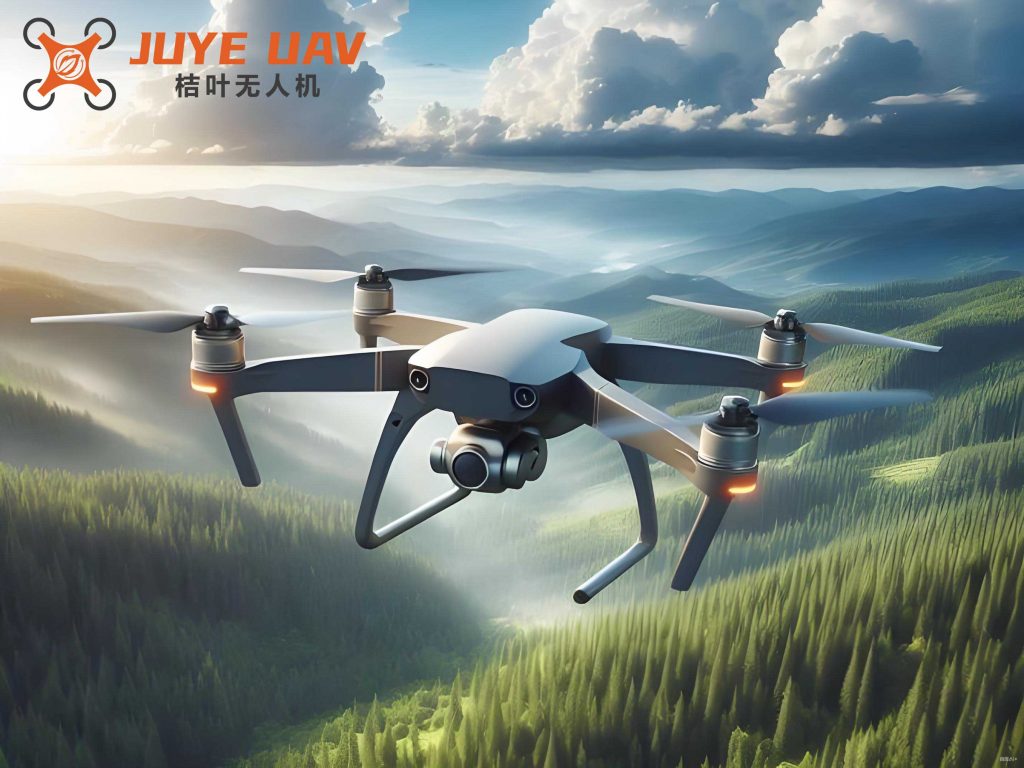
This theoretical grounding is delivered not through rote memorization, but by connecting each principle directly to the physical quadrotor drone platform they will later fly, making the knowledge tangible and relevant.
3. The Digital Sandbox: Building and Experimenting in Simulation
Before risking expensive hardware, students need a safe, flexible, and repeatable environment to experiment. This is where a comprehensive simulation platform becomes an indispensable pedagogical tool. We utilize an open-source toolchain centered on the Robot Operating System (ROS), the Gazebo simulator, and the Prometheus project.
3.1 Autonomous Platform Construction
The first major task for students is to construct their own digital development environment. This process is itself a critical learning experience involving system administration and software integration.
- Operating System (Ubuntu 18.04): Students choose between a virtual machine (for simplicity) and a dual-boot setup (for performance), learning basic Linux command-line operations essential for robotics development.
- Robot Operating System (ROS Melodic): They install ROS, a middleware framework that provides libraries, tools, and the publish-subscribe communication paradigm. Understanding ROS nodes, topics, and services is fundamental to modern robot software architecture.
- Prometheus & PX4 SITL: Finally, they deploy the Prometheus modules, which include high-level autonomy algorithms, and configure the PX4 Software-In-The-Loop (SITL) simulator. This creates a complete simulation where the actual PX4 flight controller code runs in a virtual environment, communicating with a simulated quadrotor drone model in Gazebo via MAVLink and MAVROS (the ROS-MAVLink bridge).
3.2 Core Simulation Experiments
With the platform ready, students begin with guided experiments to validate their setup and understand basic control.
- Basic Flight Control: Running provided scripts, they command the simulated quadrotor drone to take off, hover, follow waypoints, and track geometric trajectories like circles or figure-eights. Visualizing the ROS computation graph helps them understand the data flow between the controller node, MAVROS, and the simulator.
- Sensor Simulation: They enable simulated sensors like cameras and LiDAR on the quadrotor drone model in Gazebo, learning how sensor data is published as ROS topics.
3.3 Open-Ended Simulation Projects
The true power of simulation is unlocked in this phase. Students, working in small groups, select a capstone project that pushes beyond basic flight. Examples include:
- Autonomous Path Planning: Implementing and comparing algorithms (A*, RRT*, etc.) for navigating a cluttered Gazebo world. The objective function for an optimal path might be:
$$ J = \int_{t_0}^{t_f} ( \|\mathbf{v}(t)\|^2 + \rho \cdot \text{CollisionRisk}(\mathbf{p}(t)) ) dt $$ - Simultaneous Localization and Mapping (SLAM): Using simulated LiDAR or camera data with algorithms like Gmapping or Cartographer to build a map of an unknown environment while localizing the quadrotor drone within it.
- Vision-Based Control: Developing a pipeline using OpenCV and ROS to detect an ArUco marker or a colored object and then commanding the quadrotor drone to autonomously track or land on it.
These projects require research, coding, debugging, and collaboration—mirroring real-world R&D workflows. The simulation platform provides the perfect risk-free sandbox for innovation and failure, which is a crucial part of the learning process for mastering quadrotor drone autonomy.
4. Confronting Reality: Quadrotor Drone Flight Practice
The final phase transitions from the ideal, noise-free world of simulation to the messy, unpredictable reality of physical systems. This is where theoretical models and simulated code meet real-world physics, sensor noise, communication delays, and environmental factors.
4.1 The Practice Platform: System Overview
A reliable and well-instrumented quadrotor drone is essential. A platform like the P600 offers a professional-grade experience. Its key components, which students must now understand in practice, are summarized below:
| Subsystem | Component Example | Educational Purpose |
|---|---|---|
| Airframe & Propulsion | 600mm Carbon Fiber Frame, 4006 Motors, 6S ESCs | Understand mechanical design, thrust-to-weight ratio, and propulsion efficiency. |
| Flight Controller | Pixhawk (running open-source PX4) | Interface with open-source autopilot software, calibrate sensors, tune control parameters. |
| Onboard Computer | NVIDIA Jetson TX2 | Run advanced ROS nodes for autonomy (SLAM, planning) directly on the quadrotor drone. |
| Sensors | GPS, LiDAR (RPLidar S1), Gimbal Camera | Experience real sensor data streams, noise characteristics, and calibration necessities. |
| Communication | HOMER Digital Data Link | Manage wireless communication for telemetry and real-time video, understanding range and bandwidth limits. |
| Ground Control Station (GCS) | QGroundControl (QGC) | Monitor vehicle state, plan missions, and analyze logs—a critical tool for operational awareness. |
4.2 Structured Flight Operations
Safety is paramount. Students operate in tightly managed groups with clearly defined roles: Pilot-in-Command, Visual Observer, Safety Officer (managing a physical tether for initial tests), Mission Planner, and Data Analyst.
- Pre-Flight Safety Protocol: Students execute a rigorous checklist: inspecting the airframe and propellers, verifying battery voltage and integrity, ensuring a clear flight zone, checking radio link strength, and confirming that all software (QGC, remote desktop to the Jetson) is connected and streaming data.
- Demonstration and Supervised Flight: Instructors first demonstrate manual flight in stabilized modes, emphasizing smooth control inputs. Students then practice basic manual hovering and translation under close supervision, developing a feel for the quadrotor drone’s dynamics.
- Autonomous Mission Execution: This is the culmination. Students upload a mission planned in QGC or initiate an autonomous script (developed and tested earlier in simulation) via the onboard Jetson computer. A typical mission might involve autonomous takeoff, flying to a series of GPS waypoints to inspect virtual “assets,” and returning to land. The quadrotor drone executing this mission relies on the precise integration of all systems studied in theory and simulation.
- Post-Flight Analysis: Students download and analyze flight logs using tools like PlotJuggler or Flight Review. They compare the commanded trajectory from their algorithm with the actual path flown by the quadrotor drone, identifying discrepancies caused by wind, estimation errors, or control latency. This analysis closes the learning loop, informing refinements to both their algorithms and their understanding.
Conclusion
The “Theory-Simulation-Practice” framework represents a holistic response to the urgent need for skilled professionals in the rapidly expanding field of aerial robotics. By centering the curriculum on the quadrotor drone—a complex yet accessible cyber-physical system—this approach seamlessly integrates multidisciplinary knowledge from dynamics, control theory, computer science, and electrical engineering. The progression from abstract theory to digital experimentation and finally to physical validation mirrors the actual engineering design cycle. This method does more than teach students how to operate a quadrotor drone; it empowers them to understand, modify, and innovate upon the entire system. They learn to navigate the entire stack, from low-level motor commands to high-level intelligent behaviors, while constantly grappling with the friction between idealized models and physical reality. This pedagogical model fosters not just competent technicians, but creative problem-solvers and innovators capable of advancing quadrotor drone technology and applying its principles to the broader challenges of autonomous systems. In doing so, it provides a robust blueprint for new engineering education that is adaptive, practical, and deeply aligned with the technological demands of the future.