
In recent years, the rapid advancement and widespread adoption of civilian UAV (Unmanned Aerial Vehicle) technology have revolutionized various sectors, from agriculture and logistics to entertainment and surveillance. As an observer and researcher in this field, I have witnessed how these devices offer immense benefits but also pose significant threats to individual privacy rights. The ability of civilian UAVs to capture high-resolution imagery, collect data, and operate stealthily has led to growing concerns about unauthorized surveillance and data exploitation. This article delves into the legal challenges surrounding privacy infringements by civilian UAVs, analyzes current regulatory frameworks, and proposes robust measures for protection, with an emphasis on the need for comprehensive legislation.
The proliferation of civilian UAVs is a testament to technological progress, but it also underscores a critical gap in legal systems worldwide. From my perspective, the core issue lies in the dissonance between fast-paced innovation and slow-evolving laws. Civilian UAVs, often equipped with cameras, sensors, and communication modules, can intrude into private spaces without physical entry, making traditional privacy doctrines inadequate. For instance, a civilian UAV hovering over a residential backyard can record intimate activities, thereby violating what I consider to be fundamental privacy expectations. This scenario is not hypothetical; numerous reports highlight instances where civilian UAVs have been used for stalking, corporate espionage, or unauthorized data collection. Thus, it is imperative to explore legal mechanisms that can mitigate these risks while fostering responsible use of civilian UAV technology.
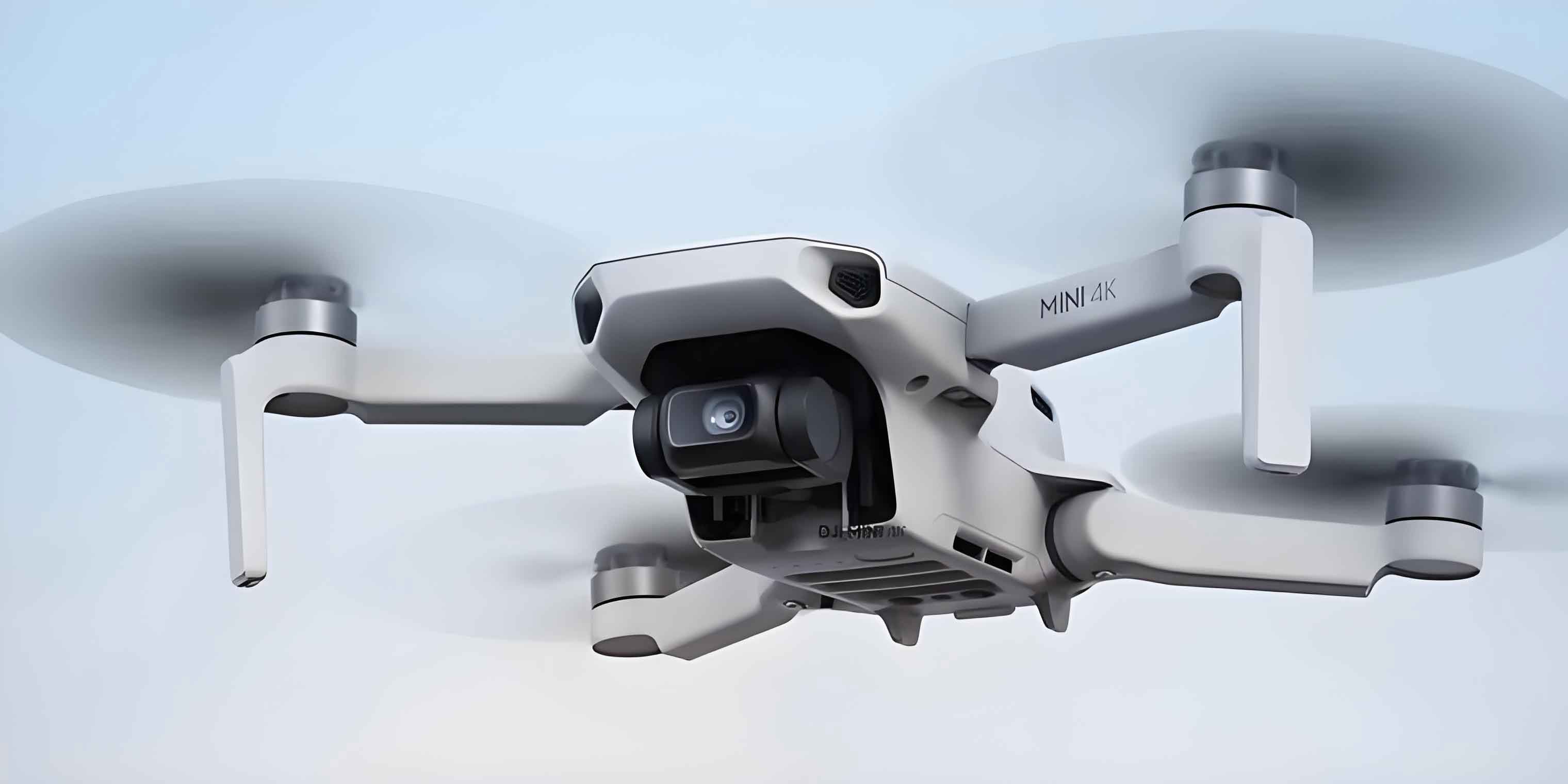
To understand the privacy implications, we must first examine the technical capabilities of civilian UAVs. These devices range from small quadcopters to fixed-wing models, capable of autonomous flight via GPS and real-time data transmission. The privacy threats emerge from features like facial recognition, thermal imaging, and long-endurance flight, which enable persistent monitoring. In my analysis, I categorize civilian UAV privacy intrusions into three main types: data collection without consent, surveillance in private domains, and data misuse. For clarity, I summarize these in Table 1, which outlines the modes of intrusion and their potential impacts.
| Intrusion Type | Description | Example Scenario | Privacy Risk Level |
|---|---|---|---|
| Data Collection | Unauthorized gathering of personal information via cameras or sensors | A civilian UAV recording conversations in a private garden | High |
| Surveillance | Persistent observation of individuals in private spaces | Hovering near windows to capture indoor activities | Very High |
| Data Misuse | Sharing or selling collected data without consent | Footage sold to third parties for advertising | Medium to High |
From a legal standpoint, the current regulatory landscape for civilian UAVs is fragmented and insufficient. In many jurisdictions, including China, laws primarily focus on aviation safety and airspace management, neglecting privacy aspects. As I reviewed various regulations, I found that rules often emphasize no-fly zones, altitude limits, and operator licensing, but rarely address how civilian UAVs can infringe on privacy rights. For example, the “Interim Measures for the Management of Civilian Unmanned Aerial Vehicle Operational Flight Activities” in China sets safety protocols but does not explicitly prohibit privacy invasions. This gap is concerning because, without clear legal boundaries, victims of civilian UAV intrusions have limited recourse. To illustrate the global variation, Table 2 compares the regulatory approaches in selected countries regarding civilian UAV privacy protections.
| Country | Key Legislation | Privacy Provisions | Enforcement Mechanisms |
|---|---|---|---|
| United States | FAA Regulations, State Laws | Limited; relies on existing privacy laws | Fines, criminal charges |
| European Union | GDPR, Drone Regulations | Strong data protection under GDPR | Hefty penalties, data removal |
| China | Civil Aviation Rules, Local Ordinances | Minimal; safety-focused | Administrative sanctions |
| Australia | Civil Aviation Safety Authority Rules | Explicit privacy guidelines for drones | Licensing revocation, lawsuits |
The inadequacy of these regulations becomes apparent when we model the privacy risk mathematically. I propose a formula to quantify the risk associated with civilian UAV operations: $$ Risk_{privacy} = P_{intrusion} \times S_{sensitivity} \times C_{control} $$ where \( P_{intrusion} \) represents the probability of a civilian UAV intruding into a private space, \( S_{sensitivity} \) denotes the sensitivity of the data collected, and \( C_{control} \) is the factor for legal and technical controls. A low \( C_{control} \), indicative of weak regulations, amplifies the overall risk. For instance, if a civilian UAV operates in an area with lax laws, \( C_{control} \) approaches zero, making \( Risk_{privacy} \) high. This equation underscores the urgency of strengthening \( C_{control} \) through robust legal frameworks.
In my view, addressing these challenges requires the adoption of innovative legal principles. One such principle is the “reasonable expectation of privacy,” which I believe should be explicitly integrated into civilian UAV regulations. Originating in U.S. jurisprudence, this doctrine protects individuals where they subjectively expect privacy and society recognizes that expectation as reasonable. For civilian UAVs, this means that flying over private properties, such as homes or backyards, should be deemed an intrusion unless consent is obtained. I argue that courts should apply this principle to cases involving civilian UAVs, granting judges discretion to assess whether an individual’s privacy was violated based on contextual factors. For example, using a civilian UAV to peer into a fenced garden would likely breach a reasonable expectation of privacy, even if no physical trespass occurred.
Another critical concept is the “spatial right” or “airspace property right,” which defines the vertical domain above land. From my research, I conclude that property owners should have exclusive rights to the airspace immediately above their premises, up to a reasonable height, to prevent civilian UAV incursions. This can be formalized through legislation that specifies zones where civilian UAV flight is restricted without permission. Mathematically, we can define this zone as a cylinder: $$ V_{private} = \pi r^2 h $$ where \( r \) is the property boundary radius and \( h \) is the allowable height (e.g., 100 meters). Any civilian UAV entering \( V_{private} \) without authorization would constitute an illegal invasion. This approach aligns with traditional property law while adapting to modern threats from civilian UAVs.
Furthermore, I advocate for clear standards on “non-physical intrusion” to cover civilian UAV activities. Current laws often require physical trespass for liability, but civilian UAVs can invade privacy remotely. Therefore, legal definitions should expand to include electromagnetic, visual, or data intrusions. For instance, a civilian UAV capturing images through a window should be treated similarly to a person peeping in. To operationalize this, I suggest a regulatory framework with graduated penalties, as shown in Table 3, which ties infringement severity to consequences for civilian UAV operators.
| Infringement Level | Description | Civil Penalty | Criminal Charge |
|---|---|---|---|
| Minor | Accidental intrusion with no data retention | Warning, fine up to $500 | None |
| Moderate | Intentional surveillance without dissemination | Fine of $500-$5000, license suspension | Misdemeanor |
| Severe | Data collection and sale, or persistent stalking | Fine over $5000, permanent ban | Felony |
From a technological perspective, I recommend that regulations mandate privacy-by-design features for civilian UAVs. Manufacturers should integrate geofencing, which uses GPS to create virtual barriers, preventing civilian UAVs from entering restricted areas. Additionally, civilian UAVs could be required to have audible alerts or visible markers when recording, enhancing transparency. The effectiveness of such measures can be evaluated using a cost-benefit analysis: $$ Benefit = R_{risk reduction} – C_{compliance} $$ where \( R_{risk reduction} \) is the reduction in privacy risk from implementing features, and \( C_{compliance} \) is the cost to manufacturers. My estimates suggest that for civilian UAVs, \( Benefit \) is positive when regulations are standardized globally, encouraging widespread adoption.
In conclusion, the rise of civilian UAVs necessitates a paradigm shift in privacy law. As I have argued, existing regulations are inadequate, focusing too much on safety while ignoring the insidious nature of privacy invasions. Through principles like reasonable expectation of privacy, spatial rights, and non-physical intrusion standards, we can build a resilient legal framework. Moreover, combining legal reforms with technological safeguards will ensure that civilian UAVs serve society without compromising fundamental rights. I urge policymakers to act swiftly, as delays only exacerbate the risks posed by civilian UAVs. Ultimately, a balanced approach will foster innovation while protecting individuals from unwarranted surveillance, ensuring that the sky remains a space of freedom, not fear.
To further elaborate, let’s consider the economic implications of civilian UAV privacy regulations. The global market for civilian UAVs is expanding rapidly, and without clear rules, uncertainty could hinder growth. I propose that regulations include incentives for privacy-compliant civilian UAVs, such as tax breaks or certification programs. This can be modeled as: $$ Growth_{market} = k \times (1 – Regulatory_{burden}) $$ where \( k \) is a constant representing market potential, and \( Regulatory_{burden} \) is the perceived cost of compliance. By minimizing burdens through smart laws, we can boost the civilian UAV industry while safeguarding privacy.
Additionally, international cooperation is crucial, as civilian UAVs often cross borders. I support the development of treaties that harmonize privacy standards for civilian UAV operations, similar to aviation agreements. This would prevent jurisdictional gaps and ensure consistent enforcement. For example, a multinational database could track civilian UAV registrations and violations, enhancing accountability. In my vision, the future of civilian UAV regulation lies in a holistic, adaptive system that evolves with technology, always prioritizing human dignity over convenience.