
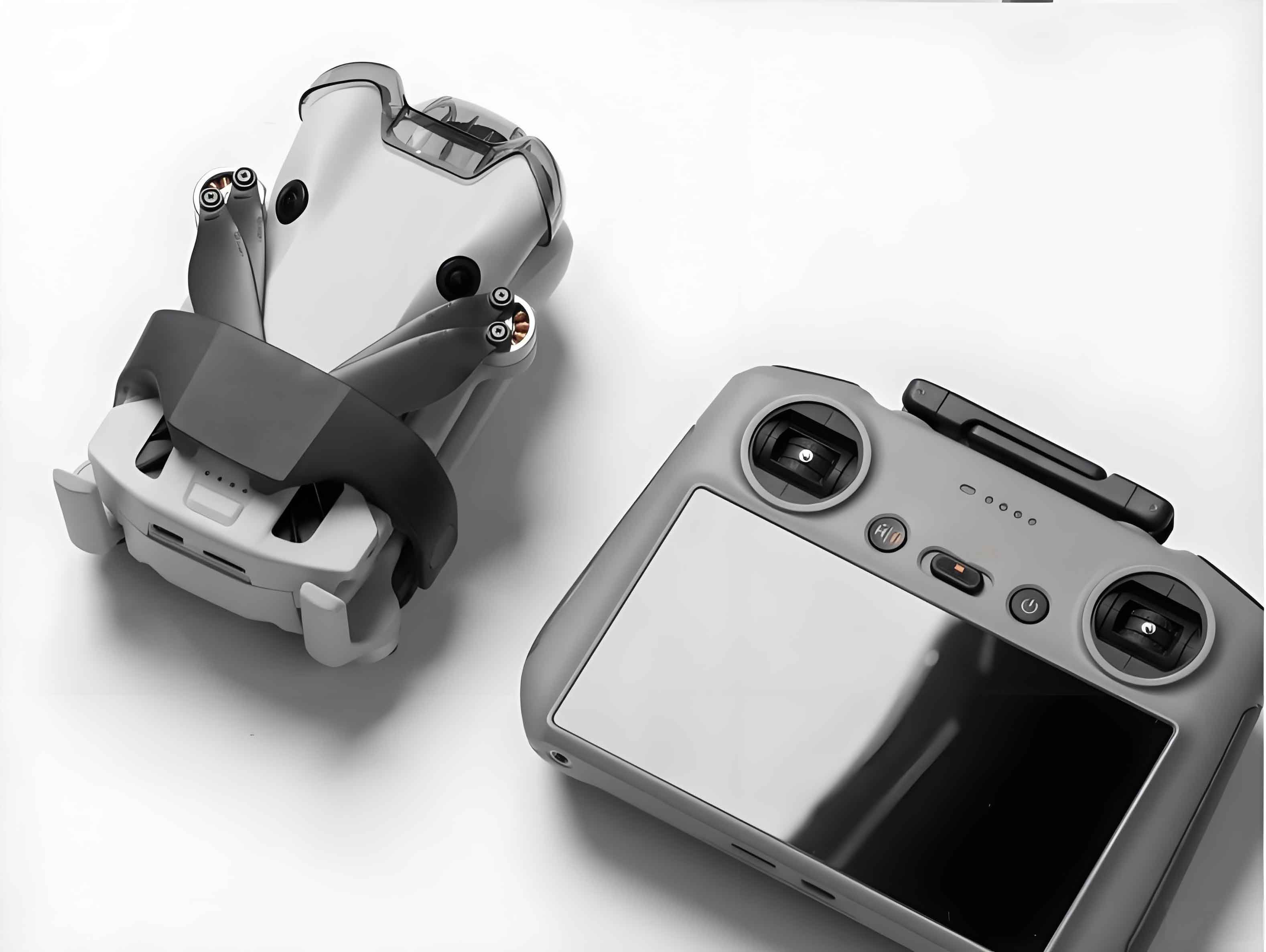
The proliferation of civilian Unmanned Aerial Vehicles (UAVs), encompassing both smartly controlled drones and traditional radio-controlled model aircraft due to their similar risk profiles, represents a significant technological shift with profound legal implications. The operation of a civilian UAV constitutes an inherently hazardous activity. Incidents causing damage are characterized by high frequency, difficulty in prevention, and potentially severe consequences. While regulatory frameworks globally are evolving, the core question of civil liability for damages caused by these devices remains paramount for ensuring justice and fostering a responsible ecosystem. This analysis delves into the principles of tort liability applicable to civilian UAV operations within a standard legal framework, examining diverse harm scenarios, foundational liability constructs, and the nuanced allocation of responsibility among various parties.
Typology of Civilian UAV-Induced Harm
Damage incidents involving civilian UAV can be systematically categorized based on the victim and the spatial context of the accident. Understanding these categories is essential for applying the correct legal principles.
| Category | Description | Primary Risks & Examples |
|---|---|---|
| UAV vs. Ground Third Party | Damage caused to persons or property on the ground due to the UAV’s operation (e.g., crash, collision, improper payload release). | Personal injury; Property damage (vehicles, buildings); Crop damage from spraying mishaps. |
| UAV vs. UAV | Mid-air collisions or dangerous proximity between two or more UAVs, causing damage to the involved devices and potentially resulting in ground damage from falling debris. | Loss or damage to UAV equipment; Subsequent ground damage from crashes. |
| UAV vs. Manned Aircraft | Incursions into controlled airspace, particularly near airports, leading to collisions or hazardous proximity with commercial or general aviation aircraft. | Aircraft damage; Major economic losses from flight delays/cancellations; Catastrophic safety risks. |
The risk profile of a civilian UAV is distinct. Factors such as technological immaturity, low operator skill barriers, evolving traffic regulations, and increasing flight speeds contribute to a high-probability, high-consequence risk environment. This necessitates a robust and clear liability regime.
Foundations of Liability: Imputation Principles and Constitutive Requirements
The cornerstone of assigning liability lies in determining the applicable imputation principle. A one-size-fits-all approach is unsuitable for the varied harm scenarios involving civilian UAV.
1. Imputation Principles:
- Strict Liability (No-Fault) for Ground Third Parties: The operation of a civilian UAV is classified as an ultra-hazardous activity. Consequently, liability for damage to ground third parties is governed by strict liability. The claimant need not prove fault or negligence on the part of the operator. The mere occurrence of damage from the operation creates liability. This principle, aligning with established doctrines for manned aircraft, protects vulnerable victims and incentivizes operators to maintain maximum safety standards. The legal basis can be summarized as:
$$L_{ground} = f(D, C)$$
where $L_{ground}$ is liability to a ground third party, triggered by the existence of Damage ($D$) and a direct causal link to the UAV’s Operation ($C$), irrespective of Operator Fault ($O$). - Fault-Based Liability for Airborne Conflicts: For incidents between UAVs, or between a UAV and a manned aircraft, the liable principle shifts to fault-based liability. Since all parties are engaged in a similar hazardous activity and are subject to comparable duties of care, liability is assigned based on whose breach of duty (negligence) caused the incident. The formula modifies to:
$$L_{air} = f(O, D, C)$$
Here, liability ($L_{air}$) requires proof of Operator Fault/Negligence ($O$) in addition to Damage ($D$) and Causation ($C$).
2. Constitutive Requirements for Liability:
For a successful tort claim, specific constitutive elements must be established. These are applied differently under strict versus fault-based regimes.
| Requirement | Description | Application Note |
|---|---|---|
| Operation by an Operator | The civilian UAV must have been in a state of “operation” or “in flight,” typically from power-up for takeoff to the end of the landing roll. The “operator” is the person or entity with control over its use at the time of the incident. | Static UAVs (under repair, display) do not trigger strict liability. |
| Damage to a Third Party | The victim must suffer legally recognizable harm—bodily injury, mental distress, or property loss. “Third party” excludes employees or direct agents of the operator. | Indirect economic losses (e.g., airline delays due to airspace incursion) pose complex quantification challenges. |
| Causal Link | A direct causal chain must exist between the UAV’s operation and the damage suffered. Damage merely occurring while a UAV was lawfully overhead does not establish liability. | Causation is typically direct and clear in crash scenarios. |
| Fault (for Fault-Based Cases) | In airborne incidents, the claimant must prove the defendant failed to exercise the standard of care a reasonable operator would have observed, constituting negligence. | This element is not required for strict liability claims against ground third parties. |
Allocation and Assumption of Liability
Identifying the liable party can be complex, especially when ownership, operational control, and direct benefit are separated. The guiding doctrine is the “binary theory of operational benefit and control,” focusing on who had factual control over the specific flight and who stood to benefit directly from it.
1. Standard Liability Modalities:
- Vicarious Liability: An employer or principal is liable for damage caused by an employee or agent operating a civilian UAV within the scope of their duties. The operator can seek indemnity from the negligent employee/agent internally.
- Personal Liability: An individual operating their own civilian UAV or a family member operating a household UAV is personally (or familially) liable for any damage caused.
- Joint & Several / Several Liability: In multi-UAV incidents causing ground damage, operators may be held jointly and severally liable if their actions constitute a joint tort (e.g., coordinated but negligent flight). If the acts are separate but together cause the harm, liability may be apportioned based on respective fault and causal contribution.
2. Liability in Situations of Separated Interests:
| Legal Relationship | Typical Scenario | Primary Liable Party | Rationale & Exceptions |
|---|---|---|---|
| Contract for Services (Independent Contractor) | Farmer hires a drone service company for crop spraying. | The service company (Contractor). | Contractor has direct operational control and expertise. The client (Farmer) may share liability only if proven negligent in selection or instructions (e.g., insisting on flight in unsafe weather). |
| Dry Lease / Rental | Renting a UAV without an operator. | The Renter (User). | The renter gains direct operational control and benefit. The owner/lessor may be liable if proven negligent at the time of lease (e.g., leasing a known defective civilian UAV or to an incompetent pilot). |
| Finance Lease | A company acquires a UAV via a long-term lease with eventual ownership. | The Lessee (User). | The lessee has exclusive possession, control, and derives all operational benefits. The finance lessor, being merely a financier, is shielded from tort liability. |
| Illegal Use (Theft, Conversion) | A civilian UAV is stolen and then causes damage. | The Illegal User (Thief). | The legal owner’s chain of control and benefit is involuntarily severed by the illegal act. The owner is not liable unless proven negligent in securing the UAV (a high bar). |
Defenses and the Role of Insurance
Even under strict liability, operators have limited defenses. The primary statutory defense is the intentional conduct of the victim. If it can be proven that the victim deliberately caused the damage (e.g., attempting to swat a drone, resulting in injury), the civilian UAV operator’s liability is extinguished. Traditional force majeure events like direct consequences of armed conflict or riots may also serve as a defense, as the operator is equally a victim of such uncontrollable circumstances.
Given the significant and potentially catastrophic risks associated with civilian UAV operations, insurance is not merely prudent but often legally mandated for commercial activities. Third-Party Liability Insurance is crucial for risk distribution. It ensures that victims can be compensated even if an individual operator lacks sufficient assets, and it protects operators from financial ruin. The insurance mechanism effectively socializes the risk inherent in this beneficial technology:
- Operator: Pays a premium $P$ based on risk profile.
- Insurance Pool: Aggregates premiums $∑P$ from many operators.
- Victim Compensation: Claim $C$ for damages is paid from the pool, ensuring prompt and adequate compensation: $C$ ≤ Coverage Limit.
As the civilian UAV industry matures, there is a compelling argument for the development of a compulsory third-party liability insurance scheme, potentially supplemented by a societal compensation fund for exceptional cases, to create a comprehensive safety net.
Conclusion
The integration of civilian UAV technology into daily life and commerce demands a sophisticated and adaptive liability framework. The current legal landscape, built upon principles of strict liability for ground damage and fault-based liability for airborne conflicts, provides a foundational structure. Key to its effective application is the careful analysis of operational control and benefit in complex relationships like leases and service contracts. As the capabilities and applications of civilian UAV expand, continuous refinement of these liability rules, coupled with robust mandatory insurance mechanisms, is essential. This will ensure fair, efficient, and predictable resolution of disputes, adequately protect the rights of victims, balance the interests of operators, and ultimately support the safe and sustainable growth of the UAV ecosystem by providing clear rules of accountability.