
The rapid evolution of unmanned aerial technology represents one of the most significant shifts in modern aerospace. While the popular discourse often centers on civilian applications—from package delivery to aerial photography—it is the ascent of the military drone that poses the most profound legal, ethical, and security challenges. The military drone has transitioned from a niche surveillance tool to a cornerstone of national defense and power projection, fundamentally altering the calculus of conflict and security. As an observer and analyst of this technological frontier, I contend that the existing legal and regulatory frameworks are dangerously lagging, creating a governance vacuum with global implications. This article explores the intricate landscape surrounding the military drone, examining its unique characteristics, the fractured state of international and domestic regulation, and the urgent need for coherent legal structures to manage their proliferation and use.
The very definition of a military drone extends beyond its civilian counterpart. Formally, it is an Unmanned Aircraft (UA) or Unmanned Aircraft System (UAS) operated by a state’s armed forces or related security agencies. Unlike civilian models, a military drone is often designed for endurance, payload capacity, survivability, and integration into complex command-and-control networks. Its missions span intelligence, surveillance, and reconnaissance (ISR), precision strike, electronic warfare, and logistical support. The autonomy level in a military drone can vary significantly, introducing complex questions about human control and accountability.
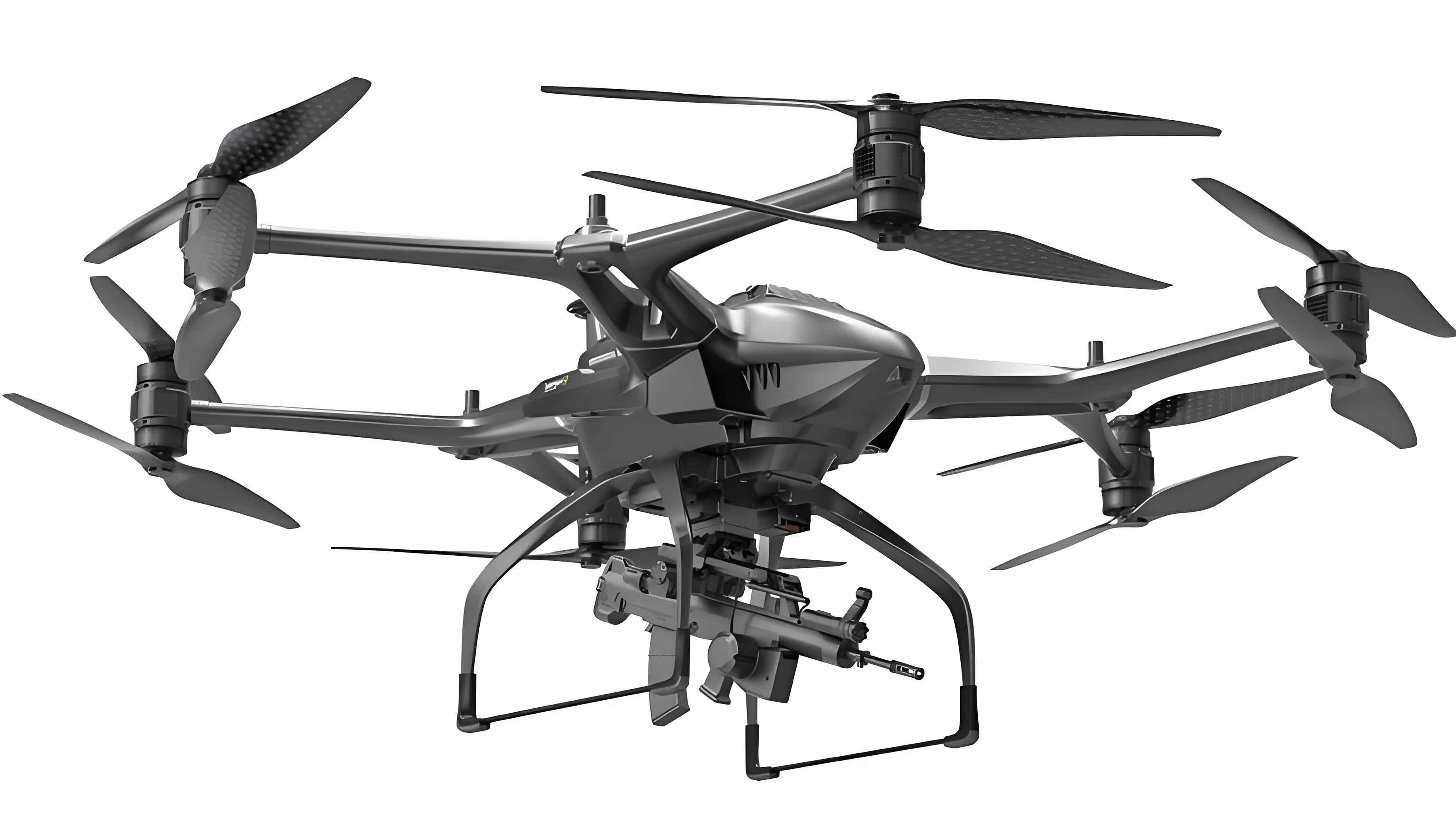
The classification of these systems is critical for regulation. We can categorize them along several axes, which are summarized in the table below. This taxonomy helps clarify the operational and regulatory challenges associated with each type. For instance, the regulatory approach for a small tactical military drone will differ vastly from that governing a strategic, weaponized system.
| Classification Axis | Categories | Typical Characteristics & Examples |
|---|---|---|
| Size/Endurance | Strategic (HALE/MALE) | High-Altitude Long Endurance (HALE), Medium-Altitude Long Endurance (MALE). Operate at 15,000+ ft for 24+ hours (e.g., RQ-4 Global Hawk, MQ-9 Reaper). |
| Tactical | Smaller, shorter range, used by battalion or company-level units for ISR (e.g., RQ-7 Shadow). | |
| Small/Mini/Micro | Hand-launched, short-range surveillance (<1 km range). Increasingly used for swarm tactics. | |
| Function/Payload | ISR (Non-kinetic) | Equipped with EO/IR sensors, SIGINT payloads. Primary role is information gathering. |
| Combat (Kinetic) | Armed with missiles or guided bombs (e.g., MQ-9 Reaper). | |
| Logistics/Support | Used for resupply, medical evacuation (MEDEVAC). | |
| Degree of Autonomy | Remotely Piloted | Human operator makes all critical decisions (take-off, navigation, weapon release). |
| Human-Supervised Autonomous | System performs predefined missions (e.g., patrol) with human oversight and veto authority. | |
| Fully Autonomous | System identifies, selects, and engages targets without real-time human intervention. (Largely hypothetical for kinetic strikes under current policies). |
The legal status of a military drone is unequivocal under international law: it is a state aircraft. Article 3 of the Chicago Convention explicitly states that the convention applies only to civil aircraft, not to “aircraft used in military, customs and police services.” Consequently, a military drone is not subject to the international civil aviation regulations promulgated by the International Civil Aviation Organization (ICAO) concerning airworthiness, registration, or operation. Its sovereignty is an extension of the state that operates it. However, this clear distinction in law belies a murkier reality in practice. The physical and operational characteristics of many military drone platforms, especially large MALE/HALE systems, are identical to civilian aircraft. They share the same airspace, use similar navigation protocols, and pose identical risks of collision or system failure. This creates a significant regulatory gap for air traffic management (ATM) in non-conflict zones or during transit flights.
Domestically, the regulation of a military drone is typically handled by national defense authorities and aviation bodies through classified or internal directives. There is little public transparency or international harmonization. For example, while the U.S. Federal Aviation Administration (FAA) has developed intricate rules for civilian small UAS (Part 107) and is pioneering Unmanned Traffic Management (UTM), the flight of a military drone in domestic airspace is governed by separate, often ad hoc, agreements between the Department of Defense and the FAA. The European Union’s new U-Space regulatory framework for drones explicitly excludes state aircraft. This bifurcated system is fraught with risk. Consider the formula for assessing mid-air collision risk, which is agnostic to the aircraft’s military or civilian status:
$$ P_{collision} = \rho \cdot A \cdot v_{rel} \cdot t $$
Where \( \rho \) is the spatial density of aircraft, \( A \) is the combined collision cross-section, \( v_{rel} \) is the relative velocity, and \( t \) is the exposure time. A military drone operating without full integration into ATM systems increases \( \rho \) and the uncertainty in \( v_{rel} \), thereby elevating \( P_{collision} \) for all airspace users.
The core legal challenges extend far beyond airspace integration. They strike at the heart of international humanitarian law (IHL) and human rights law. The use of armed military drone platforms for targeted strikes outside of internationally recognized conflict zones has been a source of intense controversy. The legal justifications often hinge on concepts like self-defense against non-state actors and the existence of a “transnational armed conflict.” Critics argue these interpretations dangerously expand the boundaries of lawful warfare and violate principles of sovereignty and proportionality.
Furthermore, increasing automation introduces the specter of lethal autonomous weapons systems (LAWS). While a fully autonomous military drone capable of selecting and engaging human targets without meaningful human control is not yet a widespread reality, the technological trajectory points in that direction. The central legal and ethical question can be framed as a constraint on a decision function:
$$ \text{Engagement Decision} = F(sensor input, target database, rules of engagement) $$
In a remotely piloted system, \( F \) is ultimately executed by a human. In an autonomous system, \( F \) is executed by an algorithm. The debate revolves around whether an algorithm can reliably satisfy the IHL principles of distinction (between combatants and civilians) and proportionality (balancing military advantage and collateral damage). The complexity of these calculations in dynamic environments suggests profound regulatory challenges ahead.
The proliferation of military drone technology to non-state actors and smaller nations further destabilizes the regulatory landscape. These actors are not bound by the same policy constraints as major powers, increasing the risks of misuse, escalation, and incidents leading to broader conflict. The following table outlines the primary legal and regulatory challenges and potential avenues for governance.
| Challenge Domain | Specific Issues | Potential Regulatory Mechanisms |
|---|---|---|
| Airspace Integration & Safety | Mid-air collision risk, loss of link procedures, spoofing/jamming resilience, interaction with civilian ATM. | Develop technical standards for detect-and-avoid (DAA), electronic identification (E-ID), and secure C2 links. Bilateral/multilateral agreements for transit flight procedures. |
| International Law & Use of Force | Legality of strikes outside war zones, sovereignty violations, accountability for civilian casualties, definition of “armed attack” triggering self-defense. | Greater transparency and reporting on strike criteria and outcomes. Multilateral dialogues to clarify and potentially revise interpretations of self-defense law. |
| Arms Control & Non-Proliferation | Rapid global proliferation, potential for arms races, transfer to non-state actors. | Inclusion of certain armed military drone categories in export control regimes (e.g., Missile Technology Control Regime – MTCR). Development of norms against transfer to unstable regions. |
| Ethics & Autonomous Systems | Delegation of life-and-death decisions to machines, algorithmic bias, accountability gaps (“responsibility vacuum”). | International negotiations on a legally binding instrument prohibiting fully autonomous LAWS. National policies mandating “meaningful human control” over critical functions. |
| Data Security & Privacy | Mass surveillance capabilities, interception of data links, cybersecurity of C2 infrastructure. | Application of data protection principles to ISR data. Enhanced encryption and cybersecurity standards for military drone systems. |
The operational effectiveness of a military drone is often modeled using an OODA (Observe, Orient, Decide, Act) loop. The speed and efficiency of this loop are seen as key advantages.
$$ \text{Operational Effectiveness} \propto \frac{1}{t_{OODA}} $$
where \( t_{OODA} \) is the time to complete the loop. However, from a regulatory and ethical standpoint, the “Decide” phase must incorporate legal compliance checks, which can be represented as a conditional function:
$$ \text{Act}_\text{legal} = \begin{cases}
\text{Execute Strike}, & \text{if } (IHL\_Distinction = True) \land (IHL\_Proportionality = True) \land (RoE = True) \\
\text{Abort}, & \text{otherwise}
\end{cases} $$
Ensuring this function is robust, especially in an automated or semi-automated military drone, is the paramount regulatory task.
Looking forward, the convergence of technologies—swarming AI, hypersonic flight, and dual-use civilian-military platforms—will further complicate the picture. A future military drone swarm’s behavior might be governed by emergent algorithms rather than centralized control. The regulatory response must be proactive, involving not just lawyers and statesmen but also engineers, ethicists, and civil society. Global governance, perhaps through a new multi-stakeholder forum or by strengthening existing bodies like the UN Group of Governmental Experts on LAWS, is essential. The goal cannot be to stifle innovation, but to channel it. The formula for sustainable security in the age of the military drone must balance capability with constraint:
$$ \text{Sustainable Security} = \frac{\text{Technological Capability} \times \text{Strategic Advantage}}{\text{Ethical Risk} \times \text{Legal Uncertainty}} $$
To maximize this quotient, we must work relentlessly to reduce the denominator—the ethical and legal risks born from inadequate regulation.
In conclusion, the military drone is not merely a new weapon but a transformative technology demanding an equally transformative legal and regulatory response. The current patchwork of national policies and contested international norms is insufficient. The challenges are multifaceted, spanning safety, law of armed conflict, arms control, and fundamental ethics. Addressing them requires building bridges between the defense and civilian aviation sectors, fostering transparent international dialogue on use-of-force norms, and establishing clear, legally binding prohibitions on the most dangerous applications of autonomy. The path forward is complex, but the imperative is clear: to harness the strategic value of the military drone while firmly embedding its development and use within a framework that upholds safety, security, and the enduring principles of international law. The future stability of global security depends on our collective will to navigate this uncharted airspace with wisdom and foresight.