
As I reflect on the recent wave of national standardizations, I am struck by their profound impact on shaping technological and environmental landscapes. The approval and release of these standards mark a pivotal moment in our journey toward sustainable development, enhanced security, and industrial innovation. In this comprehensive analysis, I will delve into the specifics of these standards, with a particular emphasis on the transformative role of civilian drones. Through detailed tables, mathematical formulations, and in-depth discussion, I aim to elucidate how these frameworks are setting new benchmarks across sectors.
The standardization initiative encompasses a diverse array of fields, from resource management to digital security. Each set of standards is designed to address critical gaps, drive quality improvements, and foster safer, more efficient practices. Let me begin by exploring the standards beyond the realm of civilian drones, to provide a holistic context.
Revitalizing Resources: Standards for Recycled Raw Materials
The newly revised standards for recycled raw materials, covering copper, copper alloys, and aluminum, establish a clear demarcation between waste and high-quality regenerated inputs. This clarity is crucial for improving product quality and process stability. From my perspective, these standards incentivize advanced recycling technologies while phasing out obsolete capacities, directly contributing to carbon peak and neutrality goals. The technical parameters can be summarized in the following table, which outlines key thresholds for classification:
| Material Type | Purity Threshold (Min %) | Contaminant Limit (Max ppm) | Primary Application |
|---|---|---|---|
| Recycled Copper | 99.5 | 200 | Electrical conductors, alloys |
| Recycled Copper Alloy | 95.0 | 500 | Machinery components, fittings |
| Recycled Aluminum | 98.0 | 300 | Automotive, packaging |
The economic and environmental benefit can be modeled using a simplified equation for carbon reduction impact:
$$ \Delta C = \sum_{i=1}^{n} (E_{virgin,i} – E_{recycled,i}) \times M_i \times CF $$
Where \( \Delta C \) is the total carbon reduction, \( E \) represents energy consumption per unit mass for virgin and recycled production of material \( i \), \( M_i \) is the mass of material processed, and \( CF \) is the carbon emission factor. This formula underscores how standardized high-quality inputs lower energy use and emissions.
Sustainable Agriculture: Livestock Waste Management Standards
The standards for monitoring livestock manure and managing farm environment and waste promote scientific assessment and resource utilization. They accelerate the transformation of waste into valuable products, enhancing environmental stewardship in animal husbandry. A key aspect is the quantification of nutrient cycles. The nitrogen balance in a farming system can be expressed as:
$$ N_{balance} = N_{input} – N_{output} = (N_{feed} + N_{fertilizer}) – (N_{product} + N_{loss}) $$
Where \( N_{loss} \) includes volatilization and runoff, which the standards aim to minimize through improved management practices. The following table illustrates target values for key waste parameters as per the new standards:
| Parameter | Target Range for Safe Reuse | Monitoring Frequency |
|---|---|---|
| Ammonia Concentration | < 50 mg/L | Monthly |
| Organic Matter Content | 30-60% | Quarterly |
| Pathogen Count (E. coli) | < 1000 CFU/g | Per batch |
Fortifying Cyberspace: Information Security Standards
In response to escalating cyber threats, the series of standards on information security technology stipulate requirements and test methods for network intrusion prevention, security auditing, anti-spam, and incident classification. These measures are vital for safeguarding data integrity and privacy. From a technical standpoint, the effectiveness of an intrusion prevention system (IPS) can be evaluated using metrics like detection rate \( D_r \) and false positive rate \( F_p \):
$$ D_r = \frac{T_p}{T_p + F_n} \times 100\% $$
$$ F_p = \frac{F_p}{F_p + T_n} \times 100\% $$
Where \( T_p \) is true positives, \( F_n \) is false negatives, and \( T_n \) is true negatives. The standards define thresholds for these metrics to ensure robust protection. A comparative table of key security domains is presented below:
| Security Domain | Primary Technical Requirement | Testing Method |
|---|---|---|
| Network Intrusion Prevention | Real-time signature analysis and anomaly detection | Penetration testing with simulated attacks |
| Cybersecurity Auditing | Comprehensive log collection and analysis | Audit trail verification and integrity checks |
| Anti-Spam | Content filtering and sender reputation systems | Volume and content-based spam testing suites |
| Incident Classification | Severity levels based on impact and scope | Scenario-based incident response drills |
Advancing Identification: Biometric Recognition Standards
The three standards on biometric recognition aim to regulate the market, improve accuracy and security, and foster healthy growth in identity verification industries. These standards cover modalities like fingerprint, facial, and iris recognition. Accuracy is often measured using the Equal Error Rate (EER), where false acceptance rate (FAR) equals false rejection rate (FRR):
$$ \text{EER} = \text{FAR} = \text{FRR} \quad \text{at the threshold } \theta $$
The standards set maximum EER values for different security levels. The table below summarizes performance criteria:
| Biometric Modality | Maximum EER (for Level 1 Security) | Data Protection Requirement |
|---|---|---|
| Facial Recognition | 0.1% | Encryption of facial templates |
| Fingerprint Recognition | 0.01% | Secure storage with access control |
| Iris Recognition | 0.001% | Anti-spoofing liveness detection |
Intelligent Transportation: In-Vehicle Network Standards
The series of standards for road vehicle local interconnected networks provide complete test methods for the electrical physical layer and protocol conformance. This guides product design, enhances development capability, and ensures consistency. The signal integrity on such networks can be described by the eye diagram metric, where the eye opening \( O_e \) must meet specified thresholds:
$$ O_e = V_{high} – V_{low} – 2 \times \sigma_{noise} $$
Where \( V_{high} \) and \( V_{low} \) are signal levels, and \( \sigma_{noise} \) is noise standard deviation. The standards define minimum \( O_e \) for reliable communication. Key protocol aspects are tabulated here:
| Network Layer | Key Parameter | Test Condition |
|---|---|---|
| Electrical Physical | Voltage Swing: 1.5V to 3.3V | Temperature range: -40°C to 125°C |
| Data Link | Bit Error Rate < 10^{-12} | Under electromagnetic interference |
| Protocol Conformance | Message latency < 10 ms | High bus load scenarios |
Ensuring Safety: Electrical Equipment and Urban Risk Standards
The revised mandatory national standard “Technical Specification for Safety of Electrical Equipment” covers common safety requirements for low-voltage equipment (AC below 1000 V, DC below 1500 V), setting a baseline to protect users. The risk of electric shock can be quantified by the touch voltage \( V_t \) and body impedance \( Z_b \):
$$ I_{body} = \frac{V_t}{Z_b} $$
The standard limits \( I_{body} \) to safe levels (typically below 5 mA). Similarly, the urban safety risk assessment standard provides methodological guidance for evaluating public safety risks, enhancing emergency management. The risk score \( R \) for an urban hazard can be computed as:
$$ R = P \times S $$
Where \( P \) is probability of occurrence and \( S \) is severity impact, both normalized on scales defined by the standard. A summary of safety thresholds is:
| Equipment Type | Maximum Leakage Current | Insulation Resistance (Min) |
|---|---|---|
| Household Appliances | 0.25 mA | 2 MΩ |
| Industrial Tools | 0.75 mA | 1 MΩ |
| Medical Devices | 0.1 mA | 5 MΩ |
The Dawn of a New Era: Civilian Drones and Their Mandatory Safety Standard
Now, I turn my focus to a domain of particular personal and societal interest: civilian drones. The release of the first mandatory national standard for civilian drones, titled “Safety Requirements for Civilian Unmanned Aircraft System Products,” represents a watershed moment. As civilian drones proliferate across agriculture, forestry, logistics, emergency response, and environmental monitoring, their unregulated use posed significant risks, including “rogue flights” and safety hazards due to inconsistent product quality. This standard, effective from June 1, is a cornerstone for managing civilian drones, supporting the broader unmanned aircraft flight management regulations.
From my standpoint, this standard is not merely a technical document; it is a framework that will shape the future of civilian drones. It applies to micro, light, and small civilian drones (excluding model aircraft), mandating 17 areas of technical requirements with corresponding test methods. These include electronic fences, remote identification, emergency handling, structural strength, and data link protection, among others. The holistic approach ensures that civilian drones are designed, produced, and operated with safety as the paramount concern.
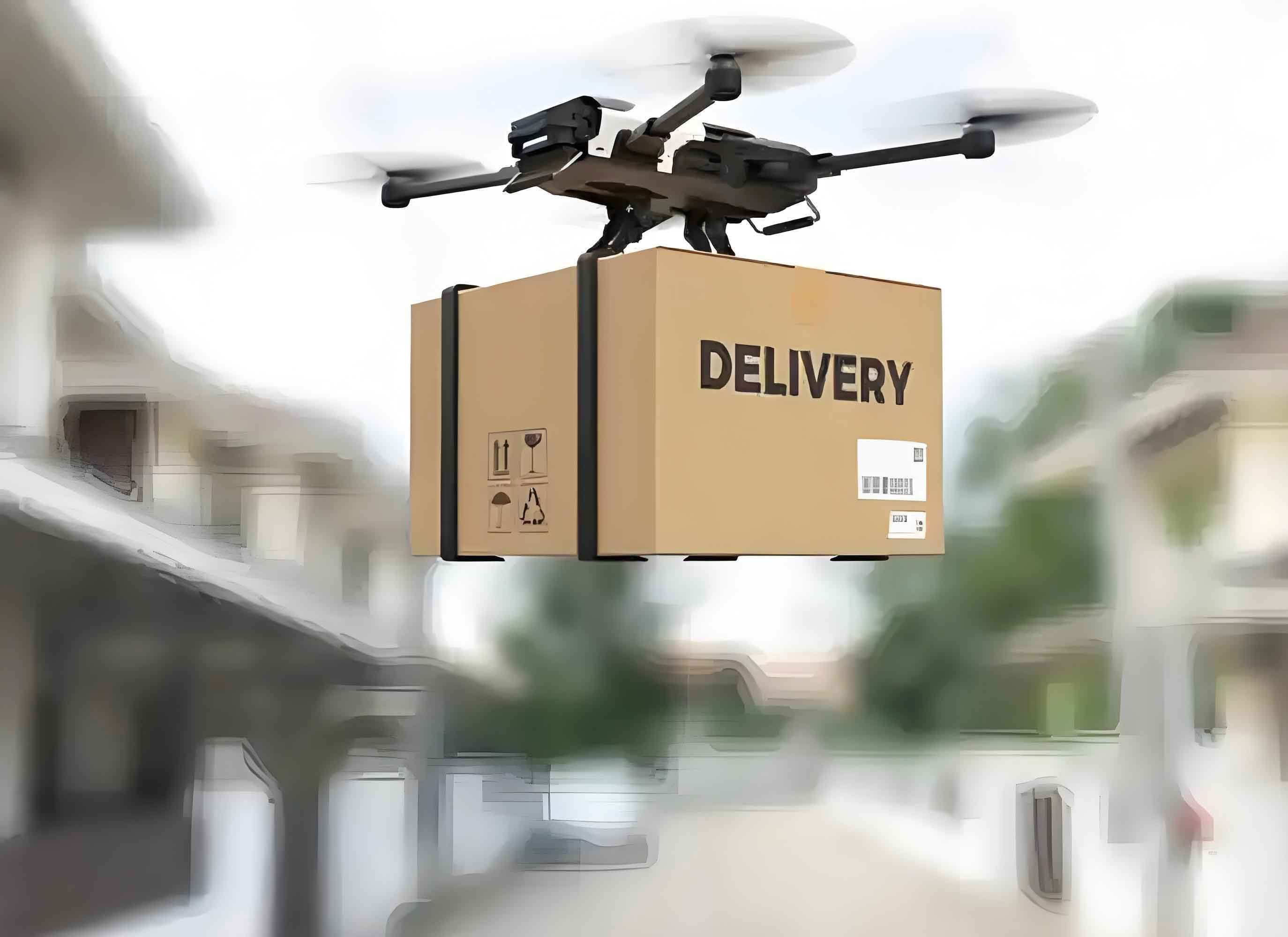
To illustrate the technical rigor, consider the requirement for “perception and avoidance” systems in civilian drones. The minimum detection distance \( D_{min} \) for obstacles can be derived from the drone’s maximum speed \( v_{max} \) and reaction time \( t_r \):
$$ D_{min} = v_{max} \times t_r + \frac{v_{max}^2}{2a} $$
Where \( a \) is the deceleration capability. The standard specifies \( D_{min} \) values based on drone categories. Similarly, for electronic fences, the geofencing accuracy \( \Delta G \) must satisfy:
$$ \Delta G \leq 10 \text{ meters} \quad \text{for urban areas} $$
This ensures that civilian drones remain within authorized zones, mitigating security risks.
The following table encapsulates the core mandatory requirements for civilian drones as per the new standard, highlighting how each contributes to safety and reliability:
| Requirement Area | Technical Specification | Test Method Summary |
|---|---|---|
| Electronic Fence | Pre-programmed no-fly zones with automatic compliance | Simulated flight tests near restricted coordinates |
| Remote Identification | Real-time broadcast of ID, location, and altitude | Signal interception and decoding verification |
| Structural Strength | Withstand 1.5 times maximum operational load | Static and dynamic load testing in labs |
| Power Energy System | Battery safety: overcharge/discharge protection | Thermal runaway and cycle life testing |
| Perception and Avoidance | Detect obstacles within 30 meters for light drones | Obstacle course flights with sensor validation |
| Data Link Protection | Encryption for command and control signals | Cybersecurity penetration attempts |
| Electromagnetic Compatibility | No interference with other radio services | Emission and immunity testing per bands |
| Noise Level | Limit of 75 dB(A) at 3 meters distance | Acoustic measurement in anechoic chambers |
The economic and operational implications for civilian drones are profound. By standardizing safety, the barrier to entry for responsible manufacturers is lowered, while substandard products are phased out. This fosters innovation in civilian drones, encouraging advancements in autonomy, payload capacity, and energy efficiency. For instance, the standard’s focus on “controllability” ensures that civilian drones can maintain stable flight under wind disturbances, which is critical for applications like delivery or surveillance. The wind resistance requirement can be modeled as:
$$ F_{wind} = \frac{1}{2} \rho C_d A v_{wind}^2 \leq T_{max} $$
Where \( \rho \) is air density, \( C_d \) is drag coefficient, \( A \) is frontal area, \( v_{wind} \) is wind speed, and \( T_{max} \) is maximum thrust. The standard sets minimum \( v_{wind} \) thresholds (e.g., 10 m/s for small drones) that civilian drones must withstand.
Moreover, the standard’s emphasis on “anti-error” design prevents user mishandling, a common issue with civilian drones. This includes intuitive interfaces and fail-safe mechanisms. As I analyze these provisions, it becomes clear that the ecosystem for civilian drones is being fortified from the ground up. The integration of remote identification, for example, enables authorities to monitor civilian drones in real-time, addressing concerns about rogue operations. This aligns with global trends toward digital accountability for civilian drones.
Synergistic Impacts and Future Trajectories
The interplay between these standards creates a synergistic effect. For example, the information security standards bolster the data link protection required for civilian drones, ensuring that communication channels are resilient against cyber threats. Similarly, the urban risk assessment standards can incorporate risks posed by civilian drones, such as mid-air collisions or privacy intrusions, into broader city safety plans. From my perspective, this holistic standardization approach is essential for navigating the complexities of modern technology.
Looking ahead, I anticipate further evolution in standards for civilian drones, particularly as they integrate with smart city infrastructures and Internet of Things (IoT) networks. Areas like beyond-visual-line-of-sight (BVLOS) operations, swarm coordination, and artificial intelligence-driven navigation will necessitate updated frameworks. The current standard lays a robust foundation, but continuous refinement will be key as civilian drones become more pervasive.
In conclusion, the recent national standards represent a comprehensive stride toward quality, safety, and sustainability. While each set of standards addresses distinct challenges, the collective impact is transformative. Among these, the mandatory standard for civilian drones stands out as a critical enabler for safe and innovative aerial technologies. By adhering to these frameworks, industries can unlock new potentials, mitigate risks, and contribute to societal well-being. As we embrace this era of standardized dynamism, the promise of civilian drones and other advanced technologies becomes ever more attainable, guided by the principles of excellence and responsibility.