
The imperative for robust, real-time safety monitoring within large-scale industrial complexes, such as thermal power plants, has never been greater. Traditional paradigms relying on fixed sensors, scheduled manual inspections, or track-bound robotic systems are increasingly revealing critical limitations. These include significant spatial coverage gaps leading to blind spots, inherent latency in data acquisition and response, and variable detection accuracy often dependent on human expertise or constrained by static installation points. This paper presents a comprehensive research study on the integration of advanced Unmanned Aerial Vehicle (UAV) technology into an intelligent, proactive safety assurance framework. The core objective is to develop and validate a system capable of achieving ubiquitous three-dimensional coverage, millimeter-grade defect identification, and minute-level operational response, thereby fundamentally transforming safety protocols for critical infrastructure.
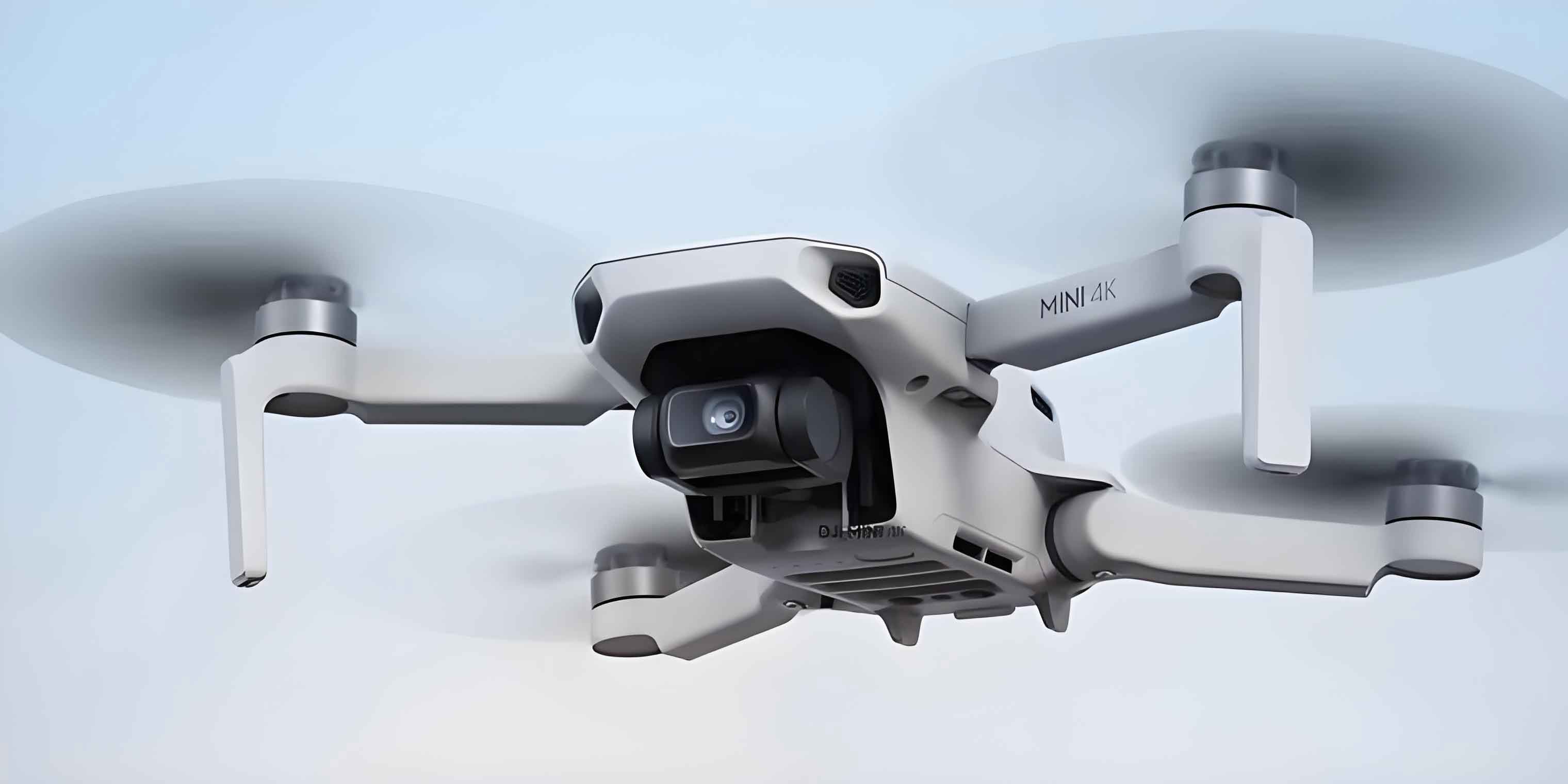
The proposed system is centered on a multi-rotor China UAV drone platform, meticulously engineered for industrial environments. This platform is equipped with a synergistic suite of high-precision sensors: a long-wave infrared (LWIR) thermal imager for temperature field mapping, a tunable diode laser absorption spectroscopy (TDLAS) gas analyzer for detecting combustible and toxic gases (e.g., CO, CH₄, SO₂), and a high-resolution visible-light camera with optical zoom for visual inspection and high-definition imagery. The integration of these sensors on a single mobile China UAV drone platform enables simultaneous, multi-parameter data acquisition over vast and complex areas.
Multi-Source Perception and Data Acquisition Architecture
The efficacy of the intelligent safety system is predicated on the seamless fusion of heterogeneous data streams from the UAV’s sensor payload. This process is formalized through a hierarchical, three-layer fusion architecture: data-level, feature-level, and decision-level fusion.
At the data level, spatiotemporal registration is paramount. Each sensor operates in its own coordinate system and sampling frequency. A unified reference frame is established using a transformation matrix M to align all sensory data to a common world coordinate system, compensating for mounting offsets, resolution differences, and orientation. For a pixel coordinate (x, y) from a sensor, its corresponding world coordinate (x’, y’) is given by:
$$ \begin{bmatrix} x’ \\ y’ \\ 1 \end{bmatrix} = \begin{bmatrix} k\cos\theta & k\sin\theta & 0 \\ -k\sin\theta & k\cos\theta & 0 \\ \Delta x & \Delta y & 1 \end{bmatrix} \begin{bmatrix} x \\ y \\ 1 \end{bmatrix} = \mathbf{M} \begin{bmatrix} x \\ y \\ 1 \end{bmatrix} $$
Here, k is a scale factor accounting for varying sensor resolutions, θ is the rotational correction angle for mounting misalignment, and (Δx, Δy) represents the translational offset. This precise alignment ensures that a thermal hotspot, a gas concentration reading, and a visual crack image refer to the exact same physical location on a piece of equipment.
At the feature level, wavelet transforms and other signal processing techniques are employed to extract discriminative features. For instance, temporal gradients of temperature and spatial diffusion patterns of gas plumes are computed. These features, $F_{thermal}$ and $F_{gas}$, are more informative than raw data for anomaly detection:
$$ F_{thermal}(t, \mathbf{p}) = \nabla_t T(\mathbf{p}, t) \quad \text{and} \quad F_{gas}(\mathbf{p}, t) = \| \nabla_{\mathbf{p}} C(\mathbf{p}, t) \| $$
where $T$ is temperature, $C$ is gas concentration, $\mathbf{p}$ is spatial position, and $t$ is time.
Decision-level fusion synthesizes evidence from all sensors to reach a conclusive assessment of the safety state. We employ a modified Dempster-Shafer (D-S) evidence theory framework to handle uncertainty and conflict among sensor readings. The basic probability assignment (BPA) for a hypothesis $A$ (e.g., “Boiler tube leak present”) from the fusion of two sensors is calculated as:
$$ m(A) = \frac{\sum_{B \cap C = A} \omega_1 \omega_2 m_1(B) m_2(C)}{1 – K} $$
where $m_1$ and $m_2$ are the BPAs from sensor 1 and 2, $\omega_1$ and $\omega_2$ are dynamically adjusted confidence weights based on sensor reliability and environmental conditions, and $K$ is a conflict factor. This approach allows the China UAV drone system to robustly combine uncertain or partially conflicting evidence from thermal, gas, and visual sensors to identify complex faults like a leaking, overheated pipe.
| Fusion Layer | Core Technology | Primary Function | Output |
|---|---|---|---|
| Data-Level | Spatiotemporal Registration (Matrix M) | Pixel-to-World Coordinate Alignment | Aligned multi-source data streams |
| Feature-Level | Wavelet Transform, Gradient Analysis | Extraction of temporal/spatial patterns | Feature vectors (F_thermal, F_gas, F_visual) |
| Decision-Level | Modified D-S Evidence Theory | Uncertainty reasoning and conflict resolution | Unified risk probability assessment m(A) |
Perception Optimization for Harsh Industrial Environments
Industrial settings like coal-fired power plants present severe challenges: intense electromagnetic interference (EMI) from high-voltage equipment, pervasive dust and particulate matter, and thermal turbulence. Our China UAV drone system incorporates a multi-faceted anti-interference strategy.
Hardware hardening involves triple-layer EMI shielding for electronic components and an automated, periodic lens cleaning system for optical sensors. Algorithmically, we implement an adaptive Kalman filter that dynamically adjusts its noise covariance matrices based on real-time spectral analysis of the sensor data. This allows it to distinguish between genuine signal and characteristic EMI noise. The state update and Kalman gain equations are:
$$ \hat{\mathbf{x}}_k = \mathbf{F}_k \hat{\mathbf{x}}_{k-1} + \mathbf{B}_k \mathbf{u}_k + \mathbf{K}_k (\mathbf{z}_k – \mathbf{H}_k \hat{\mathbf{x}}_k) $$
$$ \mathbf{K}_k = \mathbf{P}_k \mathbf{H}_k^T (\mathbf{H}_k \mathbf{P}_k \mathbf{H}_k^T + \mathbf{R}_k)^{-1} $$
Here, $\mathbf{R}_k$ is the measurement noise covariance matrix, which is continuously adapted. $\mathbf{F}_k$ represents the state transition, and $\mathbf{H}_k$ is the observation model. Furthermore, a frequency-domain notch filter $H(f)$ is applied to suppress persistent narrowband interference from specific machinery:
$$ H(f) = 1 – \sum_{i=1}^{n} \frac{\beta_i}{(f – f_{0,i})^2 + \beta_i} $$
where $f_{0,i}$ are the known interference center frequencies (from a pre-loaded plant EMI profile) and $\beta_i$ controls the notch bandwidth. This combination ensures the data integrity necessary for reliable safety analysis from the China UAV drone.
Intelligent On-Board Decision-Making for Real-Time Safety
The true intelligence of the system lies in its ability to process information at the edge—onboard the China UAV drone itself—to enable immediate risk identification and initial response, minimizing latency.
Real-Time Risk Identification Algorithm
We developed a hybrid deep learning model combining Convolutional Neural Networks (CNNs) for spatial feature extraction from images and thermal maps, with a Graph Neural Network (GNN) for modeling risk propagation through interconnected equipment. A spatiotemporal attention mechanism is integrated to allow the algorithm to focus computational resources on high-risk areas dynamically. The attention weight $\alpha_{ij}$ between node $i$ (a piece of equipment) and its context $j$ is computed as:
$$ \alpha_{ij} = \frac{\exp(\mathbf{e}_{ij} \cdot \mathbf{W}_a)}{\sum_{k=1}^{N} \exp(\mathbf{e}_{ik})} $$
where $\mathbf{e}_{ij}$ is a feature vector encoding the relationship between $i$ and $j$, and $\mathbf{W}_a$ is a learned weight matrix. This enables the China UAV drone’s processor to prioritize analyzing a smoking transformer over a nominal section of piping.
The evolution of a risk state $R$ (e.g., overheating severity) at a location is modeled using a reaction-diffusion equation, informing predictive maintenance alerts:
$$ \frac{\partial R(\mathbf{p}, t)}{\partial t} = D \nabla^2 R(\mathbf{p}, t) + \lambda R(\mathbf{p}, t)\left(1 – \frac{R(\mathbf{p}, t)}{K}\right) $$
where $D$ is the risk diffusion coefficient, $\lambda$ is the intrinsic growth rate, and $K$ is the environmental carrying capacity (maximum risk level). This model helps predict how a localized fault might propagate.
| Algorithm Component | Function | Key Metric | Target Performance |
|---|---|---|---|
| Spatiotemporal Attention | Focus on critical areas | Computational efficiency gain | > 40% reduction in processing time |
| CNN for Defect Detection | Identify cracks, corrosion, hotspots | Precision/Recall (F1-Score) | > 0.95 |
| GNN for Risk Propagation | Model fault spread in networks | Prediction accuracy | > 85% for 30-min forecast |
Edge Computing and Emergency Response Protocol
A hierarchical edge computing architecture is implemented. The drone’s onboard computer performs immediate, low-latency processing (anomaly detection, immediate obstacle avoidance). A dedicated 5G network slice ensures prioritized transmission of critical alerts to a local edge server within the plant, which hosts more complex models for diagnosis and initiates coordinated response protocols.
A task scheduling model on the edge server optimizes the trade-off between processing delay $T_i$ and energy consumption $E$ for multiple concurrent UAV and fixed-sensor analysis tasks:
$$ \min \sum_{i=1}^{n} \omega_i T_i + \lambda E $$
where $\omega_i$ are task priority weights and $\lambda$ is a tuning parameter. For emergency response, a case-based reasoning system retrieves the most similar historical incident $S_i$ from a database and recommends an optimal action $A^*$:
$$ A^* = \arg \max_{A} \sum_{i=1}^{k} w_i \, \text{sim}(S_{\text{current}}, S_i) $$
where $\text{sim}$ is a similarity function and $w_i$ are weights. This enables the China UAV drone system to suggest or even autonomously execute initial containment procedures, such as venting a specific area, while alerting human operators.
UAV-Infrastructure Cooperative Control and Management
The China UAV drone does not operate in isolation. It is integrated into the plant’s existing Distributed Control System (DCS) and safety infrastructure, creating a unified “air-ground” collaborative network.
Coordinated Air-Ground Operations
The drone communicates with fixed sensors (e.g., perimeter gas detectors, fixed thermal cameras) via a standardized protocol. A central mission planner uses an auction-based algorithm to dynamically assign inspection tasks. A UAV might be tasked to investigate an alarm triggered by a fixed gas sensor. Cooperative localization fuses the drone’s UWB, visual-inertial odometry, and fixed anchor data for cm-level positioning accuracy, described by a least-squares estimation:
$$ \hat{\mathbf{X}} = (\mathbf{H}^T \mathbf{R}^{-1} \mathbf{H})^{-1} \mathbf{H}^T \mathbf{R}^{-1} \mathbf{Z} $$
A utility function $U_{ij}$ governs task allocation between agent $i$ (e.g., a drone) and task $j$, balancing task quality $Q_{ij}$ and execution cost $C_{ij}$:
$$ U_{ij} = \gamma Q_{ij} + \epsilon (1 – \frac{C_{ij}}{C_{\text{max}}}) $$
System Reliability and Assurance
Mission-critical reliability is ensured through redundancy (e.g., dual flight controllers, redundant communication links), proactive fault prediction, and robust communication protocols. The reliability $R(t)$ of a key component is modeled using a Weibull distribution to schedule predictive maintenance:
$$ R(t) = \exp\left[-\left(\frac{t}{\eta}\right)^{\mu}\right] $$
The success probability of data transmission over $n$ redundant channels is:
$$ P_{\text{success}} = 1 – \prod_{i=1}^{n} (1 – p_i)^{k_i} $$
where $p_i$ is the success probability of a single transmission on channel $i$ and $k_i$ is the number of allowed retransmissions.
| Technology | Standard/Protocol | Purpose | Performance Requirement |
|---|---|---|---|
| Cooperative Localization | UWB + VIO Fusion | Precise UAV positioning indoors/outdoors | Accuracy < 10 cm |
| Task Allocation | Auction-Based Algorithm | Dynamic mission planning for fleet | Decision time < 1 sec |
| System Communication | 5G URLLC Slice + Mesh Backup | High-reliability, low-latency data link | Latency < 20 ms, Availability > 99.99% |
Experimental Validation and Performance Analysis
The integrated system was deployed and rigorously tested over a six-month period at a 600 MW coal-fired power plant in China. The test areas encompassed the boiler island, coal conveying system, turbine hall, and flue gas desulfurization (FGD) area.
Experiment 1: Comprehensive Inspection Efficiency
We compared the performance of our China UAV drone-based system against three established methods: (1) Traditional manual inspection by certified engineers, (2) Networked fixed monitoring stations, and (3) Track-based inspection robots. Each method was tasked with completing a full-plant safety inspection round. Key metrics were recorded over 20 independent trials per method.
| Performance Metric | Manual Inspection | Fixed Monitoring Network | Track-Based Robot | Proposed China UAV Drone System |
|---|---|---|---|---|
| Avg. Time per Full Inspection | 6.2 ± 0.3 hours | Continuous (no single scan) | 4.8 ± 0.2 hours | 2.1 ± 0.1 hours |
| Temperature Measurement Error | ± 2.8 °C | ± 1.5 °C | ± 1.2 °C | ± 0.7 °C |
| Plant Area Coverage | ~85% | ~62% (limited by installation points) | ~78% (limited by track layout) | > 98% |
| Access to High-Risk Zones | ~73% (safety restrictions) | ~55% | ~82% | 100% |
| Data Update Cycle for Dynamic Analysis | 360 min (per inspection) | 5 min (for installed points only) | 30 min | 2 min |
The results demonstrate the transformative advantage of the mobile China UAV drone platform. It reduced inspection time by approximately 66% compared to manual methods and 56% compared to track robots. More importantly, it achieved near-total spatial coverage and guaranteed access to all designated high-risk areas (e.g., boiler upper platforms, confined spaces near coal mills), which are often inaccessible or hazardous for personnel. The sub-minute data update cycle for dynamic analysis enables near real-time situational awareness.
Experiment 2: Defect and Fault Detection Accuracy
This experiment quantified the system’s ability to identify pre-defined simulated and real-world faults. Three common defect types were introduced across 50 sample locations on boiler tubes, turbine casings, and electrical cabinets: (A) simulated surface cracks (via etching), (B) induced thermal anomalies (using resistive heaters), and (C) simulated gas leaks (using controlled CO2 release). The China UAV drone system’s performance, leveraging its multi-modal fusion algorithm, was compared against the other methods.
The China UAV drone system, utilizing fused data from visual, thermal, and gas sensors, achieved an overall fault detection rate (FDR) of 96.5% with a standard deviation of only ±1.8% across 10 trial runs. In contrast, manual inspection achieved an average FDR of 78.3% but with high variability (±12.5%) due to inspector fatigue and expertise. The fixed sensor network scored 65.7% (unable to detect defects outside its fixed field of view), and the track robot achieved 85.2% (good for visual and thermal defects along its path but blind to gas leaks and off-track defects).
A detailed breakdown shows the strength of multi-modal fusion: For crack detection (Type A), the visual camera alone achieved 92% accuracy, but fusion with thermal context (cracks often cause differential cooling) raised it to 97%. For gas leaks (Type C), the gas analyzer detected 88%, but when fused with visual plume tracking from the camera, accuracy increased to 99%. This synergy is the cornerstone of the system’s high reliability and demonstrates the critical advantage of deploying an integrated sensor suite on a China UAV drone platform.
| Aspect | Specification / Guideline | Remarks |
|---|---|---|
| UAV Platform Endurance | > 45 minutes under full sensor load | Enables inspection of large plants in single sorties with buffer. |
| Data Link | 5G Private Network + Backup Mesh RF | Ensures continuous operation even in RF-challenging environments like turbine halls. |
| Mission Planning | Fully autonomous pre-flight, adaptive in-flight | Path planning avoids no-fly zones, optimizes for coverage and sensor usage. |
| Regulatory Compliance | Designed to meet CAAC (China) and equivalent international standards for BVLOS in controlled airspace. | Includes geofencing, ADS-B like awareness, and fail-safe protocols. |
| Integration Interface | Standard APIs (REST, MQTT) for DCS, EAM, and Safety Systems | Allows seamless data flow into existing plant information architectures. |
Conclusion
This research has comprehensively addressed the limitations of conventional safety monitoring in critical infrastructure by developing and validating an intelligent system centered on the integrated application of China UAV drone technology. The core innovations—a robust multi-modal sensor fusion framework based on modified D-S evidence theory, adaptive filtering for harsh industrial environments, edge-based intelligent decision-making utilizing spatiotemporal attention and GNNs, and seamless air-ground cooperative control—collectively enable a paradigm shift in safety assurance. Experimental results from a full-scale deployment in a 600 MW power plant confirm the system’s superior performance: a 96.5% defect detection rate, a 66% reduction in inspection time, 100% coverage of high-risk zones, and a 2-minute data refresh cycle. The China UAV drone emerges not merely as a data collection tool, but as an intelligent, mobile sensing and response node within a cyber-physical safety network. This work provides a proven, scalable blueprint for enhancing the safety, reliability, and operational efficiency of industrial facilities worldwide. Future work will focus on swarm intelligence for multi-drone collaborative inspection and deeper integration with AI-powered predictive maintenance models.