
From my perspective, the rapid socio-economic development has led to increasingly diverse and technologically sophisticated methods employed by criminals, posing severe challenges to contemporary public security work. The assistance of police Unmanned Aerial Vehicles (UAVs) in investigative and evidence-gathering activities has revolutionized traditional investigative approaches. It addresses the weak coordination among different police units and significantly enhances the efficiency of law enforcement officers. This article analyzes and summarizes the existing problems in the application of police UAVs in investigation and proposes corresponding countermeasures. Against the backdrop of public security big data and smart policing initiatives, police UAVs, as an emerging product of policing technology, continue to develop and improve. I believe they will undoubtedly become an indispensable force in policing work within the information society.
The origin of China UAV drone technology dates back to the 1980s. After decades of latency, drones have now become a leading technological trend. With the modernization and technologization of China’s public security forces, police UAVs have begun to play a prominent role. In 2017, the Ministry of Public Security issued the “Police Unmanned Aircraft Systems” series of industry standards, which strictly regulate the product performance and technical specifications of police UAVs and provide guidance for their application and research, propelling the development of China UAV drone technology in the policing domain. In emergency incidents, police UAVs seamlessly integrate rear command centers with front-line operations. With their small size, high speed, strong maneuverability, and high concealment, they demonstrate unparalleled advantages, effectively improving case-handling efficiency. The combined model of technology and human effort reduces investigative errors caused by external factors, ensures officer safety during law enforcement, enhances the capability to combat criminals, and better safeguards people’s lives and property. In investigative work, police UAVs break through traditional methods, enabling the tracking of clues over a larger area, providing immense convenience, and improving the efficiency of evidence collection. This analysis, grounded in practical public security work, examines the dilemmas faced by police UAVs in criminal investigation and social order maintenance, considering the current state and future trends of China UAV drone development. The proposed strategies hold significant importance for the advancement of police UAVs in the new era.
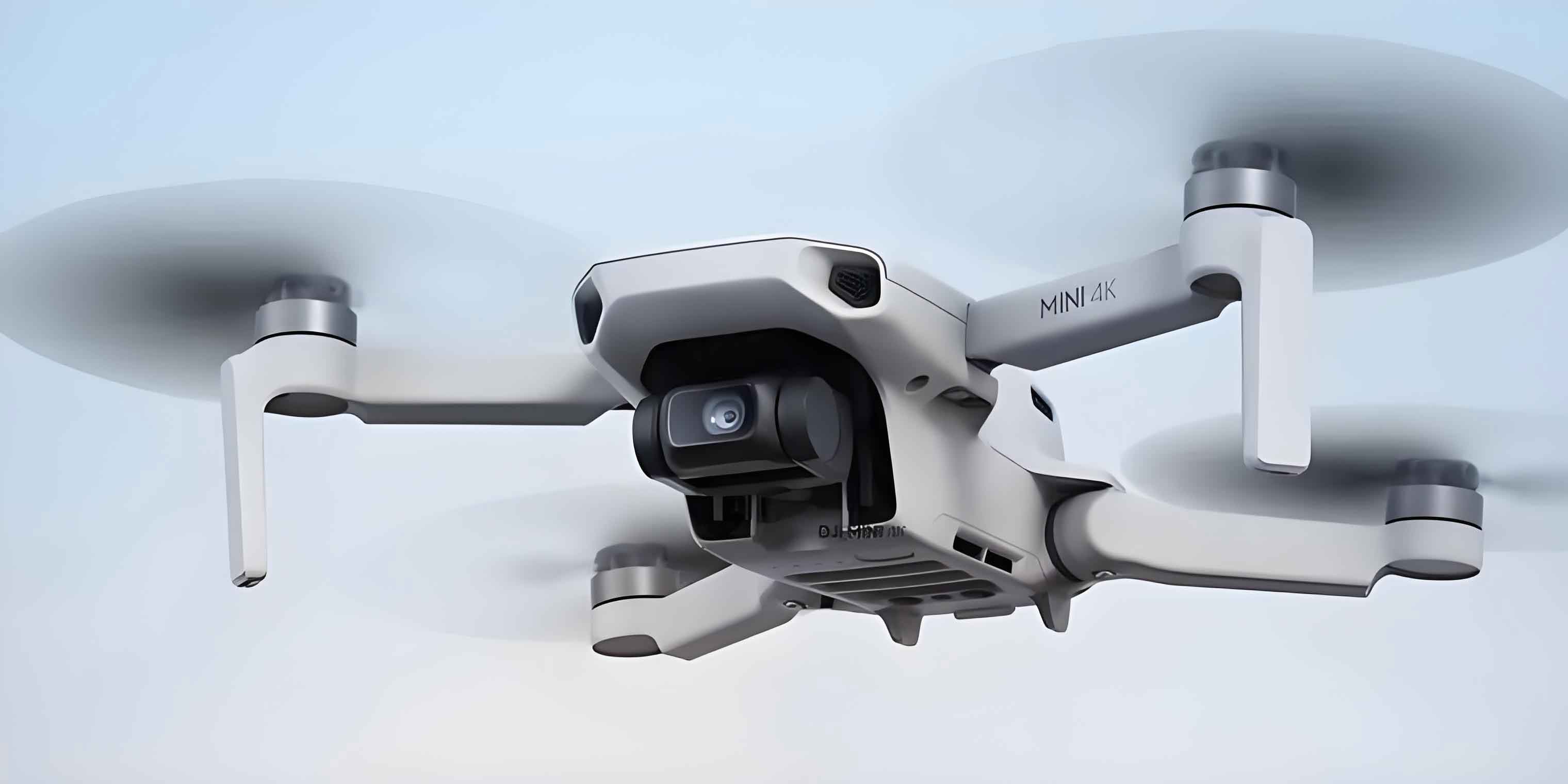
Overview of Police UAVs
Concept of Police UAVs
Police UAVs fall under the category of industrial-grade drones, with more complex functional and performance requirements compared to consumer-grade models. They are not only a crucial component of UAV applications in policing but also represent a vital aspect of civil-military integration in China UAV drone technology. According to the “Industry Standards of the People’s Republic of China for Public Security,” a police unmanned aircraft refers to an aircraft equipped by public security organs, suitable for performing policing tasks, and operated without an on-board pilot. Based on the UAV platform, they are fitted with corresponding systems tailored to policing needs, enhancing specific performance characteristics.
Types of Police UAVs
Currently, the police UAVs deployed on a large scale in China are mainly categorized into fixed-wing, flapping-wing, and multi-rotor types. Based on their functions, they can be further classified, as summarized in the table below.
| Type | Primary Function | Key Application in Investigation |
|---|---|---|
| Scene Preservation Type | Maintains order at crime scenes, sets markers to prevent contamination or destruction. | Preserves the integrity of the initial scene for forensic analysis. |
| Investigation & Evidence Collection Type | Conducts detailed aerial reconnaissance and evidence gathering using high-resolution sensors. | Documents scenes from multiple angles, captures overviews of large or inaccessible areas. |
| Technical Support Type | Analyzes evidence, provides scientific backing for case resolution. | Performs spectral analysis, 3D scene reconstruction, or other specialized technical tasks. |
| Tracking & Apprehension Type | Tracks and locates suspects, confirms positional information. | Provides real-time aerial surveillance during pursuits, assists in containment and arrest operations. |
| Emergency Rescue Type | Ensures safety of civilians and officers during high-risk operations. | Delivers supplies, assesses dangerous situations, provides aerial illumination or communication relay. |
Current Application Status in Investigative Activities
The modern China UAV drone fleet is deployed across various policing scenarios, enhancing operational capabilities significantly.
1. Assisting Officers in High-Risk Missions: In counter-terrorism and emergency response operations, police UAVs equipped with cameras, low-light TV systems, infrared scanners, and LiDAR perform reconnaissance and suspect searches. They can access large, complex, or socially sensitive areas where ground teams cannot operate safely, thereby protecting officers and providing critical intelligence for command decisions.
2. Assisting Traffic Police in Scene Investigation: In major traffic accidents within dense urban environments, UAVs enable rapid scene assessment. They capture data, create 3D reconstructions, and transmit information to command centers. This mitigates issues from scene contamination, ensures comprehensive and accurate investigation, aids in rapid clearance to reduce congestion, and, with lighting modules, facilitates night-time assessment.
3. Conducting Night-time Reconnaissance: Overcoming the limitations of low-light conditions, UAVs equipped with infrared thermal imaging and high-definition visible light sensors conduct effective night operations. The high thermal sensitivity allows for locating heat signatures to pinpoint suspects. UAVs can also provide aerial illumination to guide subsequent ground teams.
| Application Scenario | Key UAV Functions | Primary Technical/Operational Demands |
|---|---|---|
| Counter-Terrorism & Raids | Real-time reconnaissance, suspect tracking, tactical support. | Stealth, real-time HD video transmission, resistance to electronic interference, potential offensive/defensive payloads. |
| Traffic Accident Investigation | Rapid scene modeling, data collection, traffic flow management. | High-precision positioning, 3D modeling software, efficient data link in urban canyons. |
| Night-time Surveillance | Thermal imaging, covert monitoring, illumination. | High-sensitivity thermal sensors, low-noise operation, extended endurance in darkness. |
| Narcotics Plant Eradication | Large-area surveillance, pattern identification, evidence documentation. | Long endurance, high-resolution wide-area sensors, GPS mapping integration. |
| Indoor/Special Environment Reconnaissance | Close-quarters inspection, hazardous environment assessment. | Collision avoidance, compact size, stable flight in GPS-denied areas, specialized sensors. |
Application Dilemmas of Police UAVs in Investigative Activities
Lack of Supporting Investigative Tactics and Techniques
Since 2017, specialized training for police UAV operation has been promoted. However, China still lacks a comprehensive training system. While there are nearly 8000 UAV operators in public security organs, most have mastered only basic flight skills without sufficient tactical experience for diverse investigative scenarios. There is no established system of UAV-specific investigative tactics. For instance, during narcotics plant detection, tactics should prioritize stealth and a global overview—conducting high-altitude surveys to identify cultivation areas before coordinating with ground teams. In counter-terrorism, operators should use UAVs for intelligence gathering on suspect numbers, locations, and armaments, and potentially engage directly with tactical payloads. For indoor scene investigation, specific flight patterns must balance data collection with evidence preservation. This gap highlights a need for tactical doctrine tailored to the China UAV drone platform.
Lagging Development of Information Interaction During Investigation
Police UAVs primarily collect and transmit real-time audio-visual data to command centers for analysis. However, the real-time interaction between UAV technology and policing information platforms lags behind the advancement of public security big data and smart policing, creating a bottleneck. Typically, the UAV discovers a target, transmits data to the ground operator, who then relays information to command for confirmation and decision-making. This linear, multi-step process involves handling massive data streams under high pressure, increasing the risk of errors. Effective real-time image transmission and data relay require integration with a complete policing information platform, not just a single data link. The relatively late start of China UAV drone informatization means related technologies are still exploratory. The滞后 development impedes leveraging the UAV’s full potential, failing to fuse front-line data with back-end centers, thereby imposing significant pressure on command staff.
Insufficient Adaptability of UAV Hardware Technology to Investigative Activities
The effectiveness of police UAVs hinges on how well their technological development aligns with investigative work. Currently, a gap exists. Most police UAVs are multi-rotor types powered by lithium-polymer batteries, which offer the poorest payload and endurance among major types. Typical flight time is around 30 minutes, extendable to 45 minutes under optimal conditions. For example, during the 2022 “Sky Eye 2022” anti-drug campaign in Xiangyang, Hubei, UAVs operating over the Han River were significantly affected by wind. Their endurance was reduced to approximately 20 minutes per sortie, requiring multiple battery swaps. This limited the侦查 scope, reduced efficiency, increased logistical burden, and hampered the mission. This underscores a critical hardware constraint for the China UAV drone in field operations.
We can model the effective operational time $T_{op}$ considering environmental factors:
$$T_{op} = \frac{C \cdot \eta}{P_{hover} + P_{sensor} + \Delta P_{env}}$$
where $C$ is battery capacity, $\eta$ is power system efficiency, $P_{hover}$ is power for hovering, $P_{sensor}$ is sensor suite power draw, and $\Delta P_{env}$ is additional power required to counteract environmental factors like wind. The need for frequent recharging or refueling directly reduces mission coverage area $A_{cover}$:
$$A_{cover} \propto v \cdot T_{op} \cdot R_{sensor}$$
where $v$ is UAV speed and $R_{sensor}$ is the effective range of its primary sensor.
Strategies to Enhance the Investigative Application Capability of Police UAVs
Strengthening Tactical and Technical Training for Police UAVs
Improving the proficiency of public security organs in using UAVs focuses on talent cultivation to enhance the comprehensive quality of law enforcement teams. To ensure efficient task completion, operators must master not only application technology but also continuously acquire new knowledge and skills—such as video imaging, advanced piloting, and supporting field tactics—elevating their professional competence. Specialized training centers should be established. Training must go beyond basic flight skills to include tactical training tailored to investigative scenarios, combining piloting techniques with professional tactics. Courses should be scenario-specific, followed by simulated drills and assessments to cultivate expert operators who can maximize the UAV’s advantages. Training should be crew-based, integrating operator tactical training with command staff instruction for coordinated front-rear operations. Furthermore, an anti-UAV mechanism should be established, training operators in electronic interference and signal suppression to sanction violators in no-fly zones. This holistic approach ensures safe and efficient UAV deployment across all scenarios, solidifying the role of the professionally operated China UAV drone.
| Training Tier | Core Curriculum | Objective | Assessment Method |
|---|---|---|---|
| Tier 1: Basic Proficiency | Flight mechanics, regulations, basic maintenance, sensor operation. | Safe and legal operation of UAV systems. | Flight test, written exam on regulations. |
| Tier 2: Applied Tactics | Scenario-based flight patterns (surveillance, tracking, search), data management, coordination with ground units. | Effective execution of standard policing missions using UAVs. | Simulated field exercises, tactical decision-making evaluation. |
| Tier 3: Advanced Specialization | Counter-UAV tactics, electronic warfare basics, advanced sensor exploitation (e.g., hyper-spectral), complex environment navigation. | Handling sophisticated threats and exploiting full technological potential of the platform. | Live, force-on-force exercises, technical analysis projects. |
| Continuous Training | Updates on new technologies, tactics, and case studies. | Maintaining operational edge and adapting to evolving criminal methods. | Regular refresher courses and certification renewals. |
Building an Information Platform for Real-Time Interaction and Integration
The issue of information interaction lag can be addressed by constructing a dedicated information platform. This platform would receive real-time audio-visual data from the UAV, perform preliminary big data analysis, screening, and研判, and achieve seamless real-time interaction with the broader policing information platform. After a UAV identifies and tracks a target, the platform could perform preliminary trajectory analysis in the backend, drastically reducing the decision-making workload for command staff, ensuring scientific and stable decisions, and alleviating manpower burdens. This platform must synergize with public security databases, assisting investigators in transforming their investigative mindset for seamless data衔接. Furthermore, big data analytics can mine potential value from precise data, enhancing investigative efficacy. The data throughput $D_{throughput}$ required for such a platform can be modeled as:
$$D_{throughput} = N_{uav} \cdot (R_{video} + R_{sensor} + R_{telemetry}) \cdot \tau$$
where $N_{uav}$ is the number of concurrent UAVs, $R$ represents the data rate for video, sensor data, and telemetry respectively, and $\tau$ is the mission duration. The platform’s processing power must scale accordingly.
| Platform Layer | Key Components | Function | Integration Target |
|---|---|---|---|
| Data Acquisition Layer | UAV onboard sensors, encrypted data links (5G/private network). | Collects raw video, imagery, telemetry, and location data from the field. | Direct link to all deployed police UAV assets. |
| Edge Processing Layer | On-board or ground station processing units. | Performs initial data compression, target detection/algorithms, reduces bandwidth needs. | Pre-processes data before transmission to core. |
| Platform Core & Analytics Layer | Central servers, AI analytics engines, GIS mapping, database management systems. | Stores data, runs advanced analytics (facial recognition, pattern analysis, 3D modeling), manages digital twin of operations. | Public Security Big Data platforms, Command & Control systems, Criminal Records databases. |
| Application & Interface Layer | Web-based dashboards, mobile command apps, AR/VR interfaces for operators. | Presents analyzed intelligence, live feeds, and decision-support tools to commanders and field units. | Field officer smartphones/tablets, Command Center video walls. |
Upgrading UAV Hardware to Improve Adaptability to Investigative Activities
Police UAVs must enhance their hardware’s adaptability to overcome short endurance and poor performance in complex or恶劣 weather. Compared to civilian drones, police models require robust侦查巡航 capabilities. To address endurance, hydrogen fuel cells can be adopted. Typically, hydrogen fuel cells offer about 65% higher power generation efficiency than lithium-polymer batteries. Companies like the UK’s Intelligent Energy have used compressed hydrogen to extend drone flight times to 90-120 minutes. Configuring UAVs with high-strength, lightweight components ensures performance in challenging conditions. Carbon fiber airframes reduce weight and energy consumption, lower operational noise for better stealth, and allow operation in extreme weather, ensuring safety and stability during missions. The future development of the China UAV drone for policing hinges on such technological leaps. The potential endurance gain $\Delta T$ from switching to hydrogen fuel cells can be expressed as:
$$\Delta T \approx T_{LiPo} \cdot \left( \frac{\epsilon_{H_2} \cdot \rho_{H_2}}{\epsilon_{LiPo} \cdot \rho_{LiPo}} – 1 \right)$$
where $T_{LiPo}$ is the LiPo battery baseline endurance, $\epsilon$ is the energy conversion efficiency, and $\rho$ is the energy density of the respective power source.
Conclusion
As a product of the technology-empowered policing initiative, police UAVs, with their unique advantages, bring便利 to investigative work, enhance efficiency, save resources, and better protect officers and the public. They are evolving from辅助 tools to an indispensable force in information-era policing. The continuous advancement of the China UAV drone ecosystem, through targeted training, integrated information systems, and hardware innovation, will unlock its full potential. By systematically addressing the dilemmas in tactics, information flow, and hardware adaptability, police UAVs will become a more robust, intelligent, and pervasive component of modern public security infrastructure, shaping the future of law enforcement operations and contributing significantly to national security and social stability. The path forward involves treating the UAV not just as a flying camera, but as a node in a sophisticated network-centric policing system, where data, decisions, and actions flow seamlessly to create a decisive operational advantage.