
The evolution of modern engineering education demands a paradigm shift from purely theoretical knowledge transmission to fostering innovation and practical problem-solving skills. The goal is no longer just to cultivate competent engineers but to empower individuals who can creatively apply interdisciplinary knowledge, learn autonomously, and navigate complex, real-world challenges. In this context, project-based learning centered on captivating technological platforms has proven immensely effective. Among such platforms, the quadrotor drone stands out as an exceptional educational tool. It is a dynamically rich, sensor-laden, programmable system that embodies principles from control theory, embedded systems, signal processing, and mechanics. By engaging students with a quadrotor drone platform, we can vividly demonstrate the physical meaning behind abstract mathematical formulas, bridge the gap between simulation and real-world implementation, and cultivate the essential ability to discover knowledge through hands-on practice.
This article details the design and implementation of a practical course, “Control Theory and Design for Quadrotor Drones,” developed from ongoing research. The course is structured to guide students through a complete engineering cycle: from understanding physical principles and mathematical modeling, to algorithm design in simulation, and finally to deployment and testing on actual hardware. The core philosophy is to use the quadrotor drone as a conduit to make theoretical concepts tangible. Students learn not just *what* the equations are, but *why* they exist and *how* they manifest in the behavior of a flying machine. The practical framework encourages teamwork, targeted literature retrieval, and iterative problem-solving, equipping students with the foundational tools and mindset for future scientific research and development.
1. The Pedagogical Quadrotor Drone Platform
A robust, transparent, and accessible hardware-software platform is the cornerstone of effective practical education. While commercial drones from companies like DJI offer polished performance, their closed-source flight controllers are “black boxes,” unsuitable for teaching core control algorithms. Conversely, popular open-source projects like PX4 or ArduPilot, while powerful, present a steep learning curve due to their complex codebase, making it difficult for beginners to modify and understand core flight control logic within a semester.
To address this, we developed an integrated quadrotor drone platform specifically for pedagogy. The design prioritizes simplicity in software architecture and robustness in hardware, enabling students with foundational C programming skills to comprehend, modify, and experiment with flight control algorithms. The key advantage is the direct line of sight from a mathematical control law written in software to the physical response of the drone, allowing students to immediately observe the effects of parameter tuning.
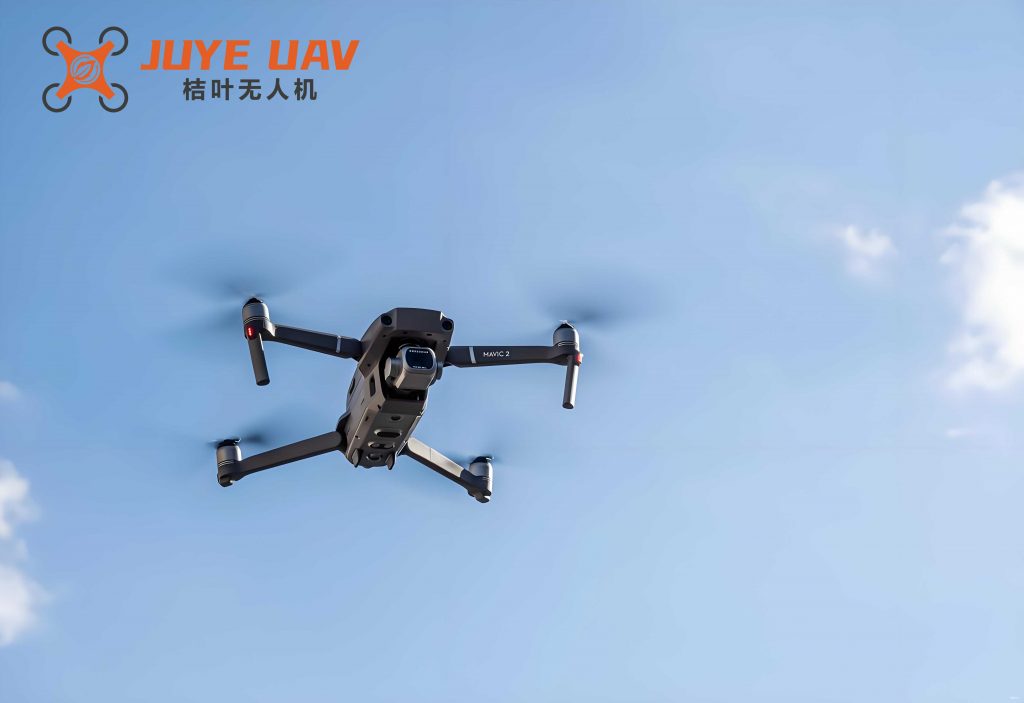
The developed educational quadrotor drone platform, as shown, integrates the following key components:
| Component | Specification / Model | Educational Purpose |
|---|---|---|
| Frame | Carbon Fiber Integrated Plate (Arm Length: 300mm) | Demonstrates mechanical design, weight distribution, and rigidity. |
| Motors & ESCs | Brushless DC Motors, Electronic Speed Controllers | Introduces electromechanical actuation, PWM control signals. |
| Propellers | Pair of CW/CCW propellers | Illustrates generation of lift and torque, propeller dynamics. |
| Battery | Li-Po, 2300mAh, 35C Discharge | Discusses power management, flight time calculation (~15 min at 0.5kg AUW). |
| Flight Controller | STM32F417ZGT6 (ARM Cortex-M4 with FPU) | Platform for embedded programming, real-time computation, peripheral interfacing (I2C, SPI, UART). |
| Sensors | IMU (Gyro/Accelerometer/Magnetometer), Barometer | Foundation for sensor fusion, state estimation, and understanding noise. |
| Remote Control & Telemetry | RC Transmitter/Receiver, Radio Telemetry Module | Teaches wireless communication protocols, manual override systems. |
Safety is paramount in practical instruction. We constructed a dedicated flight arena enclosed with a carbon fiber net. This enclosure contains the quadrotor drone during testing, preventing injury from spinning propellers and minimizing damage to the vehicle if control is lost, thereby creating a safe environment for student experimentation.
2. Course Structure: A Progressive Journey from Theory to Flight
The course is meticulously structured into three progressive modules, each comprising several hands-on projects. The complexity builds incrementally, with each project extending the functionality of the previous one. The first two modules emphasize conceptual understanding and simulation using MATLAB, while the final module focuses on embedded C/C++ development and integration on the physical quadrotor drone.
2.1 Module 1: Dynamic Modeling and Simulation
This module answers the fundamental question: *How do we mathematically describe the motion of a quadrotor drone?* We begin by deconstructing the drone’s flight mechanics through videos and animations, explaining how differential thrust from four rotors enables all six degrees of freedom (roll, pitch, yaw, and horizontal/vertical translation).
The theoretical modeling introduces critical concepts:
- Coordinate Frames: Body frame $$(B)$$ and Earth-fixed inertial frame $$(E)$$.
- Rotation Matrices: Using the Z-Y-X (or 3-2-1) Euler angle convention, the rotation matrix from body to inertial frame is:
$$ R_B^E = \begin{bmatrix}
c_\theta c_\psi & s_\phi s_\theta c_\psi – c_\phi s_\psi & c_\phi s_\theta c_\psi + s_\phi s_\psi \\
c_\theta s_\psi & s_\phi s_\theta s_\psi + c_\phi c_\psi & c_\phi s_\theta s_\psi – s_\phi c_\psi \\
-s_\theta & s_\phi c_\theta & c_\phi c_\theta
\end{bmatrix} $$
where $$c_x = \cos(x)$$, $$s_x = \sin(x)$$, and $$\phi, \theta, \psi$$ are roll, pitch, and yaw angles respectively. - Dynamic Equations: Using Newton-Euler formalism, we derive the translational and rotational dynamics.
- Translational Dynamics: $$ m \ddot{\mathbf{p}} = \begin{bmatrix} 0 \\ 0 \\ -mg \end{bmatrix} + R_B^E \begin{bmatrix} 0 \\ 0 \\ F \end{bmatrix} $$ where $$\mathbf{p} = [x, y, z]^T$$ is the position in the inertial frame, $$m$$ is the mass, $$g$$ is gravity, and $$F$$ is the total thrust from all rotors.
- Rotational Dynamics: $$ I \dot{\boldsymbol{\omega}} + \boldsymbol{\omega} \times (I \boldsymbol{\omega}) = \boldsymbol{\tau} $$ where $$I$$ is the inertia matrix, $$\boldsymbol{\omega} = [p, q, r]^T$$ is the angular velocity vector in the body frame, and $$\boldsymbol{\tau} = [\tau_\phi, \tau_\theta, \tau_\psi]^T$$ is the control torque vector.
The motor forces and torques are related to the squared rotor speeds $$\omega_i^2$$:
$$
\begin{bmatrix} F \\ \tau_\phi \\ \tau_\theta \\ \tau_\psi \end{bmatrix} =
\begin{bmatrix}
k_F & k_F & k_F & k_F \\
0 & -L k_F & 0 & L k_F \\
-L k_F & 0 & L k_F & 0 \\
k_M & -k_M & k_M & -k_M
\end{bmatrix}
\begin{bmatrix} \omega_1^2 \\ \omega_2^2 \\ \omega_3^2 \\ \omega_4^2 \end{bmatrix}
$$
where $$k_F$$ is the thrust coefficient, $$k_M$$ is the torque coefficient, and $$L$$ is the arm length.
Students implement this full nonlinear model in MATLAB/Simulink. Their first project is to simulate the open-loop response of the quadrotor drone to step motor inputs, observing the inherently unstable behavior and coupling between axes.
2.2 Module 2: Control Theory and Methods
The quadrotor drone is a classic underactuated system—it has six degrees of freedom but only four independent control inputs (the rotor speeds). This module tackles control design. We employ a hierarchical, nested control strategy that decouples the system’s dynamics. A virtual control input is introduced to handle the underactuation. The overall control architecture is as follows:
Control Architecture:
- Horizontal Position Controller: Takes desired $$x_{des}, y_{des}$$ and generates desired roll and pitch angles $$\phi_{des}, \theta_{des}$$ as virtual commands.
- Attitude Controller: Takes $$\phi_{des}, \theta_{des}, \psi_{des}$$ and calculates the required control torques $$\boldsymbol{\tau}$$.
- Altitude Controller: Takes desired height $$z_{des}$$ and calculates the total thrust $$F$$.
- Control Allocation: Inverts the motor mixing matrix to convert $$(F, \boldsymbol{\tau})$$ into individual motor speed commands $$\omega_i$$.
We focus on the ubiquitous PID (Proportional-Integral-Derivative) controller due to its intuitive tuning and effectiveness. For the attitude loop (inner loop), the control law for, say, the roll axis is:
$$ \tau_\phi = k_{p,\phi} e_\phi + k_{i,\phi} \int e_\phi \, dt + k_{d,\phi} \dot{e}_phi $$
where $$e_\phi = \phi_{des} – \phi$$ is the roll error. Students first tune these controllers in simulation, learning the physical effect of each gain: $$k_p$$ for responsiveness, $$k_d$$ for damping, and $$k_i$$ for eliminating steady-state error.
A critical practical aspect covered is sensor fusion. Raw gyroscope and accelerometer data from the IMU are noisy and biased. We teach complementary filtering and introduce the concept of the Kalman filter to estimate the vehicle’s attitude reliably. The complementary filter provides a hands-on first step:
$$ \hat{\theta} = \alpha (\hat{\theta}_{prev} + g_y \cdot \Delta t) + (1-\alpha) \theta_{acc} $$
where $$\hat{\theta}$$ is the estimated pitch, $$g_y$$ is the gyroscope pitch rate, $$\theta_{acc}$$ is the pitch from accelerometer, and $$\alpha$$ is a tuning parameter close to 1.
Students implement these cascaded PID controllers and a sensor fusion filter in simulation. Their project involves autonomously stabilizing the simulated quadrotor drone at a hover and then commanding it to follow a simple trajectory, observing the performance of the inner vs. outer loops.
| Control Loop | Input (Error) | Output | Key Learning Objective |
|---|---|---|---|
| Attitude (Inner) | $$\phi_{des}-\phi, \theta_{des}-\theta, \psi_{des}-\psi$$ | Torques $$\tau_\phi, \tau_\theta, \tau_\psi$$ | Fast stabilization, disturbance rejection. Understanding derivative action for damping. |
| Altitude | $$z_{des}-z$$ | Total Thrust $$F$$ | Managing gravity, integral action for precise height hold. |
| Horizontal Position (Outer) | $$x_{des}-x, y_{des}-y$$ | Virtual commands $$\phi_{des}, \theta_{des}$$ | Understanding underactuation, mapping horizontal force to tilt angles. |
2.3 Module 3: Embedded Implementation and Practical Flight
This module transitions from simulation to reality. Students learn embedded systems concepts through the lens of the quadrotor drone flight controller.
A. Embedded Development Skills:
- C Programming for Embedded Systems: Focus on efficiency, ISRs (Interrupt Service Routines), and hardware register manipulation.
- Development Environment: Using IAR Embedded Workbench for project management, compilation, flashing, and debugging.
- Peripheral Programming:
- Generating PWM signals to command ESCs and control motor speed.
- Using I2C and SPI protocols to read data from the IMU and other sensors.
- Implementing UART communication for telemetry and ground station interaction.
- Real-Time Operating System (RTOS) Concepts: Structuring code into tasks (e.g., sensor reading at 1kHz, control update at 500Hz, telemetry at 50Hz).
B. Practical Flight Training: Safety and familiarization come first.
- Assembly & Disassembly: Students build the quadrotor drone from parts, understanding the role of every component.
- Simulator Practice: Using software like VelociDrone or Liftoff, students learn the orientation skills and muscle memory needed to fly manually with an RC transmitter.
- Progressive Flight Training in the Net Arena:
- Step 1: “Propeller-off” testing of the control software, verifying motor spin directions and response to commands.
- Step 2: Manual hover in “Acro/Manual Mode,” relying solely on pilot skill.
- Step 3: Testing “Stabilize Mode,” where their implemented attitude controller assists in leveling the drone.
- Step 4: Autonomous hover in “Altitude Hold Mode,” engaging their full PID control stack.
2.4 Integrative Capstone Project
The culmination of the course is an open-ended capstone project that synthesizes all learned concepts. Students work in teams of 3-5, self-organizing based on interests (e.g., control algorithms, computer vision, embedded systems, mechanical design). The project framework is provided, but the solution path is not prescribed. Examples include:
- Controller Performance Analysis: Systematically varying PID gains and logging flight data to analyze effects on overshoot, settling time, and disturbance rejection.
- Trajectory Following: Implementing a path planner (e.g., generating a smooth square or figure-8 trajectory) and enhancing the position controller to track it.
- Sensor Fusion Exploration: Implementing a complementary filter and a simple Kalman filter for attitude estimation and comparing their performance in-flight.
- Obstacle Avoidance (Simulation): Integrating a simple range sensor model in simulation and designing a reactive avoidance behavior.
This project is driven by a problem-based learning approach. The instructor acts as a facilitator, guiding students to ask the right questions: “What is the physical limitation here?” “What part of the model is inaccurate?” “What algorithm from the literature could solve this?” Students must collaboratively research, prototype in simulation, implement on hardware, test, fail, debug, and iterate. This process authentically replicates the research and development cycle.
3. Educational Outcomes and Reflections
This practical course framework has been offered to upper-level undergraduate students in electronic engineering. While these students possess strong backgrounds in signals and circuits, their formal training in dynamics and control is often limited. The quadrotor drone serves as a powerful unifying platform that gives immediate context to new control theory concepts.
A significant observed shift in student mindset is the transition from a “knowledge accumulation” model to a “problem-solving” model. Initially, many students wish to master all underlying theory before touching the system. The course structure deliberately inverts this: it presents a concrete problem (e.g., “make it hover”), which motivates the search for specific knowledge (e.g., “how does a PID work?”, “how do I read the gyroscope?”). This cultivates the crucial skill of just-in-time, self-directed learning.
Student feedback highlights a strong engagement with sensor fusion and filtering topics, as they grapple directly with noisy real-world data. The moment when their code successfully stabilizes the physical quadrotor drone for the first time is a profound demonstration of theory made practice. They gain fluency not just in MATLAB and C, but in the essential toolset of modern engineering: version control, debugging hardware-software interactions, reading datasheets, and consulting scientific literature to find solutions.
| Course Module | Primary Skills Developed | Tools & Methods | Final Learning Outcome |
|---|---|---|---|
| Modeling & Simulation | Mathematical abstraction, physical system modeling, simulation. | MATLAB/Simulink, Coordinate Transformations, ODEs. | Ability to create a dynamic simulation of a complex mechatronic system. |
| Control Theory | Control design, stability analysis, system decoupling, sensor fusion. | PID Control, Nested Loops, Complementary/Kalman Filtering. | Ability to design a stable controller for a MIMO, underactuated system. |
| Embedded Implementation | Real-time programming, hardware interfacing, debugging, systems integration. | Embedded C, IAR, PWM, I2C/SPI, UART, RTOS concepts. | Ability to translate algorithms into efficient, reliable code on resource-constrained hardware. |
| Capstone Project | Project management, teamwork, research, iterative design, technical communication. | Literature review, experimental design, data analysis, collaborative coding. | Holistic experience of the engineering lifecycle, from concept to working prototype. |
4. Conclusion
The “Control Theory and Design for Quadrotor Drones” course demonstrates how a carefully designed practical framework can transform engineering education. By centering the curriculum on a compelling, complex system like the quadrotor drone, abstract mathematical and theoretical concepts are grounded in immediate physical reality. Students move from passive recipients of information to active investigators, learning to ask questions, seek out knowledge, collaborate, and persevere through iterative testing and failure. The course goes beyond teaching specific facts about drones; it instills a foundational methodology for tackling open-ended problems. Students learn that engineering is not about having all the answers memorized, but about understanding principles, leveraging tools, and systematically navigating from a problem statement to a functional solution. This practical, problem-oriented experience with the quadrotor drone platform is invaluable preparation for the challenges of modern research, innovation, and technological development.