
The rapid advancement and widespread application of unmanned aerial vehicles (UAVs), particularly quadrotors, represent a significant technological frontier globally, with China being a major contributor to both research and commercial deployment. From agricultural monitoring to logistics and emergency services, the demand for reliable, high-performance China UAV drone platforms is ever-increasing. However, achieving precise and robust flight control remains a core challenge, especially when facing inherent system complexities. This paper delves into a critical aspect of this challenge: the design of a flight control system that guarantees prescribed tracking performance while simultaneously compensating for significant model uncertainties and enforcing safety-critical attitude constraints. We present a comprehensive control strategy, developed from a first-person research perspective (“we”), detailing the mathematical formulation, controller synthesis, stability proof, and simulation validation.
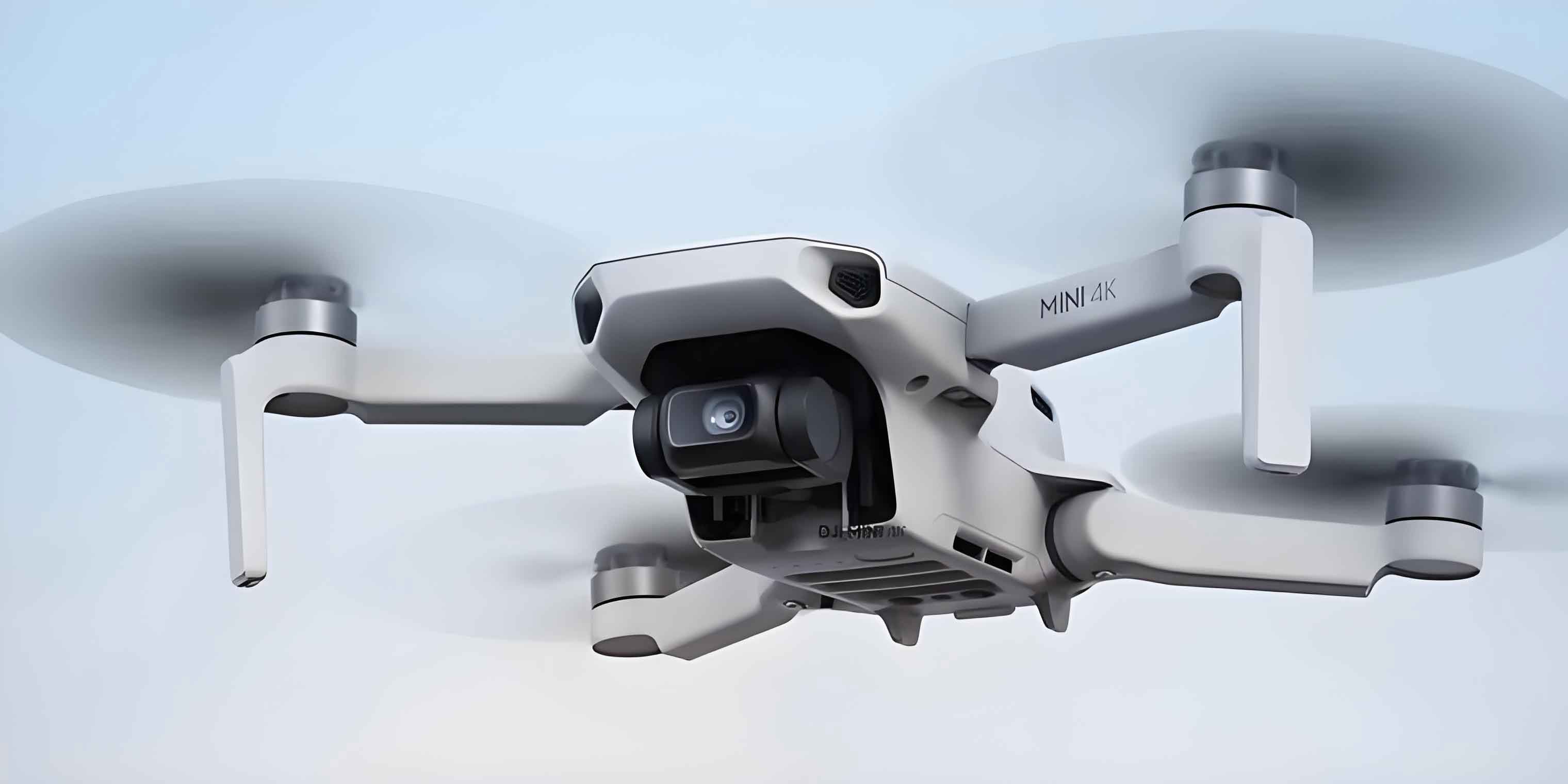
The operational envelope of a China UAV drone is often limited by its dynamic capabilities. A primary concern is the saturation of attitude angles—roll and pitch—during aggressive maneuvers such as tracking fast-moving ground targets. Exceeding these limits can lead to instability or even crash. Furthermore, accurate dynamic modeling is difficult; parameters like aerodynamic drag coefficients are hard to identify precisely, and the system is perpetually subject to unknown external disturbances like wind gusts. These factors collectively degrade tracking performance and pose substantial risks to the operational safety of the China UAV drone. Our objective is to synthesize a controller that not only ensures stable trajectory tracking with quantifiable, user-defined transient and steady-state performance (prescribed performance) but also actively manages attitude commands to prevent saturation, all while adapting to unknown model parameters and disturbances.
1. Mathematical Modeling of the Quadrotor UAV System
We begin by establishing the dynamic model for a generic quadrotor, which forms the basis for our controller design. Two coordinate frames are defined: the earth-fixed inertial frame $\{O_e, x_e, y_e, z_e\}$ and the body-fixed frame $\{O_b, x_b, y_b, z_b\}$. The standard Newton-Euler formulation yields the following translational and rotational dynamics:
Translational Dynamics:
$$ \begin{align*}
\ddot{x} &= \frac{1}{m} (cos\psi sin\theta cos\phi + sin\psi sin\phi) F – \frac{d_x}{m} \dot{x} \\
\ddot{y} &= \frac{1}{m} (sin\psi sin\theta cos\phi – cos\psi sin\phi) F – \frac{d_y}{m} \dot{y} \\
\ddot{z} &= \frac{1}{m} (cos\theta cos\phi) F – g – \frac{d_z}{m} \dot{z}
\end{align*} $$
Rotational Dynamics (Euler Angles):
$$ \begin{align*}
\ddot{\phi} &= \dot{\theta}\dot{\psi} \left( \frac{I_y – I_z}{I_x} \right) + \frac{1}{I_x} u_{\phi} – \frac{d_{\phi}}{I_x} \dot{\phi} \\
\ddot{\theta} &= \dot{\phi}\dot{\psi} \left( \frac{I_z – I_x}{I_y} \right) + \frac{1}{I_y} u_{\theta} – \frac{d_{\theta}}{I_y} \dot{\theta} \\
\ddot{\psi} &= \dot{\phi}\dot{\theta} \left( \frac{I_x – I_y}{I_z} \right) + \frac{1}{I_z} u_{\psi} – \frac{d_{\psi}}{I_z} \dot{\psi}
\end{align*} $$
Where $(x, y, z)$ are inertial positions, $(\phi, \theta, \psi)$ are roll, pitch, and yaw angles, $m$ is mass, $g$ is gravity, $I_x, I_y, I_z$ are moments of inertia, $F$ is total thrust, $u_\phi, u_\theta, u_\psi$ are control moments, and $d_{(\cdot)}$ are aerodynamic damping coefficients.
To facilitate controller design using the backstepping framework, we define state variables and incorporate modeling errors/ disturbances $e_{(\cdot)}$:
Let $x_1 = x, x_2 = \dot{x}, \phi_1 = \phi, \phi_2 = \dot{\phi}$, etc. The force inputs in the inertial frame are defined as:
$$ u_x = (cos\psi sin\theta cos\phi + sin\psi sin\phi)F, \quad u_y = (sin\psi sin\theta cos\phi – cos\psi sin\phi)F, \quad u_z = (cos\theta cos\phi)F $$
This allows us to write the system in a strict-feedback form with lumped uncertainties:
$$ \begin{align*}
\dot{x}_1 &= x_2 \\
\dot{x}_2 &= \frac{1}{m}u_x – \frac{d_x}{m} x_2 + e_x \\
\dot{y}_1 &= y_2 \\
\dot{y}_2 &= \frac{1}{m}u_y – \frac{d_y}{m} y_2 + e_y \\
\dot{z}_1 &= z_2 \\
\dot{z}_2 &= \frac{1}{m}u_z – g – \frac{d_z}{m} z_2 + e_z \\
\dot{\phi}_1 &= \phi_2 \\
\dot{\phi}_2 &= \dot{\theta}_1\dot{\psi}_1 \left( \frac{I_y – I_z}{I_x} \right) + \frac{1}{I_x} u_{\phi} – \frac{d_{\phi}}{I_x} \phi_2 + e_{\phi} \\
&\vdots \quad \text{(Similar for } \theta \text{ and } \psi \text{ channels)}
\end{align*} $$
We make the following practical assumption central to robust China UAV drone control:
Assumption 1: The aerodynamic damping coefficients $d_{(\cdot)}$ and the lumped disturbance terms $e_{(\cdot)}$ are unknown but bounded. There exist unknown positive constants $D_{(\cdot)}$ and $E_{(\cdot)}$ such that $|d_{(\cdot)}| \le D_{(\cdot)}$ and $|e_{(\cdot)}| \le E_{(\cdot)}$.
2. Prescribed Performance Control with Saturation Compensation
Our control architecture is hierarchical. A position controller generates desired attitude angles and total thrust, which are then tracked by an inner-loop attitude controller. The key innovations are the integration of Prescribed Performance Control (PPC) to enforce error bounds and a Dynamic Saturation Compensation (DSC) system to manage attitude constraints.
2.1 Position Controller Design (X-channel as example)
Define the tracking error: $\tilde{x} = x_1 – x_d$, where $x_d$ is the desired trajectory. The core of PPC is to enforce that $\tilde{x}$ evolves within a predefined performance envelope:
$$ -f_1(t) < \tilde{x} < f_2(t) $$
where $f_1(t)$ and $f_2(t)$ are smooth, exponentially decaying performance functions, e.g., $f_1(t) = (f_{1,0} – f_{1,\infty})e^{-k_1 t} + f_{1,\infty}$. To transform this constrained problem into an unconstrained one, we introduce an error transformation:
$$ Y = \frac{1}{2} \ln\left( \frac{\tilde{x}/f_2(t) + 1}{1 – \tilde{x}/f_1(t)} \right) $$
This transformation maps the constrained error $\tilde{x}$ into an unconstrained variable $Y$. If $Y$ is bounded, then the performance bounds on $\tilde{x}$ are guaranteed. The derivative of $Y$ is:
$$ \dot{Y} = \zeta (\dot{\tilde{x}} – \frac{\dot{f}}{f} \tilde{x}) = \zeta (x_2 – \dot{x}_d – \frac{\dot{f}}{f} \tilde{x}) $$
where $\zeta$ is a positive term derived from the transformation. Using backstepping, we treat $x_2$ as a virtual control. We design the desired virtual control law $\alpha_{x}$ and pass it through a first-order filter to obtain its filtered version $\bar{\alpha}_{x}$ and a filtering error $\chi$:
$$ \tau \dot{\bar{\alpha}}_{x} + \bar{\alpha}_{x} = \alpha_{x}, \quad \bar{\alpha}_{x}(0) = \alpha_{x}(0), \quad \chi = \bar{\alpha}_{x} – x_2 $$
The actual control law $u_x$ is designed using an adaptive backstepping approach to compensate for $d_x$ and $e_x$:
$$ u_x = m \left[ -c_1 \tilde{x} – c_2 \chi + \dot{x}_d + \frac{\dot{f}}{f} \tilde{x} – \hat{D}_x \text{sgn}(\chi) |x_2| – \hat{E}_x \text{sgn}(\chi) – \zeta Y \right] $$
where $c_1, c_2 > 0$ are control gains, and $\hat{D}_x$, $\hat{E}_x$ are estimates of the unknown bounds. The parameter update laws are:
$$ \dot{\hat{D}}_x = \gamma_{D} |\chi| |x_2|, \quad \dot{\hat{E}}_x = \gamma_{E} |\chi| $$
This structure ensures that the control effort actively counters the estimated effects of damping and disturbances. The designs for $u_y$ and $u_z$ follow an identical procedure.
2.2 Attitude Command Generation and Constraint Handling
The position controller outputs $u_x, u_y, u_z$. These are converted into desired total thrust $F_d$, roll $\phi_d$, and pitch $\theta_d$ angles:
$$ \begin{align*}
F_d &= \sqrt{u_x^2 + u_y^2 + (u_z + g)^2} \\
\phi_d &= \arcsin\left( \frac{m}{F_d} (u_x \sin\psi_d – u_y \cos\psi_d) \right) \\
\theta_d &= \arctan\left( \frac{u_x \cos\psi_d + u_y \sin\psi_d}{u_z + g} \right)
\end{align*} $$
Here lies a critical problem for the China UAV drone during high-performance tracking: the computed $\phi_d$ and $\theta_d$ can easily exceed the vehicle’s physical limits (e.g., $\pm 20^\circ$), leading to saturation. Simple command clipping destabilizes the outer-loop position control. We address this by embedding a Dynamic Saturation Compensation (DSC) system. When the attitude command is saturated, the DSC generates a compensation signal that modifies the original position control command, effectively reducing the aggressiveness of the demanded attitude. The compensation dynamics are designed as:
$$ \dot{\xi} = -k_\xi \xi + \Delta u_{sat} $$
where $\xi$ is the compensation state, $k_\xi > 0$, and $\Delta u_{sat}$ is the difference between the saturated and unsaturated attitude commands. This filtered compensation signal $\xi$ is then fed back to adjust the position controller’s reference, creating a holistic solution that maintains stability while respecting actuator/attitude limits.
| Component | Design Feature | Purpose for China UAV Drone |
|---|---|---|
| Prescribed Performance (PP) | Error transformation & Performance functions $f_i(t)$ | Guarantees user-defined max overshoot, convergence rate, and steady-state error. |
| Adaptive Robust Control | Control laws with $\hat{D}_{(\cdot)}$, $\hat{E}_{(\cdot)}$ and update laws | Compensates for unknown aerodynamics ($d_{(\cdot)}$) and disturbances ($e_{(\cdot)}$). |
| Dynamic Saturation Compensation (DSC) | Compensation dynamics $\dot{\xi} = -k_\xi \xi + \Delta u_{sat}$ | Prevents instability due to attitude command saturation, enhancing safety. |
| Command Filtering | First-order filter for virtual controls | Simplifies derivative computation in backstepping and improves robustness. |
2.3 Attitude Controller Design
The inner-loop attitude controller tracks the (possibly saturated) desired angles $\phi_d, \theta_d, \psi_d$. The design mirrors the position controller’s PPC and adaptive structure but is applied to the rotational dynamics. For the roll channel:
$$ u_{\phi} = I_x \left[ -c_{1,\phi} \tilde{\phi} – c_{2,\phi} \chi_\phi + \ddot{\phi}_d^f + \frac{\dot{f}_\phi}{f_\phi} \tilde{\phi} – \dot{\theta}\dot{\psi}\left(\frac{I_y-I_z}{I_x}\right) – \hat{D}_{\phi} \text{sgn}(\chi_\phi) |\phi_2| – \hat{E}_{\phi} \text{sgn}(\chi_\phi) – \zeta_\phi Y_\phi \right] $$
with corresponding adaptation laws for $\hat{D}_\phi$ and $\hat{E}_\phi$. This ensures fast and accurate attitude tracking, which is the foundation for precise positional control of the China UAV drone.
3. Stability Analysis
The closed-loop stability is proven using Lyapunov theory. We construct a composite Lyapunov function candidate $V$ encompassing tracking errors ($Y$, $\chi$), filter errors, and parameter estimation errors ($\tilde{D} = \hat{D} – D$, $\tilde{E} = \hat{E} – E$).
For the X-channel subsystem, consider:
$$ V_x = \frac{1}{2} Y^2 + \frac{1}{2} \chi^2 + \frac{1}{2\gamma_D} \tilde{D}_x^2 + \frac{1}{2\gamma_E} \tilde{E}_x^2 $$
Taking its derivative along the trajectories of the system and substituting the control law $u_x$ and update laws, we obtain after substantial algebraic manipulation:
$$ \dot{V}_x \le -c_{Y} Y^2 – c_{\chi} \chi^2 + \epsilon $$
where $c_{Y}, c_{\chi} > 0$ and $\epsilon$ is a small positive constant arising from approximation errors. This inequality shows that $V_x$ is ultimately bounded. Consequently, all signals in the system, including the transformed error $Y$, the filter error $\chi$, and the parameter estimates, are uniformly ultimately bounded (UUB). Since $Y$ is bounded, the original tracking error $\tilde{x}$ is guaranteed to remain within the prescribed performance bounds defined by $f_1(t)$ and $f_2(t)$. The same analysis applies to the Y, Z, and attitude channels. The integration of the DSC system can be shown to introduce another bounded term in the Lyapunov derivative, preserving the UUB property. Thus, the entire closed-loop system for the China UAV drone is stable, with guaranteed performance and constraint satisfaction.
| System State / Error | Lyapunov Component | Ultimate Bound | Guarantee |
|---|---|---|---|
| Transformed Error $Y$ | $\frac{1}{2}Y^2$ | Bounded | Prescribed performance on $\tilde{x}$ |
| Filtering/Compensation Error $\chi$ | $\frac{1}{2}\chi^2$ | Bounded | Virtual control smoothness |
| Parameter Estimates $\tilde{D}, \tilde{E}$ | $\frac{1}{2\gamma}\tilde{D}^2, \frac{1}{2\gamma}\tilde{E}^2$ | Bounded | Stable adaptation |
| DSC State $\xi$ | $\frac{1}{2}\xi^2$ | Bounded | Stable saturation compensation |
4. Simulation Results and Analysis
To validate the proposed control scheme for a China UAV drone, we conducted numerical simulations in a high-fidelity environment. The vehicle parameters and simulation conditions are summarized below:
| Parameter | Symbol | Value |
|---|---|---|
| Mass | $m$ | 1.4 kg |
| Inertia (X/Y/Z) | $I_x, I_y, I_z$ | 0.1021, 0.0921, 0.16036 kg·m² |
| Attitude Limit | $\phi_{max}, \theta_{max}$ | ±20° |
| Initial Position | $(x_0, y_0, z_0)$ | (0, 0, 10) m |
| Target Trajectory | $(x_d(t), y_d(t))$ | ($5t$, $5t$) m (moving vehicle) |
| Disturbance & Damping | $e_{(\cdot)}(t), d_{(\cdot)}(t)$ | $10\sin(0.02t)$ (simulating wind & unmodeled dynamics) |
The controller gains and PPC function parameters were tuned for a balance of performance and robustness. The scenario involves the China UAV drone initially hovering at 10m altitude, then tasked to track a ground vehicle moving at 5 m/s in both X and Y directions.
Key Results:
- Tracking Performance: The drone successfully tracks the moving target. The position errors converge and remain within the designer-specified performance bounds despite the presence of unknown disturbances and damping, demonstrating the efficacy of the adaptive prescribed performance controller.
- Attitude Constraint Management: This is the pivotal result. In the initial transient, the demanded pitch and roll angles required for aggressive acceleration exceed the 20° limit. With the standard PPC controller but without the DSC system, these commands would be simply clipped, causing significant overshoot and oscillation in the position tracking. With our proposed DSC-integrated controller, the attitude commands are smoothly regulated. The compensation system actively reduces the position controller’s aggressiveness, allowing the attitude angles to approach their limits without sustained saturation. The plots clearly show the drone achieving tracking with notably smaller, safer attitude angles.
- Robustness: The adaptive laws successfully estimate and compensate for the time-varying disturbances and damping effects. The control inputs remain smooth and feasible throughout the maneuver.
The comparative simulation conclusively shows that the integrated Prescribed Performance and Dynamic Saturation Compensation control provides superior performance for a China UAV drone operating at the limits of its dynamic envelope, ensuring both precise tracking and enhanced operational safety.
5. Conclusion and Future Work for China UAV Drone Applications
In this work, we have presented a comprehensive flight control solution tailored to the challenges of modern China UAV drone operations. The proposed controller synergistically combines Prescribed Performance Control (PPC) for guaranteed transient/steady-state tracking, adaptive laws to mitigate model uncertainties and disturbances, and a novel Dynamic Saturation Compensation (DSC) mechanism to enforce critical attitude constraints. The Lyapunov-based stability analysis provides formal guarantees of uniform ultimate boundedness for all closed-loop signals. Simulations confirm that this approach enables a China UAV drone to perform demanding tasks—like tracking fast-moving targets—with high precision while maintaining attitude angles within safe limits, a crucial factor for real-world deployment in complex environments.
Future research directions include extending this framework to handle more complex scenarios such as:
1. Fault-tolerant control for actuator failures in China UAV drones.
2. Implementation and validation on hardware platforms to assess practical performance under real-world noise and latency.
3. Integration with onboard vision-based guidance for fully autonomous tracking missions.
4. Extension to swarm coordination of multiple China UAV drones with shared performance and constraint specifications.
The methodology outlined here provides a solid theoretical and practical foundation for developing the next generation of robust, high-performance, and safe autonomous flight systems for China UAV drone technology.