
The rapid ascent of the low-altitude economy has positioned the Unmanned Aerial Vehicle (UAV) sector as a pivotal engine for global technological and economic advancement. Characterized by exponential market growth and diversification into logistics, precision agriculture, infrastructure inspection, and emergency response, the UAV drone industry stands at a critical juncture. However, this breakneck expansion is accompanied by significant challenges, including technological fragmentation, inconsistent product quality, concerns over safety and security, and a notable deficit in strong, trusted global brands. In this complex landscape, standardization emerges not merely as a technical necessity but as a fundamental strategic tool for steering the industry toward sustainable development, intelligent evolution, and robust brand-building.
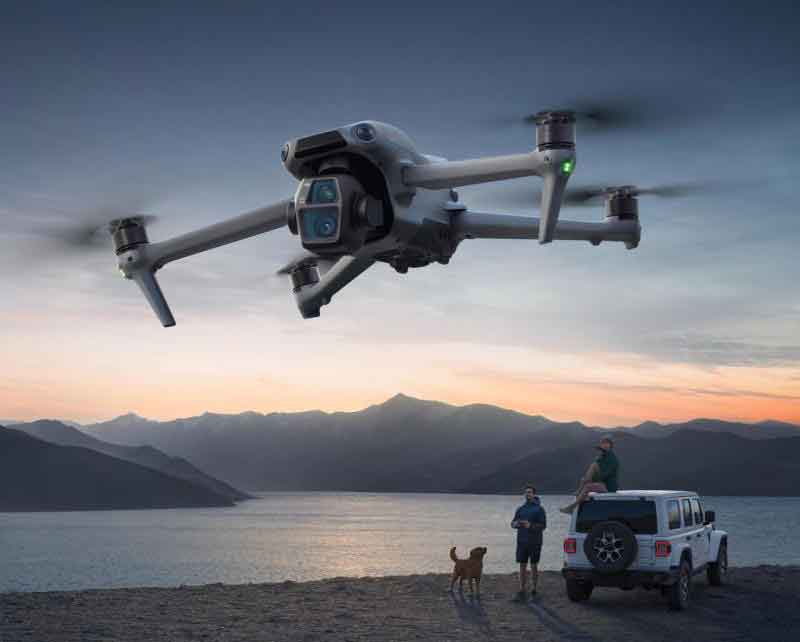
Standardization provides the common language and technical framework that underpin product reliability, operational safety, and ecosystem interoperability. For UAV drone manufacturers, adherence to and leadership in developing high standards is intrinsically linked to brand perception. A brand synonymous with quality, safety, and innovation is invariably built upon a foundation of rigorous, transparent, and often pioneering standards. This article explores the multifaceted role of standardization in fostering the intelligent and brand-oriented development of the UAV industry, proposing actionable pathways and analyzing the inherent challenges.
The Standardization Landscape: Frameworks and Current Status
The establishment of a coherent standard system is the first step in bringing order to a rapidly innovating field. Recognizing this, national and international bodies have been actively developing frameworks to guide the UAV ecosystem. A prominent example is the architectural approach adopted by guidelines such as China’s Unmanned Aircraft Systems Standard System Construction Guide, which delineates a multi-dimensional structure. This framework typically integrates management dimensions (encompassing the entire lifecycle from R&D to decommissioning) with technical dimensions (covering system hierarchy, platform configuration, and classification). The core structure of such a system often rests on four pillars:
| Pillar | Scope and Purpose | Examples |
|---|---|---|
| A. Foundation Standards | Provide fundamental, universal definitions, terminology, classification principles, and reference models essential for common understanding across the industry. | Nomenclature, taxonomy, system architecture models. |
| B. Management Standards | Address the regulatory, operational, and organizational aspects covering the full lifecycle of the UAV drone system. | Airworthiness certification, traffic management (UTM), operator licensing, maintenance procedures. |
| C. Technical Standards | Specify requirements and test methods for the hardware, software, and performance of UAV drone systems and their components. | Flight performance metrics, communication protocols (e.g., C2 link), navigation accuracy, environmental resilience (e.g., IP ratings), safety and security specifications. |
| D. Industry Application Standards | Tailor general requirements to the specific needs, risks, and operational environments of distinct vertical markets. | Precision spraying for agriculture, BVLOS (Beyond Visual Line of Sight) procedures for logistics, payload specifications for surveying, data formats for infrastructure inspection. |
The current status of UAV standardization is a mosaic of national and industry-specific efforts. Numerous standards have been promulgated, focusing on various aspects of UAV drone technology. The following table summarizes a non-exhaustive list of standard categories and their typical content.
| Category | Standard Type | Typical Content/Themes |
|---|---|---|
| Core Technology & Safety | Classification & Terminology | Definitions, category/class based on weight, speed, and operational capability. |
| System Safety & Reliability | General safety requirements, fail-safe design, crashworthiness, reliability testing methods (e.g., MTBF – Mean Time Between Failures). | |
| Flight Performance & Testing | Requirements for endurance, hover accuracy, climb/descent rates, and standardized flight test methodologies. | |
| Operational & Management | Identification & Tracking | Unique product identification codes (e.g., serial number), remote ID specifications for real-time tracking. |
| Geofencing & Operations | Data formats and technical specifications for dynamic and static geofences, general flight operation rules. | |
| Supporting Technologies | Communication & Data Link | Command and Control (C2) link performance, latency, security, and interoperability protocols. |
| Payload Interface | Standardized mechanical, electrical, and data interfaces for cameras, sensors, and delivery mechanisms. | |
| Application-Specific | Vertical Market Standards | Spraying efficacy and droplet size for agricultural UAV drones, accuracy tolerances for mapping drones, package securing and release mechanisms for delivery drones. |
This evolving yet fragmented landscape presents both a challenge and an opportunity for companies aiming to build a brand. While compliance is mandatory, leadership in shaping these standards can become a powerful brand differentiator.
Standardization as the Cornerstone of Intelligent Branding
Building a reputable brand in the UAV drone market transcends marketing slogans; it is an engineering and operational discipline rooted in consistent, superior performance and trust. Standardization is the engine that drives this discipline. The pathway to intelligent branding through standardization can be modeled as a function where brand equity (B) is dependent on the systematic implementation of technical (T), quality (Q), and customer-centric (C) standards.
$$ B = \int ( \alpha \cdot T_{std} + \beta \cdot Q_{std} + \gamma \cdot C_{std} ) \, dt $$
Where:
- $T_{std}$ represents the level of adoption/leadership in advanced technical standards (e.g., for AI navigation, swarm communication).
- $Q_{std}$ represents the rigor of the internal quality management and production standards.
- $C_{std}$ represents standards focused on user experience, service, and satisfaction.
- $\alpha, \beta, \gamma$ are weighting coefficients specific to a company’s brand strategy.
- The integral over time $dt$ signifies that brand building is a cumulative, long-term process.
Pathway 1: Building a Holistic Internal Standardization System
The first and most critical step for any UAV drone enterprise is to establish an internal standard system that is more stringent than the prevailing external regulations. This system must permeate every facet of the organization.
| System Module | Key Elements | Impact on Branding |
|---|---|---|
| Product Design & R&D | Standardized design review processes, component selection criteria, simulation and modeling protocols, design for manufacturability (DFM) and reliability (DFR) rules. | Ensures innovative yet reliable products, reducing time-to-market for robust offerings, forming the basis of an “engineering excellence” brand narrative. |
| Core Technology & IP Management | Standards for protecting proprietary algorithms (e.g., flight control, obstacle avoidance), documentation of key patents, and licensing frameworks. | Protects and leverages core intellectual property as a key brand asset, establishing technological leadership. |
| Quality Control & Manufacturing | Incoming component inspection standards, in-process quality checkpoints, final product acceptance testing (FAT) protocols, traceability systems. | Directly ensures product consistency and reliability—the most tangible brand promise for a UAV drone. A low defect rate builds immense customer trust. |
| Supplier & Supply Chain Management | Qualification standards for vendors, technical requirements for sourced components (e.g., batteries, motors), and joint quality audit procedures. | Extends brand quality guarantees upstream, mitigating supply chain risks and ensuring end-product integrity. |
| External Standards & Regulation Monitoring | A dynamic process for tracking, analyzing, and integrating evolving national/international standards and regulatory changes into internal systems. | Positions the brand as compliant and forward-looking, avoiding costly recalls or market access denials, and enabling proactive shaping of new standards. |
Pathway 2: Linking Key Standards to Brand Value Drivers
Not all standards are equal in the eyes of the customer. Intelligent branding requires mapping specific standards to the core attributes that drive customer satisfaction (S) and, ultimately, loyalty (L). We can model customer satisfaction as a function of perceived performance against key branded attributes.
$$ S = \sum_{i=1}^{n} w_i \cdot P(A_i) $$
Where $A_i$ are key brand attributes (e.g., Safety, Ease-of-Use, Data Accuracy, Durability), $P(A_i)$ is the perceived performance on attribute $i$, and $w_i$ is the importance weight assigned by the customer segment.
Each attribute $A_i$ is underpinned by a set of standards $Std_{ij}$. For instance:
- Attribute: Flight Safety ($A_{Safety}$) is supported by standards for redundant systems ($Std_{S1}$), geofencing compliance ($Std_{S2}$), and failsafe landing procedures ($Std_{S3}$).
- Attribute: Operational Intelligence ($A_{Intel}$) is supported by standards for autonomous navigation accuracy ($Std_{I1}$), real-time obstacle avoidance ($Std_{I2}$), and swarm coordination protocols ($Std_{I3}$).
The following table illustrates this strategic linkage:
| Primary Brand Value Proposition | Key Customer-Facing Attributes (A_i) | Supporting Technical & Process Standards (Std_ij) | Brand Impact |
|---|---|---|---|
| The Reliable Workhorse | Durability, Weather Resistance, Low Maintenance | Environmental testing standards (IP ratings, vibration, thermal cycling), MTBF targets, modular repair manuals. | Builds trust in harsh conditions (agriculture, inspection), lowers total cost of ownership, fosters long-term contracts. |
| The Intelligent Autopilot | Ease-of-Use, Autonomous Mission Success, Accurate Data | Human-Machine Interface (HMI) guidelines, target recognition accuracy, mapping data precision standards (e.g., RMSE), BVLOS certification protocols. | Democratizes complex operations, enables scaling of services, creates premium positioning for data-as-a-service. |
| The Secure & Compliant Partner | Data Security, Regulatory Compliance, Airspace Safety | Cybersecurity standards for data links, encrypted logging, adherence to remote ID specs, privacy-by-design frameworks. | Essential for enterprise and government adoption, mitigates legal and reputational risk, becomes a key differentiator in regulated markets. |
By excelling in the standards that directly amplify these branded attributes, a UAV drone company can disproportionately increase customer satisfaction and loyalty, creating a defensible market position.
Challenges in Standardization Implementation and Strategic Responses
The path to leveraging standardization for branding is fraught with obstacles. A clear understanding of these challenges enables the formulation of effective counter-strategies.
| Challenge Category | Specific Obstacles | Potential Negative Impact | Strategic Response for Brand-Builders |
|---|---|---|---|
| Standards Development | Rapid Technological Obsolescence: The pace of innovation in AI, sensing, and propulsion can outstrip the standard-setting process. | Standards risk being outdated at publication, stifling genuine innovation that could enhance the brand. | Advocate for and adopt performance-based rather than prescriptive standards. Focus internal R&D on exceeding the intent of current standards. Engage actively in standards bodies to accelerate update cycles. |
| Fragmentation & Competing Interests: Multiple standards bodies (ISO, ASTM, national authorities) and conflicting corporate patents can lead to a lack of global harmonization. | Increases compliance costs, creates market access barriers, and confuses customers, diluting global brand messaging. | Prioritize compliance with standards that have the widest global recognition. Invest in modular product designs that can be adapted to regional requirements. Lead industry consortia to drive convergence. | |
| Implementation & Conformity | High Cost of Compliance & Certification: Rigorous testing and certification processes (e.g., for airworthiness or cybersecurity) are resource-intensive. | Can disadvantage smaller, innovative players and slow down the launch of new, potentially brand-defining products. | Treat certification costs as a strategic investment in brand credibility. Leverage digital twins and simulation to reduce physical testing costs. Seek strategic partnerships to share certification burdens. |
| Lax Enforcement & Non-Compliance: Inconsistent policing of standards, especially in some markets, allows low-quality, non-compliant UAV drones to compete. | Undercuts the price premium of compliant brands, creates safety incidents that tarnish the entire industry’s reputation. | Differentiate aggressively on verifiable quality and safety. Promote consumer and B2B education on the importance of standards. Support industry associations in advocating for stronger, uniformly enforced regulations. | |
| Market Perception | Low Awareness of Standards’ Value: End-users, especially in nascent markets, may not understand the link between standards and product quality/safety. | The brand equity built through superior standards is not fully recognized or monetized, competing largely on price. | Incorporate standards compliance into core marketing messages (e.g., “Certified Safe,” “Industry-Grade Reliability”). Develop transparent “white papers” or labels that explain key certifications. Offer training that highlights how adherence to standards translates to better user outcomes. |
Future Trajectories: Standardization at the Confluence of Intelligence and Global Branding
The future of the UAV drone industry will be defined by deeper intelligence and global market integration. Standardization will be the critical enabler for both.
Intelligent Systems and Evolving Standards
The integration of Artificial Intelligence (AI) and Machine Learning (ML) for autonomous decision-making, computer vision, and predictive maintenance represents the next frontier. Standardizing these intelligent functions is paramount for trust and scalability. Future standards will need to address:
- AI/ML Performance and Assurance: Metrics for accuracy, robustness, and explainability of AI-driven functions (e.g., object detection in cluttered environments). A standard could define a minimum performance threshold: $$ P_{det} \geq \theta_{min} \text{ under conditions } C_{std} $$ where $P_{det}$ is the probability of correct detection and $\theta_{min}$ is the standardized minimum.
- Ethical and Operational Safety: Standards for ethical AI use (e.g., bias mitigation in surveillance algorithms) and verifiable safe learning in operational contexts.
- Swarm Interoperability: Communication and coordination protocols for heterogeneous UAV drone swarms from different manufacturers to perform complex tasks intelligently.
Brands that contribute to and early adopt these intelligent system standards will be perceived as pioneers, shaping the very definition of what an “smart UAV drone” is.
Standardization as a Catalyst for Global Brand Expansion
For a UAV drone brand to achieve global recognition, navigating the labyrinth of international standards and regulations is non-negotiable. The strategic approach involves:
- Active Participation in International Bodies: Contributing to ISO, ICAO, and other global forums ensures that a company’s expertise influences international norms, aligning them with its own technological roadmap.
- Adoption of Modular and Adaptable Architectures: Designing products around a core standardized platform that can accept region-specific modules (e.g., different communication or identification modules) reduces time-to-market for global variants.
- Building a “Standards-First” Corporate Culture: Embedding standardization awareness from the initial design phase through to after-sales service ensures consistent global quality, which is the ultimate foundation of a strong international brand.
The relationship between a brand’s global market share ($M_{global}$) and its standardization maturity ($SM$) can be conceptualized. While not purely linear, a positive correlation exists, mediated by market access ($A$) and perceived trust ($T$):
$$ M_{global} \propto SM^{\kappa} \cdot A(SM) \cdot T(SM) $$
where $\kappa$ is a positive exponent, and both market access $A$ and trust $T$ are functions of the company’s standardization maturity $SM$.
Conclusion
The journey toward a dominant, intelligent brand in the competitive UAV drone industry is inextricably linked to the mastery of standardization. It is a multifaceted strategic endeavor that moves beyond mere compliance. The pathway involves constructing a rigorous internal standard system that governs every aspect of creation and delivery, strategically aligning specific technical standards with the core value propositions that drive customer satisfaction and loyalty, and proactively engaging with the evolving standardscape for intelligent systems. While challenges such as fragmentation, cost, and market perception persist, they can be mitigated through proactive strategies, education, and a commitment to quality. Ultimately, in an industry where technology and regulations evolve at breakneck speed, standardization provides the stable foundation upon which enduring trust, operational excellence, and a powerful, intelligent brand are built. The UAV drone companies that recognize standardization not as a constraint but as the ultimate platform for innovation and brand differentiation will be the ones to lead the low-altitude economy into its next chapter.