
The meteoric rise of civilian Unmanned Aerial Vehicles (UAVs) represents one of the most transformative technological shifts of our era, poised to reshape logistics, transportation, and countless aspects of daily life. This rapid advancement, however, has dramatically outpaced the development of a coherent and comprehensive legal framework. The resultant regulatory vacuum is no longer a mere theoretical concern but a pressing practical obstacle that threatens public safety, national security, and the sustainable growth of the industry itself. Therefore, establishing a robust legal architecture is an urgent imperative. This architecture must be built upon a clear understanding of its fundamental components: the regulatory subjects, the guiding principles, the substantive content, and the overarching system. This analysis delves into these core challenges, arguing for a balanced, coordinated, and forward-looking approach to regulating the civilian UAV ecosystem.
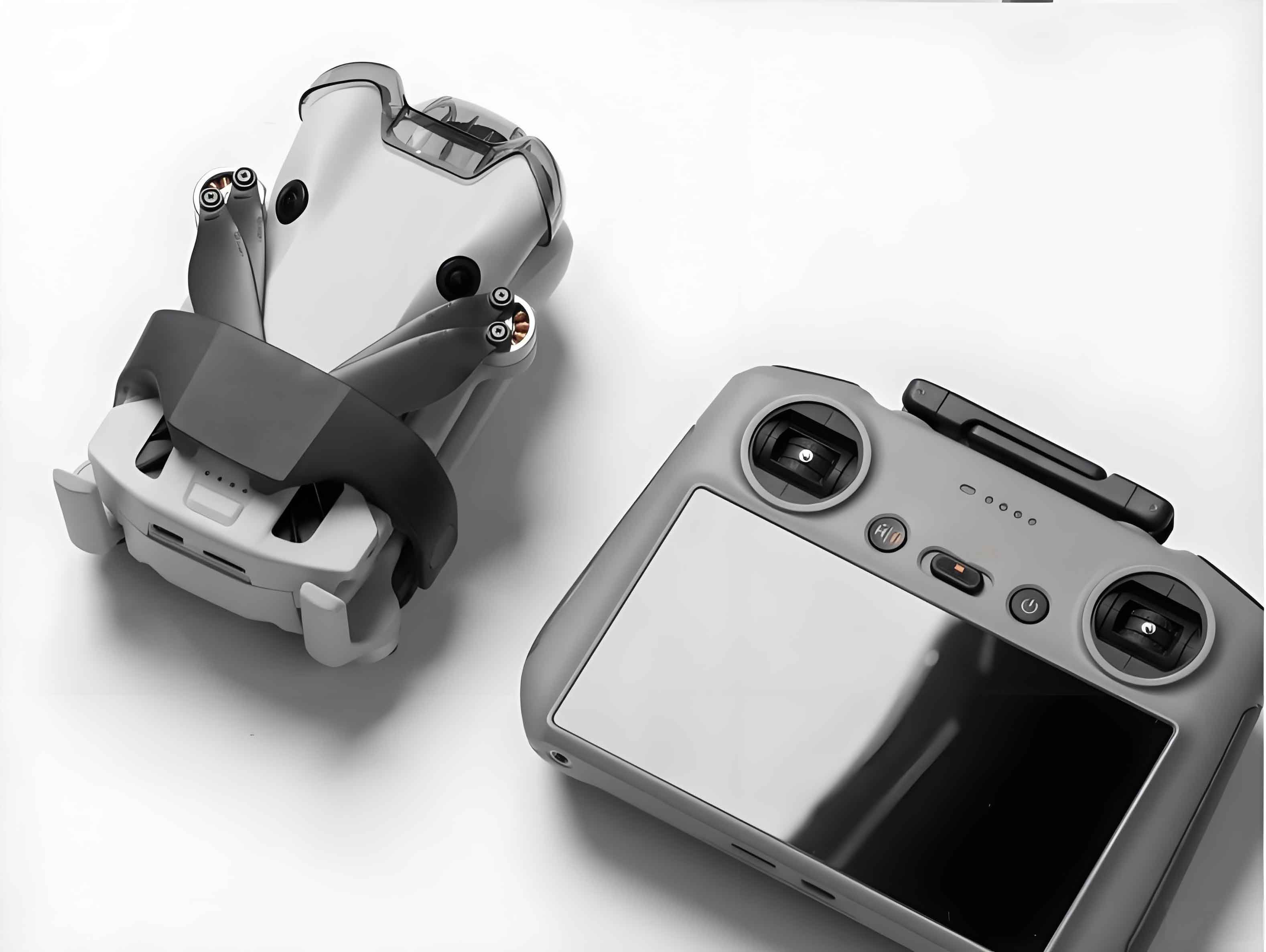
The primary impetus for legal intervention stems from the unique risks posed by the integration of civilian UAV operations into shared airspace. Unlike manned aviation with its long-established norms and strict oversight, the low-altitude environment frequented by drones is characterized by a high density of potential conflicts—with other drones, with manned aircraft during take-off and landing phases, with critical infrastructure, and with the privacy and safety of individuals on the ground. The potential for mid-air collisions, unauthorized surveillance, intentional malicious use, and the disruption of sensitive facilities necessitates a regulatory response. Furthermore, the sheer volume and accessibility of civilian UAV technology amplify these risks, making self-regulation and purely market-based solutions insufficient. The law must step in to define the rules of the sky, assign liability, and establish minimum safety and security standards to protect public interest while enabling innovation.
I. The Complex Web of Regulatory Subjects
A foundational challenge in governing civilian UAV operations is the multiplicity of agencies and entities with a legitimate stake. This fragmented landscape often leads to overlapping jurisdictions, regulatory gaps, and operational inefficiency. The management of a single civilian UAV flight can implicate national security, aviation safety, spectrum allocation, manufacturing standards, and local law enforcement. Clarifying and coordinating this web of regulatory subjects is the first step toward effective governance.
Internationally, a common model involves a primary aviation authority (such as the FAA in the United States or EASA in Europe) setting core safety and operational rules, while other bodies manage specific domains like radio frequencies (e.g., the FCC/ITU) or data privacy. The situation is particularly complex in contexts where air sovereignty and airspace management are closely tied to military authority. A promising structure involves a high-level inter-agency coordinating committee, chaired by a national aviation authority or a cabinet-level office, to harmonize policies across defense, transport, telecommunications, industry, and interior ministries. The ideal framework should designate a clear lead agency for overall safety regulation while mandating formal coordination mechanisms for cross-cutting issues like airspace design, security threats, and law enforcement.
| Regulatory Subject | Primary Responsibilities | Key Challenges & Coordination Needs |
|---|---|---|
| Aviation Authority | Airworthiness certification, pilot/operator licensing, operational rules (VLOS/BVLOS), airspace integration, safety oversight. | Balancing safety with innovation; coordinating airspace design with military; managing the risk from legacy “non-compliant” civilian UAV. |
| Military / Defense Authority | National airspace sovereignty, designation of restricted/prohibited zones (around bases, critical national infrastructure). | Deconflicting military and civilian low-altitude operations; sharing airspace data securely; dynamic restriction protocols. |
| Telecommunications Regulator | Allocation and management of command & control (C2) and telemetry radio spectrum; standards for communication links. | Ensuring spectrum availability and resilience for safe BVLOS operations; mitigating interference; promoting standardized protocols. |
| Law Enforcement & Security Agencies | Countering malicious use (e.g., smuggling, espionage, attacks); enforcing no-fly zones; investigating incidents; data security. | Developing detection and mitigation technologies; defining legal grounds for interception; cross-border cooperation for threats. |
| Local/Municipal Authorities | Land-use planning for vertiports/UAV hubs; local ordinances on noise, privacy, and flight over public gatherings. | Avoiding a patchwork of conflicting local laws; ensuring local rules align with national airspace framework. |
| Data Protection Authority | Regulating the collection, processing, and storage of personal data (e.g., imagery, video) by civilian UAV. | Applying GDPR-like principles to ubiquitous aerial sensors; defining “legitimate interest” for commercial operations. |
II. Foundational Principles for UAV Regulation
Beyond identifying who regulates, it is crucial to establish how and why they regulate. The legal framework must be guided by foundational principles that ensure it is fit for purpose, fair, and sustainable.
A. The Principle of Proportionalate Risk-Benefit Balancing
Regulation must be proportionate to the actual risk posed. A one-size-fits-all approach that applies the stringent rules of manned aviation to all civilian UAV would stifle the industry. Instead, a risk-based classification is essential. This can be modeled by weighting various risk factors:
$$ R = f(w, s, a, o, e) $$
Where:
- $R$ = Aggregate Risk Score
- $w$ = Weight/Mass of the UAV
- $s$ = Kinetic energy/speed capability
- $a$ = Operational airspace complexity (e.g., over people, near airports)
- $o$ = Operator competency and organizational maturity
- $e$ = Equipage (e.g., Detect-and-Avoid systems, geo-fencing, remote ID)
The regulatory burden should scale with $R$. A micro-UAV flown VLOS in a rural area presents a fundamentally different risk profile ($R_{low}$) than a large cargo UAV flying BVLOS over an urban center ($R_{high}$). The principle demands that rules for the former be minimally intrusive, while the latter justifies comprehensive certification, licensing, and technological mandates. This principle inherently balances safety with operational freedom and industry growth.
B. The Principle of Technological Neutrality and Future-Proofing
The law should regulate outcomes (safety, privacy, security) rather than prescribe specific technologies. Given the rapid pace of innovation in automation, artificial intelligence, and swarm technology, a regulation mandating a specific technical solution (e.g., a particular type of transponder) may become obsolete quickly. Instead, the framework should set performance-based standards. For example, a rule might state: “The civilian UAV must maintain a minimum level of situational awareness and separation assurance commensurate with its operational environment,” rather than “The UAV must use Radar X.” This allows manufacturers and operators to choose the most efficient and advanced means of compliance, fostering innovation while ensuring safety objectives are met.
C. The Principle of Harmonization and Global Interoperability
Civilian UAV operations, especially for logistics and advanced air mobility, are inherently borderless in aspiration. Divergent national regulations create significant barriers to trade, manufacturing, and international operations. Harmonization of core regulations—such as product certification categories, remote pilot license standards, and key operational protocols—is vital. This principle advocates for active alignment with international standards developed by bodies like the International Civil Aviation Organization (ICAO) and regional authorities. It reduces compliance costs for global manufacturers and facilitates cross-border services, ultimately benefiting consumers and the global industry.
D. The Principle of Social Benefit Maximization
Regulation should not only mitigate harm but also actively enable and promote the immense social benefits of civilian UAV technology. The legal framework must facilitate applications that serve the public good. This includes creating expedited or clear pathways for operations in:
- Emergency Response: Search and rescue, disaster assessment, medical delivery.
- Critical Infrastructure Inspection: Power lines, pipelines, wind turbines.
- Environmental and Agricultural Monitoring: Precision farming, wildlife tracking, pollution detection.
- Public Service Delivery: Transport of supplies to remote communities.
The regulatory goal can be framed as maximizing a social utility function $U$:
$$ U = \sum (B_i – C_i – R_i) $$
Where for each application $i$, $B_i$ represents the quantifiable social benefit (e.g., lives saved, economic efficiency gained), $C_i$ is the compliance cost, and $R_i$ is the residual risk after mitigation. Regulation should aim to minimize $(C_i + R_i)$ for high-$B_i$ applications, thereby maximizing overall $U$.
III. The Substance of Regulation: Dynamic and Static Dimensions
The substantive rules governing civilian UAV can be divided into two complementary dimensions: static regulation, which governs the actor and equipment before flight, and dynamic regulation, which governs the behavior during flight and its aftermath.
A. Static Regulation (Pre-Flight)
This dimension focuses on setting the foundational conditions for safe entry into the airspace system.
- Product Safety & Airworthiness: Establishing type certification or declaration of conformity for UAV systems based on their risk category. This involves standards for structural integrity, system reliability (e.g., loss of link procedures), and security against cyber-attacks. A formal process, even if simplified for low-risk classes, is essential to ensure manufacturers bear responsibility for putting safe products on the market.
- Operator & Pilot Competency: Requiring remote pilots to demonstrate knowledge (e.g., airspace rules, meteorology, emergency procedures) and, for higher-risk operations, skill. This ranges from online training for basic operations to formal licenses with practical tests for complex commercial flights. Organizational entities conducting commercial operations should also hold an operating certificate, demonstrating robust safety management systems.
- Registration & Remote Identification: Mandating that each civilian UAV (above a minimal threshold) is registered to a responsible person or entity. Crucially, this must be coupled with a robust Remote ID (RID) requirement, essentially a “digital license plate” broadcast during flight. RID is the cornerstone for accountability, enabling authorities and other airspace users to identify non-cooperative or non-compliant UAVs. The technical standard for RID must ensure it is reliable, secure from spoofing, and interoperable.
B. Dynamic Regulation (In-Flight & Post-Flight)
This dimension manages real-time operations and post-incident processes.
- Airspace Integration &> Operational Rules: Defining where and how civilian UAV can fly. This includes:
- Geographic Zoning: Clearly mapping no-fly zones (e.g., airports, prisons, government facilities), altitude ceilings, and zones where certain permissions are required (e.g., controlled airspace).
- Operational Limitations: Rules for Visual Line of Sight (VLOS), Extended VLOS (EVLOS), and Beyond VLOS (BVLOS) operations. BVLOS is the key to scalability and requires robust technological and regulatory solutions for conflict detection and resolution.
- Right-of-Way Rules: Clear hierarchical rules (e.g., manned aircraft have absolute priority, certain UAVs yield to others) to prevent conflicts.
- Real-Time Surveillance and Traffic Management (UTM): For scale operations, especially BVLOS, a supporting infrastructure is needed. A UTM system is a federated, mostly digital ecosystem that provides services like airspace authorization, strategic deconfliction, weather information, and traffic situational awareness. Regulation must define the architecture, data exchange protocols, and responsibilities of UTM service providers (UTM SPs).
- Liability, Insurance, and Incident Response: The law must clearly assign liability for damage caused by a civilian UAV, typically establishing strict liability on the operator. Mandatory third-party liability insurance is a logical corollary to ensure victims are compensated. Furthermore, clear protocols for reporting and investigating accidents and incidents are necessary for systemic learning and safety improvement.
- Privacy and Data Protection: Dynamic rules must address the unique surveillance capabilities of UAVs. This may include restrictions on persistent hovering over private property, requirements for data minimization and encryption, and rules governing the retention and use of captured imagery, especially involving individuals.
IV. Building a Coherent Regulatory System
Individual rules and principles must be woven into a coherent, hierarchical system. An effective legal framework for civilian UAV is a multi-layered pyramid.
1. Core Legislation (The Apex): At the top, a dedicated national law or a major amendment to existing aviation acts is required. This high-level statute establishes the overarching legal basis. It defines key terms (UAV, remote pilot, operator), grants regulatory authority to the lead agency, establishes the foundational principles (proportionality, social benefit), and mandates essential pillars like registration, Remote ID, and a risk-based classification system. It sets the “constitution” for civilian UAV operations.
2. Implementing Regulations & Technical Standards (The Body): Beneath the core law, the lead aviation authority issues detailed regulations. These are more agile and can be updated as technology evolves. They contain the specific technical and operational requirements: the exact criteria for each risk category, the syllabus for pilot training and testing, the performance specifications for Remote ID and detect-and-avoid systems, and the detailed operational rules for different airspaces. This layer translates principles into actionable compliance requirements.
3. Industry Standards & Best Practices (The Foundation): The regulatory system should actively incorporate and reference consensus-based standards developed by industry bodies (e.g., ASTM International, RTCA). These standards provide the deep technical detail on how to meet regulatory performance objectives—for instance, how to test battery safety, or what data fields to include in a Remote ID broadcast. Recognizing these standards through “compliance by presumption” mechanisms fosters innovation and global alignment.
4. Enforcement & Judicial Interpretation (The Reinforcement): The system is completed by effective enforcement mechanisms (fines, license suspension, criminal penalties for egregious offenses) and a clear judicial pathway for resolving disputes related to liability, privacy infringements, or regulatory appeals. Consistent court rulings help refine the understanding and application of the law.
The challenge of regulating civilian UAV is not merely a technical or legal puzzle; it is a test of our ability to govern a disruptive technology in a way that harnesses its potential while safeguarding fundamental societal values. The journey requires moving from a fragmented, reactive stance to a proactive, integrated, and principled legal framework. By clearly defining regulatory subjects, adhering to principles of proportionality and social benefit, fleshing out both static and dynamic regulatory content, and constructing a coherent legal system, we can create an environment where the civilian UAV industry can soar safely, responsibly, and for the benefit of all. The airspace of the future is being written today, and its rulebook must be as innovative as the vehicles that will fill it.