
In recent years, unmanned aerial vehicles (UAVs), commonly referred to as drones, have gained widespread attention due to their structural simplicity, high safety, low cost, and ability to carry advanced avionics equipment. Among various applications, the deployment of UAVs equipped with communication devices as aerial base stations for communication coverage has become a research hotspot. This paper addresses the optimization of airspace deployment for multi-UAV systems in scenarios such as disaster recovery or battlefield reconstruction, aiming to maximize communication coverage while minimizing the number of UAV drones involved. We propose an enhanced Dandelion Optimizer (DO) algorithm, incorporating improvements in initial population generation, boundary violation handling, and elite pool composition. Additionally, we establish a mathematical model for irregular target areas and introduce a dynamic step-size bisection method to estimate the optimal number of UAV drones. Through extensive simulations, we validate the effectiveness of our approach in terms of convergence speed, accuracy, and coverage performance.
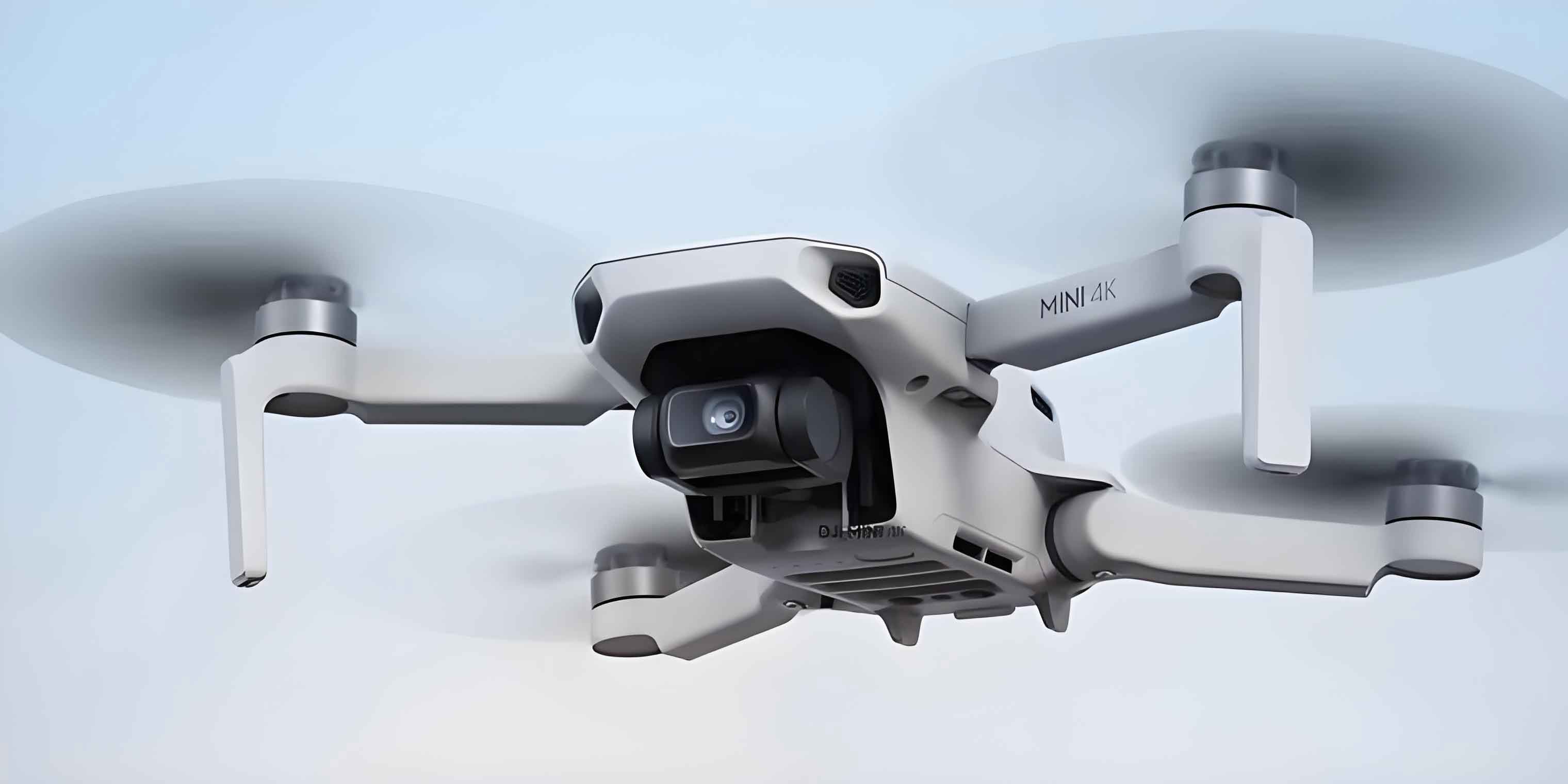
The deployment of multiple UAV drones for airspace coverage presents significant challenges, particularly in irregular or dynamic environments. Traditional methods often assume regular areas or fixed UAV positions, which may not be practical in real-world scenarios. Our work focuses on optimizing the positions of UAV drones to achieve high coverage rates with minimal resources. We consider fixed-wing UAVs due to their long endurance and substantial payload capacity, modeling their coverage as circular regions in a two-dimensional plane. The goal is to determine the optimal number and distribution of UAV drones to cover a given irregular area efficiently.
To tackle this problem, we first develop a mathematical model for airspace deployment. The coverage area of each UAV drone is represented as a circle with radius $R_0$ centered at the drone’s hovering point $O(x_O, y_O)$. The target irregular area is discretized into $N$ square grids, each with a geometric center $c_i = (c_{ix}, c_{iy})$. The set of all grid centers is denoted as $C = \{c_1, c_2, \dots, c_N\}$. We employ a Boolean sensing model to determine coverage: a grid center $c_i$ is considered covered if its Euclidean distance to the UAV drone’s center $O$ is less than or equal to $R_0$. Mathematically, the coverage status $f_i$ for grid $i$ is defined as:
$$f_i = \begin{cases}
1, & \text{if } d_{c_i,O} \leq R_0 \\
0, & \text{if } d_{c_i,O} > R_0
\end{cases}$$
where $d_{c_i,O} = \sqrt{(c_{ix} – x_O)^2 + (c_{iy} – y_O)^2}$. When multiple UAV drones are deployed, their coverage areas may overlap. To avoid double-counting, we use a joint probability model to compute the overall coverage probability $G_i$ for each grid center $c_i$:
$$G_i = 1 – \prod_{m=1}^{M} (1 – G_{mi})$$
Here, $M$ is the total number of UAV drones, and $G_{mi}$ is the coverage probability of grid $i$ by UAV drone $m$. Since we use a Boolean model, $G_{mi}$ is either 0 or 1, but the formula generalizes to probabilistic models. The overall coverage rate $F$ is then calculated as the fraction of covered grid centers:
$$F = \frac{1}{N} \sum_{i=1}^{N} G_i$$
Our objective is to maximize $F$ by optimizing the positions of the UAV drones. Additionally, we aim to minimize the number of UAV drones $M$ required to achieve a specified minimum coverage rate $\beta$. This dual optimization ensures cost-effectiveness and operational efficiency in deploying UAV drone networks.
The Dandelion Optimizer (DO) algorithm is a nature-inspired metaheuristic that simulates the flight of dandelion seeds. It consists of three phases: ascent, descent, and landing. However, the original DO algorithm suffers from slow convergence and low precision in complex optimization problems. We enhance the DO algorithm in three key aspects to better suit the multi-UAV deployment problem.
First, we improve the initial population generation using an interval division method combined with Gaussian chaotic mapping. Traditional random initialization may lead to uneven distribution of individuals in the search space. Our method divides the search range $[lb, ub]$ into $n$ intervals $[lb_i, ub_i]$ for $i = 1, 2, \dots, n$. Within each interval, we generate individuals using Gaussian chaotic mapping, defined by the recurrence relation:
$$x_{n+1} = a \cdot x_n \cdot (1 – x_n) + b \cdot \text{randn}()$$
where $a$ and $b$ are control coefficients, and $\text{randn}()$ represents Gaussian noise. This approach enhances population diversity and randomness, leading to better exploration of the search space for UAV drone positions.
Second, we modify the boundary violation handling strategy. In the original DO algorithm, particles that exceed boundaries are simply clamped to the boundary values, which can reduce diversity. Instead, we adopt a collision rebound strategy. For a UAV drone position $(X, Y)$ that falls outside the irregular area $S$, we compute its projection onto the edges of $S$ and identify the closest edge $l_i$ within the valid range. Suppose $l_i$ is represented by the line equation $y = m x + c$, and the projection point is $(x_v, y_v)$. The adjusted position $(X’, Y’)$ is given by:
$$X’ = x_v \pm \frac{\text{dist}}{\sqrt{1 + m^2}}, \quad Y’ = y_v \pm \frac{m \cdot \text{dist}}{\sqrt{1 + m^2}}$$
Here, $\text{dist}$ is a rebound distance calculated as $\text{dist} = R_0 \cdot r(k)$, where $R_0$ is the UAV drone’s coverage radius, and $r(k)$ is a function that decreases with iteration $k$ to gradually reduce rebound magnitude:
$$r(k) = \exp\left(-0.5 \left(\frac{x(k)}{0.7}\right)^2\right) + 0.1 \cdot \exp\left(-0.5 \left(\frac{x(k)}{0.05}\right)^2\right)$$
This strategy allows UAV drone positions to remain diverse while staying within the feasible region.
Third, we enhance the elite pool composition. The original DO algorithm relies solely on the best individual for updates, which can lead to premature convergence. We introduce an elite pool $Elite$ that includes the top three individuals based on fitness, along with randomly selected inferior individuals. As iterations progress, the proportion of inferior individuals decreases, balancing exploration and exploitation. The elite pool is defined as:
$$Elite = [elite_1, elite_2, elite_3, P_i, P_j]$$
where $elite_1, elite_2, elite_3$ are the best individuals, and $P_i, P_j$ are randomly chosen inferior solutions. This approach maintains diversity and helps escape local optima in UAV drone deployment.
To estimate the minimum number of UAV drones required for a given coverage threshold $\beta$, we propose an improved bisection method with dynamic step adjustment. The maximum and minimum number of UAV drones, $M_{\text{max}}$ and $M_{\text{min}}$, are initially estimated based on the area $S$ of the irregular region and the coverage area per UAV drone $\pi R_0^2$:
$$M_{\text{min}} = \left\lceil \frac{S}{\pi R_0^2} \right\rceil, \quad M_{\text{max}} = \left\lceil \frac{S}{\frac{1}{2} \pi R_0^2} \right\rceil$$
The ideal maximum coverage per UAV drone is $\alpha_0 = \frac{\pi R_0^2}{S}$. For a candidate number $M = \frac{M_{\text{min}} + M_{\text{max}}}{2}$, we use the improved DO algorithm to compute the optimal coverage rate $\beta’$. The bisection interval is then updated dynamically based on the difference between $\beta’$ and $\beta$, as summarized in Table 1.
| Condition | Traditional Bisection | Improved Bisection |
|---|---|---|
| $\beta’ < \beta$ | $\left[ \frac{M_{\text{min}} + M_{\text{max}}}{2}, M_{\text{max}} \right]$ | $\left[ \min\left( M_{\text{max}}, \frac{M_{\text{min}} + M_{\text{max}}}{2} + \left\lceil \frac{\beta – \beta’}{\alpha_0} \right\rceil \right), M_{\text{max}} \right]$ |
| $\beta’ > \beta$ | $\left[ M_{\text{min}}, \frac{M_{\text{min}} + M_{\text{max}}}{2} \right]$ | $\left[ M_{\text{min}}, \max\left( M_{\text{min}}, \frac{M_{\text{min}} + M_{\text{max}}}{2} – \left\lceil \frac{\beta’ – \beta}{\alpha_0} \right\rceil \right) \right]$ |
This process iterates until $M_{\text{max}} – M_{\text{min}} \leq 1$, at which point $M_{\text{max}}$ is the minimum number of UAV drones needed. This method efficiently balances coverage and resource utilization for UAV drone networks.
We evaluate the performance of our improved DO algorithm through simulations. First, we test its convergence speed and accuracy using benchmark functions, as shown in Table 2. These functions include unimodal, bimodal, and multimodal types to assess exploration and exploitation capabilities.
| Function Type | Name | Function Expression | Optimal Value |
|---|---|---|---|
| Unimodal | Sphere | $F(x) = \sum_{i=1}^{n} x_i^2$ | 0 |
| Bimodal | Six-Hump Camel-Back | $F(x) = 4x_1^2 – 2.1x_1^4 + \frac{1}{3}x_1^6 + x_1x_2 – 4x_2^2 + 4x_2^4$ | -1.0316285 |
| Multimodal | Shekel’s Foxholes | $F(x) = \left[ \frac{1}{500} + \sum_{j=1}^{25} \frac{1}{j + \sum_{i=1}^{2} (x_i – a_{ij})^6} \right]^{-1}$ | 1 |
The results, presented in Table 3, demonstrate that our improved DO algorithm achieves higher precision and faster convergence compared to the original DO algorithm. For instance, on the Sphere function, the improved DO reaches a solution close to 0 in 13 iterations, whereas the original DO requires 28 iterations. This enhancement is crucial for efficiently optimizing UAV drone positions in large search spaces.
| Function | Optimal Value | Original DO Solution | Improved DO Solution | Iterations (Original) | Iterations (Improved) |
|---|---|---|---|---|---|
| Sphere | 0 | 0.54 | 0.04 | 28 | 13 |
| Six-Hump Camel-Back | -1.0316285 | -2.17847 | -1.96138 | 52 | 35 |
| Shekel’s Foxholes | 1 | 2.62034 | 1.38901 | 79 | 47 |
We also analyze the time complexity of our algorithm. Compared to other metaheuristics like Particle Swarm Optimization (PSO), Genetic Algorithm (GA), and Ant Lion Optimizer (ALO), the improved DO shows more consistent and shorter runtimes. In 50 repeated experiments with a population size of 50 and 500 iterations, the improved DO had a median runtime lower than PSO, GA, and ALO, indicating its efficiency for real-time UAV drone deployment planning.
Next, we apply our method to the multi-UAV airspace coverage problem. Consider an irregular area with vertices at coordinates $(30,30), (0,0), (40,5), (60,40), (15,70)$ in kilometers, covering approximately 3725 km². Each UAV drone has a coverage radius $R_0 = 7$ km, resulting in a coverage area of about $\pi \times 7^2 \approx 153.94$ km² per UAV drone. The ideal maximum coverage per UAV drone is $\alpha_0 = 153.94 / 3725 \approx 4.13\%$. We set a minimum coverage requirement $\beta = 85\%$.
Using the improved bisection method, we estimate the minimum number of UAV drones. Starting with $M_{\text{min}} = \lceil 3725 / 153.94 \rceil = 25$ and $M_{\text{max}} = \lceil 3725 / (0.5 \times 153.94) \rceil = 49$, we iteratively refine the interval. For different values of $M$, we compute the optimal coverage rate $\beta’$ using the improved DO algorithm, as shown in Table 4.
| Number of UAV Drones ($M$) | Optimal Coverage Rate ($\beta’$) | Status Relative to $\beta = 85\%$ |
|---|---|---|
| 29 | 95.02% | Above |
| 23 | 86.99% | Above |
| 22 | 84.22% | Below |
| 21 | 81.71% | Below |
The minimum number of UAV drones required to achieve at least 85% coverage is $M = 23$, with an actual coverage of 86.99%. The optimized positions of the 23 UAV drones are distributed evenly across the irregular area, minimizing overlaps and gaps. This demonstrates the effectiveness of our approach in balancing coverage and resource allocation for UAV drone networks.
We further compare the coverage performance of our improved DO algorithm with the original DO, PSO, GA, and ALO algorithms. For $M = 23$ UAV drones, we run each algorithm with a population size of 50 and 500 iterations. The coverage rate $F$ over iterations is plotted, showing that the improved DO achieves an initial coverage of 74.29%, higher than the original DO’s 65.18%, and converges to 87.89% by iteration 149. In contrast, the original DO reaches 84.51% at iteration 326, PSO reaches 83.95% at 290, GA reaches 80.81% at 334, and ALO reaches 82.35% at 238. These results highlight the superior convergence speed and final coverage of our improved DO algorithm for multi-UAV deployment.
The mathematical formulation for coverage optimization involves maximizing $F$ subject to the constraints of UAV drone positions within the irregular area. Let the position of UAV drone $m$ be denoted as $O_m = (x_m, y_m)$ for $m = 1, 2, \dots, M$. The coverage probability $G_{mi}$ for grid $i$ by UAV drone $m$ is:
$$G_{mi} = \begin{cases}
1, & \text{if } \sqrt{(c_{ix} – x_m)^2 + (c_{iy} – y_m)^2} \leq R_0 \\
0, & \text{otherwise}
\end{cases}$$
Then, $G_i = 1 – \prod_{m=1}^{M} (1 – G_{mi})$, and the overall coverage rate is $F = \frac{1}{N} \sum_{i=1}^{N} G_i$. To handle irregular areas, we define a polygon $S$ with vertices $(v_{1x}, v_{1y}), (v_{2x}, v_{2y}), \dots, (v_{nx}, v_{ny})$. A point $(x, y)$ is inside $S$ if it satisfies the point-in-polygon condition, such as the ray-casting algorithm. During optimization, we ensure all UAV drone positions lie within $S$ using the boundary handling strategy described earlier.
The improved DO algorithm optimizes the vector of UAV drone positions $\mathbf{X} = [x_1, y_1, x_2, y_2, \dots, x_M, y_M]$. The fitness function is simply $F(\mathbf{X})$, which we maximize. The dimension of the problem is $2M$, and each variable is bounded by the minimum and maximum coordinates of the irregular area. The algorithm proceeds as follows:
- Initialization: Generate the initial population using interval division and Gaussian chaotic mapping. Each individual represents a candidate set of UAV drone positions.
- Ascent Phase: For each individual, update positions based on weather conditions. On sunny days (exploration), the update is:
$$p_{t+1} = p_t + \alpha \cdot v_x \cdot v_y \cdot \ln Y \cdot (p_s – p_t)$$
where $\alpha$ is a step size, $v_x$ and $v_y$ are lift coefficients, $Y$ follows a log-normal distribution, and $p_s$ is a random position. On rainy days (exploitation), the update is:
$$p_{t+1} = p_t \cdot k, \quad k = 1 – \frac{t^2}{T^2} + \frac{t^2}{T^2} \cdot \text{rand}()$$ - Descent Phase: Update positions toward the population mean:
$$p_{t+1} = p_t – \alpha \cdot \beta \cdot (p_{\text{mean}} – p_t)$$
where $p_{\text{mean}}$ is the average position of the population. - Landing Phase: Update positions using the elite pool and Lévy flights:
$$p_{t+1} = p_{\text{elite}} + \lambda \cdot \alpha \cdot \delta \cdot (p_{\text{elite}} – p_t)$$
where $p_{\text{elite}}$ is selected from the elite pool, $\lambda$ is a Lévy flight parameter, and $\delta$ is a scaling factor. - Boundary Handling: Apply the collision rebound strategy to any UAV drone positions that exceed the irregular area.
- Fitness Evaluation: Compute $F$ for each individual.
- Elite Pool Update: Update the elite pool with top individuals and random inferior individuals.
- Termination: Repeat steps 2-7 until the maximum iterations are reached.
This process ensures efficient optimization of UAV drone positions for maximum coverage. The use of multiple UAV drones in a coordinated manner allows for covering large, irregular areas effectively. Each UAV drone acts as a node in a network, providing communication or surveillance services. The optimization of their positions is critical to minimize costs and maximize service quality.
In addition to coverage rate, we consider the overlap between UAV drone coverage areas. Excessive overlap wastes resources, while insufficient overlap may leave gaps. Our algorithm naturally minimizes overlap due to the fitness function focusing on overall coverage. However, for further refinement, we can incorporate an overlap penalty term. Let $A_{\text{overlap}}$ be the total overlapping area among UAV drone coverage circles. The modified fitness function could be:
$$F’ = F – \gamma \cdot \frac{A_{\text{overlap}}}{M \cdot \pi R_0^2}$$
where $\gamma$ is a weighting factor. This encourages dispersed UAV drone positions, reducing redundancy. In our simulations, we found that the basic fitness function already yields low overlap, but this extension provides flexibility for specific applications.
The deployment of UAV drones in dynamic environments may require real-time adjustments. Our improved DO algorithm can be adapted for online optimization by reducing the population size or iterations. However, for planning purposes, the offline approach suffices. Future work could integrate predictive models for changing conditions, such as moving targets or varying communication demands.
To summarize, our contributions include: (1) an enhanced DO algorithm with better initial population, boundary handling, and elite diversity; (2) a mathematical model for irregular area coverage using multiple UAV drones; (3) a dynamic bisection method for estimating the minimum number of UAV drones; and (4) extensive simulations showing superior performance over existing algorithms. These advances support efficient and cost-effective UAV drone deployment for airspace coverage in disaster response, military operations, and other critical scenarios.
In conclusion, the use of multiple UAV drones for airspace coverage is a promising solution for many applications. Our improved DO algorithm effectively optimizes the positions of UAV drones to achieve high coverage rates with minimal resources. The integration of advanced strategies for population initialization, boundary handling, and elite management leads to faster convergence and higher precision. The proposed bisection method accurately determines the minimum number of UAV drones needed, balancing coverage and cost. Simulations confirm that our approach outperforms traditional algorithms in both benchmark tests and practical deployment scenarios. Future research may explore three-dimensional deployment, dynamic environments, and hybrid algorithms for further enhancement. Overall, this work provides a robust framework for multi-UAV airspace coverage optimization, contributing to the advancement of UAV drone technologies.