
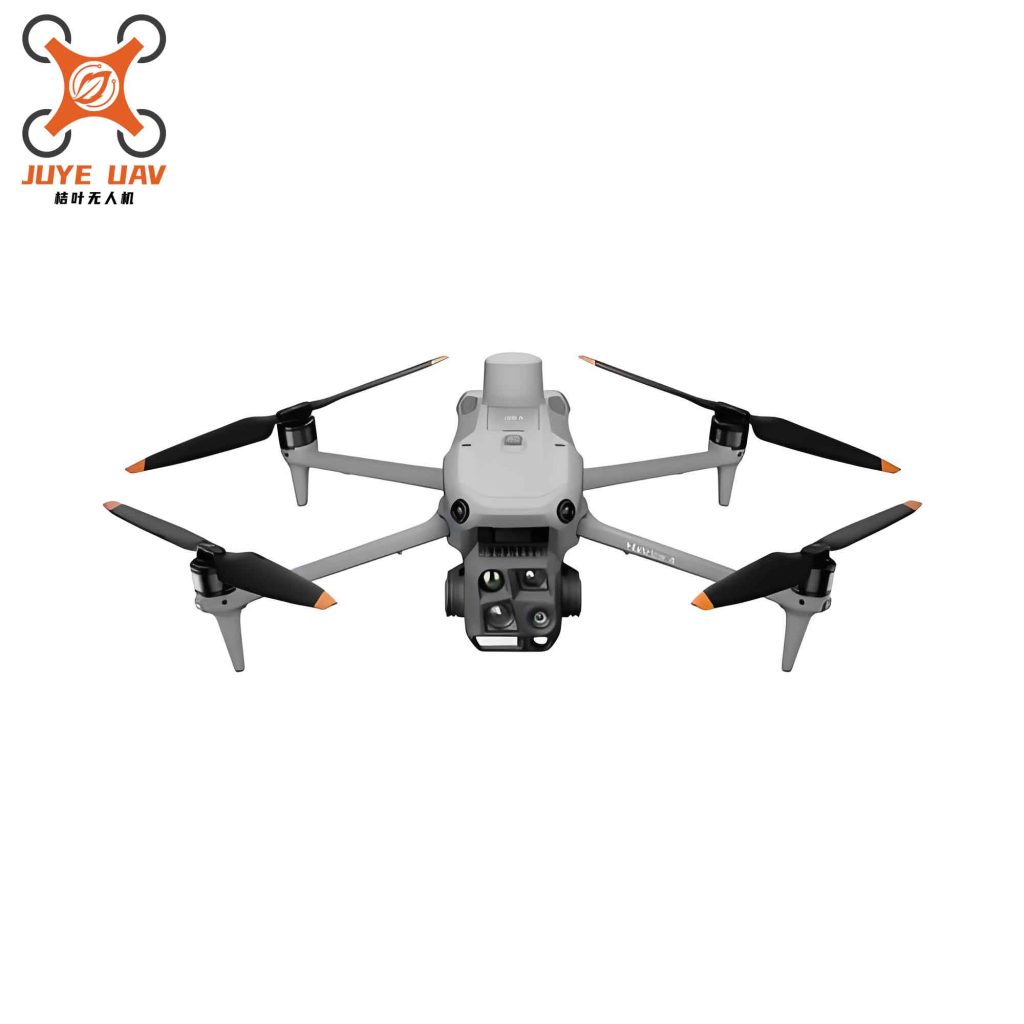
In the context of the rapid development of 6G space-air-ground networks and the deep implementation of China drone low-altitude economy strategy, unmanned aerial vehicles have evolved from early aerial photography tools into intelligent aerial platforms capable of executing high-value missions in complex dynamic environments. However, in typical applications such as emergency rescue and smart city inspection, China drone often faces the dual challenge of computation-intensive and latency-sensitive tasks, including high-definition video stream real-time analysis, panoramic augmented reality rendering, and target recognition. To address these challenges, we propose a collaborative scheduling framework that integrates sensing, computing, and communication resources specifically tailored for China drone low-latency missions.
Our study investigates a base station sensing-assisted UAV-MEC system, where a multi-antenna integrated sensing and communication base station serves multiple drones within its coverage area. The base station is co-deployed with a Mobile Edge Computing server to support high-speed computation. During system operation, drones offload their computation-intensive low-latency tasks to the base station via uplink communications. Concurrently, to ensure wireless link reliability and beam alignment accuracy, the base station employs radar functionality for real-time position sensing and trajectory tracking of drones. This creates a fundamental competition for computing resources between sensing-triggered tasks and offloaded computation tasks at the edge server side.
The key innovation of our work lies in explicitly characterizing the computational resource preemption cost of the sensing process. Unlike existing studies that often assume zero-cost sensing or infinite computing capacity, we quantify the mapping relationship between radar sampling frequency, sensing estimation error, and effective communication rate. This closed-loop mapping captures the impact of sensing frequency on offloading link stability and communication performance, which is crucial for China drone operations in dynamic environments.
For the mixed low-latency task flows, we design a priority-based queue scheduling mechanism with timeout dropping. The sensing tasks are assigned higher priority to ensure continuous beam tracking, while offloaded computation tasks are scheduled according to their urgency and waiting time. The priority function for each offloaded task is defined as:
$$F_u(t) = \omega_1 \cdot \frac{t_{wait,u}(t)}{T_{comp,max}} + \omega_2 \cdot \frac{D_{comp,u}(t)}{C_{comp,u}(t)} + \omega_3 \cdot \frac{1}{\tau_{comp,u}(t) + \epsilon}$$
where the weights ω₁, ω₂, ω₃ sum to 1, ε is a small constant to prevent division by zero, and t_wait,u(t) represents the task waiting time in the queue. This mechanism ensures that urgent tasks receive prioritized resource allocation, which is essential for China drone low-latency applications where task deadlines must be strictly met.
We formulate the joint optimization problem that integrates multi-drone trajectory planning, task offloading decisions, and edge computing resource allocation. The system model incorporates several key components:
System Model Formulation
Communication and Sensing Model: We employ a probabilistic Line-of-Sight channel model to describe the air-to-ground channel characteristics between China drone and the base station. The LoS probability is modeled using the Sigmoid function:
$$P_{u,LoS}(t) = \frac{1}{1 + \eta_a \exp(-\eta_b(\theta_u(t) – \eta_a))}$$
where ηa and ηb are environment-dependent statistical parameters. The corresponding path losses for LoS and NLoS links are:
$$L_{u,LoS}(t) = 20\log_{10}(4\pi f_c d_{u,bs}(t)/v_c) + \xi_{LoS}$$
$$L_{u,NLoS}(t) = 20\log_{10}(4\pi f_c d_{u,bs}(t)/v_c) + \xi_{NLoS}$$
For the MIMO radar sensing, the estimation mean square error of drone position is bounded by the Cramér-Rao lower bound:
$$\varepsilon_u(t) = \frac{\Phi}{P_{rad} \cdot f_{sen,u}(t) \cdot d_{u,bs}^4(t)}$$
where Φ is an integrated physical constant determined by bandwidth and wavelength. The sensing accuracy must satisfy the threshold constraint ε_u(t) ≤ ε_th for maintaining reliable beam alignment, which is critical for China drone communication links.
Task Scheduling Model: Two types of task flows are considered: sensing-triggered tasks generated by the base station, and offloadable computing tasks generated by drones. The sensing-triggered tasks have data size:
$$D_{sen,u}(t) = b_{sen} \cdot f_{sen,u}(t)$$
with computation requirement:
$$C_{sen,u}(t) = \gamma_{sen} \cdot D_{sen,u}(t)$$
The offloadable computing tasks arrive according to a Bernoulli process with probability ρu. The local execution delay for drone u is:
$$\tau_{u,local}(t) = \frac{C_{comp,u}(t)}{f_{u,local}(t)}$$
For offloaded tasks, the uplink transmission delay is:
$$\tau_{u,trans}(t) = \frac{D_{comp,u}(t)}{R_u(t)}$$
where R_u(t) is the uplink communication rate. The sensing processing delay at the base station is:
$$\tau_{sen}(t) = \frac{\sum_{u=1}^{U} C_{sen,u}(t)}{F_{mec}}$$
The total system cost includes task processing delay, sensing maintenance cost, and timeout dropping penalty. The queue dynamics at the MEC server evolve as:
$$Q(t+1) = \max\left[Q(t) + \sum_{u=1}^{U} r_u(t) \cdot C_{comp,u}(t) \cdot (1 – r_u(t)) – (F_{mec} – \sum_{u=1}^{U} C_{sen,u}(t)), 0\right] + C_{drop}(t)$$
where C_drop(t) represents the expired tasks discarded due to buffer overflow, incurring a penalty λ per task failure.
Optimization Problem and Algorithm Design
The complete optimization problem is formulated as minimizing the long-term system cost subject to trajectory, sensing, and computing constraints:
Minimize:
J = lim_{T→∞} (1/T) Σ_{t=1}^{T} E[ Σ_{u=1}^{U} τ_{u,sys}(t) + Cost_{sen}(t) + λ · C_{drop}(t) ]
Subject to:
C1: l_u(1) = l_u_start, l_u(T_total) = l_u_end, ∀u
C2: ||v_u(t)|| ≤ v_max, ∀u,t
C3: ε_u(t) ≤ ε_th, ∀u,t
C4: τ_sen(t) ≤ δt, ∀t
C5: Σ_{u=1}^{U} f_{u,mec}(t) ≤ F_{mec} – Σ_{u=1}^{U} C_{sen,u}(t)/δt, ∀t
C6: r_u(t) ∈ {0,1}, ∀u,t
This is a Mixed-Integer Non-Linear Programming problem due to the coupling of continuous trajectory variables and discrete offloading decisions. To solve this efficiently, we propose the Proximal Policy Optimization with Potential-Guided Reward algorithm based on a centralized Markov Decision Process formulation.
State Space: The 12U+1 dimensional joint state vector is defined as:
$$s_t = \{s_1(t), s_2(t), …, s_U(t), Q_{global}(t)\}$$
where each sub-vector s_u(t) contains 12 normalized features including position coordinates, velocity components, distance to base station, uplink rate, local task backlog, remaining deadline, and direction vectors.
Action Space: The 4U dimensional joint action vector is:
$$a_t = \{a_1(t), a_2(t), …, a_U(t)\}$$
where a_u(t) = {v_{x,u}, v_{y,u}, r_u, f_u} representing velocity components, offloading decision, and computing weight respectively.
Reward Function: The composite reward consists of performance feedback, potential-guided navigation, and terminal constraints:
$$R(t) = R_{perf}(t) + R_{nav}(t) + R_{terminal}(t)$$
The performance feedback term includes:
$$R_{perf}(t) = -[ \alpha_c \cdot \Sigma_{u=1}^{U} \tau_{u,sys}(t) + \alpha_s \cdot Cost_{sen}(t) + \alpha_d \cdot C_{drop}(t) + \alpha_p \cdot P_{const}(t) + \alpha_e \cdot \Sigma_{u=1}^{U} \varepsilon_u(t) ]$$
The artificial potential field navigation term guides drones toward targets:
$$R_{nav}(t) = \Sigma_{u=1}^{U} [ \beta_1 \cdot \nabla \varphi_{end}(l_u(t)) – \beta_2 \cdot ||\nabla \varphi_{obs}(l_u(t))|| ]$$
where φ_end represents the attractive potential toward destination and φ_obs represents repulsive potential from obstacles or boundaries.
Algorithm Architecture: We employ a centralized Actor-Critic framework where both the policy network and value network use fully-connected feedforward neural networks with two hidden layers of 256 neurons each and ReLU activation. The actor network outputs action distribution parameters, with velocity components mapped via tanh, computing weights via Softmax, and offloading decisions via sign function. The critic network estimates state value for advantage computation.
The training process follows three stages: trajectory sampling, advantage estimation using Generalized Advantage Estimation, and parameter update with clipped surrogate objective:
$$L^{CLIP}(\theta) = \hat{E}_t[\min(r_t(\theta)\hat{A}_t, clip(r_t(\theta), 1-\rho, 1+\rho)\hat{A}_t)]$$
where r_t(θ) = π_θ(a_t|s_t)/π_θ_old(a_t|s_t) is the probability ratio and ρ=0.2 is the clipping threshold.
Key Performance Metrics and Comparative Analysis
We conducted extensive simulations to validate the proposed algorithm. The simulation scenario considers a 1000×1000 m² area with U=3 drones and one base station at the center. Key simulation parameters are summarized below:
| Parameter | Value | Parameter | Value |
|---|---|---|---|
| Carrier frequency f_c | 28 GHz | Task data size | [2, 4] Mbits |
| System bandwidth B | 100 MHz | Computation density | 800 cycles/bit |
| Number of drones U | 3 | Task generation rate ρ_u | 0.15 |
| Base station antennas M | 64 | Task deadline T_comp,max | [2, 4] s |
| Noise power density N0 | -174 dBm/Hz | Local CPU frequency | 2.6 GHz |
| Maximum drone velocity v_max | 30 m/s | MEC total computing power F_mec | 15.2 GHz |
| Flight altitude H | 20 m | Sensing computation cost | 10⁹ cycles/s |
| Total flight time T_total | 100 s | Actor learning rate lr_a | 1×10⁻⁴ |
| Drone transmit power | 0.1 W | Critic learning rate lr_c | 3×10⁻⁴ |
| Radar sensing power P_rad | 40 W | Reward scaling factor | 0.1 |
The convergence characteristics of the proposed PPO-PGR algorithm demonstrate stable behavior after approximately 1600 training episodes, with cumulative rewards converging around -214. This stability validates the effectiveness of the proximal clipping mechanism in handling high-dimensional continuous action spaces for China drone applications.
The average position sensing estimation error during training shows a significant improvement from initial random exploration phases to convergence. In early stages, the sensing error frequently exceeds the threshold due to random trajectories keeping drones in poor radar visibility regions. As training progresses, the agent learns to adjust flight trajectories to maintain proximity to the base station, thereby maintaining sensing accuracy within safe limits. This ensures reliable beam alignment for China drone millimeter-wave communication links.
For system latency and task reliability metrics, we compared our proposed PPO-PGR algorithm against three baseline strategies:
| Strategy | Average Task Delay (s) | Task Completion Rate (%) | Sensing Error (m) |
|---|---|---|---|
| All-Local Execution | 3.82 | 68.5 | 0.85 |
| All-Offload Execution | 2.15 | 82.3 | 0.42 |
| Random Strategy | 2.94 | 73.1 | 0.63 |
| Proposed PPO-PGR | 1.38 | 97.09 | 0.28 |
The results clearly demonstrate the superiority of our proposed method. The All-Local execution strategy suffers from limited onboard computing capacity, resulting in high task delays and low completion rates. The All-Offload strategy, while leveraging MEC computing power, is constrained by millimeter-wave channel fluctuations and sensing task preemption of edge computing resources. The Random strategy exhibits intermediate performance due to lack of coordinated optimization. In contrast, our PPO-PGR algorithm achieves stable average delay of 1.38 seconds while maintaining a high task completion rate of 97.09%, significantly outperforming all baseline schemes.
The Pareto frontier analysis reveals that our proposed PPO-PGR solution occupies the optimal region in the three-dimensional performance space, balancing average task delay, average sensing error, and task completion rate. This demonstrates the algorithm’s ability to achieve optimal trade-offs among multiple performance metrics while ensuring sensing survival. The joint optimization of trajectory and resources effectively manages the fundamental tension between sensing accuracy and computing efficiency in China drone systems.
Theoretical Analysis and Key Insights
The fundamental challenge addressed in this work is the competition for computing resources between sensing tasks and computation offloading tasks at the edge server. This competition creates a coupling effect where high-frequency sensing improves communication link quality but consumes computing resources that could otherwise serve offloaded tasks. Our explicit modeling of this trade-off reveals several important insights for China drone applications.
First, the sensing frequency directly impacts both estimation accuracy and computing resource availability. The relationship can be expressed as:
$$\frac{\partial Cost_{sen}}{\partial f_{sen}} = w_t \cdot \frac{\gamma_{sen} \cdot b_{sen}}{F_{mec}} – \lambda \cdot \frac{\partial P_{const}}{\partial \varepsilon_u} \cdot \frac{\partial \varepsilon_u}{\partial f_{sen}}$$
This balance point determines the optimal sensing frequency that minimizes total system cost. Our algorithm learns to dynamically adjust this trade-off based on current system state and task characteristics.
Second, the trajectory optimization significantly influences sensing quality and communication performance. The relationship between drone position and these metrics is captured by the potential field guidance mechanism:
$$\varphi_{end}(l_u(t)) = \frac{1}{2} k_{att} \cdot ||l_u(t) – l_u^{end}||^2$$
$$\varphi_{obs}(l_u(t)) = \begin{cases} 0, & d_u(t) > d_0 \\ \frac{1}{2} \eta_{rep} \cdot \left(\frac{1}{d_u(t)} – \frac{1}{d_0}\right)^2, & d_u(t) \leq d_0 \end{cases}$$
where k_att and η_rep are gain coefficients. This artificial potential field transforms sparse terminal rewards into dense, continuous guidance signals, effectively addressing the direction-finding problem in long-duration trajectory optimization.
Third, the priority-based queue scheduling mechanism ensures that urgent tasks receive timely processing. The advantage estimation in our algorithm incorporates both immediate rewards and future expected returns:
$$\hat{A}_t = \delta_t + (\gamma\lambda_{GAE})\delta_{t+1} + (\gamma\lambda_{GAE})^2\delta_{t+2} + …$$
This enables the algorithm to make optimal decisions considering long-term consequences rather than being myopically focused on immediate performance.
Conclusion and Future Work
In this paper, we presented a comprehensive framework for collaborative scheduling of integrated sensing, computing, and communication resources specifically designed for China drone low-latency tasks. Our contributions include: (1) explicit characterization of sensing computational overhead and its impact on task offloading performance; (2) design of a priority-based queue scheduling mechanism with timeout dropping for mixed task flows; (3) formulation of the joint optimization problem as a centralized Markov decision process; and (4) development of the PPO-PGR algorithm with artificial potential field-guided rewards and centralized Actor-Critic architecture.
Simulation results demonstrate that our proposed method achieves superior performance compared to baseline strategies, including All-Local, All-Offload, and Random approaches. The algorithm converges to stable policies that maintain high task completion rates (97.09%) while significantly reducing average task latency (1.38 seconds) and ensuring acceptable sensing accuracy. This validates the effectiveness of the collaborative communication-sensing-computing resource scheduling mechanism for China drone low-latency mission scenarios.
However, several limitations exist in the current work. The centralized training architecture requires real-time global state information feedback, which may lead to significant signaling overhead as the number of drones increases. This could potentially cause decision latency in large-scale deployments. Additionally, the current model assumes perfect knowledge of drone mobility patterns and task characteristics, which may not hold in highly uncertain environments.
Future research directions include: (1) extending the framework to distributed multi-agent reinforcement learning architectures to reduce communication overhead and improve scalability. Such approaches would allow each China drone to make decisions based on local observations while sharing value function approximations; (2) incorporating more sophisticated channel models that account for time-varying multipath effects and interference; (3) investigating energy-constrained scenarios where both computing and communication power are limited; and (4) exploring the integration of reconfigurable intelligent surfaces to further enhance mmWave beamforming performance in challenging environments.
The proposed PPO-PGR algorithm provides a solid foundation for intelligent resource management in China drone networks, enabling reliable and efficient operation in emergency communication, smart city inspection, and other latency-critical applications. As China drone technology continues to advance, such collaborative scheduling mechanisms will become increasingly important for realizing the full potential of integrated sensing, computing, and communication systems.