
In modern marine security and intelligent ocean management, surface target search technology plays a crucial role. With increasingly complex maritime security situations and deepening exploitation of marine resources, efficient and accurate surface target search capabilities have become a technical foundation for many critical tasks. In maritime search and rescue and emergency response, effective surface target search technology can significantly improve target detection efficiency and rescue success rates, serving as a key means to reduce casualties and property losses. In complex and ever-changing marine environments, surface target search tasks face challenges such as vast search ranges, uncertain target information, and high real-time requirements. Traditional single-platform operation modes struggle to meet the practical needs of modern marine monitoring and emergency response, making heterogeneous multi-agent systems an effective solution. The cross-domain cooperative formation mode integrating aerial unmanned drones and surface unmanned vehicles expands the dimension of monitoring and perception from the traditional two-dimensional plane to three-dimensional space, leveraging the complementary advantages of each platform and demonstrating immense application potential and research value.
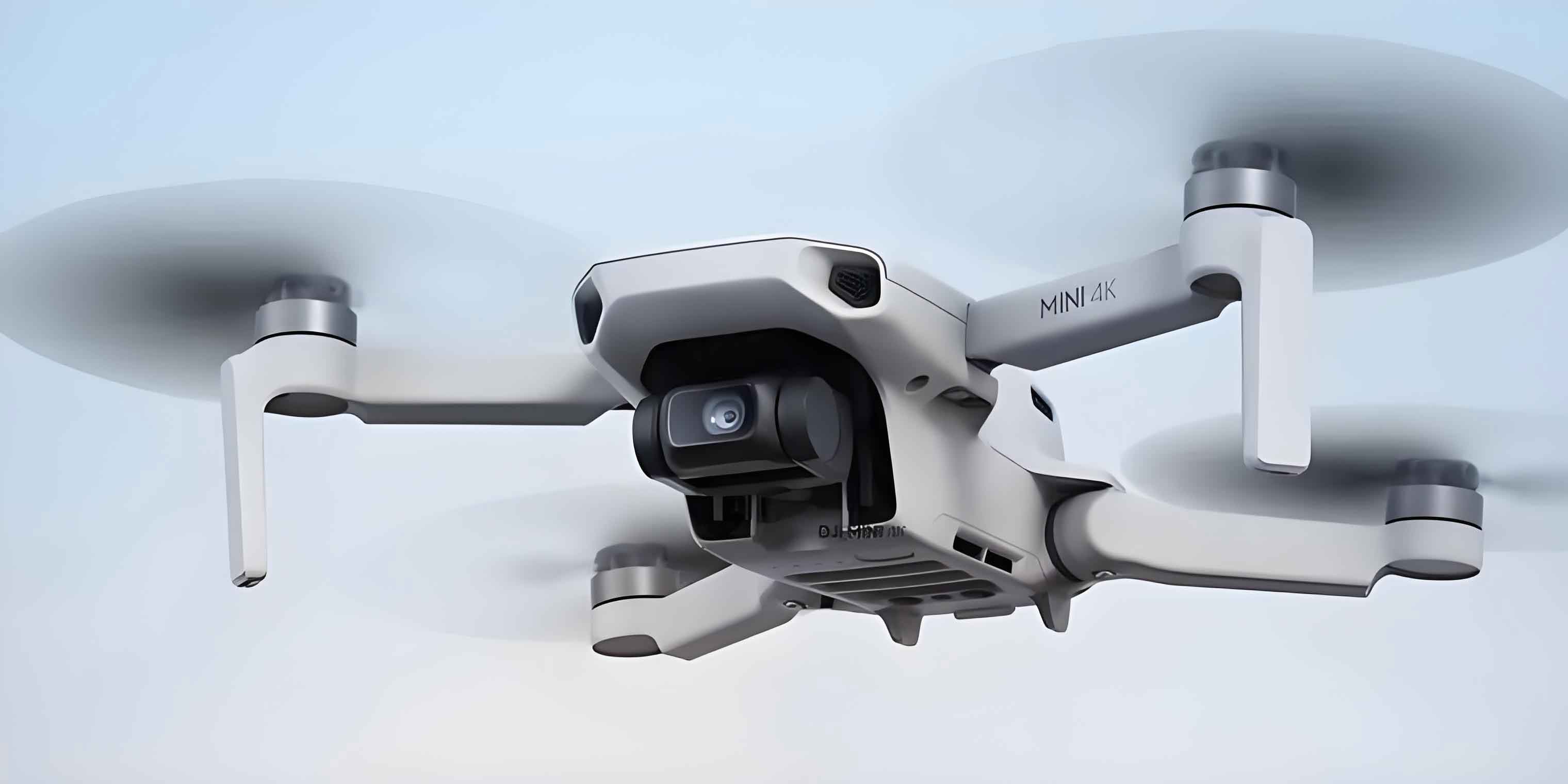
Unmanned surface vehicle (USV) clusters, as flexible surface mobile platforms, can support unmanned drones in completing long-endurance missions. With their agile water navigation capabilities, compact size, high endurance, and high payload capacity, they are suitable for long-duration, high-intensity maritime operations, acting as mobile platforms and logistical support bases for unmanned drones. Unmanned drones, with their broad detection视野, agile maneuverability, and free hovering capability, quickly cover wide areas from high altitudes and precisely locate targets, becoming key means for large-scale search and environmental monitoring.
Researchers worldwide have achieved numerous results in cross-domain formation control. For instance, some studies propose cooperative trajectory planning methods for UAV-USV clusters based on geofence constraints and temporal collision judgment, using differential evolution algorithms to optimize cluster navigation time, with simulations verifying communication maintenance and safe navigation capabilities. Others address fault-tolerant formation control under multiple actuator failures in cross-domain formations, proposing methods to handle heterogeneous dynamics and uncertainties caused by actuator failures, tackling control challenges from structural mutations. Additionally, “leader-follower” based cross-medium cooperative control strategies for USV-AUV systems utilize nonlinear disturbance observers to compensate for modeling errors, combined with improved line-of-sight guidance and feedback linearization design to achieve AUV following control, theoretically ensuring consistent global asymptotic stability. To further enhance the intelligence level of cooperative tasks, researchers explore more advanced control frameworks, such as applying model predictive control to UAV-USV cooperative tracking tasks, transforming cooperative tracking problems into constrained quadratic programming problems and solving them with improved Hildreth algorithms to ensure real-time tracking. To cope with complex external disturbances in marine environments, studies on cross-domain fixed-time formation control for air-sea heterogeneous unmanned systems design cross-domain communication protocols and combine fixed-time control theory with backstepping methods to design distributed observers and controllers. For further optimization, prescribed performance control is integrated with optimal control to ensure system performance while optimizing virtual control inputs. Simultaneously, to address model uncertainties, intelligent estimation algorithms are widely adopted, such as using radial basis function neural networks to estimate uncertain dynamics of USVs and uncertainty and disturbance estimators to compensate for multiple disturbances on UAVs. Moreover, to reduce controller design complexity and communication burden, robust path tracking controllers based on L-functions are proposed, along with novel output-error-based dynamic event-triggered mechanisms to reduce control command transmission frequency.
Overall, existing methods have made progress in cross-domain formation research but often rely on specific constraints, limiting adaptability in dynamic multi-target or large-scale search tasks. Some studies consider actuator failures, but robustness issues arising from dynamic characteristic differences between heterogeneous platforms and environmental uncertainties remain insufficiently addressed. The marine environment is complex and variable, with factors like sea state changes, obstructions, and blurred target features easily reducing perception accuracy and affecting target detection and tracking effectiveness. Multi-domain platforms have significant dynamic characteristic differences, with aerial and surface platforms differing markedly in maneuverability, perception capabilities, and control frequencies, leading to complex system coupling and increased difficulty in cooperative modeling and control design. Existing control methods often rely on ideal conditions, lacking adaptability and robustness in complex environments with multiple targets, strong disturbances, and uncertain parameters. These issues limit the widespread deployment and efficient operation of cross-domain formations in real marine environments for surface target search tasks.
To address these problems, this paper focuses on surface target search and constructs a unified modeling framework for UAV-USV heterogeneous systems, integrating aerial and surface platforms into a unified dynamic system, providing a modeling basis for cooperative control of cross-domain systems. A formation control strategy based on virtual leaders is designed, projecting the quadrotor unmanned drone onto the water surface as the tracking target for surface unmanned vehicles and setting surface virtual leaders, effectively simplifying the three-dimensional formation problem into a two-dimensional tracking problem, reducing system complexity. Building on traditional fixed-time control methods, adaptive laws are introduced to estimate system uncertain parameters in real-time, combined with nonlinear gain functions to design control laws, ensuring error convergence within a fixed time while significantly enhancing system robustness and anti-interference capabilities. Through simulation systems comprising one UAV and four USVs, the proposed control method’s convergence, stability, and anti-disturbance capabilities in multi-agent systems are verified, providing theoretical support and technical reference for efficient cooperation of heterogeneous swarm systems in practical marine search tasks.
Unlike common multi-machine cooperation modes, this paper focuses on the specific formation configuration of “single drone multiple boats,” where one leading unmanned drone guides multiple following USVs to execute tasks. This configuration stems from specific task requirements. In wide-area maritime surveillance and operations, a single unmanned drone platform can cover vast areas and uniformly调度 boat clusters, simplifying airspace coordination complexity. Simultaneously, surface tasks (such as large-scale search, environmental monitoring, or target encirclement) often require multiple operational units to be deployed dispersedly in physical space, with multiple USVs forming a distributed surface operational network to achieve parallel processing of large sea areas. Therefore, the “single drone multiple boats” formation configuration effectively combines the information advantage of unmanned drones with the physical coverage and operational advantages of multiple USVs, representing a cost-effective, clear cooperative relationship, and task-adaptive heterogeneous swarm mode with significant application value in maritime search and rescue, fishery law enforcement, and other fields.
Problem Description and Preliminary Knowledge
Coordinate Systems and Transformations
In UAV-USV cross-domain formation systems, coordinate system definition is the foundation of modeling and control. This paper primarily uses two coordinate systems: the ground coordinate system and the body coordinate system, describing target trajectories and self-motion states, respectively. To align position and attitude information between systems, accurate coordinate transformation relationships must be established between these two coordinate systems. Three-dimensional moving targets involve six degrees of freedom motion during navigation: surge, sway, heave, yaw, pitch, and roll. Let $$\boldsymbol{\eta}_1 = [x, y, z]^T$$ describe the three-dimensional position of the body in the fixed coordinate system, and $$\boldsymbol{\eta}_2 = [\phi, \theta, \psi]^T$$ describe the attitude angles of the body coordinate system relative to the fixed coordinate system, where: $\phi$ is the roll angle, range $(-90^\circ, 90^\circ]$; $\theta$ is the pitch angle, range $(-90^\circ, 90^\circ)$; $\psi$ is the yaw angle, range $(-180^\circ, 180^\circ]$. Thus, the body’s motion parameters in the body coordinate system can be represented as $$\boldsymbol{\eta} = [\boldsymbol{\eta}_1^T, \boldsymbol{\eta}_2^T]^T$$. The velocity of the body origin projected onto the $x_G$ axis of the body coordinate system is denoted as longitudinal velocity $u$, onto the $y_G$ axis as lateral velocity $v$, and onto the $z_G$ axis as vertical velocity $w$. The three rotational angular velocities in the body coordinate system are represented by $p$, $q$, $r$, respectively. Define $$\boldsymbol{\upsilon}_1 = [u, v, w]^T$$ and $$\boldsymbol{\upsilon}_2 = [p, q, r]^T$$, so the body’s motion parameters in the body coordinate system are represented as $$\boldsymbol{\upsilon} = [\boldsymbol{\upsilon}_1^T, \boldsymbol{\upsilon}_2^T]^T$$.
Assuming the fixed coordinate system origin coincides with the body coordinate system origin, the fixed coordinate system can be converted to the body coordinate system through three coordinate axis rotations, with the transformation relationship expressed as:
$$
\begin{bmatrix} \xi \\ \eta \\ \zeta \end{bmatrix} = \mathbf{J}_1(\boldsymbol{\eta}_2) \begin{bmatrix} x \\ y \\ z \end{bmatrix}
$$
where
$$
\mathbf{J}_1(\boldsymbol{\eta}_2) = \begin{bmatrix}
\cos\psi\cos\theta & \cos\psi\sin\theta\sin\phi – \sin\psi\cos\phi & \cos\psi\sin\theta\cos\phi + \sin\psi\sin\phi \\
\sin\psi\cos\theta & \sin\psi\sin\theta\sin\phi + \cos\psi\cos\phi & \sin\psi\sin\theta\cos\phi – \cos\psi\sin\phi \\
-\sin\theta & \cos\theta\sin\phi & \cos\theta\cos\phi
\end{bmatrix}
$$
The inverse transformation is:
$$
\begin{bmatrix} x \\ y \\ z \end{bmatrix} = \mathbf{J}_1^{-1}(\boldsymbol{\eta}_2) \begin{bmatrix} \xi \\ \eta \\ \zeta \end{bmatrix}
$$
where
$$
\mathbf{J}_1^{-1}(\boldsymbol{\eta}_2) = \begin{bmatrix}
\cos\psi\cos\theta & \sin\psi\cos\theta & -\sin\theta \\
\sin\psi\cos\phi – \cos\psi\sin\theta\sin\phi & -\cos\psi\cos\phi – \sin\psi\sin\theta\sin\phi & \cos\theta\sin\phi \\
\sin\psi\sin\phi + \cos\psi\sin\theta\cos\phi & -\cos\psi\sin\phi + \sin\psi\sin\theta\cos\phi & \cos\theta\cos\phi
\end{bmatrix}
$$
The velocity components in the fixed coordinate system and the linear velocities in the body coordinate system transformation relationship is:
$$
\dot{\boldsymbol{\eta}}_1 = \mathbf{J}_1(\boldsymbol{\eta}_2) \boldsymbol{\upsilon}_1 = \mathbf{J}_1(\boldsymbol{\eta}_2) \begin{bmatrix} u \\ v \\ w \end{bmatrix} = \begin{bmatrix} \dot{x} \\ \dot{y} \\ \dot{z} \end{bmatrix}
$$
The attitude angles in the fixed coordinate system and the angular velocities in the body coordinate system transformation relationship can be expressed as:
$$
\dot{\boldsymbol{\eta}}_2 = \mathbf{J}_2(\boldsymbol{\eta}_2) \boldsymbol{\upsilon}_2 = \mathbf{J}_2(\boldsymbol{\eta}_2) \begin{bmatrix} p \\ q \\ r \end{bmatrix} = \begin{bmatrix} \dot{\phi} \\ \dot{\theta} \\ \dot{\psi} \end{bmatrix}
$$
where
$$
\mathbf{J}_2(\boldsymbol{\eta}_2) = \begin{bmatrix}
1 & \sin\phi\tan\theta & \cos\phi\tan\theta \\
0 & \cos\phi & -\sin\phi \\
0 & \sin\phi/\cos\theta & \cos\phi/\cos\theta
\end{bmatrix}
$$
Unmanned Drone Model
To facilitate subsequent formation control system design, the unmanned drone mathematical model is simplified, making the following assumptions:
- The quadrotor unmanned drone is considered as a six-degree-of-freedom rigid body.
- The body coordinate system origin is at the drone’s center of gravity, with symmetric structure and uniform mass distribution.
- The Earth’s surface is considered flat, ignoring its rotation and revolution effects.
The six-degree-of-freedom model during drone flight主要由 consists of动力学模型 and运动学模型 for center of mass motion and绕质心转动的动力学模型 and运动学模型. Simplifying flight motion and ignoring complex coupling effects, the six-degree-of-freedom motion model can be described through forces and moments简化. Small quadrotor unmanned drones can be simplified to three main control moments $$\boldsymbol{\tau} = [\tau_{\phi}, \tau_{\theta}, \tau_{\psi}]^T$$, where $\tau_{\phi}$, $\tau_{\theta}$, $\tau_{\psi}$ represent the roll, pitch, and yaw moments experienced by the UAV, respectively. Its动力学模型 is as follows:
$$
\begin{aligned}
\ddot{x}_a &= \frac{F_a}{m_a} (\cos\phi_a \sin\theta_a \cos\psi_a + \sin\phi_a \sin\psi_a) – \frac{\rho_{xa}}{m_a} \dot{x}_a \\
\ddot{y}_a &= \frac{F_a}{m_a} (\cos\phi_a \sin\theta_a \sin\psi_a – \sin\phi_a \cos\psi_a) – \frac{\rho_{ya}}{m_a} \dot{y}_a \\
\ddot{z}_a &= \frac{F_a}{m_a} (\cos\phi_a \cos\theta_a) – g – \frac{\rho_{ha}}{m_a} \dot{z}_a \\
\ddot{\phi}_a &= \frac{I_{ya} – I_{za}}{I_{xa}} \dot{\theta}_a \dot{\psi}_a + \frac{\tau_{\phi} – \rho_{\phi} \dot{\phi}_a}{I_{xa}} \\
\ddot{\theta}_a &= \frac{I_{za} – I_{xa}}{I_{ya}} \dot{\phi}_a \dot{\psi}_a + \frac{\tau_{\theta} – \rho_{\theta} \dot{\theta}_a}{I_{ya}} \\
\ddot{\psi}_a &= \frac{I_{xa} – I_{ya}}{I_{za}} \dot{\phi}_a \dot{\theta}_a + \frac{\tau_{\psi} – \rho_{\psi} \dot{\psi}_a}{I_{za}}
\end{aligned}
$$
where: $\boldsymbol{\eta}_a = [x_a, y_a, z_a]^T$ is the UAV position vector; $\boldsymbol{\omega}_a = [\phi_a, \theta_a, \psi_a]^T$ is the UAV attitude vector; $\rho_{xa}, \rho_{ya}, \rho_{ha}$ and $\rho_{\phi}, \rho_{\theta}, \rho_{\psi}$ are aerodynamic damping coefficients; $F_a$ is the total thrust generated by the drone; $m_a$ is the UAV mass; $g$ is gravitational acceleration; $\omega_a$ is rotor angular velocity; $I_r$ is rotational inertia.
It should be noted that to focus on the core issues of formation control, this model does not详细 consider complex atmospheric disturbances such as gusts or sustained winds. In practical applications, these environmental factors significantly affect UAV attitude and position. However, the adaptive controller designed herein possesses compensation capabilities for total system uncertainties (including unmodeled dynamics and external disturbances), thus having inherent robustness to such environmental disturbances.
Unmanned Surface Vehicle Model
According to equations (5) and (6), the USV six-degree-of-freedom运动学方程 can be expressed as:
$$
\begin{aligned}
\dot{x}_f &= u_f \cos\psi_f \cos\theta_f + v_f (\cos\psi_f \sin\theta_f \sin\phi_f – \sin\psi_f \cos\phi_f) + w_f (\cos\psi_f \sin\theta_f \cos\phi_f + \sin\psi_f \sin\phi_f) \\
\dot{y}_f &= u_f \sin\psi_f \cos\theta_f + v_f (\sin\psi_f \sin\theta_f \sin\phi_f + \cos\psi_f \cos\phi_f) + w_f (\sin\psi_f \sin\theta_f \cos\phi_f – \cos\psi_f \sin\phi_f) \\
\dot{z}_f &= -u_f \sin\theta_f + v_f \cos\theta_f \sin\phi_f + w_f \cos\theta_f \cos\phi_f \\
\dot{\phi}_f &= p_f + q_f \sin\phi_f \tan\theta_f + r_f \cos\phi_f \tan\theta_f \\
\dot{\theta}_f &= q_f \cos\phi_f – r_f \sin\phi_f \\
\dot{\psi}_f &= q_f \sin\phi_f / \cos\theta_f + r_f \cos\phi_f / \cos\theta_f
\end{aligned}
$$
In unmanned surface vehicles, comfort requirements are lower, typically considered as planar motion on a two-dimensional horizontal plane, only considering USV movement along the X-axis, Y-axis, and rotation about the Z-axis, i.e., surge, sway, and yaw three-degree-of-freedom motion. Without current disturbances, its运动学模型 can be described as:
$$
\dot{\boldsymbol{\eta}}_f = \mathbf{R}_B^E(\psi_f) \boldsymbol{v}_f
$$
where: $\boldsymbol{\eta}_f = [x_f, y_f, \psi_f]^T$ is the USV three-degree-of-freedom state in the ground coordinate system, $x_f$ is position on the X-axis, $y_f$ on the Y-axis, $\psi_f$ is yaw angle in the ground coordinate system; $\boldsymbol{v}_f = [u_f, v_f, r_f]^T$ represents USV forward velocity, lateral velocity, and yaw angular velocity in the body coordinate system. Since only three-degree-of-freedom motion is considered, i.e., $\theta, \phi$ are both 0, then
$$
\mathbf{R}_B^E(\psi_f) = \begin{bmatrix}
\cos\psi_f & -\sin\psi_f & 0 \\
\sin\psi_f & \cos\psi_f & 0 \\
0 & 0 & 1
\end{bmatrix}
$$
Considering the USV as a rigid body, its动力学模型 can be described as:
$$
\mathbf{M} \dot{\boldsymbol{\upsilon}} + \mathbf{C}(\boldsymbol{\upsilon}) \boldsymbol{\upsilon} + \mathbf{D}(\boldsymbol{\upsilon}) \boldsymbol{\upsilon} + \mathbf{g}(\boldsymbol{\eta}) = \boldsymbol{\tau} – \boldsymbol{\tau}_e
$$
where: $\mathbf{M}$ is the generalized mass matrix, composed of mass and inertia matrices and added mass matrix; $\mathbf{C}(\boldsymbol{\upsilon})$ represents the Coriolis centripetal matrix, composed of hydrodynamic centripetal matrix and rigid body centripetal matrix; $\mathbf{D}(\boldsymbol{\upsilon})$ is the nonlinear hydrodynamic damping matrix; $\mathbf{g}(\boldsymbol{\eta})$ is the restoring force matrix, composed of weight $W$ and buoyancy $B$; $\boldsymbol{\tau} = [F_f, 0, 0, 0, \delta_s, \delta_r]^T$ represents the USV control matrix, where $F_f$ is thrust, $\delta_s$ is horizontal rudder angle, $\delta_r$ is vertical rudder angle; $\boldsymbol{\tau}_e$ is environmental disturbance.
The USV mathematical model in the two-dimensional horizontal plane can be simplified as:
$$
\begin{aligned}
\dot{x}_f &= u_f \cos(\psi_f) – v_f \sin(\psi_f) \\
\dot{y}_f &= u_f \sin(\psi_f) + v_f \cos(\psi_f) \\
\dot{\psi}_f &= r_f \\
\dot{u}_f &= \frac{m_{2f}}{m_{1f}} v_f r_f – \frac{d_{1f}}{m_{1f}} u_f + \frac{1}{m_{1f}} F_f \\
\dot{v}_f &= -\frac{m_{1f}}{m_{2f}} u_f r_f – \frac{d_{2f}}{m_{2f}} v_f \\
\dot{r}_f &= \frac{m_{1f} – m_{2f}}{m_{6f}} u_f v_f – \frac{d_{5f}}{m_{6f}} r_f + \frac{1}{m_{6f}} b_2 \delta_r
\end{aligned}
$$
where
$$
\begin{aligned}
m_{1f} &= m_f – X_{\dot{u}}, \quad m_{2f} = m_f – Y_{\dot{v}}, \quad m_{3f} = m_f – Z_{\dot{w}} \\
m_{5f} &= I_y – M_{\dot{q}}, \quad m_{6f} = I_z – N_{\dot{r}} \\
g_1 &= (W – B)\cos\theta, \quad g_2 = (z_g W – z_b B)\sin\theta \\
d_{1f} &= X_u + X_{u|u|}|u_f|, \quad d_{2f} = Y_v + Y_{v|v|}|v_f| \\
d_{3f} &= Z_w + Z_{w|w|}|w_f|, \quad d_{4f} = M_q + M_{q|q|}|q_f| \\
d_{5f} &= N_r + N_{r|r|}|r_f|, \quad b_1 = u_f^2 M_{\delta_s}, \quad b_2 = u_f^2 N_{\delta_r}
\end{aligned}
$$
Here, $m_f$ is USV mass; $m_1, m_2, m_6$ are combined mass and added mass terms; $d_1, d_2, d_5$ are hydrodynamic damping parameters; $X_u, Y_v, Z_w, M_q, N_r$ are hydrodynamic parameters; $X_{u|u|}, Y_{v|v|}, Z_{w|w|}$ are nonlinear damping coefficients; $M_{q|q|}, N_{r|r|}$ are nonlinear damping moment coefficients, using SNAME standards; $M_{\delta_s}$ and $N_{\delta_r}$ are rudder effectiveness coefficients; $I_j, j=x,y,z$ represent USV moments of inertia.
This USV model simplifies complex hydrodynamic effects such as wave slamming and second-order wave forces in high sea states. These factors become main disturbance sources in恶劣 sea conditions. In this study’s simulation environment, these complex marine environmental influences are uniformly summarized as bounded external disturbance terms, estimated and compensated through adaptive fixed-time controllers, thereby verifying control algorithm effectiveness under continuous external disturbances. This simplification facilitates focused analysis of formation control algorithm core performance, while the algorithm’s robust design endows it with certain applicability potential when facing more complex sea conditions.
It must be noted that based on constructing the above UAV and USV动力学模型, any effective cooperative formation task presupposes each platform’s physical motion capabilities. Therefore, before controller design, speed and maneuverability constraints for the drone-boat formation need clarification. As the leader, the unmanned drone, though highly maneuverable, must consider following USV capability limits in its planned trajectory. Specifically, the UAV’s maximum flight speed $V_{a,\text{max}}$ and maximum angular rate determine its motion envelope, but in formation tasks, its horizontal projection speed should match the USV’s maximum航速 $u_{s,\text{max}}$, avoiding USV inability to follow due to excessive speed. Similarly, as followers, USV maneuverability is a key bottleneck for formation capability, with maximum turn rate $r_{s,\text{max}}$ determining its minimum turning radius, requiring the leading unmanned drone’s planned path turn curvature not too large. In summary, the premise of designing cooperative formation control tasks herein is that the leading UAV generated desired trajectory must be “followable” by the following USV cluster, i.e., trajectory speed and curvature changes are within USV动力学响应范围. Controller design will further handle external disturbances and model uncertainties on this basis to achieve high-precision fixed-time formation tracking.
Formation Control Model Based on Virtual Leader Method
Surface search tasks often involve large-scale, uncertain targets, and dynamic environments, imposing high demands on search efficiency and task response. Formation control provides systematic support for search tasks through multi-platform cooperation, information sharing, and formation dynamic adjustment, enabling surface and aerial heterogeneous platforms to efficiently and stably complete complex search tasks. By designing virtual tracking targets for each follower USV, the UAV-USV formation problem is transformed into a virtual leader tracking problem. As shown in the principle diagram, when formation parameters meet design requirements, the formation shape is maintained. Therefore, each unmanned surface vehicle controlling its own formation parameters can cooperatively complete formation control, with the leader coordinating desired formation parameters. In a UAV-USV cross-domain formation cluster, the leader UAV advances at a certain speed and heading angle, while other follower USVs form desired formations centered on the leader UAV’s water surface projection. To enable follower USVs to form desired formations, a virtual leader is established for each follower USV, with follower USVs achieving formation shape control through tracking the virtual leader’s trajectory. The basic principle is illustrated in the figure, where the $i$-th follower USV position vector is $\boldsymbol{\eta}_i = [x_i, y_i, 0]^T$, the leader UAV’s horizontal projection position vector is $\boldsymbol{\eta}_l = [x_l, y_l, z_l]^T$, the $i$-th follower USV’s virtual leader position vector is $\boldsymbol{\eta}_{id} = [x_{id}, y_{id}, 0]^T$, $\psi_i$ and $\psi_l$ are the heading angles of the follower USV and leader UAV’s horizontal projection, respectively, $\boldsymbol{\rho}_i = [d_i \sin\beta_i, d_i \cos\beta_i, 0]^T$, $[d_i, \beta_i]$ are desired formation parameters, $d_i$ and $\beta_i$ are desired formation distance and line-of-sight angle between the virtual leader and UAV horizontal projection, $E-X_E Y_N Z_U$ is the fixed coordinate system, $B-X_B Y_B Z_B$ is the body coordinate system.
In the fixed coordinate system $E-X_E Y_N Z_U$, using coordinate rotation, based on the leader UAV’s horizontal position and desired formation distance $d_i$ and line-of-sight angle $\beta_i$, the virtual leader position vector $\boldsymbol{\eta}_{id}$ and leader USV horizontal position vector $\boldsymbol{\eta}_l$ relationship can be obtained:
$$
\boldsymbol{\eta}_{id} = \boldsymbol{\eta}_l – \mathbf{J}_1 \boldsymbol{\rho}_i
$$
where $\mathbf{J}_1 = \begin{bmatrix} \cos\psi_l & -\sin\psi_l & 0 \\ \sin\psi_l & \cos\psi_l & 0 \\ 0 & 0 & 1 \end{bmatrix}$ is the transformation matrix between fixed and body coordinate systems, and $\dot{\mathbf{J}}_1 = \mathbf{J}_1 \boldsymbol{v}_l^*$, $\boldsymbol{v}_l^* = \begin{bmatrix} 0 & -r_l & q_l \\ r_l & 0 & 0 \\ -q_l & 0 & 0 \end{bmatrix}$.
Thus, the UAV-USV formation control problem can be transformed into follower USV tracking virtual targets. Define USV and virtual leader position tracking error as:
$$
\boldsymbol{\eta}_{ei} = \boldsymbol{\eta}_{id} – \boldsymbol{\eta}_i
$$
In the body coordinate system, it can be expressed as:
$$
\mathbf{z}_1 = \mathbf{J}_1^T \boldsymbol{\eta}_{ei}
$$
Let $\mathbf{z}_1 = \mathbf{J}_1^T \boldsymbol{\eta}_{ei} = \mathbf{J}_1^T (\boldsymbol{\eta}_{id} – \boldsymbol{\eta}_i) = \mathbf{J}_1^T (\boldsymbol{\eta}_l – \mathbf{J}_1 \boldsymbol{\rho}_i – \boldsymbol{\eta}_i) = \mathbf{J}_1^T (\boldsymbol{\eta}_l – \boldsymbol{\eta}_i) – \boldsymbol{\rho}_i = \mathbf{J}_1^T \boldsymbol{\eta}_e – \boldsymbol{\rho}_i$, where $\boldsymbol{\eta}_e = \boldsymbol{\eta}_l – \boldsymbol{\eta}_i$ is trajectory tracking error.可知, $\mathbf{z}_1$ is the trajectory tracking error expressed in the body coordinate system. If $\mathbf{z}_1 = 0$, then $\boldsymbol{\eta}_e = 0$,至此, the formation tracking problem can be transformed into stabilizing $\mathbf{z}_1$.
Differentiating $\mathbf{z}_1$ yields:
$$
\begin{aligned}
\dot{\mathbf{z}}_1 &= \dot{\mathbf{J}}_1^T \boldsymbol{\eta}_{ei} + \mathbf{J}_1^T \dot{\boldsymbol{\eta}}_{ei} – \dot{\boldsymbol{\rho}}_i \\
&= -\boldsymbol{v}_l^* \mathbf{J}_1^T \boldsymbol{\eta}_{ei} + \mathbf{J}_1^T (\dot{\boldsymbol{\eta}}_{id} – \dot{\boldsymbol{\eta}}_i) – \dot{\boldsymbol{\rho}}_i \\
&= -\boldsymbol{v}_l^* \mathbf{z}_1 + \mathbf{J}_1^T (\dot{\boldsymbol{\eta}}_l – \dot{\mathbf{J}}_1 \boldsymbol{\rho}_i – \mathbf{J}_1 \dot{\boldsymbol{\rho}}_i – \dot{\boldsymbol{\eta}}_i) – \dot{\boldsymbol{\rho}}_i \\
&= -\boldsymbol{v}_l^* \mathbf{z}_1 + \mathbf{J}_1^T \dot{\boldsymbol{\eta}}_l – \boldsymbol{v}_l^* \boldsymbol{\rho}_i – \dot{\boldsymbol{\rho}}_i – \mathbf{J}_1^T \dot{\boldsymbol{\eta}}_i – \dot{\boldsymbol{\rho}}_i \\
&= -\boldsymbol{v}_l^* \mathbf{z}_1 + \mathbf{J}_1^T \dot{\boldsymbol{\eta}}_l – \boldsymbol{v}_l^* \boldsymbol{\rho}_i – \mathbf{P} \boldsymbol{\upsilon}_i – \dot{\boldsymbol{\rho}}_i
\end{aligned}
$$
where $\mathbf{P} = \begin{bmatrix} 1 & 0 & 0 \\ 0 & 0 & 0 \\ 0 & 0 & 0 \end{bmatrix}$, $\boldsymbol{\upsilon}_i = [u_i, q_i, r_i]^T$.
Define virtual velocity control variable $\boldsymbol{\upsilon}_d = [u_d, q_d, r_d]^T$, velocity error $\boldsymbol{\upsilon}_e = \boldsymbol{\upsilon}_d – \boldsymbol{\upsilon}_i$, then equation (18) can be rewritten as:
$$
\dot{\mathbf{z}}_1 = -\boldsymbol{v}_l^* \mathbf{z}_1 + \mathbf{P} \boldsymbol{\upsilon}_e + \mathbf{P} \boldsymbol{\upsilon}_d + \mathbf{J}_1^T \dot{\boldsymbol{\eta}}_l – \boldsymbol{v}_l^* \boldsymbol{\rho}_i – \dot{\boldsymbol{\rho}}_i
$$
Adaptive Fixed-Time Formation Controller Design and Stability Analysis Based on Backstepping
To achieve fixed-time convergence for $\mathbf{z}_1$, construct virtual velocity control law as follows:
$$
\boldsymbol{\upsilon}_d = \mathbf{P}^{-1} \left( -\mathbf{K}_1 \tanh(\mathbf{z}_1) – \mathbf{K}_2 \text{diag}(|\mathbf{z}_1|^{\beta-1}) \text{sgn}(\mathbf{z}_1) + \boldsymbol{v}_l^* \mathbf{z}_1 – \mathbf{J}_1^T \dot{\boldsymbol{\eta}}_l + \boldsymbol{v}_l^* \boldsymbol{\rho}_i + \dot{\boldsymbol{\rho}}_i \right)
$$
where $\mathbf{K}_1$, $\mathbf{K}_2$ are positive definite matrices, $\beta \in (1,2)$.
Lemma 1: If there exists a nonlinear system $\dot{x}(t) = f(x(t))$, where $\mathbf{x} = [x_1, x_2, \dots, x_n]^T$, function $f(\mathbf{x})$ is continuous on $\mathbb{R}^n$ and $f(0) = 0$. If there exist positive constants $q_1 > 0, q_2 > 0$, parameters $0 < a < 1, b > 1, 0 < \delta < \infty$, and a continuous positive definite function $V(\mathbf{x}): \mathbb{R}^n \to \mathbb{R}$, satisfying $\dot{V}(\mathbf{x}) \leq -q_1 V^a(\mathbf{x}) – q_2 V^b(\mathbf{x}) + \delta$, then the system state converges to the residual set:
$$
\lim_{t \to T_{\max}} \left\{ \mathbf{x} | V(\mathbf{x}) \leq \min\left( \left( \frac{\delta}{(1-\kappa)q_1} \right)^{\frac{1}{a}}, \left( \frac{\delta}{(1-\kappa)q_2} \right)^{\frac{1}{b}} \right) \right\}
$$
where $\kappa \in (0,1)$ is a constant, system convergence time $T_{\max}$ satisfies:
$$
T_{\max} \leq \frac{1}{\kappa q_1 (1-a)} + \frac{1}{\kappa q_2 (b-1)}
$$
Theorem 1: If constructing virtual velocity control law as equation (20), and satisfying $\boldsymbol{\upsilon}_e = 0$, then $\mathbf{z}_1$ converges to a bounded region within fixed time.
Proof: Select Lyapunov function:
$$
V_1 = \frac{1}{2} \mathbf{z}_1^T \mathbf{z}_1
$$
According to equation (19), differentiating equation (23) yields:
$$
\dot{V}_1 = \mathbf{z}_1^T \left( -\boldsymbol{v}_l^* \mathbf{z}_1 + \mathbf{P} \boldsymbol{\upsilon}_e + \mathbf{P} \boldsymbol{\upsilon}_d + \mathbf{J}_1^T \dot{\boldsymbol{\eta}}_l – \boldsymbol{v}_l^* \boldsymbol{\rho}_i – \dot{\boldsymbol{\rho}}_i \right)
$$
Since $\mathbf{z}_1^T \boldsymbol{v}_l^* \mathbf{z}_1 = 0$, if $\boldsymbol{\upsilon}_e = 0$, substituting equation (20) into equation (24):
$$
\dot{V}_1 = \mathbf{z}_1^T \left( -\mathbf{K}_1 \tanh(\mathbf{z}_1) – \mathbf{K}_2 \text{diag}(|\mathbf{z}_1|^{\beta-1}) \text{sgn}(\mathbf{z}_1) \right)
$$
According to literature, for any $\xi > 0$, the following inequality holds:
$$
x \tanh\left(\frac{x}{\xi}\right) \geq |x| – \xi \epsilon, \quad \epsilon = 0.2785
$$
Based on literature and equation (26):
$$
\mathbf{z}_1^T \mathbf{K}_1 \tanh(\mathbf{z}_1) \geq k_1 \|\mathbf{z}_1\|_1 – n k_1 \xi \epsilon \geq 2\sqrt{2} k_1 V_1^{1/2} – n k_1 \xi \epsilon
$$
where $k_1 = \lambda_{\min}(\mathbf{K}_1)$.
Also,
$$
\mathbf{z}_1^T \mathbf{K}_2 \text{diag}(|\mathbf{z}_1|^{\beta-1}) \text{sgn}(\mathbf{z}_1) \geq k_2 \sum_{i=1}^{n} |z_{1i}|^{\beta} \geq 2^{\beta/2} k_2 V_1^{\beta/2}
$$
where $k_2 = \lambda_{\min}(\mathbf{K}_2)$.
Thus,
$$
\dot{V}_1 \leq -2\sqrt{2} k_1 V_1^{1/2} – 2^{\beta/2} k_2 V_1^{\beta/2} + n k_1 \xi \epsilon
$$
Let $a = 2\sqrt{2} k_1$, $b = 2^{\beta/2} k_2$, $\delta = n k_1 \xi \epsilon$. According to Lemma 1, $V_1$ converges within fixed time, implying $\mathbf{z}_1$ converges. Proof ends.
至此, if $\boldsymbol{\upsilon}_e = 0$ can be achieved, then trajectory error term $\mathbf{z}_1$ will converge to a bounded region within fixed time. To further ensure velocity error $\boldsymbol{\upsilon}_e$收敛 within fixed time, design actual control law as follows:
$$
\boldsymbol{\tau}_a = \mathbf{P}^T \mathbf{z}_1 + \mathbf{K}_3 \tanh(\mathbf{z}_2) + \mathbf{K}_4 \text{diag}(|\mathbf{z}_2|^{\beta-1}) \text{sgn}(\mathbf{z}_2) + \hat{\sigma} \mathbf{z}_2
$$
where $\boldsymbol{\tau}_a = [\tau_u, 0, 0, 0, \tau_q, \tau_r]^T$ is control input, $\mathbf{z}_2 = \boldsymbol{\upsilon}_e$ is velocity error, $\hat{\sigma} = \hat{l}_0 + \hat{l}_1 \|\boldsymbol{\upsilon}\| + \hat{l}_2 \|\boldsymbol{\upsilon}\|^2$ is adaptive gain.
To compensate system uncertainties, adaptive parameters $\hat{l}_0$, $\hat{l}_1$, $\hat{l}_2$ update laws are:
$$
\dot{\hat{l}}_i = \gamma_i \|\mathbf{z}_2\|^{2-\beta} – \kappa_{i1} \hat{l}_i – \kappa_{i2} \hat{l}_i^{\beta}, \quad i = 0,1,2
$$
where $\gamma_i > 0$, $\kappa_{i1} > 0$, $\kappa_{i2} > 0$ are design constants.
Theorem 2: If constructing adaptive fixed-time controller as equation (30), then tracking error, velocity error, and adaptive parameters will converge to bounded sets within fixed time.
Proof: Let $\mathbf{z}_2 = \boldsymbol{\upsilon}_e$, select Lyapunov function:
$$
V_3 = V_1 + \frac{1}{2} \mathbf{z}_2^T \mathbf{M} \mathbf{z}_2 + \frac{1}{2} \sum_{i=0}^{2} \frac{1}{\gamma_i} \tilde{l}_i^2
$$
where $\tilde{l}_i = l_i – \hat{l}_i$, $l_i$ are true unknown constants. Differentiating and substituting dynamics, control law, and update laws, after manipulations, obtain:
$$
\dot{V}_3 \leq -q_1 V_3^{1/2} – q_2 V_3^{\beta/2} + \delta
$$
for some positive $q_1, q_2, \delta$. By Lemma 1, $V_3$ converges within fixed time, implying $\mathbf{z}_1$, $\mathbf{z}_2$, $\tilde{l}_i$ converge. Proof ends.
Thus, under controller action, system converges within fixed time.
Simulation Verification
To validate designed adaptive nonlinear controller effectiveness and practicality in cross-domain UAV-USV formation systems, a formation control model comprising one UAV as leader and four USVs as followers is built. Simulation uses North-East-Down coordinate system, all agent motions consider动力学 limits, controller outputs actual thrust and moments. Total simulation time 150 s, sampling time 0.1 s.
Straight-line path selected as leader reference trajectory, starting point (0,0,20 m), desired flight height maintained at 20 m, followers initialized behind leader, using line formation structure, longitudinal spacing set 10 m. To achieve precise tracking of leader and virtual formation points, each follower uses proposed adaptive controller for three-degree-of-freedom attitude and velocity closed-loop control. Simulation results如下.
| Parameter | Value | Description |
|---|---|---|
| $m_a$ | 1.5 kg | UAV mass |
| $m_f$ | 50 kg | USV mass |
| $g$ | 9.81 m/s² | Gravity |
| $\beta$ | 1.5 | Fixed-time parameter |
| $\gamma_i$ | 0.1 | Adaptive gain |
| $\kappa_{i1}, \kappa_{i2}$ | 0.01, 0.01 | Update law constants |
From formation trajectory plots, four follower USVs adjust within 10–20 s, forming and maintaining desired formation with leader UAV. According to formation error and velocity error curves, all follower USV formation tracking errors converge near zero within 20 s, demonstrating good fast convergence characteristics, proving designed controller achieves stable formation control. According to control output curves, although large adjustments exist initially (within t=10 s) to quickly correct initial errors, after entering steady-state tracking phase, control inputs are smooth without high-frequency chattering, longitudinal thrust stabilizes around 200 N, yaw moment fluctuates within small range around 0 N, controller quickly adjusts thrust system based on velocity errors, ensuring good heading control performance. Therefore, designed adaptive nonlinear controller has certain practical value and effectiveness in cross-domain UAV-USV formation control for surface target search tasks.
Conclusion and Future Work
This paper围绕 surface search tasks, addressing limited search range issues, constructs a unified动力学 modeling framework suitable for quadrotor unmanned drone and surface unmanned vehicle cooperative operations, and designs a formation control method based on virtual leaders. This method fully utilizes UAV high-altitude wide-area perception and USV near-water fine operation, achieving functional complementarity between two platform types, effectively expanding search coverage. For system uncertainties and nonlinearities, adaptive fixed-time control strategy is introduced, ensuring tracking and velocity errors converge within fixed time, improving system robustness and response speed. Through building UAV-USV heterogeneous cluster simulation environment, proposed method effectiveness and feasibility in fixed formation structures and preset path tracking tasks are verified. Simulation results show method achieves stable formation control for multi-agent systems, possessing good practical application potential.
This research provides solid theoretical foundation for UAV-USV cooperative formation control, but for more complex practical application scenarios, many directions值得深入探索. Future research will致力于 integrating more realistic marine environment动力学 models into controller design, especially under high sea states, developing active wave motion compensation strategies to address challenges of UAV taking off/landing or cooperating on颠簸 USV platforms, which will be key to enhancing cooperative system operational capability. Simultaneously, to address communication bandwidth limitations and energy sensitivity in远海 tasks, proposed fixed-time control framework can be combined with dynamic event-triggered mechanisms and quantized control, studying how to maximize communication and computation resource savings while ensuring convergence performance. Furthermore, in practical tasks, clusters not only maintain formation but also need to satisfy multiple constraints like obstacle avoidance, collision avoidance, and sensor field of view, integrating model predictive control framework with proposed fixed-time control有望以更优化的方式处理多重时变约束. Finally, in long-endurance tasks, sensor or actuator failures are inevitable risks, developing active fault-tolerant control and health management technologies for heterogeneous systems is crucial for ensuring UAV-USV cooperative system task resilience in harsh environments.
In summary, the integration of unmanned drones and unmanned surface vehicles in swarm formations represents a significant advancement for marine operations. The adaptive fixed-time control approach developed herein provides a robust framework for coordinating these heterogeneous systems, enabling efficient and reliable surface target search in dynamic ocean environments. Continued research in this domain will further unlock the potential of cross-domain autonomous systems for a wide range of maritime applications.