
As a researcher and practitioner in the field of military aviation maintenance, I have dedicated significant effort to understanding and optimizing support systems for advanced weaponry. In recent years, the proliferation and critical role of military unmanned aerial vehicles (UAVs) in modern warfare have underscored the urgent need for efficient, cost-effective, and rapid maintenance strategies. The traditional three-level maintenance structure—comprising organizational, intermediate, and depot levels—has been the backbone of military logistics for decades. However, with the increasing complexity, reliability, and deployment demands of military UAVs, a paradigm shift toward a two-level maintenance system is not only desirable but essential. In this article, I will explore the intricacies of the two-level maintenance system specifically tailored for military UAVs, examining its evolution, advantages, technological enablers, and applicability. My aim is to provide a comprehensive analysis that highlights why this approach is poised to become the standard for sustaining military UAV fleets, ensuring high operational readiness while minimizing lifecycle costs.
The concept of two-level maintenance, in essence, consolidates repair activities into two primary echelons: the organizational level (often referred to as the flight line or field level) and the depot level (factory or base-level support). This structure eliminates the intermediate maintenance level, which traditionally handled repairs beyond the capability of field technicians but not extensive enough for depot overhaul. For military UAVs, this simplification is particularly appealing due to their unique operational profiles. Military UAVs are deployed in diverse environments—from remote forward operating bases to carrier decks—and are tasked with missions ranging from surveillance and reconnaissance to strike operations. Consequently, their maintenance systems must be agile, responsive, and capable of supporting high-tempo operations. The two-level maintenance model addresses these needs by streamlining processes, reducing logistical footprints, and leveraging advanced technologies. Throughout this discussion, I will emphasize how military UAVs benefit from this approach, using key terms such as “military UAV” repeatedly to reinforce their central role.
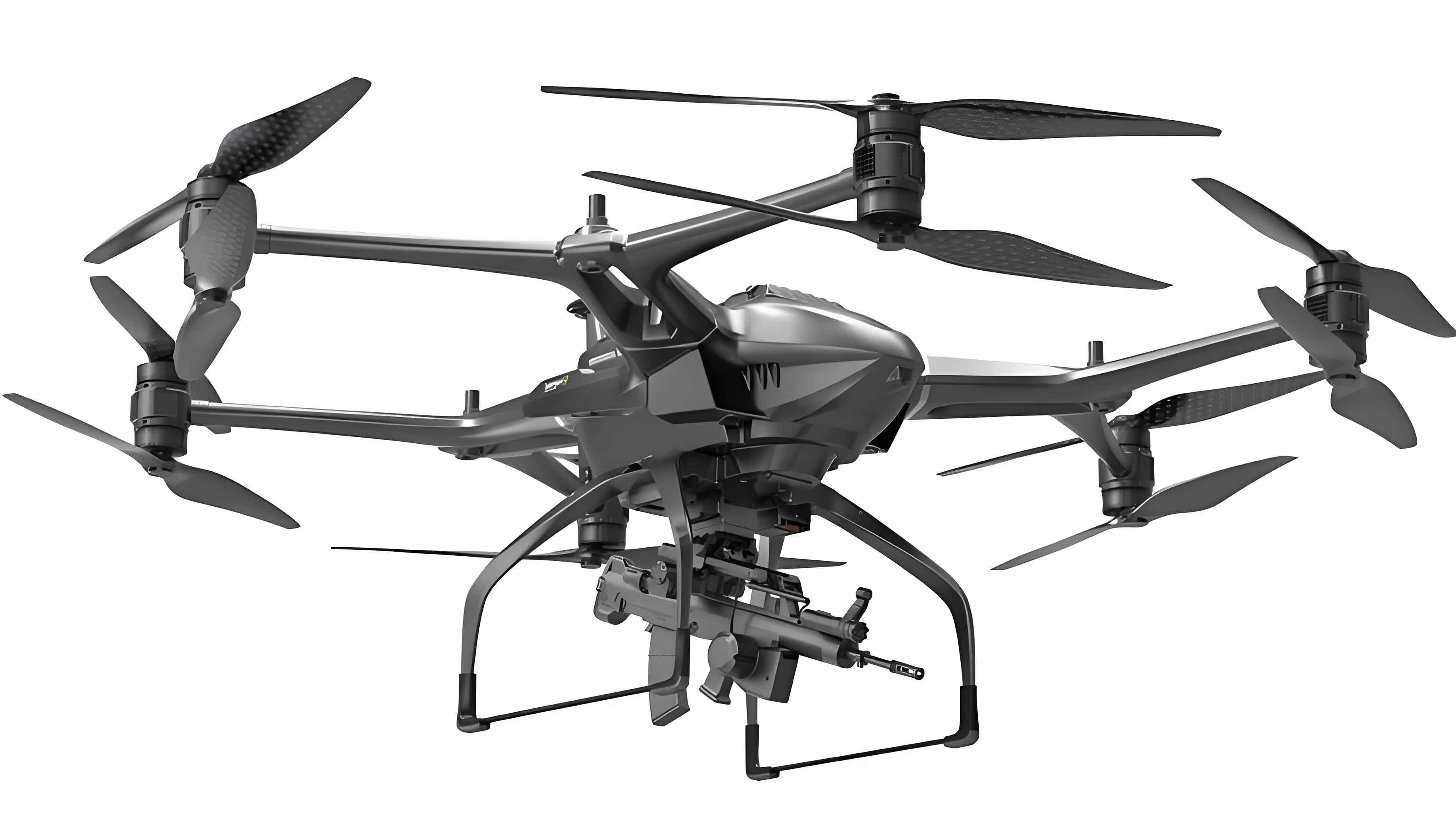
To appreciate the relevance of two-level maintenance for military UAVs, it is crucial to delve into its historical development. The origins of two-level maintenance can be traced back to the mid-20th century, when the U.S. Air Force experimented with a simplified structure for certain aircraft systems. Initially, this involved only organizational and depot levels, with technicians on the flight line responsible for fault isolation and replacement of line-replaceable units (LRUs). However, as aircraft systems grew more complex, the need for intermediate-level support became apparent, leading to the widespread adoption of the three-level model. It wasn’t until the 1990s, driven by lessons from conflicts such as the Gulf War, that the U.S. military revisited the two-level concept. The war exposed shortcomings in logistics and repair capabilities, prompting a reevaluation of maintenance hierarchies. Moreover, the rising costs associated with maintaining intermediate-level facilities, coupled with advancements in reliability and built-in test (BIT) technologies, made a return to two-level maintenance feasible. Today, this model has been successfully implemented in advanced aircraft like the F-22 and F-35, and its principles are increasingly applied to military UAVs. The evolution reflects a broader trend toward leaner, more efficient support systems, where military UAVs—with their modular designs and high-tech components—are ideal candidates.
The advantages of adopting a two-level maintenance system for military UAVs are multifaceted and significant. From my analysis, I can distill these benefits into several key areas, which I summarize in the following table to provide a clear comparison with the traditional three-level approach.
| Aspect | Three-Level Maintenance for Military UAVs | Two-Level Maintenance for Military UAVs |
|---|---|---|
| Deployment and Mobility | Requires transport of intermediate-level assets, increasing deployment footprint and complexity. | Simplifies logistics; reduces transport needs, enhancing rapid deployment and mobility for military UAV operations. |
| Process Efficiency | Involves multiple handoffs between levels, leading to longer repair cycles and potential delays. | Streamlines workflow; faults are isolated and replaced at organizational level, with direct shipment to depot, speeding up turnaround. |
| Cost Implications | Higher lifecycle costs due to maintenance of intermediate facilities, personnel, and equipment. | Lowers lifecycle costs by eliminating intermediate infrastructure; savings can be redirected to enhancing military UAV capabilities. |
| Resource Utilization | Requires specialized technicians at multiple levels, increasing training and manpower demands. | Optimizes resources; field technicians focus on replacement, while depot experts handle repairs, reducing skill requirements at organizational level. |
| Technological Integration | May lag in adopting new tech due to fragmented systems across levels. | Encourages innovation in BIT, modular design, and automated testing, directly benefiting military UAV sustainability. |
| Operational Readiness | Potential bottlenecks at intermediate level can degrade availability of military UAVs. | Improves readiness by minimizing repair time and ensuring faster return of military UAVs to service. |
This table underscores why two-level maintenance is gaining traction for military UAVs. In practice, the benefits translate to tangible improvements in mission effectiveness. For instance, during contingency operations, military UAVs can be deployed more swiftly, with fewer support constraints. The reduction in logistical burden allows for greater focus on combat operations, a critical factor in asymmetric warfare where military UAVs often play pivotal roles. Moreover, the cost savings are substantial; studies have shown that eliminating intermediate maintenance can cut overall support expenses by up to 30% for certain systems, funds that can be reinvested in procuring additional military UAVs or upgrading their payloads. From my perspective, these advantages make a compelling case for adopting two-level maintenance across military UAV fleets, especially as these platforms become more pervasive and technologically advanced.
Modern two-level maintenance for military UAVs is not merely a reversion to older practices but a sophisticated system enabled by cutting-edge technologies. The core of this model revolves around the use of line-replaceable modules (LRMs) instead of traditional LRUs. LRMs are self-contained functional units designed for quick removal and installation at the organizational level, often with minimal tools and training. This modularity is fundamental to efficient maintenance of military UAVs, as it allows for rapid fault isolation and replacement. The process typically begins with built-in test (BIT) systems embedded in the military UAV, which automatically monitor health and detect anomalies. When a fault occurs, BIT guides field technicians to the suspect LRM using portable maintenance aids (PMAs)—handheld devices that interface with the military UAV’s systems. The faulty LRM is then swapped with a spare, and the military UAV is returned to operational status. The removed LRM is shipped directly to the depot, where specialized automated test equipment (ATE) diagnoses and repairs it at the component level. This seamless flow is depicted in the following formula, which represents the overall maintenance turnaround time (MTAT) for a military UAV under a two-level system:
$$MTAT = T_{detect} + T_{isolate} + T_{replace} + T_{transport} + T_{repair} + T_{return}$$
Where:
– $T_{detect}$ is the time for fault detection via BIT.
– $T_{isolate}$ is the time for fault isolation to an LRM.
– $T_{replace}$ is the time for LRM replacement at organizational level.
– $T_{transport}$ is the time to ship the LRM to depot.
– $T_{repair}$ is the time for depot-level repair.
– $T_{return}$ is the time to return the repaired LRM to inventory.
In a well-optimized two-level system for military UAVs, $T_{isolate}$ and $T_{replace}$ are minimized through modular design, while $T_{transport}$ is reduced via efficient logistics networks. This results in a lower MTAT compared to three-level systems, where additional time is spent at the intermediate level. To quantify the reliability benefits, we can use the following reliability function for a military UAV subsystem:
$$R(t) = e^{-\lambda t}$$
Here, $R(t)$ is the probability that the subsystem operates without failure up to time $t$, and $\lambda$ is the failure rate. With improved maintenance, the effective $\lambda$ decreases due to faster repairs and better fault management, enhancing overall system availability. For military UAVs, high availability is critical for mission success, and two-level maintenance directly contributes to this by reducing downtime.
The successful implementation of two-level maintenance for military UAVs hinges on several key technologies. I have identified six core enablers that form the backbone of this approach, each playing a vital role in ensuring efficiency and effectiveness.
| Key Technology | Description | Impact on Military UAV Maintenance |
|---|---|---|
| Line-Replaceable Module (LRM) Technology | Advanced modular design allowing quick swap of functional units in the field. | Enables rapid fault isolation and replacement for military UAVs, reducing organizational-level repair time and simplifying logistics. |
| Logistics and Supply Chain Innovations | Integrated systems for transport, storage, and distribution of parts, often leveraging commercial practices. | Supports direct shipment of faulty LRMs to depot for military UAVs, minimizing delays and ensuring timely spare availability. |
| Test and Diagnostics Advancements | Includes BIT, ATE, and portable devices for accurate fault detection and isolation. | Enhances diagnostic accuracy for military UAVs, allowing precise targeting of failures and reducing erroneous replacements. |
| Commercial Off-the-Shelf (COTS) Integration | Use of commercially available components and systems in military designs. | Lowers costs and improves supply chain resilience for military UAVs, facilitating easier maintenance and upgrades. |
| Maintenance Management Systems | Software and protocols for coordinating repair activities, inventory, and personnel. | Optimizes workflow and resource allocation for military UAV maintenance, ensuring smooth operation of two-level structure. |
| Supporting Technologies (e.g., AI, Simulation) | Artificial intelligence for predictive maintenance, and modeling tools for system analysis. | Proactively identifies potential failures in military UAVs, allowing preemptive actions and reducing unscheduled repairs. |
From my experience, these technologies are interrelated and must be deployed cohesively. For example, LRM technology relies on robust diagnostics to ensure that the correct module is replaced; otherwise, unnecessary swaps could strain logistics. Similarly, COTS components in military UAVs must be carefully selected to meet durability standards while benefiting from commercial supply chains. The integration of AI and simulation is particularly promising for military UAVs, as it allows for condition-based maintenance—where repairs are performed based on actual wear rather than fixed schedules. This aligns perfectly with the two-level philosophy, as it reduces the frequency of depot visits and extends the intervals between major overhauls. In essence, these technologies transform maintenance from a reactive chore into a proactive, data-driven process, ultimately enhancing the sustainability of military UAV fleets.
To assess the applicability of two-level maintenance for military UAVs, it is essential to consider their unique system characteristics. Military UAVs differ from manned aircraft in several ways that influence maintenance requirements. First, they are often deployed in swarms or as part of networked systems, increasing the scale of support needed. Second, their missions can involve high-risk environments, such as contested airspace, necessitating robust reliability and quick recovery from failures. Third, many military UAVs are designed with stealth or specialized payloads, making certain components sensitive and requiring controlled repair environments. Based on my observations, these traits make military UAVs well-suited for two-level maintenance. The modular nature of modern military UAVs allows for easy LRM-based repairs, while their reliance on electronics and software facilitates advanced BIT. Moreover, the trend toward autonomy in military UAVs reduces the need for on-site human intervention, further streamlining organizational-level activities. However, challenges remain, such as the need for secure communication links for remote diagnostics and the handling of classified technologies at depot facilities. Despite this, the overall feasibility is high, especially as military UAV designs evolve to incorporate maintainability as a key requirement.
The applicability can be mathematically modeled using a suitability index $S$ for a military UAV system, defined as:
$$S = w_1 \cdot M + w_2 \cdot R + w_3 \cdot T – w_4 \cdot C$$
Where:
– $M$ is the modularity score (0 to 1), reflecting LRM adoption.
– $R$ is the reliability score (0 to 1), based on failure rates.
– $T$ is the testability score (0 to 1), indicating BIT and diagnostic coverage.
– $C$ is the complexity score (0 to 1), representing system intricacy.
– $w_1, w_2, w_3, w_4$ are weighting factors based on operational priorities.
For a military UAV with high modularity and testability, $S$ will be positive, suggesting good fit for two-level maintenance. In contrast, legacy systems with low scores may require hybrid approaches. From my analysis, most next-generation military UAVs score highly on these metrics, paving the way for widespread two-level adoption.
The basic process of two-level maintenance for military UAVs involves a coordinated flow between organizational and depot levels. I describe this process in detail to illustrate how it functions in practice. At the organizational level, which includes forward operating bases or carrier decks, military UAV operators and technicians conduct pre-flight checks and routine inspections. When a fault is detected—either through BIT or operational anomalies—the technician uses a PMA to access diagnostic data. The system guides the isolation to a specific LRM, such as a flight control computer or sensor module. The faulty LRM is then removed and replaced with a serviceable one from local inventory. The military UAV is cleared for operations, often within minutes. The removed LRM is packaged and entered into a logistics pipeline for transport to the depot. This pipeline leverages military or commercial carriers to ensure swift delivery.
At the depot level, which could be a dedicated repair facility or the manufacturer’s plant, the LRM undergoes detailed testing. ATE systems, which may include functional testers and environmental chambers, are used to pinpoint the failure to a component level, such as a faulty resistor or circuit board. Repair technicians then replace or repair the component, reassemble the LRM, and subject it to verification tests. Once certified, the LRM is returned to the supply chain as a spare, ready for future use. This cycle emphasizes speed and precision, with the depot acting as a centralized hub for complex repairs. The following equation models the inventory management aspect, crucial for sustaining military UAV availability:
$$I_{req} = \lambda_{fail} \cdot MTAT \cdot N_{UAV} + S_{buffer}$$
Where:
– $I_{req}$ is the required inventory of LRM spares.
– $\lambda_{fail}$ is the failure rate per military UAV.
– $MTAT$ is the mean turnaround time as defined earlier.
– $N_{UAV}$ is the number of military UAVs in the fleet.
– $S_{buffer}$ is a safety stock buffer to account for variability.
In a two-level system, $MTAT$ is reduced, which in turn lowers $I_{req}$, leading to cost savings and less inventory overhead. This efficiency is vital for military UAV fleets that may be dispersed globally, as it reduces the need for large stockpiles at multiple locations.
In conclusion, the two-level maintenance system represents a transformative approach for sustaining military UAVs in an era of evolving threats and budgetary constraints. From my perspective, the evidence overwhelmingly supports its adoption. The simplification of logistics, coupled with advancements in modularity and diagnostics, offers a path to higher operational readiness and lower lifecycle costs for military UAVs. While challenges such as initial implementation costs and the need for cultural shifts in maintenance organizations exist, the long-term benefits far outweigh these hurdles. As military UAVs continue to proliferate and take on more complex roles—from intelligence gathering to electronic warfare—their support systems must evolve accordingly. The two-level model provides a robust framework that aligns with technological trends and operational demands. I am confident that as more nations invest in military UAV capabilities, two-level maintenance will become the standard, ensuring that these vital assets remain mission-ready and effective in defending national security interests. Future research should focus on optimizing the integration of emerging technologies like artificial intelligence and additive manufacturing to further enhance the efficiency of two-level maintenance for military UAVs.