
The evolution of modern aerial warfare is increasingly characterized by the integration of unmanned systems into complex, network-centric battlefields. Among these, drone formations have emerged as a pivotal force multiplier, offering capabilities ranging from intelligence, surveillance, and reconnaissance (ISR) to precision strike and electronic warfare. A critical and challenging mission profile for advanced drone formations is cooperative air-defense or counter-air operations. This mission entails the interception and neutralization of hostile aerial threats—such as manned fighters, bombers, and adversarial unmanned aerial vehicles (UAVs)—to establish and maintain air superiority or local air denial for friendly forces. The shift from single-platform engagements to synchronized, multi-agent drone formation operations necessitates a profound understanding of the underlying combat mechanisms and a robust methodology for evaluating mission effectiveness.
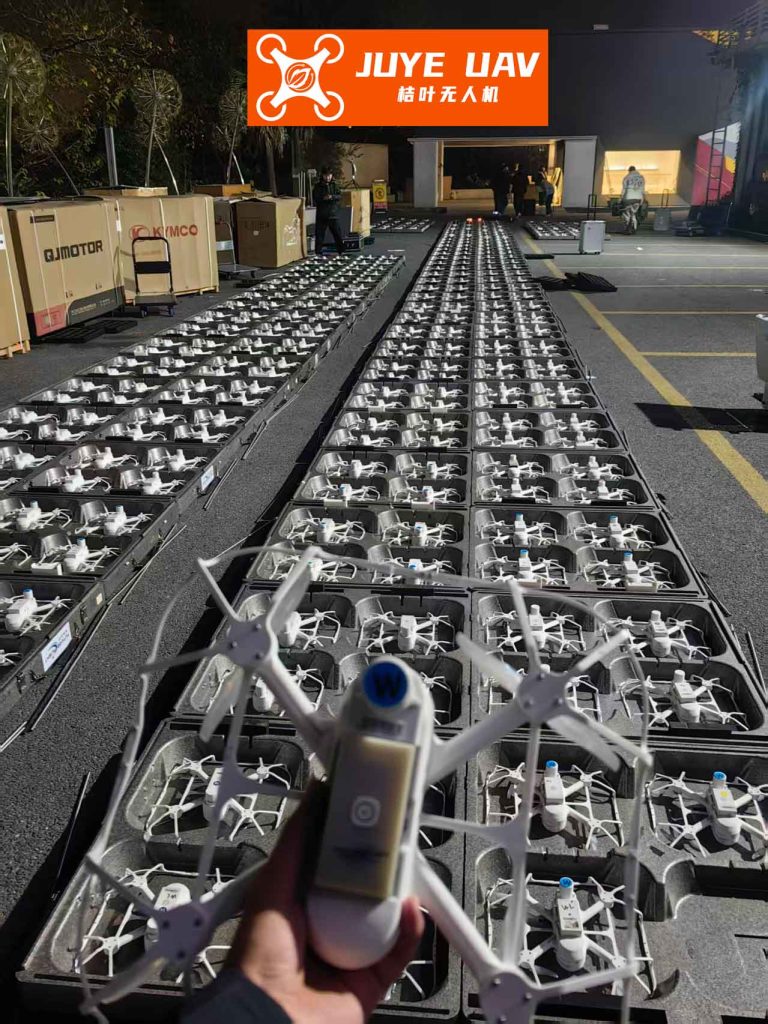
This article, from a research and analysis perspective, delves into the conceptualization, modeling, simulation, and effectiveness evaluation of cooperative air-defense missions executed by drone formations. We begin by constructing a detailed operational paradigm for such missions, breaking down the end-to-end kill chain. Subsequently, we advocate for and detail the application of Agent-Based Modeling and Simulation (ABMS) as a powerful, bottom-up analytical tool to capture the emergent behaviors and complex interactions within a drone formation. Through meticulously designed simulation scenarios, we quantitatively assess how key factors—such as sensor performance, drone formation size, and unit composition—impact core mission效能 metrics. The insights derived aim to inform both the conceptual development of future unmanned combat systems and their tactical employment doctrines.
I. The Cooperative Air-Defense Paradigm for Drone Formations
1.1 Mission Conception and Operational Context
The core mission构想 involves a defending “Blue” force utilizing a drone formation to intercept and engage an attacking “Red” force’s aerial assets before they can threaten high-value units, such as a naval carrier group. The Red threat can comprise various platforms: fourth- or fifth-generation fighter aircraft armed with anti-ship or air-to-air missiles, long-range bombers, or stealthy UAVs performing penetrating ISR. The primary objective of the Blue drone formation is to detect, track, identify, and ultimately destroy or drive away these incursive threats within a designated defensive zone, thereby protecting the fleet’s operational integrity.
The drone formation itself can be configured in multiple ways:
- Homogeneous Attack Formation: Composed entirely of Unmanned Combat Aerial Vehicles (UCAVs) equipped with sensors and air-to-air weaponry.
- Heterogeneous Mixed Formation: Integrates dedicated Early-Warning UAVs (EW-UAVs) with longer-range sensing capabilities alongside a number of UCAVs. The EW-UAV acts as a forward sensor and battle manager, enhancing the overall situational awareness of the drone formation.
1.2 Deconstructing the Operational Process: The OODA Loop Framework
The entire cooperative engagement process of a drone formation can be effectively modeled using the classic Observe-Orient-Decide-Act (OODA) loop framework. This cyclical process breaks down the complex mission into discrete, interconnected phases.
1. Observe Phase (Perception): Individual drones within the drone formation utilize their onboard sensors (AESA radars, E/O Distributed Aperture Systems, IFF) to scan the assigned airspace. They generate raw tracks containing estimates of potential targets’ range, bearing, velocity, and altitude. This data is continuously shared across the drone formation network to a central fusion node (which could be a ground station, an airborne command post, or a lead drone).
2. Orient Phase (Situational Awareness & Threat Assessment): The fused sensor data is processed to create a single, coherent Recognized Air Picture (RAP). Target identification (friend/foe/neutral) is performed. Based on the RAP and knowledge of own-force status (weapon state, fuel, position), a dynamic threat assessment is conducted. This assessment ranks hostile tracks based on factors like proximity, heading (towards the defended asset), speed, and estimated payload/type. A consolidated threat picture is then disseminated back to all agents in the drone formation.
3. Decide Phase (Mission Planning & Task Allocation): The mission commander (human or automated) uses the threat picture to make tactical decisions. This involves:
- Weapon-Target Pairing: Assigning specific UCAVs within the drone formation to engage specific Red threats.
- Task Sequencing: Determining the order of engagement, especially when threats are numerous.
- Role Assignment: Directing EW-UAVs to maintain track on high-value or stealthy targets, and ordering UCAVs to maneuver into advantageous firing positions.
- Countermeasure Planning: Deciding when and against which target to employ electronic attack (jamming) if available.
4. Act Phase (Engagement Execution): The assigned drones execute their tasks autonomously or with minimal human oversight.
- Maneuver and Positioning: UCAVs compute optimal intercept trajectories to achieve a firing solution.
- Engagement: Upon satisfying launch criteria (e.g., entering the “no-escape zone” of its missile), a UCAV launches an air-to-air missile. It may provide mid-course guidance updates to the missile via data-link.
- Electronic Attack: If equipped, drones may activate jammers to degrade the enemy’s sensor or communication capabilities.
- Battle Damage Assessment (BDA): Post-engagement, sensors are used to assess the effect on the target (destroyed, damaged, neutralized).
The loop then iterates. The outcome of the Act phase feeds back into the Observe phase (new tracks, disappeared tracks), leading to re-Orientation, new Decisions, and subsequent Actions. The tempo and efficacy of this OODA cycle relative to the adversary’s is a fundamental determinant of success for the drone formation.
1.3 Defining Effectiveness Metrics for Evaluation
To quantitatively assess the performance of a drone formation in this mission, we define two primary Measures of Effectiveness (MOEs):
1. Interception Rate (PI): The probability that an incoming Red aerial threat is successfully engaged before it can complete its attack run or reach a point deemed critically threatening. It is defined as the ratio of intercepted Red aircraft to the total number of Red aircraft sortied in a simulation run or campaign.
$$ P_I = \frac{N_{red\_intercepted}}{N_{red\_total}} $$
2. Mean Intercept Range (RI): The average distance from the defended high-value asset (e.g., the carrier) at which Red aircraft are neutralized. A larger RI indicates a more robust and forward-layered defense, providing greater safety for the protected asset.
$$ R_I = \frac{1}{N_{red\_intercepted}} \sum_{j=1}^{N_{red\_intercepted}} D_{intercept,j} $$
where \( D_{intercept,j} \) is the distance from the defended asset to the point where the j-th Red aircraft was killed.
A secondary metric often considered is the Survival Rate of the Blue Drone Formation. However, for this analysis focused on mission success, the primary MOEs are PI and RI.
| Metric Symbol | Metric Name | Definition | Desired Trend |
|---|---|---|---|
| PI | Interception Rate | Number of Red targets destroyed / Total Red targets | Maximize (→1) |
| RI | Mean Intercept Range | Average kill distance from defended asset | Maximize |
II. Agent-Based Modeling and Simulation (ABMS) Framework
To analyze the complex, dynamic, and adaptive behaviors of a cooperative drone formation, traditional analytical or aggregate-level simulations often fall short. Agent-Based Modeling and Simulation (ABMS) provides a superior methodology. ABMS models a system from the “bottom-up” by defining autonomous, interacting entities called “Agents.” Each Agent possesses its own attributes, behavioral rules, and decision-making logic. The global system behavior (e.g., the outcome of an air battle) emerges from the interactions of these individual Agents, making ABMS exceptionally suitable for studying decentralized command, coordination, and adaptation in a drone formation.
2.1 Agent Architecture and Design
We design a hierarchical reactive-deliberative Agent architecture, applicable to all entity types (UCAVs, EW-UAVs, Manned Fighters, Missiles). The architecture consists of two main layers: the Behavioral Layer and the Functional Layer.
1. Behavioral Layer (The “Brain”): This layer contains the agent’s core decision-making logic, implemented as a Finite State Machine (FSM) based on the OODA paradigm. The FSM defines the discrete states an agent can be in (e.g., Patrol, Detect, Track, Pursue, Launch, Guide) and the conditions (guards) for transitioning between these states based on inputs from sensors and communications. This embodies the “Observe-Orient-Decide-Act” cycle for each entity.
2. Functional Layer (The “Body”): This layer comprises modular sub-models that provide the capabilities needed to execute behaviors. Key modules include:
- Sensor/Perception Module: Models detection, tracking, and identification. It uses parameters like detection range (Rdet), probability of detection (Pd), and field-of-view (FOV).
- Kinematics/Motion Module: Governs the agent’s movement based on simple physics or pre-defined flight profiles (e.g., constant velocity, maneuverability limits).
- Communication Module: Handles the sending and receiving of messages (e.g., track data, engagement orders) within the drone formation network, potentially with bandwidth and latency constraints.
- Weapon Module: For UCAVs and fighters, this manages missile inventory, launch envelope calculation, and firing procedures.
The separation of behavior and function allows for flexible modeling. Different agent types (e.g., a UCAV vs. a missile) share the same architectural pattern but have different FSMs and parameterized functional models.
2.2 Formalizing the OODA Loop within the Agent FSM
The state machine for a UCAV or Fighter Agent can be formally described. Let \( S \) be the set of possible states: \( S = \{PATROL, SEARCH, TRACK, PURSUE, LAUNCH\_PREP, GUIDING, ASSESS, EVADE\} \). Transitions between states are governed by logical conditions \( C_{i \to j} \) based on perceived information \( I(t) \) at time \( t \).
For example, the critical transition from TRACK to PURSUE for a Blue UCAV assigned to target \( T_k \) could be modeled as:
$$ C_{TRACK \to PURSUE} : (Assignment\_Flag = True) \land (R_{to\_target} \le R_{pursue\_threshold}) $$
where \( R_{to\_target} \) is the range to the assigned target and \( R_{pursue\_threshold} \) is a parameter.
The decision to launch a missile (transition from PURSUE to LAUNCH_PREP) involves calculating the dynamic launch acceptability region (DLAR) or “no-escape zone”:
$$ C_{PURSUE \to LAUNCH\_PREP} : (Target\_in\_DLAR = True) \land (Missiles > 0) $$
The DLAR is a function of relative geometry, velocities, and missile performance:
$$ DLAR = f(\vec{p}_{UCAV}, \vec{v}_{UCAV}, \vec{p}_{Target}, \vec{v}_{Target}, \vec{a}_{missile}, R_{missile\_max}) $$
2.3 Simulation Scenario and Parameterization
A notional scenario is established in a simulated maritime environment. A Blue carrier group is stationed at a reference point. The Blue drone formation is on patrol in a designated Air Defense Zone (ADZ) located 400-450 km from the carrier. Red forces launch 2 aircraft from a direction threatening the carrier, aiming to penetrate towards an area 200-300 km from the carrier. The simulation runs until all Red aircraft are destroyed, reach their target area, or the Blue drone formation is eliminated.
Baseline parameters for the agents are defined as follows. Note that parameters for the Blue drone formation are the primary variables of interest in our analysis.
| Agent Type | Key Parameter | Symbol | Baseline Value | Notes |
|---|---|---|---|---|
| Blue UCAV / Red Fighter | Sensor Detection Range | Rdet | 120 km | Varied in analysis |
| Cruise Speed | Vcr | Mach 0.9 | ||
| Max Speed | Vmax | Mach 1.6 | ||
| Air-to-Air Missile Load | Nm | 4 | ||
| Max Launch Range | RLmax | 80 km | Subject to DLAR | |
| Blue EW-UAV | Sensor Detection Range | Rdet-EW | 300 km | Long-range surveillance, no weapons. |
| Air-to-Air Missile | Average Speed | Vm | Mach 3 | |
| Maximum Kinematic Range | Rm-max | 200 km | ||
| Single-Shot Kill Probability (SSKP) | Pkill | 0.8 | Within DLAR |
III.作战仿真与效能分析 (Combat Simulation and Effectiveness Analysis)
Using the developed ABMS framework, we conduct extensive Monte Carlo simulations (typically 2000 runs per scenario) to account for stochastic elements like detection probability and initial conditions. We analyze the impact of three critical factors on the MOEs \( P_I \) and \( R_I \).
3.1 Scenario 1: Impact of UCAV Sensor Range in a Homogeneous Formation
Scenario Setup: A homogeneous Blue drone formation of 2 UCAVs vs. 2 Red Fighters. The sensor detection range \( R_{det} \) of the Blue UCAVs is varied from 80 km to 160 km. All other parameters are as in Table 2.
Analysis: The sensor range directly impacts the “Observe” phase of the OODA loop. A longer \( R_{det} \) allows earlier detection and tracking, providing more time for the drone formation to make decisions and maneuver. However, its benefit is bounded by the weapon engagement envelope. The results are summarized below:
| UCAV Sensor Range (Rdet) | Interception Rate (PI) | Mean Intercept Range (RI) [km] | Interpretation |
|---|---|---|---|
| 80 km | 0.328 | 305 | Detection range is less than max launch range. UCAVs must close distance after detection, reducing engagement opportunities. |
| 100 km | 0.415 | 327 | Significant improvement as \( R_{det} \) approaches/equals weapon range, enabling quicker shots. |
| 120 km | 0.437 | 337 | Further gains, but marginal returns begin as detection occurs well outside launch range. |
| 140 km | 0.434 | 340 | Performance plateaus. Earlier detection offers little extra benefit if the UCAV must still fly to within 80 km to launch. The limiting factor is now missile kinematics, not sensors. |
| 160 km | 0.443 | 345 | Near-asymptotic behavior. Confirms the saturation effect. |
This leads to a key insight: For a homogeneous drone formation, increasing sensor performance yields diminishing returns once it significantly exceeds the effective firing range of its primary weapons. The system’s OODA loop bottleneck shifts from observation to the action of weapons release.
3.2 Scenario 2: Impact of Formation Scale (Force Size)
Scenario Setup: The size \( N_{blue} \) of the homogeneous Blue UCAV drone formation is varied (2, 4, 6, 8 UCAVs), engaging a constant Red force of 2 fighters. UCAV \( R_{det} \) is fixed at 120 km.
Analysis: Increasing the number of UCAVs provides greater spatial coverage of the ADZ, a higher volume of simultaneous sensor scans, and more available shooters. This should, in theory, improve both \( P_I \) and \( R_I \). The results show a non-linear relationship:
| Blue UCAV Count (Nblue) | Interception Rate (PI) | Mean Intercept Range (RI) [km] | Interpretation |
|---|---|---|---|
| 2 | 0.437 | 337 | Baseline small formation. |
| 4 | 0.701 | 413 | Dramatic improvement. A 4-UCAV drone formation effectively saturates the ADZ, making it very difficult for Red to penetrate undetected. |
| 6 | 0.790 | 436 | Additional gains, but the marginal increase in \( P_I \) is smaller. The law of diminishing returns applies; the primary coverage benefit was achieved with 4 drones. |
| 8 | 0.798 | 432 | Near-peak performance. Adding more platforms beyond a certain point provides limited tactical advantage against this specific threat size, potentially leading to inefficiency (overkill, coordination overhead). |
The concept of an “Effective Formation Size” emerges. For a given threat size and area to defend, there exists an optimal or sufficient number of drones in the drone formation to achieve high mission success. Exceeding this number offers limited extra effectiveness per unit cost.
3.3 Scenario 3: Value of Heterogeneous Formations (Integrating an EW-UAV)
Scenario Setup: We introduce heterogeneity. Blue employs a drone formation consisting of 1 EW-UAV (\( R_{det} = 300\) km) plus a variable number of UCAVs (1, 3, 5). This is compared against homogeneous formations of equivalent total aircraft count (2, 4, 6 UCAVs).
Analysis: The EW-UAV sacrifices weaponry for superior sensing. It acts as a persistent, forward-based surveillance node, feeding high-quality track data to the UCAVs. This allows the UCAVs to operate with reduced sensor emissions (potentially increasing stealth) or to maneuver optimally from the outset based on superior situational awareness. The key question is whether the loss in total missile inventory is compensated by the gain in early, high-fidelity information.
| Formation Composition | Total Aircraft | Total Missiles | Interception Rate (PI) | Mean Intercept Range (RI) [km] |
|---|---|---|---|---|
| Homogeneous: 2 UCAV | 2 | 8 | 0.437 | 337 |
| Heterogeneous: 1 EW + 1 UCAV | 2 | 4 | 0.522 | 375 |
| Homogeneous: 4 UCAV | 4 | 16 | 0.701 | 413 |
| Heterogeneous: 1 EW + 3 UCAV | 4 | 12 | 0.836 | 452 |
| Homogeneous: 6 UCAV | 6 | 24 | 0.790 | 436 |
| Heterogeneous: 1 EW + 5 UCAV | 6 | 20 | 0.861 | 478 |
Conclusion: The heterogeneous drone formation consistently outperforms its homogeneous counterpart of equal platform count. Despite having fewer missiles, the dramatic improvement in early detection and superior track quality provided by the EW-UAV enables the UCAVs to make more efficient, timely, and accurate engagements. This is reflected in both a higher \( P_I \) (more successful interceptions) and a significantly larger \( RI \) (intercepts occur farther away, creating a safer buffer). The information advantage provided by specialized platform integration within the drone formation proves to be more valuable than a simple increase in weapon count, highlighting the importance of “sensor-shooter” network design.
IV. Synthesis of Insights and Future Challenges
The ABMS-driven analysis of the cooperative air-defense mission provides quantifiable insights into the dynamics of drone formation operations:
1. Systemic Bottlenecks: The performance of a drone formation is constrained by the slowest link in its OODA kill chain. For homogeneous attack formations, the weapon engagement range often becomes the limiting factor after sensor range surpasses a threshold. This argues for integrated development of weapons with longer kinematic ranges or launch-and-leave capabilities to match advanced sensors.
2. Diminishing Returns on Scale: Simply increasing the number of identical platforms in a drone formation has a non-linear payoff. An “optimal” size exists for a given mission area and threat density, beyond which additional resources contribute marginally to effectiveness but add complexity and cost.
3. Asymmetric Value of Information: The most significant effectiveness gains come from enhancing the “Observe” and “Orient” phases across the entire drone formation. Integrating a dedicated sensing platform (EW-UAV) that extends and refines the formation’s collective perception demonstrates that information superiority can outweigh a numerical advantage in weapons. This validates the concept of heterogeneous, role-specialized drone formations.
4. The Decision-Making Tempo: The ABMS model currently uses relatively simple rule-based logic for task allocation (e.g., nearest-UCAV assignment). In future, more contested environments, the “Decide” phase will become critical. Incorporating more advanced, distributed decision-making algorithms (e.g., based on game theory, machine learning, or auction-based protocols) into the Agent’s behavioral layer is a necessary evolution to maintain OODA cycle superiority.
Future Research Directions and Challenges:
Several advanced topics emerge from this foundational work:
1. Modeling Advanced Adversaries & Countermeasures: Future simulations must incorporate Red forces employing low-observable (stealth) technology, electronic attack to degrade Blue communications/sensors, and their own cooperative drone swarms. Assessing the resilience of the Blue drone formation’s OODA loop in such denied environments is crucial.
2. Dynamic Re-tasking and Adaptation: Extending the Agent FSM to handle mid-mission role switching (e.g., a UCAV taking on sensing duties if the EW-UAV is lost) and adaptive drone formation re-configuration would model higher levels of autonomy and resilience.
3. Human-in-the-Loop (HITL) Integration: Modeling the role of human commanders as supervisory agents within the ABMS framework, studying appropriate levels of autonomy, and the impact of human decision latency on drone formation effectiveness is a vital area.
4. Logistics and Sustainability: A comprehensive effectiveness model should eventually factor in sustainment: fuel constraints, communication link reliability, maintenance cycles, and the concept of operations for recovering and re-arming the drone formation.
5. Higher-Fidelity Physics-Based Models: Integrating higher-fidelity aerodynamic, sensor (radar cross-section, propagation), and weapon fly-out models would increase the validity of the engagement-level results, though at a higher computational cost.
| Factor Analyzed | Impact on Effectiveness | Key Insight | Implication for Doctrine/Design |
|---|---|---|---|
| Sensor Range (Homogeneous Form.) | Increasing returns up to weapon range, then plateaus. | Weapon range can bottleneck formation效能. | Develop weapons with engagement envelopes matched to sensor capability. “Sensor-shooter” co-design. |
| Formation Scale (Number of UCAVs) | Sharp initial increase, followed by strong diminishing returns. | An “effective force size” exists for a given mission. | Avoid over-investing in homogeneous mass. Use scalable, modular drone formations tailored to threat assessment. |
| Formation Heterogeneity (Adding EW-UAV) | Significantly improves both Intercept Rate and Range. | Information superiority from specialized assets outweighs loss of some weapon capacity. | Prioritize development of mixed, role-specialized drone formations. Information is a critical combat multiplier. |
In conclusion, the application of Agent-Based Modeling and Simulation provides a powerful, flexible, and insightful platform for deconstructing and analyzing the complex behaviors of cooperative drone formations. By moving beyond static analytical models and capturing the dynamic, emergent interactions between autonomous agents, ABMS allows researchers and planners to explore the intricate trade-offs between sensor performance, platform numbers, organizational structure, and decision-making algorithms. The findings underscore that future effective drone formations will not merely be collections of platforms, but intelligently networked, heterogeneous systems where information sharing and coordinated decision-making are as critical as the kinetic capabilities of individual units. This approach offers a robust pathway for informing the development of next-generation unmanned systems and the tactical doctrines that will govern their employment in the high-stakes domain of air combat.