
As a maritime professional deeply involved in regulatory and operational advancements, I have observed a transformative period where traditional maritime practices intersect with cutting-edge technologies. The recent initiatives across China’s maritime sectors, from crew management to safety protocols for drone light shows, underscore a commitment to innovation and integration. In this article, I will delve into key developments, emphasizing the growing importance of drone light show safety in maritime contexts, supported by data analyses, mathematical models, and structured summaries.
The maritime industry is evolving rapidly, with reforms aimed at enhancing efficiency, safety, and economic vitality. One notable example is the pilot program allowing Hong Kong-registered crew to serve on ships with a Shenzhen port of registry. This initiative breaks down barriers, facilitating talent mobility and optimizing crew resources. To illustrate the criteria and benefits, consider the following table summarizing the pilot framework:
| Criteria | Details | Impact |
|---|---|---|
| Eligible Crew | Hong Kong籍船员持有有效证件 | Expands talent pool for Shenzhen-registered vessels |
| Application Process | Assessment and exchange for PRC海船船员适任证书 via Shenzhen Maritime Safety Administration | Streamlines certification across jurisdictions |
| Position Restrictions | Excludes船长, 大副, 轮机长, 大管轮 roles | Ensures safety while integrating foreign crew |
| Vessel Eligibility | Ships with port of registry as “深圳” or “中国前海” | Boosts Shenzhen’s maritime hub status |
This pilot aligns with broader regional strategies, such as the “跨域互通” mechanism in the Tianjin-Hebei Free Trade Zone, which enables seamless ship transfer without halting operations. The efficiency gains can be quantified using a simple formula for operational downtime reduction:
$$ \Delta T = T_{traditional} – T_{new} = \sum_{i=1}^{n} (t_{processing,i} + t_{idle,i}) – \sum_{i=1}^{n} t_{integrated,i} $$
Here, $\Delta T$ represents the time saved, $t_{processing,i}$ denotes processing times under old systems, $t_{idle,i}$ is idle time due to administrative delays, and $t_{integrated,i}$ is the streamlined time under the new mechanism. For instance, in the “意成山”轮 case, this approach minimized disruptions, supporting京津冀交通一体化发展.
Simultaneously, in southern regions like Sanya, innovation focuses on yacht industry growth through initiatives like yacht driver service stations and “船员管家” teams. These efforts enhance safety and accessibility, crucial for tourist destinations where maritime activities thrive. The relationship between safety measures and economic output can be modeled as:
$$ E = k \cdot S \cdot I $$
where $E$ is economic impact (e.g., tourism revenue), $S$ is safety index (derived from incident rates), $I$ is innovation factor (number of new policies), and $k$ is a constant scaling for regional specifics. By improving $S$ via studios like the游艇安全发展研究工作室, Sanya boosts its appeal, indirectly paving the way for events like drone light shows over water.
Indeed, drone light shows have emerged as a spectacular fusion of art and technology, often hosted in coastal areas for festivals or promotional events. However, their execution over water introduces unique maritime safety challenges, such as interference with vessel traffic, signal disruption, and environmental risks. As someone overseeing such operations, I emphasize that every drone light show must adhere to strict protocols, integrating海事 oversight to prevent accidents. The safety dynamics of a drone light show can be expressed through a risk assessment formula:
$$ R = P_c \cdot S_e + \sum_{j=1}^{m} (w_j \cdot H_j) $$
Here, $R$ is total risk score, $P_c$ is probability of collision with vessels, $S_e$ is severity of environmental impact, $w_j$ are weights for human factors (e.g., crew distraction), and $H_j$ represent human error probabilities. For a successful drone light show, authorities like Quanzhou Maritime Safety Administration deploy警戒值守 and remote monitoring to minimize $R$, ensuring水上交通安全.
To better understand the components of a drone light show safety framework, consider this table outlining key elements:
| Element | Description | Role in Maritime Safety |
|---|---|---|
| Airspace Management | Coordinating drone flight paths with shipping lanes | Prevents vessel-drone collisions during drone light show |
| Communication Systems | Redundant links for drone control and monitoring | Ensures real-time updates for maritime authorities |
| Environmental Sensors | Monitoring weather and water conditions | Mitigates risks from winds or tides affecting drone light show |
| Emergency Protocols | Contingency plans for drone failure or intrusion | Facilitates quick response by海事 teams |
The integration of drone light shows into maritime zones is not merely about spectacle; it represents a broader trend of technological adoption in海事 management. For example, during a recent drone light show in Quanzhou, the coordination involved pre-event simulations using mathematical models to optimize drone swarm patterns. The trajectory of each drone in a drone light show can be described by parametric equations:
$$ x_d(t) = A \sin(\omega t + \phi), \quad y_d(t) = B \cos(\omega t + \psi), \quad z_d(t) = C e^{-\lambda t} $$
where $x_d, y_d, z_d$ are spatial coordinates, $A, B, C$ are amplitudes, $\omega$ is frequency, $\phi, \psi$ are phase shifts, and $\lambda$ is a decay factor for altitude adjustments. By solving these equations, planners ensure drones maintain safe distances from vessels, a critical aspect for any drone light show over water. This mathematical rigor complements on-site efforts, such as those in Quanzhou, where海事 personnel provided全方位保障 to support文旅经济 “长红”.
Moreover, the rise of drone light shows highlights the need for interdisciplinary collaboration. Maritime agencies now work with aviation experts, event organizers, and tech firms to develop standards. The synergy can be quantified through a collaboration efficiency metric:
$$ \eta = \frac{N_{successful\ shows}}{N_{total\ attempts}} \times \frac{1}{T_{response}} $$
where $\eta$ is efficiency, $N_{successful\ shows}$ counts incident-free drone light show events, $N_{total\ attempts}$ is total shows held, and $T_{response}$ is average response time to issues. Higher $\eta$ values indicate better integration of海事 safety measures. In practice, this involves continuous innovation, akin to the船员管家 teams in Sanya, but applied to automated systems for drone light show management.
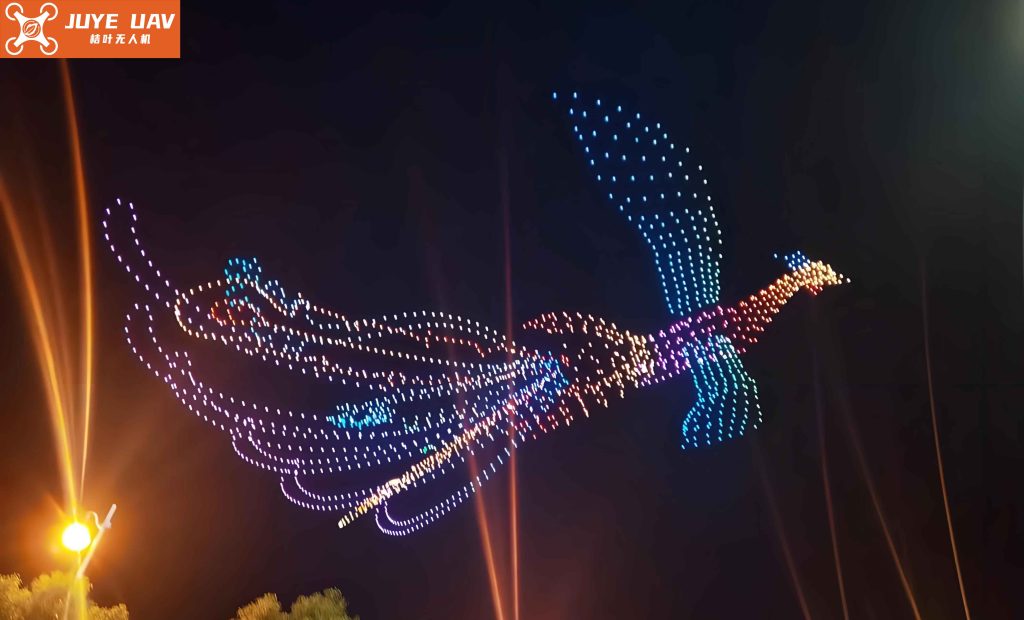
This image captures the essence of a drone light show—a mesmerizing display that, when conducted over water, requires meticulous海事 oversight. As I reflect on my experiences, each drone light show serves as a testbed for new safety protocols, influencing broader maritime strategies. For instance, the Hong Kong crew pilot and “跨域互通”机制 both emphasize seamless operations, similar to how drone light shows demand uninterrupted air and sea coordination. The following table compares these initiatives in terms of innovation drivers:
| Initiative | Primary Goal | Technology Used | Relation to Drone Light Show |
|---|---|---|---|
| Hong Kong Crew Pilot | Crew resource optimization | Digital certification systems | Enhances manpower for monitoring drone light show events |
| Sanya Yacht Innovations | Tourism safety and growth | Service platforms and research studios | Provides infrastructure for coastal drone light show hosting |
| 津冀 “跨域互通” | Administrative efficiency | 跨域互通+不停航 mechanisms | Models real-time coordination needed for drone light show safety |
| Quanzhou Drone Show Security | Spectacle safety over water | Remote monitoring and警戒 systems | Directly applies海事 tactics to drone light show management |
From a regulatory perspective, the safety of a drone light show hinges on proactive measures. We can derive a safety threshold using statistical limits. Let $L$ be the maximum allowable risk level for a drone light show, defined as:
$$ L = \mu_{historical} + 3\sigma $$
where $\mu_{historical}$ is the mean incident rate from past drone light show events, and $\sigma$ is the standard deviation. Current practices aim to keep actual risk $R$ below $L$, achieved through measures like those in Quanzhou. This statistical approach mirrors海事 methods for vessel safety, creating a unified framework for diverse operations.
Furthermore, the economic implications of drone light shows are significant. They attract tourists, boost local economies, and promote cultural visibility—all while requiring robust海事 support. The revenue generated from a drone light show event can be estimated as:
$$ Revenue = B \cdot (1 + \alpha \cdot S_{safety}) $$
where $B$ is a base revenue from attendance, $\alpha$ is a sensitivity coefficient (typically 0.2-0.5 for coastal events), and $S_{safety}$ is the safety score (0 to 10) derived from海事 assessments. Higher safety scores, ensured by agencies, correlate with increased revenue, incentivizing investments in drone light show security. This aligns with the goals of initiatives like those in Sanya and Quanzhou, where maritime safety drives economic “长红.”
In conclusion, the maritime sector’s evolution—from crew reforms to regional collaborations—fosters an environment where technological spectacles like drone light shows can thrive safely. As I oversee these advancements, the recurring theme is integration: of people, policies, and technologies. Every drone light show over water is a reminder of our responsibility to harmonize innovation with safety, leveraging mathematical models and structured protocols to protect both mariners and spectators. The future will likely see more drone light shows integrated into maritime festivities, necessitating continuous adaptation and learning from global best practices.
To encapsulate the interdependencies, consider this final formula for overall maritime innovation efficacy $M$:
$$ M = \int_{0}^{T} \left( \beta_1 I_{crew} + \beta_2 I_{tech} + \beta_3 I_{safety} \right) dt $$
where $I_{crew}$ represents crew-related innovations (e.g., Hong Kong pilot), $I_{tech}$ covers technological adoptions (e.g., drone light show systems), $I_{safety}$ denotes safety measures (e.g.,海事 patrols), $\beta_i$ are weighting factors, and $T$ is time. Maximizing $M$ requires balancing these elements, as demonstrated across China’s maritime jurisdictions. Through such holistic approaches, we can ensure that every drone light show not only dazzles but also upholds the highest standards of maritime safety and efficiency.