
In recent years, with the advancement of technology, drones have been widely used in various industries such as entertainment, exploration, and agriculture. However, alongside rapid development, due to gaps in management systems, unclear regulations for production and sales, and inadequate penalties for violators, drones have encountered issues with “illegal flights,” even becoming tools for new types of crimes, severely endangering national security, public safety, and the personal and property safety of citizens. Based on the maintenance of social order, public security authorities should actively take measures to improve law enforcement processes, optimize public security management, prevention, control, and penalties, enhance law enforcement capabilities and efficiency, to achieve the healthy development of the drone industry and the goal of building a safe China.
Drones, defined as unmanned aircraft managed by control stations (including remote operation or autonomous flight), have evolved from military applications to civilian use. Common civilian drones include fixed-wing and rotary-wing drones. Initially used in military fields for reconnaissance, geolocation, and targeting, drones have now become accessible to the general public. However, with rapid growth, various security risks have emerged, particularly threats to national and public safety. The need for effective governance is urgent, and this article explores the challenges and solutions from a first-person perspective, emphasizing the role of drone training in mitigating risks.
The term “illegal drone operations” refers to flights conducted without prior approval, lacking a pilot license, missing实名认证, or violating no-fly zones. Based on this definition, three manifestations can be identified as “illegal flights.” These are summarized in the table below.
| Manifestation | Description | Associated Risk |
|---|---|---|
| Unregistered Drones | Drones not registered in the official system, lacking proper identification marks. | Difficult tracking and accountability, increasing security threats. |
| Unlicensed Operators | Pilots without required飞行执照, especially for flights in controlled airspace. | Higher accident rates due to lack of drone training and skills. |
| Unauthorized Flights | Flights without prior审批, particularly in敏感区域 like military zones. | Direct threats to national security and public order. |
From my experience, the lack of drone training is a core issue here. For instance, micro and light drones often do not require licenses for flights in permissive airspace, but operators must still undergo drone training to understand regulations. However, many users skip this, leading to violations. The risk can be quantified using a simple formula: let $R$ be the risk level, $P$ the probability of an illegal flight, and $I$ the impact severity. Then, $$R = P \times I$$ where $P$ is influenced by factors like lack of drone training, and $I$ depends on the flight context. By enhancing drone training, we can reduce $P$, thus lowering $R$.
The public safety risks posed by illegal drone operations are multifaceted. They include endangering national security through espionage, disrupting aviation safety by interfering with manned aircraft,侵犯 property and health rights via crashes,侵犯 privacy through unauthorized surveillance, and threatening public safety via potential terrorist attacks. For example, drone incidents at airports have caused flight delays, and in crowded events, drones could be used for malicious purposes. The cumulative impact can be modeled as: $$C = \sum_{i=1}^{n} w_i \cdot r_i$$ where $C$ is the total cost, $w_i$ are weights for different risk types, and $r_i$ are individual risk levels. Drone training can mitigate these by improving operator awareness and compliance.
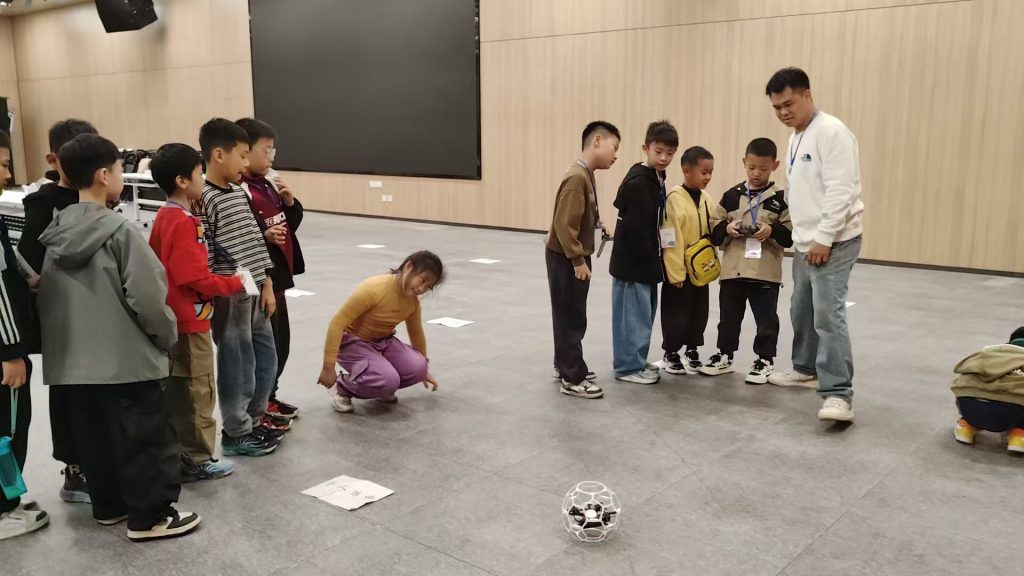
Public security authorities face several challenges in governing illegal drone operations. These difficulties are summarized in the table below, highlighting how drone training plays a role.
| Challenge | Description | Relation to Drone Training |
|---|---|---|
| Delayed Intervention | Authorities often介入 after incidents occur due to information barriers. | Lack of real-time data on operator drone training status hinders proactive measures. |
| Unclear Responsibility | Multiple agencies have overlapping管辖权, leading to confusion. | Inconsistent drone training requirements across departments exacerbate this. |
| Insufficient Experience | Police lack处置经验 and执法培训 for drone-related cases. | Inadequate focus on drone training in law enforcement curricula. |
| Technical Limitations | Limited侦测预警反制 equipment and skills to detect and counter drones. | Drone training for technical personnel is often underfunded or absent. |
| Low Risk Awareness | Operators have淡薄风险意识, skipping执照考试 to save time/cost. | Emphasizing mandatory drone training could address this gap. |
From my perspective, the root cause is often inadequate drone training. For example, obtaining a drone pilot license typically requires about 30 days of training covering theory, practice, and oral exams, but many operators avoid this due to perceived low违法成本. This can be expressed as: $$E_c = C_t + T_t$$ where $E_c$ is the effort cost, $C_t$ is the financial cost of drone training, and $T_t$ is the time investment. If $E_c$ is too high, operators may opt for illegal flights. Thus, streamlining drone training programs could reduce $E_c$ and improve compliance.
To address these challenges, I propose several countermeasures. First, clarify the职责 of public security authorities by establishing specialized执法队伍 equipped with侦测反制 devices. These teams should develop执法指南 based on best practices, incorporating drone training protocols. The efficiency of such teams can be modeled as: $$E = \frac{S}{T}$$ where $E$ is efficiency, $S$ is the number of successfully handled cases, and $T$ is the time spent. By investing in drone training for these teams, we can increase $S$ and reduce $T$, boosting $E$.
Second, build an integrated管控平台 to enhance监管能力. This platform should involve collaboration among civil aviation, air traffic control, and police departments, sharing flight data in real-time. Drone training records can be integrated into this platform, allowing authorities to verify operator credentials instantly. The platform’s effectiveness can be summarized as: $$P_e = \alpha \cdot D_q + \beta \cdot T_i$$ where $P_e$ is platform effectiveness, $D_q$ is data quality (including drone training data), $T_i$ is technical integration, and $\alpha, \beta$ are weights. By prioritizing drone training data, we improve $D_q$ and thus $P_e$.
Third, strengthen专业执法队伍建设 to improve执法能力. This includes creating dedicated agencies like “drone management offices” and providing regular drone training for police officers. Training should cover legal aspects, emergency response, and technical skills. The impact of training can be quantified as: $$\Delta K = \int_{0}^{t} f(T_r) dt$$ where $\Delta K$ is the increase in knowledge over time $t$, and $f(T_r)$ is a function of drone training投入. More emphasis on drone training leads to higher $\Delta K$, resulting in better执法质效.
Fourth,完善技术手段 to enhance侦测预警反制能力. Authorities should allocate funds for radar, spectrum, and光电 equipment, and collaborate with tech companies for advanced solutions. Drone training for operators of these systems is crucial to maximize their utility. The detection probability can be expressed as: $$P_d = 1 – e^{-\lambda \cdot M}$$ where $P_d$ is the probability of detecting an illegal drone, $\lambda$ is a constant related to equipment efficacy, and $M$ is the level of drone training for operators. Higher $M$ increases $P_d$, improving overall security.
Fifth,提高大众风险意识 to deepen安全飞行理念. Public awareness campaigns should highlight the importance of drone training and legal compliance. For sensitive areas like airports, signage and designated飞行区域 can guide users. The effectiveness of awareness programs can be modeled as: $$A = \gamma \cdot C_p + \delta \cdot T_f$$ where $A$ is awareness level, $C_p$ is campaign penetration, $T_f$ is frequency of drone training promotions, and $\gamma, \delta$ are coefficients. By consistently promoting drone training, we can boost $A$ and reduce illegal flights.
In conclusion, governing illegal drone operations requires a multifaceted approach centered on drone training. From defining manifestations to addressing challenges, drone training emerges as a key factor in reducing risks and improving compliance. By implementing integrated platforms, specialized teams, technical upgrades, and public education, authorities can foster a safer drone ecosystem. The formula for success can be summarized as: $$G = \frac{R_t \cdot I_m}{C_d}$$ where $G$ is governance effectiveness, $R_t$ is the rigor of drone training programs, $I_m$ is implementation of measures, and $C_d$ is the cost of delays. Investing in drone training maximizes $R_t$, leading to higher $G$. Ultimately, through continuous emphasis on drone training, we can achieve sustainable security and support the growth of the drone industry.