
In recent years, the rapid evolution of drone technology has revolutionized various sectors, from aerial photography and agriculture to disaster response and military operations. As a critical component of the low-altitude economy, drones have enabled innovative applications such as large-scale drone light show spectacles, which combine artistry with technology to create mesmerizing aerial displays. However, this proliferation has also spurred the development of drone countermeasure facilities designed to neutralize unauthorized or malicious drone activities. While these countermeasures are essential for security, their improper use can lead to significant radio frequency interference, jeopardizing critical communication systems, navigation services, and public safety. In this paper, we explore the design of an integrated supervisory management system aimed at monitoring and regulating drone countermeasure facilities to prevent interference, with a particular focus on safeguarding events like drone light show performances. We present a first-person perspective from our research team, detailing the system’s architecture, functionality, and implementation strategies to ensure electromagnetic space security.
The radio spectrum serves as a fundamental carrier for information transmission, underpinning global technological advancement and industrial布局. It is a strategic resource, with nations vying for regulatory influence. In our context, spectrum resources are crucial for infrastructure development, economic growth, and national defense. The advent of drones, including their use in entertainment such as drone light show events, has introduced new challenges. Countermeasure facilities, which employ jamming or spoofing techniques to disrupt drone operations, can inadvertently interfere with legitimate radio services if not properly managed. For instance, during a drone light show, interference from nearby countermeasure devices could cause drones to lose control, leading to accidents like the one reported in Quanzhou, where approximately 600 drones fell from the sky due to suspected jamming. This incident highlights the urgent need for robust oversight. Our work addresses this by proposing a system that encompasses preventive, real-time, and post-event监管 phases, leveraging advanced sensing and analytics to maintain radio order.
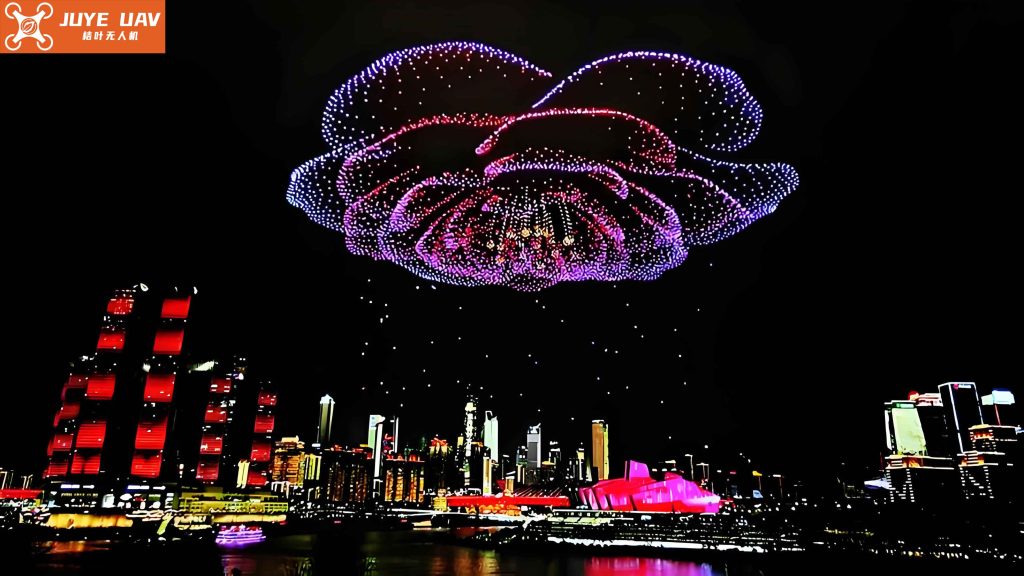
To illustrate the severity of interference, we examine several典型案例 involving drone countermeasure facilities. These cases underscore the risks posed to public safety and infrastructure, especially during sensitive operations like a drone light show. In Shanghai, a countermeasure device malfunctioned in 2020, emitting high-power 2.4 GHz signals that disrupted metro communication systems, causing signal failures along a subway line. Similarly, in Beijing, unauthorized demonstrations of countermeasure systems interfered with GPS-based timing systems near a sports venue, affecting public mobile communications. The most poignant example is the Quanzhou drone light show accident in 2024, where interference likely led to a massive drone坠落, sparking widespread concern over drone safety and radio干扰. These events demonstrate that countermeasure facilities, if unregulated, can undermine critical services and endanger lives, particularly during large-scale drone light show performances that rely on precise无线电 coordination. We estimate that such interference can cause economic losses exceeding millions of dollars, not to mention reputational damage and safety hazards.
| Incident | Location | Year | Affected System | Suspected Cause | Impact |
|---|---|---|---|---|---|
| Metro Communication Failure | Shanghai | 2020 | CBTC Signals | Faulty 2.4 GHz Jamming | Service Disruption |
| GPS Timing Interference | Beijing | 2022 | Public Mobile Networks | Unauthorized Countermeasure Demo | System Anomalies |
| Drone Light Show Accident | Quanzhou | 2024 | Drone Control Links | Radio Frequency Jamming | Drone Crashes, Safety Concerns |
In response to these challenges, we have designed a drone countermeasure facility supervisory management system. This system aims to provide end-to-end监管, from deployment to decommissioning, ensuring compliance with technical standards and minimizing interference risks. Our design is grounded in three core modules: the基础网络设施 module, the drone countermeasure facility signal感知 module, and the intelligent information assessment module. Together, they form a cohesive framework for detecting, monitoring, and evaluating countermeasure activities, with special provisions for protecting events like drone light show performances. We emphasize that this system can be deployed with relatively low personnel costs, enabling efficient testing and monitoring to safeguard important radio services and sensitive environmental targets from electromagnetic pollution.
The system’s architecture is depicted in a conceptual diagram (refer to the inserted image for visual context). It integrates multiple sensing modalities to capture real-time data on countermeasure emissions. For instance, during a drone light show, the system can proactively monitor the surrounding spectrum to detect any unauthorized jamming attempts, triggering alerts for immediate intervention. This proactive approach is vital, as a single interference incident during a drone light show could result in catastrophic failures, similar to the Quanzhou event. Our design also incorporates predictive analytics to assess compatibility with other radio systems, such as aviation and railway communications, ensuring that countermeasure operations do not compromise safety-critical infrastructure.
The基础网络设施 module forms the backbone of our system, providing a secure and stable network environment for data transmission and processing. Servers are deployed across radio management专网 and the internet, with data flowing through one-way network gates to ensure security. This setup allows for seamless integration of data from various sources, including drone operators involved in drone light show events, who can report anomalies via internet-connected platforms. The module’s design prioritizes data integrity and confidentiality, essential for managing sensitive information related to countermeasure facilities and their potential impact on public spectacles like drone light show performances.
| Module | Key Components | Primary Function | Relevance to Drone Light Show |
|---|---|---|---|
| 基础网络设施 | Servers, One-way Gates, Secure Networks | Data Security and Transmission | Ensures real-time data flow from drone light show operators |
| Signal感知 | Edge Sensors, UAV-borne Detectors, Vehicle-mounted Units | Real-time Spectrum Monitoring | Detects interference during drone light show events |
| Intelligent Assessment | Data Analytics, Alert Systems, Decision Support | Analysis and Optimization | Provides insights for securing drone light show performances |
The drone countermeasure facility signal感知 module is critical for capturing无线电 signals emitted by countermeasure devices. It consists of three sub-modules: UAV-borne lightweight detection units, vehicle-mounted lightweight detection units, and edge spectrum sensing modules. These tools enable comprehensive coverage of countermeasure activities, from assessing effective jamming ranges to monitoring frequency, power, and bandwidth parameters. For example, during a drone light show, UAV-borne units can fly pre-programmed patterns to map signal strength distributions, identifying任何 potential interference sources in real-time. This capability is crucial for preventing disruptions, as even minor signal anomalies could destabilize a drone light show fleet. The edge sensors, deployed固定ly around critical areas, provide continuous monitoring, alerting operators to any deviations from permitted technical指标. We have developed mathematical models to quantify signal propagation, such as the path loss formula for estimating interference range:
$$L = 32.44 + 20 \log_{10}(d) + 20 \log_{10}(f)$$
Here, $L$ represents the path loss in decibels (dB), $d$ is the distance between transmitter and receiver in kilometers (km), and $f$ is the signal frequency in megahertz (MHz). This formula helps predict how interference from countermeasure facilities might affect nearby systems, including those used in a drone light show. By integrating such models, our system can simulate scenarios and recommend mitigations, such as adjusting countermeasure power levels to avoid overlapping with drone light show control frequencies.
The intelligent information assessment module, deployed within the radio management专网, processes data collected by the sensing modules. It performs advanced analytics, including device identification,效能评估, compatibility analysis, and辅助决策. For instance, it can evaluate whether a countermeasure facility’s emissions are likely to interfere with GPS signals essential for drone light show navigation. The module includes sub-components like the反制设施台(站)信息管理 module for device registration, the无线电频谱信息管理 module for frequency analysis, and the识别告警 module for anomaly detection. During a drone light show, this module can dynamically assess the electromagnetic environment, providing real-time alerts if interference thresholds are exceeded. We have also incorporated machine learning algorithms to predict trends, such as identifying patterns that might precede interference events during large-scale drone light show performances.
To ensure comprehensive监管, we have structured the system around a closed-loop management approach encompassing事前,事中, and事后 phases. This tripartite framework is designed to prevent, monitor, and rectify interference issues, with particular emphasis on safeguarding high-profile events like drone light show spectacles.
In the事前 phase, preventive measures are implemented before countermeasure facilities are deployed or activated. This includes device registration and certification, where all countermeasure equipment must submit technical parameters for review. We advocate for mandatory pre-deployment testing using mobile detection units to verify compliance with frequency, power, and bandwidth standards. Spectrum planning is also crucial; for areas hosting drone light show events, we conduct compatibility assessments to ensure countermeasure operations do not conflict with essential通信 systems. For example, we might designate exclusion zones around drone light show venues where certain jamming frequencies are prohibited. This proactive step minimizes the risk of incidents like the Quanzhou drone light show accident, where interference likely originated from unauthorized countermeasure use.
| Activity | Description | Tools Used | Benefit for Drone Light Show |
|---|---|---|---|
| Device Registration | Logging technical specs in a central database | Electronic备案 Systems | Ensures only certified devices operate near drone light show sites |
| Pre-Deployment Testing | Verifying frequency, power, and bandwidth compliance | Mobile Detection Units | Prevents interference from faulty equipment during drone light show |
| Spectrum Planning | Allocating frequencies to avoid overlaps | Compatibility Analysis Software | Reserves clean spectrum for drone light show control signals |
The事中 phase focuses on real-time monitoring and dynamic control during countermeasure operations. Our system employs the signal感知 module to continuously track emission parameters, such as power and frequency shifts. If anomalies are detected—like unauthorized transmissions or power spikes—the识别告警 module triggers immediate notifications to regulatory authorities or facility operators. For drone light show events, we establish dedicated monitoring teams that use UAV-borne and vehicle-mounted units to patrol the perimeter, ensuring no interference sources are active. The system can also enact dynamic管控, such as remotely disabling countermeasure facilities if they pose a threat to a live drone light show. This real-time responsiveness is critical, as interference can escalate within seconds, potentially causing drone坠落. We model the signal strength衰减 with distance using the formula derived from the path loss equation:
$$y = Y – [32.44 + 20 \log_{10}(x) + 20 \log_{10}(f)]$$
Here, $y$ is the received interference signal level in dBµV, $Y$ is the transmitted level, $x$ is the distance in km, and $f$ is the frequency in MHz. This helps estimate the impact radius of countermeasure emissions on drone light show drones, enabling precise干预. For instance, if a countermeasure device emits at 97.37 dBµV at 1575.42 MHz (GPS频段), the interference level at 150 meters can be calculated to assess whether it exceeds the抗干扰 threshold of drone receivers. Our system automates such calculations to provide actionable insights during事中 monitoring.
The事后 phase involves追溯 analysis and optimization after interference events. Using data archived by the intelligent assessment module, we conduct root-cause investigations to identify responsible parties and technical failures. For the Quanzhou drone light show accident, our system would have logged spectrum data before and during the incident, facilitating rapid溯源. Based on findings, we recommend corrective actions, such as adjusting device parameters or imposing penalties on违规 operators. Additionally, we perform trend analysis to identify high-risk patterns—for example, recurring interference during drone light show seasons—and refine事前 and事中 protocols accordingly. This continuous improvement loop ensures that lessons from past incidents, including those affecting drone light show performances, inform future监管 strategies.
The integration of these three phases creates a robust闭环机制 that enhances overall监管 efficiency. By linking事前 prevention with事中监控 and事后 analysis, our system ensures that drone countermeasure facilities operate within safe bounds, protecting not only critical infrastructure but also public events like drone light show spectacles. We believe this holistic approach is essential for fostering a secure电磁空间, where technological innovations like drone light show displays can thrive without compromising radio order.
Looking ahead, the continued growth of drone technology and countermeasure systems will pose evolving challenges, especially as drone light show events become more complex and widespread. Our system is designed to adapt through ongoing upgrades, such as incorporating artificial intelligence for predictive analytics and expanding sensor networks for greater coverage. We also advocate for stronger technical standards and跨部门 collaboration to streamline监管. For instance, establishing a unified platform for sharing data between无线电管理部门, event organizers, and countermeasure operators could significantly enhance coordination during drone light show performances. Furthermore, research into electromagnetic compatibility should be prioritized to mitigate interference risks in crowded spectrum environments.
In conclusion, we have presented a comprehensive supervisory management system for drone countermeasure facilities, addressing the pressing issue of radio frequency interference. Our design leverages advanced sensing, intelligent assessment, and secure networking to provide end-to-end监管, with a keen focus on safeguarding sensitive applications like drone light show performances. By implementing this system, we can prevent incidents similar to the Quanzhou drone light show accident, ensure public safety, and support the sustainable development of the low-altitude economy. We envision that through technological innovation and collaborative governance, we can create a harmonious electromagnetic environment where drones, including those used in spectacular drone light show displays, coexist safely with other radio services.
To quantify the system’s effectiveness, we propose key performance indicators (KPIs) that can be monitored over time. For example, the reduction in interference incidents during drone light show events could serve as a metric for success. We also encourage further exploration of adaptive filtering techniques to enhance drone抗干扰 capabilities, as mentioned in related research. Ultimately, our work contributes to the broader goal of electromagnetic space security, ensuring that the skies remain safe for both operational drones and artistic expressions like drone light show spectacles.