
In modern warfare, the proliferation of unmanned aerial vehicle (UAV) swarms poses significant challenges to air defense systems. These swarms, characterized by their low cost, high mobility, and collaborative capabilities, can overwhelm traditional defenses. To address this, electromagnetic weapons—such as high-power microwave (HPM) devices, high-energy lasers (HEL), electromagnetic pulse (EMP) weapons, and electronic warfare (EW) systems—have emerged as promising solutions for anti-UAV operations. However, designing effective anti-UAV swarm systems requires a comprehensive conceptual model that bridges military requirements and engineering implementations. In this paper, we propose a military conceptual modeling framework based on the Six-Element Theory, which maps the key aspects of system design—scope, elements, structure, state, operation, and function—onto conceptual model components: task space, simulation entities, entity relationships, entity states, entity behaviors, and entity interactions. This approach facilitates communication between military personnel and technical experts, ensuring that the developed anti-UAV swarm systems align with operational needs. We leverage the Department of Defense Architecture Framework (DoDAF) for multi-view descriptions and employ tables, formulas, and diagrams to represent the model, providing a reference for future anti-UAV swarm system development and simulation.
The Six-Element Theory posits that any system can be described through six dimensions: environment, function, components, structure, state, and operation. These correspond to the conceptual model’s task space, simulation entities, entity relationships, entity states, entity behaviors, and entity interactions, respectively. For anti-UAV swarm systems using electromagnetic weapons, this mapping enables a holistic view of the system, from high-level mission requirements to low-level technical details. The theory emphasizes similarity between the real system and its model, ensuring accuracy and relevance. In this context, we focus on creating a standardized framework that captures the complexities of anti-UAV swarm engagements, including detection, decision-making, and electromagnetic attack processes. This paper is structured around the six elements, with each section detailing how they apply to electromagnetic weapon-based anti-UAV swarm systems. We use mathematical formulations, such as state equations and interaction matrices, to quantify system dynamics, and tables to summarize key parameters. Throughout, the term “anti-UAV” is emphasized to highlight the focus on countering UAV swarms.
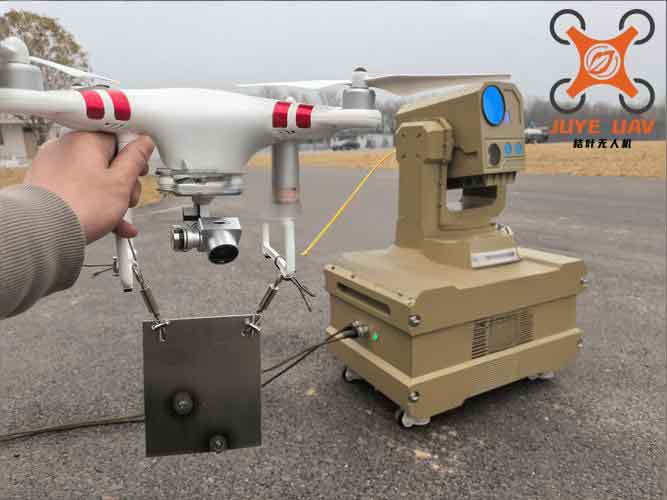
Military conceptual modeling is a critical step in system development, as it abstracts real-world military activities into structured descriptions that guide mathematical and simulation models. Traditional modeling methods, such as static approaches (e.g., natural language, tree structures, tables) and dynamic approaches (e.g., Petri nets, process modeling), often fail to fully capture mission requirements or system dynamics. The Six-Element Theory addresses these limitations by providing a balanced perspective that integrates both structural and behavioral aspects. For anti-UAV swarm systems, this is particularly important due to the rapid evolution of UAV technologies and the need for adaptable defenses. Electromagnetic weapons offer advantages like speed, range, and cost-effectiveness, but their integration into a cohesive anti-UAV framework requires careful modeling. Our work builds on existing research to propose a novel modeling approach that supports the design and evaluation of electromagnetic weapon systems for anti-UAV swarm missions.
Foundational Concepts
The Six-Element Theory is rooted in system similarity principles, stating that a simulation model must resemble the actual system in six aspects: environment, function, components, structure, state, and operation. Mathematically, this can be expressed as a mapping function: $$ S_{\text{real}} \sim S_{\text{model}} = f(E, F, C, St, S, O) $$ where \( S_{\text{real}} \) is the real system, \( S_{\text{model}} \) is the model, \( E \) is environment, \( F \) is function, \( C \) is components, \( St \) is structure, \( S \) is state, and \( O \) is operation. In anti-UAV swarm systems, this translates to ensuring that the conceptual model accurately reflects the operational environment, mission functions, entity compositions, structural relationships, state variables, and dynamic behaviors. Electromagnetic weapons, as part of these systems, include HPM weapons that disrupt electronics, HEL weapons that cause physical damage, EMP weapons for broad-area effects, and EW systems for jamming and deception. Their anti-UAV capabilities are enhanced when integrated with surveillance, command, and communication systems. The operational concept follows the OODA (Observe, Orient, Decide, Act) loop, enabling rapid response to UAV swarm threats. This paper adapts the Six-Element Theory to detail each component for anti-UAV swarm systems.
Task Space of the Anti-UAV Swarm System Conceptual Model
The task space defines the boundaries and scope of the anti-UAV swarm system, encompassing operational factors such as objectives, time, location, altitude, and battlefield environment. It serves as the foundation for the conceptual model, ensuring that all subsequent elements align with mission requirements. For electromagnetic weapon-based anti-UAV systems, the task space typically involves protecting high-value assets (e.g., military bases, strategic centers) from UAV swarm attacks. Missions include early warning, detection, identification, tracking, decision-making, and electromagnetic engagement. We use a DoDAF-style Operational View-1 (OV-1) diagram to depict the high-level concept, but in textual form, we summarize the task space through a table. The task space data includes combat level, system type, participating forces, operational area, tasks, time, environment, and processes. This helps military personnel clarify the anti-UAV swarm system’s role and constraints.
| Task Space Component | Description |
|---|---|
| Combat Level | Campaign/Tactical |
| System Type | Electromagnetic Weapon Anti-UAV Swarm System |
| Participating Forces | Space-based warning systems, air-based warning systems, ground-based warning systems, command and control systems, electromagnetic weapon chains, communication support units |
| Operational Area | Radius of XX kilometers around protected assets |
| Mission Tasks | Warning, detection, aerial electromagnetic suppression, fire destruction, or safe landing induction of incoming UAV swarms |
| Operational Time | From X hour X minute to X hour X minute on X date |
| Operational Environment | Natural (weather, terrain, hydrology); electromagnetic (radiation from electronic devices and EW equipment); social (political, economic, cultural factors) |
| Operational Process | Warning and detection, information integration, target tracking and guidance, electromagnetic weapon engagement, damage assessment |
The task space is critical for anti-UAV operations, as it sets the stage for entity definition and interaction. For instance, the operational environment influences the effectiveness of electromagnetic weapons; for example, weather conditions may affect laser propagation. We can model environmental impact using formulas, such as attenuation for electromagnetic waves: $$ I = I_0 e^{-\alpha d} $$ where \( I \) is intensity, \( I_0 \) is initial intensity, \( \alpha \) is attenuation coefficient, and \( d \) is distance. This helps quantify performance in the task space. The anti-UAV swarm system must operate within these boundaries to achieve mission success.
Simulation Entities of the Anti-UAV Swarm System Conceptual Model
Simulation entities are abstractions of the physical and logical elements in the anti-UAV swarm system, including both subjects (e.g., personnel) and objects (e.g., equipment). They represent the components that interact during operations. Key entities for electromagnetic weapon-based anti-UAV systems include warning and detection systems (space-based, air-based, ground-based), command and control systems (campaign-level, tactical-level), electromagnetic weapon chains (HPM, HEL, EMP, EW), and communication data links. Each entity has attributes like name, type, properties, and functions. We describe these entities in a table to provide a clear overview. The selection of entities focuses on those relevant to the task space, ensuring the model’s simplicity and accuracy.
| Entity Name | Entity Type | Entity Attributes | Activity Events |
|---|---|---|---|
| Space-based Warning System | Warning and Detection System | Composition: high-orbit satellites, low-orbit satellites; quantity: XX; detection range: XX km; … | Warning and detection; monitoring and identification; information support |
| Air-based Warning System | Warning and Detection System | Composition: early warning aircraft, reconnaissance aircraft, UAVs; quantity: XX; detection range: XX km; … | Warning and detection; monitoring and identification; tracking and guidance; information support |
| Ground-based Warning System | Warning and Detection System | Composition: radars, infrared devices, electro-optical devices; quantity: XX; detection range: XX km; … | Warning and detection; tracking and identification; target acquisition; target guidance |
| Campaign-level Joint Command Center | Command and Control System | Composition: command and control systems, communication systems, personnel; quantity: XX; operational area: XX km; … | Pre-mission planning; battlefield situational awareness; target threat assessment; mission coordination |
| Tactical-level Anti-UAV Command Center | Command and Control System | Composition: command and control systems, communication systems, personnel; quantity: XX; operational area: XX km; … | Mission reception; pre-mission planning; battlefield situational awareness; target threat assessment; interference and damage; damage assessment |
| Electromagnetic Weapon Chain | Electromagnetic Weapon System | Composition: HPM weapons, HEL weapons, EMP weapons, EW aircraft; quantity: XX; engagement range: XX km; … | Mission command reception; equipment status check; task data loading; target tracking, aiming, and engagement |
| Communication Data Link | Communication System | Composition: channel terminals, switching equipment, user devices; quantity: XX; communication range: XX km; … | Ensuring command and control order transmission; battlefield situation, threat, and intelligence feedback; real-time code transmission |
Entities are the building blocks of the anti-UAV swarm system model. Their attributes can be represented mathematically; for example, the detection probability of a warning system can be modeled as: $$ P_d = 1 – e^{-\lambda t} $$ where \( P_d \) is detection probability, \( \lambda \) is detection rate, and \( t \) is time. This supports quantitative analysis. The anti-UAV focus necessitates entities tailored to counter UAV swarms, such as EW systems for jamming swarm communications.
Entity Relationships in the Anti-UAV Swarm System Conceptual Model
Entity relationships describe the structural and dynamic connections between entities, including hierarchical organizations and interaction patterns. For anti-UAV swarm systems, these relationships are divided into static structural relationships (e.g., composition, classification, hierarchy) and dynamic interaction relationships (e.g., command, control, cooperation). We use a DoDAF OV-4-like diagram to illustrate dynamic interactions, but here we represent them through a matrix. Static relationships can be shown via a classification table. These relationships ensure that the anti-UAV system operates as an integrated whole, with entities collaborating effectively.
| Level 1 Node | Level 2 Node | Level 3 Node | Level 4 Node | Level 5 Node |
|---|---|---|---|---|
| Anti-UAV Swarm System Warning and Detection System | Space-based Warning System | High-orbit Satellites | … | … |
| Air-based Warning System | Early Warning Aircraft | … | … | |
| Ground-based Warning System | Radars | Infrared Devices | … |
The dynamic interaction matrix summarizes how entities relate during operations. This is crucial for anti-UAV swarm coordination, as timely information exchange and command execution are vital.
| Entity Name | Warning and Detection System | Command and Control System | Electromagnetic Weapon System |
|---|---|---|---|
| Warning and Detection System | Support | Support and Cooperation | N/A |
| Command and Control System | Command and Control | N/A | Command and Control |
| Electromagnetic Weapon System | Cooperation | Effect Feedback | N/A |
Relationships can be quantified using network theory. For instance, the connectivity strength between entities \( i \) and \( j \) can be expressed as: $$ w_{ij} = \frac{C_{ij}}{\sum_k C_{ik}} $$ where \( w_{ij} \) is the weight, and \( C_{ij} \) is the communication frequency. This aids in optimizing the anti-UAV swarm system’s structure.
Entity States in the Anti-UAV Swarm System Conceptual Model
Entity states represent the measurable characteristics or conditions of entities at specific times, including both internal and external attributes. For anti-UAV swarm systems, states include dynamic aspects (e.g., entity identity, type, task, attributes) and static aspects (e.g., terrain, environmental factors). States change over time due to behaviors and interactions. We focus on relevant state vectors that impact anti-UAV operations. For example, the electromagnetic weapon system’s state includes equipment type, quantity, quality (e.g.,完好率 or完好 rate), and readiness. A table summarizes state descriptions for key entities.
| Entity Identifier | Entity Type | Entity Capability | Entity Mission | Spatial Attributes | Motion Attributes |
|---|---|---|---|---|---|
| HPM Weapon | Soft/Hard Kill | XX units;完好 rate: XX%; availability: XX%; … | Disrupt UAV swarm electronics with EMP | Deployed around protected assets | High speed, short range, low mobility |
| HEL Weapon | Soft/Hard Kill | XX units;完好 rate: XX%; availability: XX%; … | Physically destroy UAVs with laser beams | Deployed around protected assets | High speed, long range, precise aiming, low mobility |
| EMP Weapon | Soft/Hard Kill | XX units;完好 rate: XX%; availability: XX%; … | Broad-area electronic disruption and destruction | Deployed around protected assets | Light-speed engagement, integrated detection and destruction, high mobility |
| EW Equipment | Soft Kill | XX units;完好 rate: XX%; availability: XX%; … | Jam communications and degrade UAV performance | Ground or air deployment around protected assets | Electronic warfare in networked environments, wide area, high speed, susceptible to electromagnetic interference |
State transitions can be modeled using differential equations. For instance, the readiness state \( R(t) \) of an electromagnetic weapon might follow: $$ \frac{dR}{dt} = -\alpha R + \beta M $$ where \( \alpha \) is degradation rate, \( \beta \) is maintenance rate, and \( M \) is maintenance input. This supports predictive analysis for anti-UAV operations. States are essential for assessing system performance and adapting to UAV swarm threats.
Entity Behaviors in the Anti-UAV Swarm System Conceptual Model
Entity behaviors refer to sequences of state changes over time, describing how entities act during operations. For anti-UAV swarm systems, behaviors include processes like detection, decision-making, and engagement. We use a DoDAF OV-5b-style activity model to depict behaviors, but here we summarize them through a table. Behaviors are decomposed into jobs (high-level tasks) and actions (atomic steps). This granularity helps in simulating anti-UAV swarm scenarios accurately.
| Executing Entity | Job Name | Trigger Condition | Action Name | Related Entities | Incentive Condition |
|---|---|---|---|---|---|
| Anti-UAV Swarm Combat Command Personnel | Command and Control | After receiving superior orders | Information Aggregation | Information Processing Software | Information Received |
| Situation Analysis | Situation Analysis Software | Information Processing Complete | |||
| Mission Planning | Decision Support System | Situation Analysis Complete | |||
| Operational Deployment | Decision Support System | Mission Planning Complete | |||
| Frequency Planning | Decision Support System | Operational Deployment Complete | |||
| Force Allocation | Decision Support System | Frequency Planning Complete | |||
| Tactics Preparation | Decision Support System | Force Allocation Complete | |||
| Combat Effect Assessment | Decision Support System | Tactics Preparation Complete |
Behaviors can be formalized using state machines or process algebras. For example, the anti-UAV engagement behavior might be represented as a Markov chain: $$ P(X_{t+1} = s’ | X_t = s, A_t = a) $$ where \( X_t \) is state at time \( t \), \( A_t \) is action, and \( P \) is transition probability. This enables stochastic simulation of anti-UAV swarm interactions. Behaviors are driven by the OODA loop, ensuring rapid response to UAV threats.
Entity Interactions in the Anti-UAV Swarm System Conceptual Model
Entity interactions are the exchanges between entities that trigger state changes, including physical interactions (e.g., damage, energy transfer) and information interactions (e.g., command, feedback). For anti-UAV swarm systems, these interactions are critical for coordinated operations. We use a DoDAF IPV-3-like model to describe information flows, but here we tabulate interaction data. Physical interactions involve electromagnetic attacks on UAV swarms, while information interactions include situational awareness and command updates.
| Physical Interaction Name | Triggering Entity | Receiving Entity | Interaction Parameters |
|---|---|---|---|
| Swarm Carrier Aircraft Takeoff | Space-based Warning System | Command and Control System | Carrier aircraft count,方位, etc. |
| Swarm Attack | Air-based Warning System | Command and Control System | Swarm count,方位, etc. |
| Swarm Attack | Ground-based Warning System | Command and Control System | Swarm count,方位, etc. |
| Information Name | Information Content |
|---|---|
| Mission Deployment | Conduct全天候 surveillance of UAV swarms in XX area |
| Command Control | XX warning system, detect and track UAV swarms within range |
| Information Processing | Information system analyzes target data from space, air, and ground sources |
| Situation Analysis | Combat personnel analyze target data and battlefield situation |
Interactions can be quantified using equations. For physical damage, the effect of an electromagnetic weapon on a UAV can be modeled as: $$ D = \int_0^t P(t) \cdot \eta \, dt $$ where \( D \) is damage, \( P(t) \) is power, and \( \eta \) is efficiency. For information interactions, the transmission delay \( \tau \) might be: $$ \tau = \frac{L}{v} + \delta $$ where \( L \) is distance, \( v \) is propagation speed, and \( \delta \) is processing delay. These formulas enhance the anti-UAV swarm model’s realism.
Conclusion
In this paper, we have developed a military conceptual modeling framework for anti-UAV swarm systems using electromagnetic weapons, based on the Six-Element Theory. By mapping the theory’s six aspects—scope, elements, structure, state, operation, and function—onto conceptual model components—task space, simulation entities, entity relationships, entity states, entity behaviors, and entity interactions—we provide a comprehensive approach to system design. The use of DoDAF-inspired views, tables, and mathematical formulas facilitates clear communication between military and technical stakeholders. Our model emphasizes the anti-UAV mission, ensuring that electromagnetic weapons are effectively integrated into a cohesive defense system. Future work can extend this framework to include more detailed simulations, validation through case studies, and adaptation to evolving UAV swarm tactics. This research contributes to the standardization of anti-UAV swarm conceptual modeling, supporting the development of next-generation air defense systems.
The Six-Element Theory offers a robust foundation for modeling complex systems like anti-UAV swarms. By continuously refining the entity states and behaviors, we can improve the accuracy of simulations and better prepare for real-world threats. Electromagnetic weapons, with their unique advantages, play a pivotal role in anti-UAV strategies, and this model helps optimize their deployment. We encourage further exploration of interactive dynamics and integration with artificial intelligence for autonomous anti-UAV operations. Ultimately, this conceptual model serves as a bridge between theory and practice, advancing the field of military simulation and anti-UAV defense.