
The integration of Unmanned Aerial Vehicles (UAVs) into modern policing, particularly within the high-stakes domain of counter-terrorism, represents a paradigm shift in operational capabilities. My analysis, drawn from extensive observation of tactical evolution, posits that the transformative potential of the police UAV is not merely a function of its advanced hardware but is critically dependent on the development and rigorous application of standardized operational protocols. The transition from an ad-hoc, pilot-skill-dependent tool to a reliable, force-multiplying asset hinges on a comprehensive framework encompassing doctrine, deployment, and technical integration.
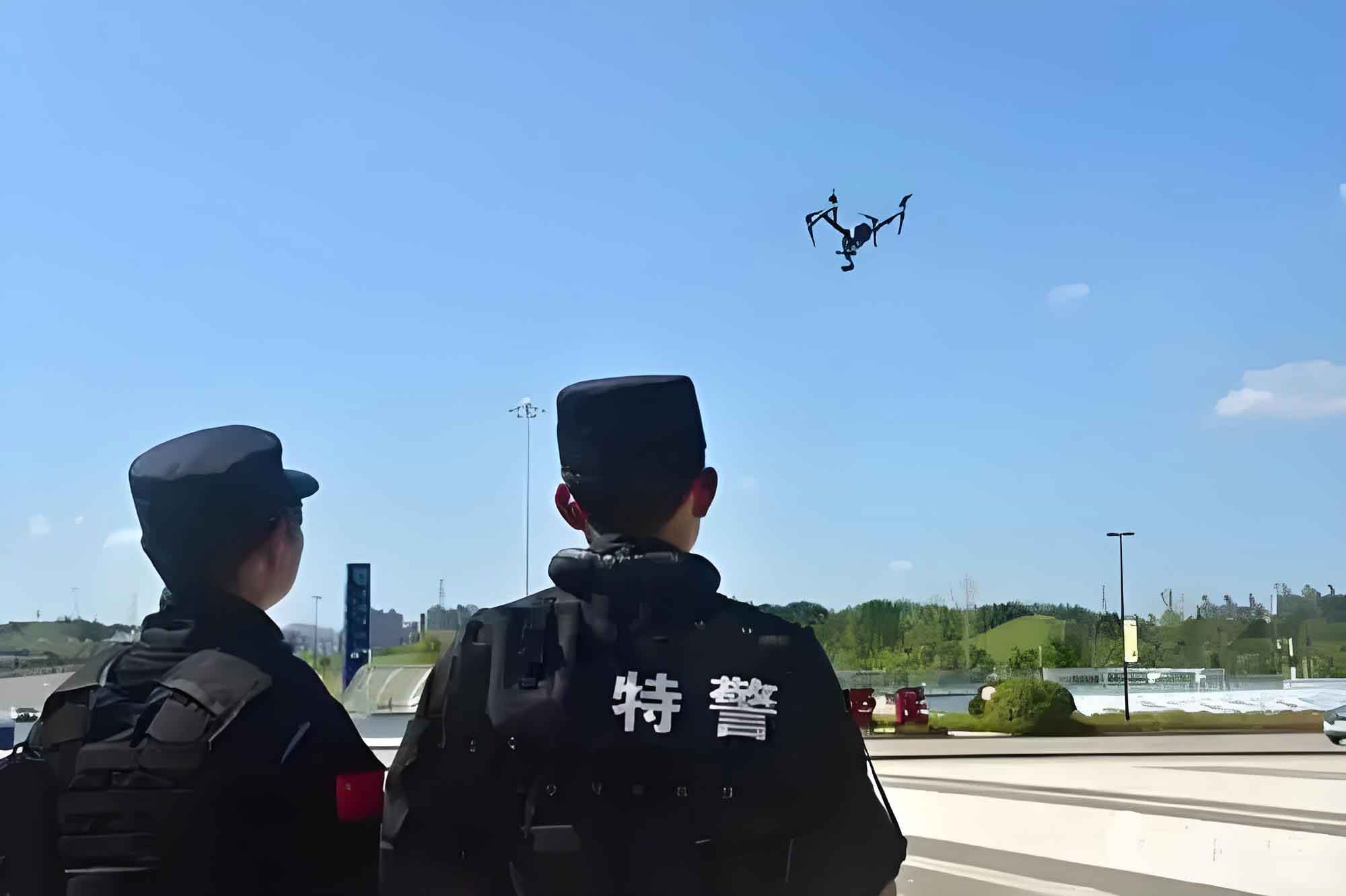
The core advantage of the police UAV lies in its versatile “sensor-and-effector” platform. This platform enables a seamless “find, fix, finish” cycle in environments where traditional ground assets are limited. The technical benefits are multifaceted:
- Persistent, Overhead Intelligence, Surveillance, and Reconnaissance (ISR): A police UAV equipped with electro-optical/infrared (EO/IR) gimbals provides unparalleled situational awareness, tracking suspect movement and identifying hazards in real-time.
- Minimal Logistic Footprint and Terrain Negation: Unlike manned aviation, multi-rotor police UAV platforms offer vertical take-off and landing (VTOL), enabling deployment from confined urban spaces or rugged topography inaccessible to ground vehicles.
- Scalable Non-Lethal/Lethal Engagement: The platform can be configured to deliver tailored effects, from loudspeakers and dazzling lights for crowd dispersion to the precise delivery of less-lethal munitions or, in extreme circumstances, authorized precision strikes.
However, the mere possession of this technology does not guarantee operational success. The central thesis of this framework is that the effectiveness \( E \) of a police UAV in a counter-terrorism scenario is a product of its technical capability \( C \), the proficiency of its crew \( P \), and the robustness of its standardized operational protocols \( S \), moderated by environmental and adversarial factors \( \epsilon \). This can be conceptualized as:
$$ E = f(C, P, S | \epsilon) = \frac{C \cdot P \cdot S}{\epsilon} $$
Maximizing \( E \), therefore, requires systematic enhancement of \( S \) to ensure \( C \) and \( P \) are applied consistently and effectively.
The Imperative for Standardization
Standardized application is the linchpin that transforms a collection of drones and operators into a cohesive, predictable, and effective tactical unit. Without it, operations suffer from several critical vulnerabilities:
- Inconsistent Outcomes: Mission success becomes overly reliant on individual pilot skill and improvisation.
- Increased Operational Risk: Ad-hoc procedures raise the probability of mid-air collisions, signal loss, or fratricide with ground units.
- Legal and Ethical Ambiguity: The use of force, especially from an aerial platform, requires clear, pre-defined rules of engagement (ROE) and use-of-force matrices to ensure accountability and legitimacy.
- Inefficient Logistics and Sustainment: Lack of standard maintenance and supply protocols leads to higher failure rates during prolonged operations.
Thus, the development of a police UAV standard operating procedure (SOP) is not an administrative formality but a critical combat enabler.
Pillars of Standardized Deployment
1. Pre-Mission Planning and Crew Configuration
Standardization begins long before the propellers spin. A systematic pre-mission workflow must be established. This involves a detailed mission analysis based on the Joint Operating Principles of Intelligence, Ground, and Air. A standardized crew configuration is vital. A typical police UAV team for a complex counter-terrorism mission should comprise:
| Role | Primary Responsibility | Key Pre-Mission Tasks |
|---|---|---|
| Mission Commander | Overall tactical direction, ROE compliance, airspace deconfliction. | Defines mission objectives, plans flight routes, conducts risk assessment. |
| Pilot-in-Command (PIC) | Safe flight operation, manual/automated piloting. | Performs pre-flight checks (using a standardized checklist), verifies aircraft status. |
| Sensor/Payload Operator (SPO) | Control of gimbal, cameras, and non-flight payloads (e.g., loudspeaker, release mechanism). | Configures sensor settings, tests payload functionality. |
| Mission Intelligence Coordinator (MIC) | Real-time analysis of video feed, geolocation of targets, information dissemination to ground commander. | Sets up data link and display systems, coordinates with intelligence cell. |
| Technical Maintenance Officer (TMO) | Airworthiness, logistics, and field repairs. | Ensures battery/ fuel supply, maintains spare parts inventory, documents maintenance logs. |
Platform selection follows a standardized decision matrix based on mission parameters (M), environment (E), duration (D), and required payload (P). A simplified selection logic can be modeled. Let \( Score_{platform} \) be the suitability score for a given platform type (Multi-rotor, Fixed-wing, VTOL Fixed-wing).
$$ Score_{platform} = w_M \cdot S_M + w_E \cdot S_E + w_D \cdot S_D + w_P \cdot S_P $$
Where \( w \) are normalized weights for each parameter, and \( S \) are scored from 1-5 based on platform capability. For example, a mission requiring long-duration wide-area search in open terrain would heavily weight \( w_D \) and \( w_E \), favoring a fixed-wing police UAV.
2. Tactical Employment and Formation Logic
The deployment of police UAV assets must be governed by clear tactical principles aligned with ground force maneuvers. Standardized formations and roles are essential for command and control.
| Operational Phase | Primary Police UAV Role | Standardized Tactical Pattern | Key Performance Metric |
|---|---|---|---|
| Initial Response & Containment | Rapid Area Assessment & Perimeter Surveillance | “Orbit & Fan”: High-altitude orbit for wide view, transitioning to fan-shaped search patterns along cordons. | Time to establish full situational picture of the outer perimeter. |
| Deliberate Search & Clearance | Detailed Reconnaissance & Forward Observation | “Leapfrog” or “S-Shaped Scan”: One UAV provides overwatch for ground team movement while another scans ahead or alongside in a systematic grid. | Area search rate (m²/min) and target detection probability \( P_d \). |
| Direct Action / Assault | Breach Support, Diversion, Precision Delivery | Low-Altitude Direct Support (LADS): UAV positions to provide real-time feed of the entry point or target room, or creates a diversion (light/sound) at a flank. | Latency of video feed to assault team leader (< 2 sec), accuracy of payload delivery. |
| Post-Incident | Forensic Mapping, Explosive Ordnance Disposal (EOD) Support | Automated Grid Photogrammetry: UAV flies a pre-programmed grid to create a high-resolution 3D map of the scene. | Resolution of output model (cm/pixel), completeness of scene coverage. |
The concept of “Swarm” or coordinated multi-UAV operations, while advanced, can be approached through standardized pairing. For instance, a fuel-efficient fixed-wing police UAV can provide wide-area search, cueing a more agile multi-rotor police UAV to investigate and track a specific target. The communication and handover protocol between these platforms must be standardized.
3. Command, Control, and Communications (C3) Architecture
Robust C3 is the nervous system of standardized police UAV operations. A tiered control architecture is recommended:
- Level 1: Direct Control – The PIC maintains direct command link with the UAV.
- Level 2: Ground Station Network – Multiple ground control stations (GCS) are networked. If the primary GCS fails, control can be seamlessly handed over to a secondary GCS. This requires standardized data protocols and cryptographic keys.
- Level 3: Integrated Command Post – The UAV video feed and telemetry are integrated into the overall tactical operations center (TOC) via a standardized video downlink format (e.g., H.264/RTMP).
A critical standardized procedure is the “Lost Link” protocol. The UAV must be pre-programmed with standardized behaviors, such as: 1) Continue mission for \( t \) seconds, 2) Ascend to a pre-defined safe altitude \( h_{safe} \), 3) Return autonomously to a pre-designated home point or rally point. The choice is mission-dependent but must be pre-defined in the SOP.
The communication range \( R \) is a limiting factor, modeled by a simplified link budget equation:
$$ P_{rx} = P_{tx} + G_{tx} + G_{rx} – L_{path}(f, d) $$
where \( P_{rx} \) is received power, \( P_{tx} \) is transmitted power, \( G \) are antenna gains, and \( L_{path} \) is path loss dependent on frequency \( f \) and distance \( d \). Standardization dictates the use of approved, resilient frequencies and the mandatory deployment of airborne communication relay police UAV when \( d \) exceeds reliable limits in urban or mountainous terrain.
4. Logistics and Sustainment Model
A police UAV is a system, not just an aircraft. Standardized sustainment is key to operational readiness. This involves a two-echelon model:
- Unit Level: The TMO performs daily inspections, minor repairs, battery management, and data hygiene. A standardized “Ready-for-Task” checklist is used before every flight.
- Depot/Contractor Level: Scheduled deep maintenance, sensor calibration, software updates, and major repairs are conducted at fixed intervals or after a set number of flight hours, as per the manufacturer’s standardized maintenance schedule.
Battery management is a science unto itself. The available flight time \( T_{flight} \) is a function of battery capacity \( C \), power draw \( P_{draw} \), and environmental factors like temperature \( \theta \):
$$ T_{flight} = \frac{\eta(\theta) \cdot C}{P_{draw}} $$
where \( \eta(\theta) \) is a temperature-dependent efficiency factor (e.g., \( \eta \) can drop below 0.7 in sub-zero conditions). SOPs must standardize battery warming/cooling procedures, state-of-charge (SoC) levels for storage, and a strict “no-fly-below-\( X\% \)-SoC” rule.
Overarching Challenges and Enabling Solutions
Legal, Ethical, and Use-of-Force Governance
The remote nature of police UAV operations creates a “moral distance” that must be bridged by robust legal frameworks. Standardization here is non-negotiable. A clear “Use-of-Force Continuum for Aerial Platforms” must be developed, mapping specific threat levels to authorized police UAV responses (e.g., spotlight/searchlight for identification, audible warning, non-kinetic effect, kinetic effect). The decision chain for authorizing lethal force must be explicitly defined, often requiring authorization from a high-ranking commander not directly involved in the flight operation, ensuring a “man-in-the-loop” for grave decisions.
Technology Adoption and Public-Private Partnership
The pace of commercial UAV innovation far outstrips traditional police procurement cycles. Standardization must not stifle innovation. The solution lies in a “Open Architecture with Certified Modules” approach. The core C3 system and safety protocols are standardized, while allowing for the integration of certified third-party sensors, software, and airframes. This requires police agencies to actively engage in standards bodies and work with industry to develop “Policing” profiles for commercial technology. A regular, standardized testing and evaluation regimen for new technologies is essential.
Training and Proficiency Standards
Standardized application requires standardized skills. Training must move beyond basic piloting to include:
- Tactical Integration Drills: Regular exercises with SWAT and K9 units to practice coordinated entries and searches.
- Electronic Warfare (EW) Awareness: Training to recognize and respond to jamming, spoofing, or hijacking attempts against the police UAV.
- Maintenance Proficiency: All crew members should have basic troubleshooting skills per the SOP.
Proficiency should be measured against standardized benchmarks and require regular re-certification.
The Path Forward: An Integrated Future
The future of the police UAV in counter-terrorism lies in its deep integration into the broader ecosystem of public safety technology. Standardization is the prerequisite for this integration. Future developments will likely focus on:
- AI-Enhanced Standard Operating Pictures (SOPs): Using machine learning algorithms, standardized to automatically detect anomalies (unattended bags, unusual crowd movement) in the police UAV feed, alerting the MIC.
- Interoperable Data Standards: Ensuring police UAV geospatial data flows seamlessly into Computer-Aided Dispatch (CAD) and Geographic Information Systems (GIS) using common data formats.
- Counter-UAV Standard Tactics: As terrorists potentially use drones, standardized defensive tactics for police UAV teams to detect, track, and mitigate hostile drones must be developed and practiced.
In conclusion, the journey from possessing a police UAV to mastering its application in counter-terrorism is a journey towards comprehensive standardization. This framework—spanning pre-mission planning, tactical employment, C3 architecture, and sustainment—provides the necessary scaffolding. By institutionalizing these standards, police forces can ensure that every deployment of a police UAV is predictable, effective, lawful, and ultimately, a decisive factor in safeguarding public security against the evolving threat of terrorism. The true measure of success will be when the police UAV is no longer seen as a novel gadget, but as a standardized, reliable, and indispensable tool in every counter-terrorism commander’s toolkit.