
The proliferation of unmanned aerial vehicles (UAVs), or drones, represents one of the most significant paradigm shifts in modern security landscapes. From their humble beginnings as hobbyist gadgets, drones have evolved into sophisticated tools with capabilities that pose substantial threats to national security, critical infrastructure, public safety, and personal privacy. The challenge of detecting, identifying, tracking, and neutralizing these small, agile, and often low-flying objects has given rise to a rapidly advancing field: anti-drone technology. This domain encompasses a wide array of sensors, effectors, and command systems designed to counter unauthorized or hostile UAV incursions. As an engineer deeply involved in this field, I have witnessed the accelerated pace of development firsthand. This article aims to provide a detailed, first-person perspective on the core technologies, integrated architectures, and future trajectories of contemporary anti-drone systems, emphasizing the critical need for multi-layered, intelligent solutions.
1. The Imperative for Anti-Drone Capabilities
The threat is no longer hypothetical. Drones have been employed for illicit surveillance, smuggling contraband into prisons, disrupting airport operations, targeting critical infrastructure like power substations, and even carrying out targeted attacks. The democratization of drone technology means that sophisticated platforms are now accessible to non-state actors, making effective countermeasures a priority for governments and private entities alike. The convergence of improved battery technology, miniaturized sensors, and advanced autonomy algorithms further compounds the challenge. A single drone can be a nuisance; a coordinated swarm can be overwhelming. Therefore, developing robust anti-drone systems is not merely a technical exercise but a fundamental requirement for maintaining security in the 21st century. The core mission of any anti-drone system is to establish a “detect-to-defeat” chain, often summarized as:
$$
\text{Detect} \rightarrow \text{Identify} \rightarrow \text{Track} \rightarrow \text{Decide} \rightarrow \text{Neutralize}
$$
Each link in this chain presents unique technical hurdles, driving innovation across multiple disciplines.
2. Core Sensing Technologies for Drone Detection
No single sensor is a panacea for the anti-drone problem. The low radar cross-section (RCS), slow speeds, and small visual and acoustic signatures of commercial drones make them elusive targets. Effective systems typically rely on a combination of complementary sensors. Below, I analyze the four primary sensing modalities.
2.1 Radio Frequency (RF) Spectrum Analysis
Most consumer and many professional drones rely on wireless communication links for command & control (C2) and, often, for video downlink. RF analysis systems exploit this vulnerability. They consist of broadband receivers and sophisticated signal processing units that constantly monitor designated frequency bands (e.g., 2.4 GHz, 5.8 GHz, 900 MHz).
Principles & Advantages: These systems work by identifying the unique RF “fingerprint” or protocol signature of a drone’s communication. Advanced systems can perform specific emitter identification (SEI), distinguishing a drone’s signal from Wi-Fi routers or Bluetooth devices. They offer passive detection (non-emitting), which is a significant tactical advantage. When multiple RF sensors are deployed, direction-finding and time-difference-of-arrival (TDoA) techniques can be used to geolocate both the drone and its pilot, a capability known as “find the pilot.” The effective range can be several kilometers, and they perform well in cluttered urban environments where radar may struggle. Their ability to provide an early warning, often before the drone is visually or acoustically noticeable, is a key strength for anti-drone operations.
Limitations & Countermeasures: The primary weakness is against autonomous or pre-programmed drones that emit no RF signals during their mission. Drones using encrypted or unconventional protocols, or those operating on cellular networks (4G/5G), can also evade basic RF detectors. Furthermore, in spectrally congested areas, the false alarm rate can increase. Adversaries may employ frequency-hopping or low-probability-of-intercept (LPI) waveforms to complicate detection. The effectiveness of an RF-based anti-drone layer thus hinges on a comprehensive and frequently updated signal library and adaptive signal processing algorithms.
2.2 Radar Systems
Radar provides active, all-weather, long-range detection and tracking. Modern anti-drone radars are specifically engineered to detect small, slow-moving targets with low RCS, often referred to as “slow-moving drones” (SMDs) or “low, slow, and small” (LSS) targets.
Technical Challenges & Solutions: The key challenge is separating the weak drone echo from ground clutter (e.g., buildings, trees) and other environmental noise. This is addressed through advanced waveforms and processing. Micro-Doppler analysis is particularly powerful. The rotating blades of a drone induce a characteristic micro-Doppler signature, a frequency modulation on the main Doppler return, which acts as a unique biometric for classification. The radar equation governing detection is:
$$
P_r = \frac{P_t G_t G_r \lambda^2 \sigma}{(4\pi)^3 R^4 L}
$$
where \(P_r\) is received power, \(P_t\) is transmitted power, \(G_t\) and \(G_r\) are antenna gains, \(\lambda\) is wavelength, \(\sigma\) is the target’s RCS, \(R\) is range, and \(L\) represents losses. For drones, \(\sigma\) is extremely small (often < 0.01 m²), necessitating high \(P_t\), sensitive processing, or very short \(R\).
Radar Architectures for Anti-Drone:
| Radar Type | Description | Advantages for Anti-Drone | Disadvantages |
|---|---|---|---|
| Pulse-Doppler (2D/3D) | Traditional scanning radar measuring range, azimuth, and (for 3D) elevation. | Mature technology, good range, provides accurate 3D tracks. | Scan rate may be too slow for very agile targets; clutter rejection can be challenging. |
| Active Electronically Scanned Array (AESA) | Uses an array of transmit/receive modules to electronically steer beams without moving parts. | Extremely fast beam agility, can track multiple targets simultaneously, high reliability. | High cost, complexity, and power consumption. |
| Multiple-Input Multiple-Output (MIMO) | Transmits orthogonal waveforms from multiple antennas, creating a virtual aperture. | Excellent spatial resolution and clutter suppression, very high refresh rates ideal for swarms. | Complex signal processing, potential for high data rates. |
| Passive Bistatic/Multistatic | Utilizes reflections of existing RF emissions (e.g., FM radio, TV signals). | Covert operation, low cost, potentially very long range. | Requires precise synchronization, coverage depends on illuminator availability. |
The trend in anti-drone radar is towards compact, solid-state, software-defined MIMO and AESA systems that offer the necessary performance to detect and maintain track on individual drones within a swarm.
2.3 Electro-Optical/Infrared (EO/IR) and Image Processing
EO/IR sensors provide the crucial “eyes” for an anti-drone system, delivering visual confirmation and enabling detailed classification. They typically consist of a dual-sensor payload: a daylight camera (CCD/CMOS) and an infrared thermal camera.
Detection and Classification: The raw sensor data is processed by computer vision algorithms. Early methods relied on background subtraction and frame differencing to detect moving objects. Modern approaches are dominated by deep learning, specifically convolutional neural networks (CNNs). A CNN is trained on vast datasets of drone and non-drone (birds, planes, clouds) imagery to learn discriminative features. The detection process can be framed as an optimization minimizing a loss function like:
$$
\mathcal{L} = \sum_i \left( \mathcal{L}_{cls}(p_i, p_i^*) + \lambda \mathbb{1}_{i}^{\text{obj}} \mathcal{L}_{reg}(t_i, t_i^*) \right)
$$
where \(\mathcal{L}_{cls}\) is classification loss (e.g., cross-entropy), \(\mathcal{L}_{reg}\) is bounding-box regression loss, \(p_i\) is predicted class probability, \(t_i\) is predicted box coordinates, and \(*\) denotes ground truth.
Advantages and Constraints: EO/IR provides positive identification, can sometimes discern drone models, and offers evidence for forensic analysis. Thermal cameras are effective at night and can detect drones based on engine or motor heat. However, performance is severely degraded by weather conditions (fog, rain, haze), and the effective range is limited by optics and atmospheric transmission. They are also inherently narrow-field-of-view sensors, requiring accurate cueing from other sensors like radar to “look” in the right direction. The integration of AI has dramatically reduced false alarms from birds and other confusers, making EO/IR a reliable component in the anti-drone kill chain.
2.4 Acoustic Sensors
Acoustic sensing is a passive, low-cost modality that detects the distinct acoustic signature produced by a drone’s motors and propellers.
Methodology: An array of microphones captures audio. Beamforming techniques are used to spatially filter the sound and determine the direction-of-arrival (DoA). The acoustic signature, often characterized in the frequency domain, contains harmonic peaks related to the motor’s rotational speed (RPM) and blade-pass frequency. A simplified model for the sound pressure at the \(k\)-th microphone in an array is:
$$
p_k(t) = s\left(t – \tau_k(\theta, \phi)\right) + n_k(t)
$$
where \(s(t)\) is the source signal, \(\tau_k\) is the time delay based on the source’s azimuth \(\theta\) and elevation \(\phi\), and \(n_k(t)\) is noise. Advanced processing can separate multiple drone sounds.
Role in Anti-Drone Systems: Acoustic sensors are highly effective at short ranges (< 500m) and in environments where RF or radar is obstructed (e.g., dense urban canyons, inside buildings). They are excellent for perimeter security and final confirmation. However, their range is limited, and performance plummets in noisy environments (near roads, machinery). They are also less effective against quiet drones, such as those with ducted fans or large, slow-turning propellers. Therefore, they are best deployed as a supplementary layer in a multi-sensor anti-drone architecture.
3. The Architecture of Modern Anti-Drone Systems
The true power of contemporary anti-drone technology lies not in individual sensors, but in their fusion into a cohesive system-of-systems. A standalone radar or camera is vulnerable to countermeasures and environmental limitations. A layered, integrated approach provides robustness, redundancy, and high confidence. The typical architecture involves sensor fusion at a central command and control (C2) node, which then directs appropriate countermeasures.
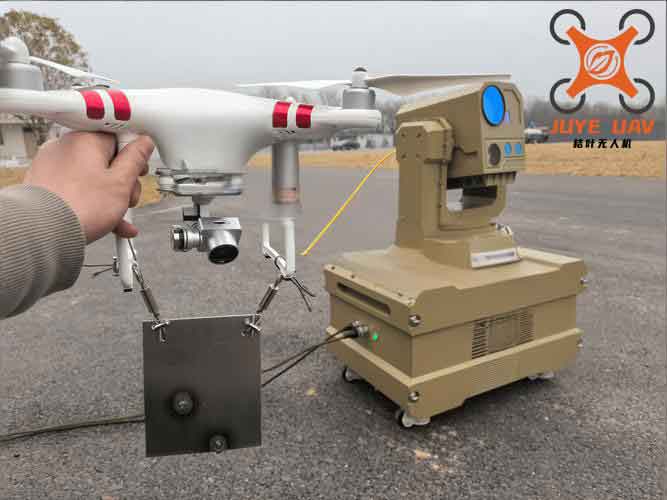
The C2 system is the brain of the operation. It ingests data from all connected sensors—RF, radar, EO/IR, acoustic—and runs correlation and fusion algorithms. The goal is to create a single, coherent “air picture.” This involves track-to-track correlation (is the object detected by radar the same as the one seen by the camera?) and object classification (is it a drone, a bird, or clutter?). The fused track contains the most accurate estimate of position, velocity, and identity. Based on pre-defined rules of engagement (ROE) and the assessed threat level, the C2 system can then automatically or with human approval select and deploy a countermeasure. Modern C2 software is designed to be open-architecture, allowing for the “plug-and-play” integration of third-party sensors and effectors, which is a critical trend in anti-drone system development.
4. Multi-Sensor Data Fusion: The Intelligence Multiplier
Sensor fusion is the cornerstone of a reliable anti-drone system. It operates at three primary levels:
- Data-Level Fusion: Raw data from homogeneous sensors (e.g., multiple radars) is combined. This is complex but offers the highest potential accuracy.
- Feature-Level Fusion: Extracted features (e.g., radar cross-section, optical size, acoustic spectrum) are combined before classification.
- Decision-Level Fusion: Each sensor subsystem makes an independent decision (e.g., “drone present”), and these decisions are combined logically (e.g., majority voting).
Bayesian frameworks and Kalman filters are traditional tools for state estimation and fusion. For classification, deep learning models like Deep Neural Networks (DNNs) and Recurrent Neural Networks (RNNs) can learn directly from the multi-modal data. A fusion rule based on Dempster-Shafer theory might combine beliefs from different sensors:
$$
m_{1,2}(A) = \frac{\sum_{B \cap C = A} m_1(B) m_2(C)}{1 – K}, \quad \text{where } K = \sum_{B \cap C = \emptyset} m_1(B) m_2(C)
$$
where \(m_1\) and \(m_2\) are mass functions (basic belief assignments) from two sensors, and \(m_{1,2}\) is the fused belief. This is particularly useful for handling uncertainty and conflict between sensor reports, a common occurrence in cluttered anti-drone scenarios. The table below summarizes common fusion approaches:
| Fusion Method | Description | Application in Anti-Drone |
|---|---|---|
| Kalman/Extended Kalman Filter | Optimal recursive estimator for linear/Gaussian systems. EKF handles non-linearity. | Fusing kinematic data (position, velocity) from radar and EO/IR for track smoothing and prediction. |
| Particle Filter | Sequential Monte Carlo method for non-linear, non-Gaussian state estimation. | Tracking drones with highly maneuverable or erratic flight paths. |
| Convolutional Neural Network (CNN) | Deep learning model for processing structured grid data (images, spectrograms). | Fusing image features from EO and IR sensors for classification. |
| Multi-Layer Perceptron (MLP) | A standard feedforward artificial neural network. | Fusing high-level feature vectors from disparate sensors (e.g., RF signature strength, acoustic classification score) for final decision. |
5. Countering the Swarm Threat
The emergence of drone swarms represents a quantum leap in threat complexity. A swarm of dozens or hundreds of low-cost drones can saturate defenses, overwhelm sensors, and execute coordinated attacks. Anti-drone systems must evolve to meet this challenge across all phases of the kill chain.
Detection and Tracking: Traditional radars may treat a closely spaced swarm as a single large object. High-resolution radars (MIMO, mmWave) with advanced tracking algorithms are required to resolve and maintain individual tracks on each swarm member. The data association problem—determining which detection belongs to which track—becomes exponentially harder.
Classification and Intent Recognition: Distinguishing a benign flock of birds from a hostile drone swarm is critical. Here, multi-sensor fusion is paramount. The micro-Doppler signature of a swarm differs from that of birds. RF sensors might detect a mesh network linking the swarm members. EO/IR can observe coordinated movement patterns. Machine learning models trained specifically on swarm data are essential for accurate and rapid classification.
Neutralization: Kinetic solutions (missiles, guns) become economically and practically infeasible against large swarms. The focus shifts to area-denial and electronic warfare solutions:
- High-Power Microwave (HPM): Emits a powerful burst of microwave energy to fry the electronics of multiple drones within a wide cone.
- Directed Energy Lasers: High-energy lasers can be used to sequentially engage multiple drones, but switching time between targets is a key factor.
- Swarm vs. Swarm: Deploying defensive drone swarms to physically intercept or net hostile drones.
- Advanced Electronic Attack (EA): Spoofing swarm navigation (GPS/INS) or injecting malicious commands into the swarm’s communication network to cause it to disband or self-destruct.
The table below contrasts traditional and swarm-focused anti-drone neutralization:
| Threat Scenario | Traditional Countermeasure | Swarm-Optimized Countermeasure | Key Challenge |
|---|---|---|---|
| Single Intruder | RF Jamming, Net Guns, Laser | Same, but overkill. | Minimizing collateral effects. |
| Dispersed Multi-Drone | Multiple kinetic interceptors. | Wide-area HPM, Distributed RF jammers. | Cost-per-engagement, coverage. |
| Tight-Knit Swarm | Treated as one large target. | Swarm interception, Network EA, Sequential Laser engagement. | Target discrimination, rapid re-targeting. |
6. The Pervasive Role of Artificial Intelligence
AI and Machine Learning (ML) are not just an emerging trend; they are becoming the foundational fabric of modern anti-drone systems. Their application spans the entire detect-to-defeat chain.
1. Enhanced Detection and Classification: As discussed, CNNs revolutionize visual and acoustic classification. For radar, AI models can learn to recognize subtle micro-Doppler patterns specific to different drone types and even distinguish them from insects or debris with higher accuracy than traditional statistical methods.
2. Predictive Tracking and Intent Analysis: Recurrent Neural Networks (RNNs) like Long Short-Term Memory (LSTM) networks can model the temporal dynamics of a drone’s flight path. They can predict its future position more accurately than a simple kinematic filter and can begin to classify intent—is it on a surveillance loiter pattern or a collision course?
3. Intelligent Sensor Management and Fusion: AI can dynamically manage the system’s resources. For example, an AI controller might decide to power down certain sensors to conserve energy, focus a radar beam on a specific sector based on RF detection, or cue an EO camera only when the classification confidence from radar/RF exceeds a threshold. This optimizes system performance and power consumption.
4. Autonomous Decision-Making: The ultimate goal for some systems is a high degree of autonomy within a human-supervised framework. An AI-powered C2 could automatically assess a threat based on its speed, trajectory, and identification, select the most appropriate and proportionate countermeasure from its arsenal (e.g., start with a warning, escalate to soft-kill jamming, then hard-kill if necessary), and execute the engagement—all while keeping a human operator in the loop for final authorization. This reduces the operator’s cognitive load and enables response times that are impossible for humans alone, which is crucial against fast-moving swarms.
The mathematical engine of this AI revolution is often the training of deep networks via backpropagation, minimizing an objective function \(J(\theta)\) with respect to the model parameters \(\theta\):
$$
\theta^* = \arg\min_{\theta} J(\theta) = \arg\min_{\theta} \frac{1}{N} \sum_{i=1}^N \mathcal{L}\left(f(x_i; \theta), y_i\right)
$$
where \(f(x_i; \theta)\) is the model’s prediction for input \(x_i\) (e.g., a radar spectrogram), \(y_i\) is the true label (“drone”, “bird”), and \(\mathcal{L}\) is a loss function (e.g., cross-entropy).
7. Future Trajectories and Concluding Remarks
The anti-drone domain is in a state of perpetual co-evolution with drone technology itself. As drones become quieter, smarter, and more autonomous, countermeasures must advance accordingly. Several key trajectories are clear:
Hyper-Sensor Fusion and the “Digital Twin”: Future systems will move beyond basic correlation to create a real-time, comprehensive digital model of the protected airspace—a “digital twin.” This model will fuse data from a vastly wider array of sources, including civilian air traffic control, connected IoT devices, and even social media feeds reporting drone sightings, to provide unparalleled situational awareness and predictive threat analysis.
Directed Energy and Non-Kinetic Dominance: The development of more compact, powerful, and efficient directed energy weapons (lasers, HPM) will continue. The focus will be on achieving militarily useful ranges, improving beam steering for swarm engagement, and integrating these systems onto mobile platforms (ground vehicles, ships, aircraft).
Standardization and Interoperability: The current market features many proprietary, stove-piped systems. The future lies in open architectures and common standards for C2 interfaces (e.g., like the U.S. Department of Defense’s push for systems compatible with FAAD C2). This will allow agencies to mix and match best-of-breed sensors and effectors, creating tailored and upgradeable anti-drone solutions.
AI Ethics and Trust: As autonomy increases, so does the need for robust testing, validation, and explainable AI (XAI). Operators must trust the system’s recommendations. Clear frameworks for accountability and rules of engagement governing autonomous anti-drone actions will be essential for widespread adoption, especially in civilian airspace.
In conclusion, the mission of safeguarding our skies from malicious drones is a complex, multi-disciplinary endeavor. There is no single “silver bullet.” Success depends on the intelligent integration of diverse sensing technologies, fused together by sophisticated algorithms, and backed by a graduated suite of neutralization options. The integration of artificial intelligence is not merely an enhancement; it is becoming the core differentiator that allows anti-drone systems to keep pace with the evolving threat. As an engineer contributing to this field, I see a future where anti-drone systems evolve from being reactive shields into proactive, intelligent guardians, capable of autonomously managing the complex, dynamic, and increasingly crowded low-altitude battlespace.