
As a practitioner deeply involved in the modernization of agricultural practices, I have witnessed firsthand the transformative potential of unmanned aerial vehicle (UAV) spraying technology in orchard pest and disease management. The shift from labor-intensive, imprecise, and hazardous manual spraying to efficient, targeted aerial application represents a critical leap forward for the sustainable development of the fruit industry. This technology is not merely a tool; it is a cornerstone for achieving higher yields, superior fruit quality, and enhanced environmental stewardship. My experience underscores that while the promise is immense, the path to widespread, effective adoption is paved with significant technical, operational, and environmental hurdles. A strategic, multifaceted approach focusing on continuous innovation, comprehensive drone training, and robust risk management is essential to unlock its full potential.
The Multifaceted Value Proposition of UAV Spraying
The traditional paradigm of orchard protection is fraught with inefficiencies. Manual sprayers navigate dense canopies, leading to uneven coverage, high labor costs, and significant operator exposure to chemicals. Tractor-mounted sprayers struggle with irregular terrain and established orchards, often causing soil compaction and plant damage. UAV spraying disrupts this model with a compelling value proposition centered on efficiency, precision, and safety.
Operational efficiency is the most immediately apparent benefit. A multi-rotor agricultural UAV can cover an area in one hour that would take a human crew an entire day. This rapid response capability is crucial for containing explosive pest outbreaks or fast-spreading fungal diseases. Precision is the second pillar. Equipped with advanced navigation systems, UAVs can execute pre-programmed flight paths with centimeter-level accuracy, ensuring consistent application. More sophisticated systems integrate sensors to modulate spray volume based on canopy density or pest hotspot maps, minimizing chemical waste. The safety advantage is twofold: it removes humans from direct contact with pesticides and eliminates the need for heavy machinery to traverse the orchard, protecting both worker health and soil structure. The cumulative effect is a significant reduction in pesticide usage per unit area, aligning perfectly with the goals of green agriculture.
Deconstructing the Core Challenges
Despite its advantages, the integration of UAV spraying into standard orchard practice faces substantial barriers. These can be categorized into technological limitations, high operational demands, and external environmental constraints.
1. Technological Performance Bottlenecks
The current generation of agricultural drones is constrained by fundamental physics. The trade-off between flight time (endurance) and payload (chemical capacity) remains a critical bottleneck. Most commercial models offer 20-30 minutes of flight time with a 10-20 kg tank. This necessitates frequent returns to base for refilling and battery swaps, drastically reducing effective field time, especially in large, contiguous orchards. The energy density of current battery technology limits progress here.
Complex orchard architectures pose another significant challenge. Dense, multi-layered canopies in mature orchards disrupt airflow and spray droplet penetration. Standard downward-facing spray systems often deposit chemicals only on the upper canopy, leaving the lower branches and inner foliage, where many pests reside, under-protected. Variable tree heights and sloping terrain in hill orchards demand dynamic altitude adjustment, a feature not universally available or perfectly reliable. Smart recognition technologies for early-stage disease or small pests, while promising, still suffer from accuracy issues under variable lighting conditions and when differentiating between similar symptom patterns (e.g., nutrient deficiency vs. fungal infection).
| Performance Parameter | Typical Range | Impact on Orchard Operation |
|---|---|---|
| Flight Endurance | 20 – 30 minutes | Frequent breaks for battery swap/charging; reduced efficiency on large plots. |
| Liquid Payload | 10 – 20 kg | Limited area coverage per sortie; increased logistical overhead for chemical mixing and transport. |
| Effective Spray Swath (in canopy) | 3 – 6 meters | Requires precise flight path planning; overlap management crucial for uniformity. |
| Droplet Penetration Depth | Upper/Mid Canopy | Lower canopy and inner foliage may receive sub-lethal doses; pest “sanctuaries” can persist. |
2. The Imperative for Specialized Operations and Management
The effective use of a spraying UAV transcends simple remote-control piloting. It requires a synthesis of agronomy, meteorology, and mechatronics. This high barrier to expertise is a major adoption hurdle. Flight operation itself is non-trivial. Operators must understand how wind, temperature, and humidity affect droplet dispersion and UAV stability. They must be skilled in manual takeover procedures during GNSS signal loss or unexpected obstacles.
The agronomic knowledge component is even more critical. Incorrect chemical selection, improper tank mixing order, or inaccurate dilution rates can lead to phytotoxicity, ineffective control, or nozzle clogging. Different growth stages of the same fruit tree species often require different application rates and droplet sizes. Furthermore, planning an efficient and thorough flight path for an irregularly shaped orchard with obstacles requires skill and experience. A poorly planned route leads to missed spots (under-dosing) or excessive overlaps (over-dosing and waste). This complexity underscores why standardized, high-quality drone training programs are not optional but fundamental.
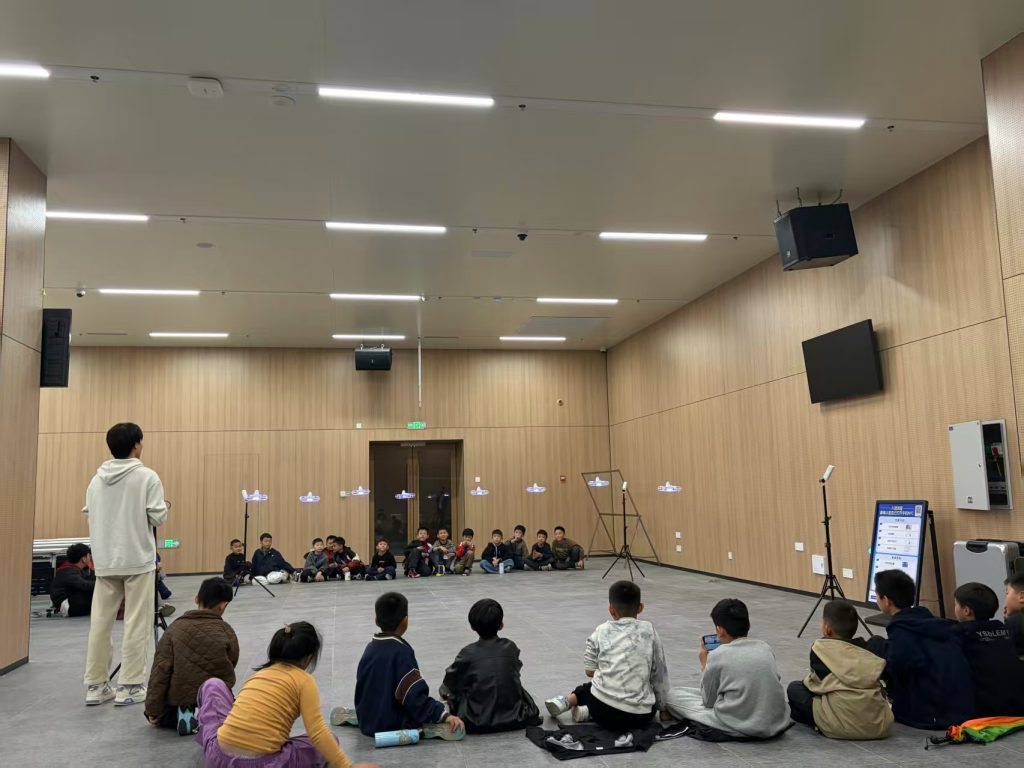
The image above visually captures the essence of structured drone training. Effective instruction bridges the gap between purchasing the technology and leveraging it competently in the field, covering everything from pre-flight checks and regulation compliance to spray calibration and emergency procedures.
3. External Environmental Constraints
UAV operations are inherently weather-dependent. Wind is the primary adversary. Winds above 4-5 m/s can cause significant spray drift, contaminating adjacent non-target areas and reducing deposition on the intended canopy. It also challenges UAV stability. Rain immediately after application washes off chemicals, nullifying the treatment and wasting resources. High temperatures accelerate the volatilization of certain pesticides, shortening their residual efficacy.
Beyond weather, electromagnetic interference (EMI) from high-voltage power lines, communication towers, or radar installations can disrupt the UAV’s Global Navigation Satellite System (GNSS) and control links, leading to erratic flight behavior or loss of control. Orchard landscapes with numerous tall trees can also create localized wind tunnels and turbulence, complicating flight and spray patterns. These factors necessitate not just fair-weather operation but a sophisticated understanding of the local micro-environment.
| Environmental Factor | Critical Threshold | Primary Impact |
|---|---|---|
| Wind Speed | > 4 m/s | Increased spray drift; reduced droplet deposition; UAV stability challenges. |
| Relative Humidity | < 30% | Increased droplet evaporation before reaching target (small droplets). |
| Temperature | > 30°C | Accelerated pesticide volatilization; potential battery overheating. |
| Rainfall | Any within 1-2 hours post-spray | Chemical wash-off, leading to treatment failure. |
| Electromagnetic Interference | Proximity to strong sources | GNSS signal loss, compass errors, potential loss of control. |
Strategic Pathways for Integration and Optimization
Overcoming these challenges requires a concerted, strategic effort across technology development, human capacity building, and operational protocols.
1. Driving Technological Innovation and Hardware Evolution
The next wave of innovation must tackle the endurance-payload dilemma. Research into higher energy-density batteries (e.g., solid-state, hydrogen fuel cells) and more efficient, low-drag airframe designs is paramount. Hybrid powertrains or rapid battery-swapping systems in the field could offer interim solutions. For canopy penetration, novel spray system architectures are needed. This includes ducted fan designs that generate a focused downdraft to push droplets into the canopy, or the development of UAVs capable of deploying articulated spray arms that can position nozzles inside or around the canopy structure.
Advancements in artificial intelligence and sensor fusion are crucial for precision. Integrating LiDAR and multispectral cameras can enable real-time 3D orchard mapping and variable-rate application. AI models trained on vast image datasets can improve the accuracy of early pest/disease detection. The development of adaptive flight control algorithms that dynamically adjust altitude and speed based on real-time terrain and canopy data will ensure uniform coverage on slopes and in irregular plots.
The physics of droplet deposition can be modeled to optimize parameters. The trajectory and fate of a spray droplet are influenced by its initial size, UAV-induced airflow, and ambient conditions. A simplified model considering drag force and evaporation can be expressed as:
$$ m_p \frac{d\vec{v_p}}{dt} = \vec{F_g} + \vec{F_d} + \vec{F_a} $$
Where:
$m_p$ is the droplet mass,
$\vec{v_p}$ is the droplet velocity vector,
$\vec{F_g}$ is the gravitational force,
$\vec{F_d}$ is the drag force (proportional to the square of the relative velocity between droplet and air), and
$\vec{F_a}$ is the force due to the UAV’s rotor-induced airflow.
Optimizing application involves adjusting nozzle parameters and flight speed to manage droplet size ($m_p$) and leverage $\vec{F_a}$ to maximize deposition on target surfaces while minimizing $\vec{F_d}$’s role in drift.
2. Establishing a Comprehensive Ecosystem for Professional Drone Training and Support
Technology is only as good as its operator. Therefore, building a robust ecosystem for drone training and service is the most critical step for sustainable adoption. This ecosystem must be multi-tiered:
- Certified Pilot Training: Foundational courses must cover flight mechanics, regulations, safe operation, and basic maintenance. This is the non-negotiable first step.
- Agronomic Specialist Training: Advanced modules should integrate agronomy. Operators must learn about pest and disease life cycles, pesticide modes of action, tank mixing compatibility, and reading weather forecasts for application windows. This transforms a pilot into a crop protection specialist.
- Data Management Training: With precision agriculture, operators need skills in mission planning software, interpreting sensor data (like NDVI maps), and generating application reports.
A successful drone training framework is a collaboration between government (setting standards and subsidies), agricultural universities (providing scientific backbone), and UAV manufacturers (offering technical know-how). Furthermore, a network of local service hubs should be established to provide maintenance, chemical advice, and even contracted spraying services for farmers who prefer not to operate the drones themselves. Continuous drone training updates are necessary as technology and regulations evolve.
3. Enhancing Environmental Adaptability and Implementing Risk Management
Proactive strategies must be developed to mitigate environmental risks. This starts with sophisticated monitoring. IoT-based micro-weather stations deployed within the orchard can provide real-time, hyper-local data on wind speed, direction, humidity, and temperature. This data should feed into decision-support systems that provide go/no-go recommendations and optimal parameter settings for the day.
To combat drift, new formulations of pesticides specifically designed for UAV application (e.g., with anti-evaporation adjuvants) and nozzles that produce a more uniform droplet spectrum in the 100-200 micron range (a balance between drift resistance and coverage) are needed. For EMI, pre-flight site surveys to identify interference sources and UAV systems with robust shielding and multi-frequency GNSS modules are essential.
Finally, integrated pest management (IPM) principles must be the foundation. UAV spraying should be one tool within a broader strategy that includes biological controls, resistant varieties, and cultural practices. This reduces over-reliance on chemicals and delays pest resistance. The UAV’s role in IPM can be for precise, timely intervention based on scouting data, minimizing the ecological footprint.
Conclusion: Toward an Intelligent Orchard Ecosystem
The journey of integrating UAV spraying into orchard pest management is a continuous process of overcoming engineering, educational, and environmental challenges. Its value in promoting efficiency, precision, and safety is undeniable and forms the bedrock of a modern, sustainable fruit production system. The path forward hinges on a triad of actions: relentless technological innovation to improve hardware capability and intelligence, the establishment of pervasive and high-quality drone training and support networks to build human capital, and the implementation of smart, data-driven protocols to manage external risks. As these elements converge, the UAV will transition from being a novel spraying device to the central nervous system of the intelligent orchard—a data-collecting, monitoring, and precise-intervention platform that ensures the health of the trees, the quality of the fruit, and the sustainability of the land. The future of orchard protection is not just in the air; it is in the seamless integration of autonomous systems, agronomic wisdom, and informed human oversight.