
The nature of naval warfare is undergoing a profound transformation. For decades, the principal aerial threats to surface combatants have been well-defined: supersonic and subsonic anti-ship missiles, and manned aircraft. Traditional shipboard air defense systems, comprised of area-defense missiles, point-defense missiles, and close-in weapon systems (CIWS), were designed and optimized to counter these high-signature, high-kinetic threats. However, the rapid proliferation and tactical innovation involving military UAVs (Unmanned Aerial Vehicles) have introduced a disruptive and asymmetric challenge to fleet defense. The paradigm of aerial attack is shifting from a few expensive, high-performance platforms to potentially hundreds of low-cost, intelligent, and attritable systems. This paper examines the evolving threat posed by military UAVs to surface fleets, analyzes current and emerging counter-UAS (C-UAS) technologies, and explores the critical technological trends and system integration challenges that will define the future of naval point defense.
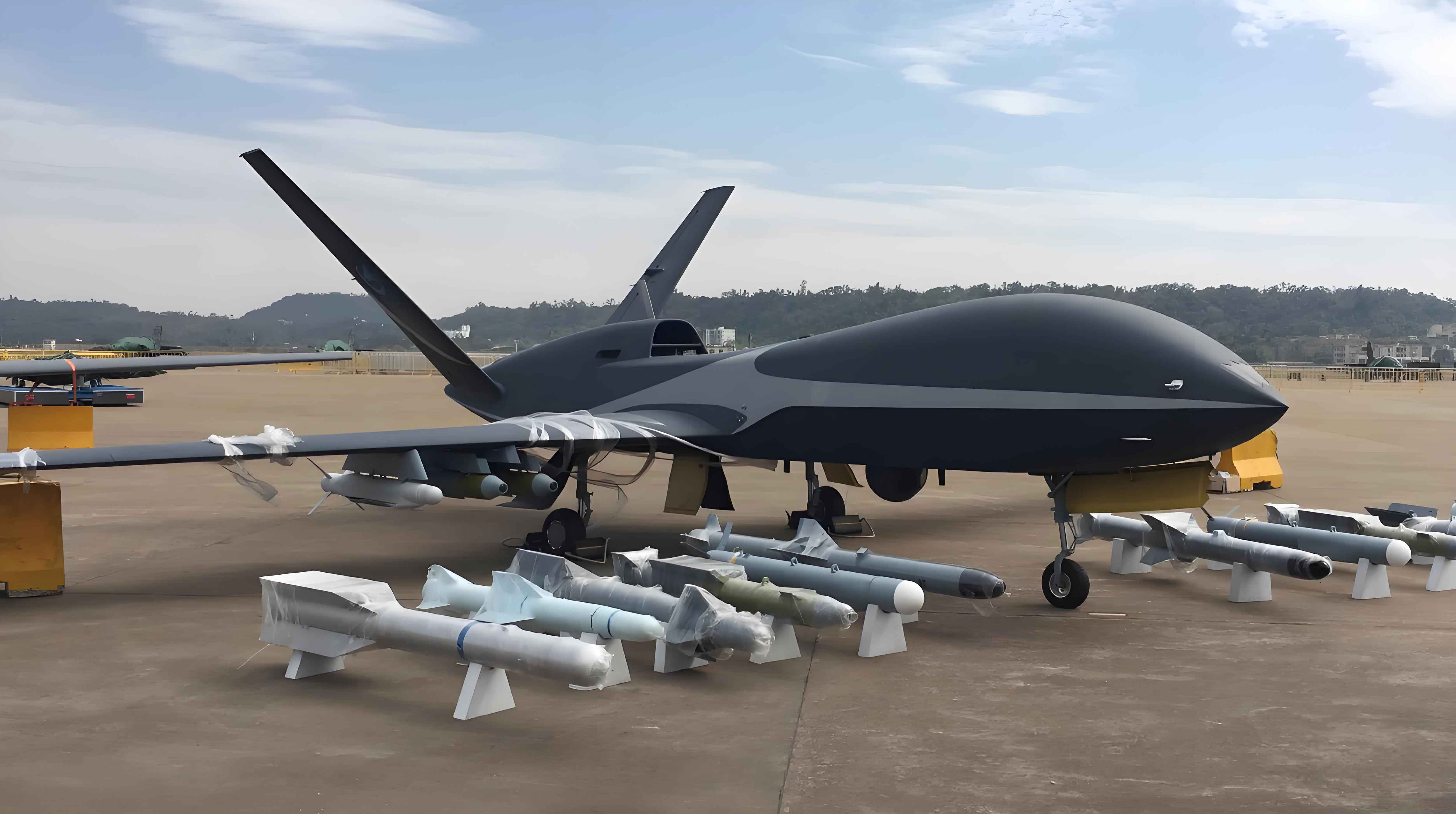
The tactical reality of this new threat is no longer theoretical. Recent conflicts have demonstrated the potent effect of military UAVs in the maritime domain. From the use of armed UAVs to target high-value naval assets to sustained, multi-hour assaults involving coordinated waves of drones and missiles, these systems have proven their ability to penetrate, harass, and overwhelm traditional defenses. The core challenge lies in the cost-exchange ratio. Engaging a $1,500 commercial-derivative quadcopter or a $50,000 loitering munition with a multi-million dollar interceptor missile is a losing economic proposition, especially when faced with saturation attacks. Furthermore, the physical and electromagnetic characteristics of many military UAVs—small radar cross-section (RCS), low infrared signature, slow speed, and low-altitude flight profiles—make them difficult to detect, track, and engage with sensors and weapons designed for faster, larger targets. Consequently, the development of layered, integrated, and cost-effective shipboard C-UAS capabilities is not merely an enhancement but a critical necessity for maintaining maritime superiority.
The Spectrum of UAV Threats: From Micro-Drones to Swarming Systems
To effectively design countermeasures, one must first understand the taxonomy and capabilities of the threat. Military UAVs span a wide continuum of size, capability, and mission. A common framework, such as the one historically used by the U.S. Department of Defense, categorizes them into groups based on weight, altitude, and speed. The threat profile to a surface ship varies dramatically across these categories.
| Category | Size/Weight | Typical Operating Altitude | Endurance/Range | Primary Maritime Threat Role | Key Defense Challenges |
|---|---|---|---|---|---|
| Group 1: Nano/Micro | < 20 lbs (9 kg) | < 1,200 ft (365 m) | Short range (< 10 nm) | Visual reconnaissance, sensor placement, harassing attacks on crew/exposed systems. | Extremely low RCS/IR signature; often manually controlled; can operate in visual clutter. |
| Group 2: Small | 21-55 lbs (10-25 kg) | < 3,500 ft (1,070 m) | Tactical range (10-50 nm) | Tactical ISR, targeting, and carrying small munitions (e.g., grenades, shaped charges). | Low signature; can use commercial parts; potential for GPS/comm-jamming. |
| Group 3: Medium | < 1,320 lbs (600 kg) | < 18,000 ft (5,500 m) | Extended range (100+ nm) | Armed reconnaissance, light strike, electronic warfare. Can carry precision-guided munitions. | Greater payload/range; may employ military-grade navigation and datalinks; more resilient. |
| Group 4/5: Large / HALE | > 1,320 lbs (600 kg) | > 18,000 ft (5,500 m) | Strategic endurance (1,000+ nm) | Long-endurance ISR, strike (with anti-ship missiles), communications relay, command node for swarms. | Higher performance akin to manned aircraft; significant weapon payload; but higher cost/signature. |
Beyond individual platforms, the concept of operations (CONOPS) presents the most severe challenge:
- Saturation Attacks: Launching large numbers of low-cost military UAVs to overwhelm a ship’s defensive systems through sheer volume, exhausting its magazine of expensive interceptors.
- Swarm Tactics: Coordinated groups of UAVs that communicate and collaborate autonomously to execute complex maneuvers, perform distributed sensing, and conduct synchronized attacks, presenting a highly dynamic and intelligent threat.
- Mixed-Package Raids: Combining military UAVs (as distractors, sensors, or jammers) with traditional anti-ship missiles and other assets to degrade and penetrate integrated air defenses.
- Asymmetric Munitions Delivery: Utilizing commercial or improvised UAVs to deliver explosive payloads with high precision against vulnerable upper-deck structures, sensors, or weapon systems.
The mathematical reality of defending against a saturation attack can be framed using a simplified model of engagement capacity. If a ship’s combat system has a maximum simultaneous engagement capacity of N targets, and an attacker launches M UAVs where M > N, the probability of a leak-through becomes significant, especially if the cost of M UAVs is far less than the cost of N ship-launched interceptors. This defines the core affordability gap.
The Counter-UAS Arsenal: From Kinetic Kill to Directed Energy
Naval C-UAS solutions are evolving into a multi-layered, effects-based toolkit, moving beyond reliance solely on kinetic interceptors. These solutions can be broadly classified by their mechanism of action: hard-kill (physical destruction) and soft-kill (functional defeat).
| Technology Type | Example Systems / Concepts | Mechanism of Action | Advantages | Limitations for Naval Use |
|---|---|---|---|---|
| Kinetic: Guns/Cannons | Phalanx CIWS, Goalkeeper, Millennium Gun | High rate of fire projectile impact. | High readiness; proven technology; good against slow, low-altitude targets. | Very short effective range; high ammunition consumption per kill; high cost-per-kill for drones; deck clutter and safety. |
| Kinetic: Missiles (Dedicated) | Raytheon Coyote, Miniature Hit-to-Kill | Small, agile missile with proximity or direct-impact warhead. | Higher single-shot probability of kill (Pk) than guns; can engage at longer ranges. | Unit cost still high relative to cheap UAVs; magazine depth challenge for swarms. |
| Kinetic: Missiles (Adapted) | APKWS (70mm guided rocket), CAMM, ESSM Blk 2 | Guided ordnance using laser, RF, or imaging infrared seekers. | Leverages existing launchers/infrastructure; some are lower-cost than heavyweight missiles. | Seekers may be challenged by small signatures; cost may still be non-trivial for mass attacks. |
| Directed Energy: High-Energy Laser (HEL) | USN HELIOS, ODIN, Israeli Iron Beam | Concentrated light energy causes thermal damage (burn-through, structural failure). | Very low cost per shot (essentially cost of electricity); deep magazine; speed-of-light engagement; precision effects. | Atmospheric attenuation (rain, fog, haze); power and cooling requirements; line-of-sight only; dwell time required. |
| Directed Energy: High-Power Microwave (HPM) | Epirus Leonidas, THOR | Broadcast high-power RF energy to disrupt/fry electronic components. | Area effect weapon; can engage multiple targets in cone simultaneously; effective against swarms. | Short effective range; significant power requirements; potential for collateral damage to friendly electronics. |
| Soft-Kill: Electronic Attack (EA) | DroneGuard, SMASH, various jammers | Jams or spoofs UAV command & control (C2) links and/or Global Navigation Satellite System (GNSS) signals. | Non-kinetic; can cause mission abort or controlled capture; low collateral physical damage. | Effectiveness varies with drone sophistication (frequency hopping, encrypted links, inertial navigation); can be spectrally congested. |
| Soft-Kill: Cyber/Network Attack | Classified capabilities | Exploits software vulnerabilities to hijack, disable, or deceive the UAV system. | Covert; can turn threat into asset; potentially long-range and persistent. | Highly target-specific; requires detailed intelligence and access; development is complex. |
The future of naval C-UAS lies not in selecting a single “silver bullet” but in the intelligent integration of these capabilities into a cohesive system. A notional engagement sequence might begin with electronic warfare systems attempting to disrupt the UAV swarm’s coordination. High-power microwaves could then be used to blanket a sector, disabling the electronics of numerous drones simultaneously. For leakers or more resilient targets, high-energy lasers provide precise, low-cost point defense. Finally, as a last layer, kinetic effectors (guns or mini-missiles) engage any remaining immediate threats. The optimal mix depends on the specific ship’s size, power generation capacity, and primary mission.
Core Technological Challenges for Shipboard C-UAS Integration
Fielding effective countermeasures against military UAVs involves overcoming significant system-level challenges beyond the individual effector technology. Three areas are particularly critical:
1. Detection, Tracking, and Classification (DTC): The “see” function is paramount. Military UAVs are difficult targets due to their low radar cross-section (RCS), small thermal signature, and ability to fly nap-of-the-earth or hide in sea clutter. No single sensor is sufficient.
- Multi-Sensor Data Fusion: The solution lies in fusing data from a heterogeneous sensor suite: advanced low-frequency air-search radars for detection, X-band multi-function radars for fire control, electro-optical/infrared (EO/IR) systems for passive tracking and classification, and electronic support measures (ESM) to detect UAV control signals. Advanced algorithms must correlate tracks from these disparate sources to maintain a single, high-fidelity picture. The fusion process can be represented as an optimization problem minimizing track uncertainty:
$$ J = \sum_{i=1}^{N} w_i \cdot \text{Uncertainty}(\text{Sensor}_i, \text{Track}) $$
where optimal weights \(w_i\) are dynamically assigned based on sensor performance and environmental conditions. - Artificial Intelligence for Classification: Machine learning (ML), particularly deep learning for image recognition and signal analysis, is essential to rapidly distinguish a small military UAV from a bird or clutter, and to classify its type and potential intent based on flight profile and other features.
2. Command and Control (C2) and Fire Control Integration: The “decide and act” functions must be rapid and automated to handle the time-critical nature of UAV threats, especially swarms.
- Automated Threat Evaluation and Weapon Assignment (TEWA): Legacy human-in-the-loop processes are too slow. Next-generation combat systems must automate the prioritization of threats and the assignment of the most appropriate effector. This is a complex resource allocation problem, often framed as a variant of the Weapon-Target Assignment (WTA) problem. For a set of \(M\) incoming threats and \(N\) available effectors (which may be of \(K\) different types, e.g., laser, missile, jammer), the goal is to maximize the total expected probability of kill \(P_K\):
$$ \text{Maximize } \sum_{i=1}^{M} \sum_{j=1}^{N} P_{K_{ij}} \cdot x_{ij} $$
subject to constraints on magazine depth, engagement timelines, and effector capability envelopes. Here, \(P_{K_{ij}}\) is the probability that effector \(j\) kills threat \(i\), and \(x_{ij}\) is a binary decision variable. Solving this in real-time for a dynamic swarm requires advanced algorithms like genetic algorithms or reinforcement learning. - Open Architecture and Modularity: To affordably upgrade C-UAS capabilities across a diverse fleet, the combat system must adopt open standards (e.g., the U.S. Navy’s Combat System Environment). This allows for the “plug-and-play” integration of new sensors and effectors, such as containerized laser systems or dedicated C-UAS electronic warfare pods, without requiring a complete system overhaul.
3. Affordability and Logistics: Winning the cost-exchange ratio is a strategic imperative.
- Low-Cost Interceptors: Developing kinetic effectors that are “good enough” to kill inexpensive drones is crucial. This drives innovation in miniaturized seekers, low-cost propulsion, and simple hit-to-kill or fragmentation warheads.
- The Directed Energy Advantage: High-Energy Lasers (HEL) represent the ultimate in cost-per-shot economics. While the initial development and integration cost is high, the marginal cost of an engagement is essentially the cost of the electricity required, which is negligible. The effectiveness of a laser can be modeled by the power required at the target for a given dwell time \(t_d\) to achieve a lethal fluence \(F_{thresh}\):
$$ P_{\text{required}} = \frac{F_{thresh} \cdot A_{\text{spot}} \cdot \tau_{\text{atm}}}{t_d} $$
where \(A_{\text{spot}}\) is the laser spot area and \(\tau_{\text{atm}}\) is the atmospheric transmission factor. Advances in fiber lasers and beam combining are steadily increasing available power while reducing size and weight. - Swarming Counter-Swarms: An emerging concept involves using defensive swarms of small, cheap interceptor UAVs to physically collide with or detonate near threat UAVs. This turns the attacker’s own tactic against them, but introduces significant challenges in launch, recovery, and swarm C2 from a moving ship.
Future Trajectories and System-of-Systems Approach
The evolution of naval C-UAS will follow several interconnected trajectories, ultimately converging on a networked, multi-domain defense architecture.
Trend 1: From Platform-Centric to Network-Centric Defense. The ship will not fight alone. Future C-UAS will rely on a naval integrated fire control network (NIFC-CA-like concepts) that incorporates targeting data from off-board sensors—other ships, aircraft (manned and unmanned), satellites, and even land-based systems. This dramatically extends the defensive engagement zone and provides earlier warning and tracking of low-flying military UAVs over the horizon.
Trend 2: AI-Powered Autonomous Combat Systems. Artificial intelligence will move beyond classification to fully autonomous engagement cycles for designated threats. AI will manage sensor fusion, execute real-time TEWA calculations, and control effector systems (like lasers and jammers) at machine speed, with human operators serving in a supervisory role. This is essential for defeating high-speed, cooperative swarms.
Trend 3: Integrated Layered Effects (ILE). The most effective shipboard defense will be a seamlessly integrated “system of systems” that applies the right effect at the right range. A notional future engagement layer might look like this:
- Long-Range (>20 km): Off-board cues initiate electronic warfare (EW) jamming of swarm C2 and navigation. If rules of engagement allow, long-range interceptors (like adapted ESSM or dedicated missiles) engage high-value group 3-5 military UAVs.
- Mid-Range (5-20 km): High-Power Microwave (HPM) systems engage sectors of the sky to disable electronics of drone clusters. Onboard radars and EO/IR provide firm tracks.
- Short-Range (1-5 km): High-Energy Laser (HEL) systems engage individual or small groups of leakers with precise, low-cost shots.
- Point-Blank (<1 km): Automated gun systems (like 30mm or 40mm cannons with airburst munitions) and last-ditch mini-missiles provide a final defensive layer.
Trend 4: Modular and Scalable “PODs”. To rapidly equip the fleet, C-UAS capabilities will be packaged into modular, containerized systems (e.g., Lockheed Martin’s MAD-FIRES, or various laser “pods”). These can be installed on available deck space on everything from aircraft carriers to littoral combat ships to auxiliaries, providing a scalable level of protection based on the ship’s role and risk profile.
In conclusion, the threat posed by modern military UAVs is dynamic, affordable, and potent. It invalidates traditional defense economics and demands a paradigm shift in naval point defense. The path forward is not a single technology, but the intelligent orchestration of a layered kill chain: enhanced multi-sensor detection, AI-driven battle management, and a mix of cost-effective effectors—particularly leveraging the revolutionary potential of directed energy. The navies that successfully integrate these elements into a cohesive, open-architecture combat system will negate the asymmetric advantage of adversarial drones and maintain control of the seas in this new era of automated warfare.