
The evolution of modern warfare has been profoundly shaped by the rapid integration of Unmanned Aerial Vehicles (UAVs). As a critical component of this transformation, the military drone has shifted from a niche surveillance asset to a central pillar of networked, multi-domain operations. The performance, survivability, and mission effectiveness of any military drone are fundamentally dictated by the capabilities of its propulsion system. Unlike their manned counterparts, UAVs are designed around the mission, liberating engineers from the stringent constraints of human physiological limits and cockpit design. This allows for radical innovations in airframe configuration, flight envelope, and operational concepts. Consequently, the propulsion system for a military drone must meet a unique and often demanding set of requirements that balance raw performance with stealth, reliability, maintainability, and life-cycle cost. This analysis delves into the key characteristics of turbofan engines used in modern military drone platforms, systematically examines the critical requirements imposed by different mission profiles, and explores the intricate relationship between these requirements and fundamental engine design parameters.
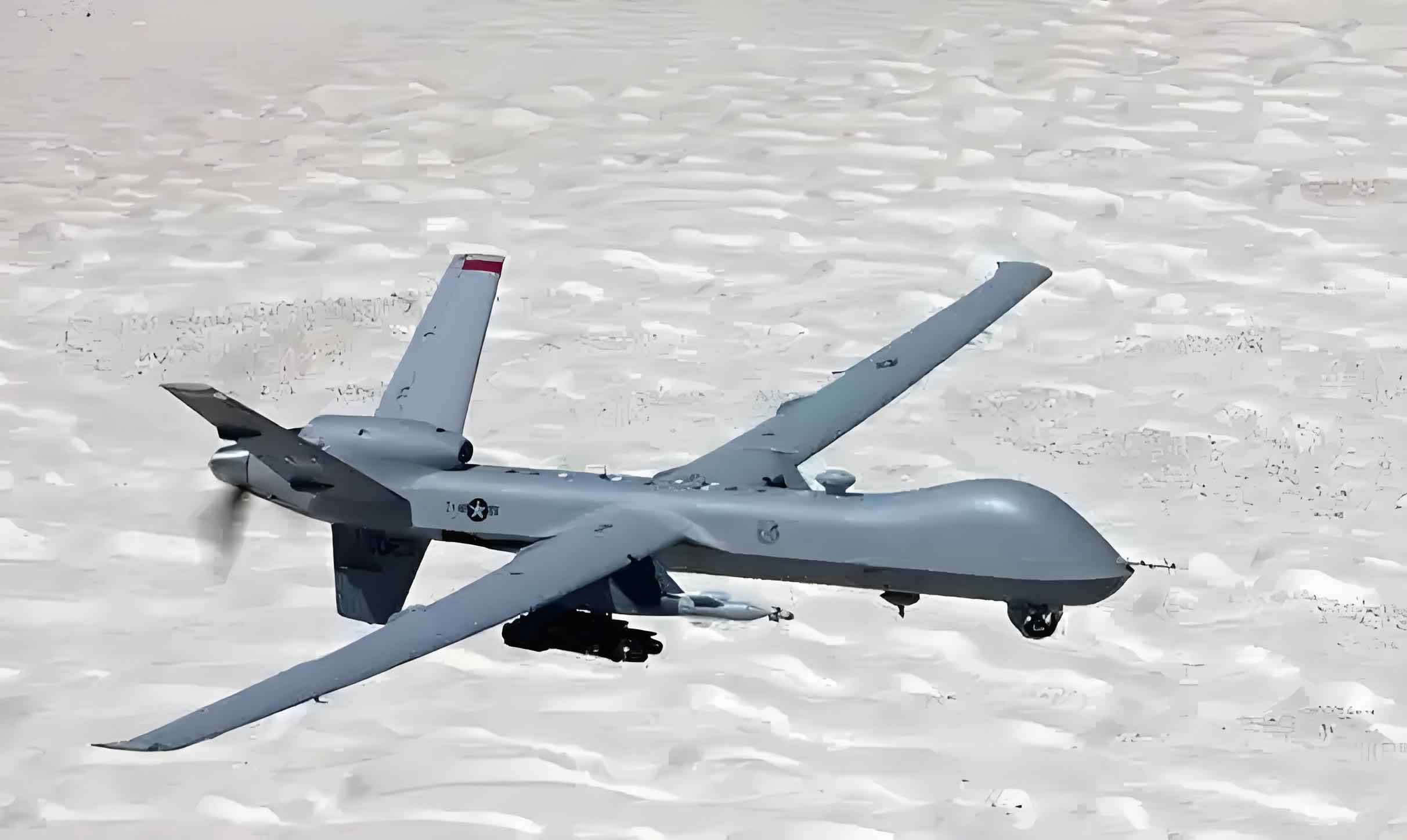
The propulsion system is the heart of any aircraft, and for a military drone, its selection and optimization are paramount. A fighter UAV engaging in contested airspace has vastly different power needs than a high-altitude intelligence platform loitering for 40 hours. Analyzing existing programs reveals that propulsion solutions are rarely built from scratch; instead, they are judiciously adapted from mature engine cores. This approach mitigates risk, controls development cost, and accelerates time to deployment. However, the adaptation is non-trivial. It involves careful trades between thrust, fuel efficiency, thermal and radar signatures, and mechanical robustness. Understanding these trades requires a clear framework linking the military drone‘s mission statement to quantifiable engine characteristics.
1. Characteristics of Turbofan Engines in Typical Military Drones
military drone platforms can be broadly categorized by their primary mission: Unmanned Combat Aerial Vehicles (UCAVs) designed for strike and air dominance; high-altitude long-endurance (HALE) unmanned reconnaissance platforms for intelligence, surveillance, and reconnaissance (ISR); and emerging roles like unmanned tankers. Each category imposes a distinct set of demands on its powerplant.
1.1 Analysis of Representative Platforms and Their Propulsion Adaptations
Examining leading global UAV programs highlights clear trends in engine selection and modification. UCAVs, such as the American X-47B or the European “Neuron,” prioritize low-observable characteristics and high-specific thrust for dash capability. They typically employ modified military turbofan engines derived from fighter or trainer aircraft. These modifications are extensive, often involving the removal of the afterburner to reduce infrared signature, the integration of serpentine or over-fuselage-mounted inlets to shield the compressor face from radar, and the use of specially shaped, sometimes coolable, exhaust nozzles to manage infrared and radar cross-section (RCS). For instance, the Pratt & Whitney F100-PW-220U engine used on the X-47B underwent significant changes from its F-16 fighter origins, including the deletion of the afterburner and its replacement with a low-observable S-shaped exhaust duct.
In contrast, HALE unmanned reconnaissance platforms like the Northrop Grumman RQ-4 Global Hawk or the classified RQ-180 prioritize extreme fuel efficiency and high-altitude operation. These military drones almost exclusively utilize modified commercial turbofan or high-bypass turbofan engines, such as the Rolls-Royce AE 3007H or the General Electric CF34. The focus here is on low specific fuel consumption (SFC), high reliability for marathon missions, and sufficient power extraction for sophisticated sensor suites. Stealth considerations, while present in newer designs like the RQ-180, are often balanced differently, sometimes favoring aerodynamic efficiency more heavily than in a frontline UCAV.
The following table summarizes key parameters and adaptation features for engines powering representative military drones across different categories.
| UAV Type | Representative UAV | Engine (Base Application) | Thrust (kN) | Bypass Ratio | Key Adaptation Features for UAV Role |
|---|---|---|---|---|---|
| UCAV | X-47B | F100-PW-220U (Fighter) | ~74 | ~0.6 | Afterburner deleted, low-observable S-duct nozzle, strengthened bearings for carrier launch. |
| Neuron | Rolls-Royce Mk951 (Trainer) | ~40 | ~0.75 | Integrated with low-observable airframe, specially designed intake and exhaust. | |
| Hunter (S-70) | AL-41F Derivative (Fighter) | >120 | Low | Over-fuselage intake, flat nozzle for IR reduction, increased stall margin. | |
| X-45C | F404-GE-102 (Fighter) | ~78.7 | ~0.34 | Enhanced exhaust system design for signature control. | |
| HALE Reconnaissance | RQ-4 Global Hawk | AE 3007H (Regional Jet) | ~42 | ~4.9 | Optimized for low SFC at high altitude, high reliability. |
| RQ-180 | CF34 Derivative (Regional Jet) | ~89 | ~5.3 | Very high bypass for efficiency, integrated into flying-wing LO airframe. | |
| MQ-20 Avenger | PW545B (Business Jet) | ~20 | ~4.1 | Lightweight, focus on endurance and power generation. | |
| Unmanned Tanker | MQ-25 Stingray | AE 3007N (Regional Jet) | ~40 | ~5.0 | Optimized for low SFC during cruise, carrier-suitable reliability. |
1.2 Key Parameter Trends and Selection Rationale
The data reveals a clear dichotomy in propulsion philosophy. UCAVs, tasked with penetration and strike in defended airspace, universally select low-bypass ratio turbofans. This choice is driven by the need for a compact engine with high specific thrust (thrust per unit of airflow), which allows for a smaller frontal area beneficial for stealth and enables better acceleration and dash performance. The fundamental relation for net thrust ($F_n$) highlights the trade-off:
$$F_n = \dot{m}_a [(1 + f) V_{je} – V_0] + (p_e – p_0)A_e$$
where $\dot{m}_a$ is air mass flow rate, $f$ is fuel-to-air ratio, $V_{je}$ is jet exhaust velocity, $V_0$ is flight velocity, $p_e$ is exhaust pressure, $p_0$ is ambient pressure, and $A_e$ is exhaust area. A low-bypass ratio engine produces a higher $V_{je}$, favoring $F_n$ at high flight speeds ($V_0$), crucial for a combat military drone.
Conversely, HALE reconnaissance and unmanned tanker platforms opt for medium to very high-bypass ratio engines. The primary objective here is to minimize Specific Fuel Consumption (SFC), which for a jet engine is approximately inversely related to propulsive efficiency ($\eta_p$). Propulsive efficiency is improved by lowering the average exhaust velocity closer to the flight speed, which is achieved by moving a larger fraction of the total airflow through the cooler, slower-moving bypass stream. SFC can be expressed as:
$$SFC \approx \frac{\dot{m}_f}{F_n} \propto \frac{1}{\eta_{th} \cdot \eta_p}$$
where $\dot{m}_f$ is fuel flow and $\eta_{th}$ is thermal efficiency. High bypass ratios dramatically improve $\eta_p$ at subsonic cruise conditions, directly translating to the long endurance required by these military drones. This fundamental thermodynamic trade-off between specific thrust (for performance/stealth) and SFC (for endurance) is the first-order driver in military drone propulsion selection.
2. Key Requirements for Military Drone Propulsion Systems
The selection and design of an engine for a military drone are governed by a multifaceted set of requirements that extend beyond basic thrust and weight. These requirements can be grouped into five primary categories: Performance, Environmental/Signature, Reliability & Maintainability, and Cost. The relative importance of each requirement varies significantly with the military drone‘s mission profile.
2.1 Categorization and Prioritization of Requirements
A systematic breakdown of requirements is essential. For a UCAV, low observables (both Radar Cross-Section and Infrared) are paramount, often labeled as a “Key Performance Parameter.” High tolerance to inlet distortion during aggressive maneuvers and the ability to operate at high inlet temperatures (for supersonic dash) are also critical. For a HALE military drone, ultra-low SFC, high-altitude operability, and exceptional reliability for missions lasting tens of hours are the top priorities. An unmanned tanker like the MQ-25 must excel in fuel efficiency and carrier-suitability while maintaining low operating costs. The following table assigns a qualitative priority (High-H, Medium-M, Low-L) to these requirements for each major military drone type.
| Requirement Category | Specific Requirement | UCAV Priority | HALE Recon Priority | Unmanned Tanker Priority |
|---|---|---|---|---|
| Performance | Low Specific Fuel Consumption (SFC) | M | H | H |
| High Thrust-to-Weight Ratio | H | L | L | |
| High Inlet Temperature (T1) Operation | H | L | M | |
| High Power Extraction (for sensors/EW) | M | H | M | |
| High Altitude Operation Capability | M | H | M | |
| High Maneuver Tolerance (to flow distortion) | H | L | L | |
| Environmental/Signature | Low Noise | L | L | L |
| Low IR Signature | H | M | M | |
| Low Radar Cross-Section (RCS) | H | M | L | |
| Reliability & Maintainability | Long Life / High Durability | M | H | M |
| High Cycle Usage Tolerance | H | L | M | |
| High Maintainability / Modularity | M | H | H | |
| Cost | Low Acquisition Cost | M | H | H |
| Low Development Cost & Risk | H | M | M | |
| Low Maintenance & Operating Cost | M | H | H |
2.2 Interplay Between Requirements and Engine Design Parameters
The requirements listed above do not exist in isolation; they interact, often contentiously, with the fundamental design parameters of the engine. Satisfying one requirement frequently exacerbates the challenge of meeting another. This creates a complex trade-space that propulsion engineers must navigate for each military drone application.
For example, achieving low SFC for a reconnaissance military drone calls for a high bypass ratio and low fan pressure ratio (FPR), which reduces core-specific thrust. This is represented by the relationship for ideal turbojet/fan cycle analysis where specific thrust is a function of FPR and flight Mach number. However, a large bypass ratio increases engine diameter and frontal area, which is detrimental to low RCS (increasing radar signature) and makes airframe integration for stealth more difficult. Similarly, while advanced radar-absorbent structures and cooled exhaust surfaces are excellent for meeting low IR/RCS requirements, they directly conflict with goals for low acquisition cost and low weight.
Another critical trade is between high thrust-to-weight ratio and high-temperature operation. Increasing turbine inlet temperature (SOT) is a primary method to improve specific power and reduce core size/weight. However, this requires advanced materials (single-crystal superalloys, ceramic matrix composites) and complex cooling schemes, which drive up cost and can impact durability. The mechanical design parameter often linked to high SOT capability is the turbine blade’s stress parameter, related to rotational speed ($N$) and annulus area ($A$):
$$\text{Turbine Stress Parameter} \propto \frac{N}{\sqrt{T}} \cdot A^{1/4}$$
where $T$ is temperature. Managing this under high SOT is a key challenge.
The table below maps how various engine design characteristics and parameters influence the key requirements. It illustrates the multifaceted and often conflicting nature of these relationships (where ** indicates strong positive correlation, * positive, o neutral/context-dependent, – negative, — strong negative).
| Engine Characteristic / Parameter | Impact on Key Requirements (Sample) | |||
|---|---|---|---|---|
| Low SFC | Low RCS/IR | High Thrust/Weight | Low Cost | |
| Low Fan Pressure Ratio / High BPR | ** | – | — | o |
| High Overall Pressure Ratio (OPR) | * | o | * | – |
| High Turbine Inlet Temperature (SOT) | * | o | ** | – (for matl/cooling) |
| Mixed Exhaust System | * | – (if not shielded) | o | o |
| Advanced Tip Clearance Control | * | o | o | – |
| Full-Authority Digital Control (FADEC) | o | o | * (optimizes perf) | – |
| Modular/Unitized Construction | o | o | o | – (acq) / * (maint) |
| Low-Observable Exhaust/Nozzle | – (often) | ** | – (adds weight) | — |
| Health Monitoring Systems | o | o | o | – (acq) / ** (maint) |
3. Selection and Optimization of Characteristic Parameters
The design of a propulsion system for a military drone is an exercise in multi-disciplinary optimization under constraints. The previous section highlighted the conflicts. The engineering task is to find a parameter set that best satisfies the prioritized requirements for a specific mission. Some parameters are “knobs” that can be turned across a wide range (e.g., Bypass Ratio, OPR), while others represent enabling technologies that are either incorporated or not (e.g., serpentine ducts, radar-absorbent material coatings).
3.1 Parameter Prioritization by Drone Type
Based on the requirement priorities, we can infer the characteristic parameters that become focal points for each class of military drone.
For UCAVs: The dominant parameters are those enabling low observables and high specific thrust. This means:
- Low to Medium Bypass Ratio: To keep the engine diameter and frontal area small.
- Integrated, Shielded Inlet and Exhaust Systems: Serpentine ducts, over-wing inlets, and carefully shaped/cooled nozzles are non-negotiable features. Their aerodynamic performance penalty is an accepted trade for survivability.
- High Turbine Inlet Temperature (SOT): Necessary to achieve the required thrust from a compact core that can be well-integrated into a stealthy airframe.
- Robust Compressor Design with High Stall Margin: To tolerate the highly distorted inflow from stealthy inlets during maneuvering.
For HALE Reconnaissance Drones: The optimization revolves around minimizing SFC and maximizing reliability.
- Very High Bypass Ratio: The primary lever for achieving ultra-low SFC at subsonic cruise.
- High Component Efficiency: Every percentage point gain in compressor or turbine adiabatic efficiency directly improves SFC.
- Modular Design and Extensive Health Monitoring: Critical for achieving high dispatch reliability and enabling quick turnaround maintenance, maximizing platform availability.
- High Altitude Optimization: The cycle must be designed to operate efficiently at thin-air conditions, which influences fan and compressor pressure ratio selections.
For Unmanned Tankers: The profile is similar to HALE drones but with added emphasis on carrier suitability and low operating cost.
- High Bypass Ratio for Efficiency: The core mission is to deliver fuel, so the own-platform’s fuel burn must be minimized.
- Extreme Reliability and Maintainability: Operating from a carrier demands exceptional robustness. Modular engines that can be swapped quickly are highly valued.
- Resistance to Saltwater Corrosion: A specific environmental requirement influencing material choices and protective systems.
3.2 The Adaptation Strategy: Modifying Mature Cores
A universal strategy observed across successful military drone programs is the adaptation of mature, proven engine cores. This approach directly addresses the high-priority requirements of low development cost/risk and high reliability. Starting with an engine that has millions of flight hours in commercial or military service provides a known-quantity core with validated performance, durability, and support infrastructure.
The adaptation work then focuses on the mission-specific features:
- For a UCAV: The afterburner is removed, the low-pressure system may be redesigned for a different bypass ratio or installation, a new exhaust system is developed, and the Full-Authority Digital Engine Control (FADEC) software is extensively rewritten to manage the new hardware and meet stealth-related control laws (e.g., limiting infrared signature by controlling temperatures).
- For a HALE Drone: A commercial core might be matched with a new, larger fan and low-pressure turbine to increase bypass ratio for better SFC. The control laws are optimized for steady-state, high-altitude cruise. Additional power take-off provisions for sensors are integrated.
This path allows propulsion engineers to concentrate their innovation and resources on the novel integration and signature challenges posed by the military drone airframe, rather than on developing an entirely new thermodynamic core from a blank sheet. It represents a pragmatic and effective method to field capable military drone propulsion systems within demanding budget and schedule constraints.
Conclusion
The propulsion system for a modern military drone is a finely tuned instrument, its characteristics dictated by a hierarchy of operational requirements. There is no universal solution. The analysis reveals a clear bifurcation: combat-oriented UCAVs demand low-bypass, high-specific-thrust engines heavily modified for stealth, while endurance-focused ISR and tanker platforms prioritize high-bypass cycles derived from commercial jets for maximum fuel efficiency. The key to successful development lies in first rigorously defining the requirement priorities from the mission profile—be it signature control, endurance, or cost-per-flight-hour—and then mapping these onto the engine’s design parameter space. Critically, this process is dominated by managing inherent conflicts, such as that between frontal area (for stealth) and bypass ratio (for efficiency). The prevailing and successful industrial strategy is to mitigate risk and cost by adapting mature engine cores, focusing development efforts on the novel integration, inlet/exhaust, and control system features required by the unique military drone application. As autonomy and teaming concepts evolve, placing the military drone as a loyal wingman or a collaborative combat asset, the demands on its propulsion system will only grow more complex, requiring continued innovation within this established framework of requirements-driven, trade-space-aware design.