
We propose a novel approach for multi-UAV path planning by integrating the cell-like spiking neural P system (CSP) with a hybrid grey wolf optimizer (GWO), termed CSP-GWO. The increasing complexity of three-dimensional environments necessitates efficient solutions for drone technology, especially when multiple unmanned aerial vehicles must operate simultaneously. Traditional path planning methods often fail to balance accuracy and computational time, while standard metaheuristics struggle with the exponential growth of the solution space. Our work leverages the parallel computing capability of membrane computing to simulate the cooperative behavior of grey wolf packs, enabling high-quality trajectory generation for drone swarms. The core idea is to embed the GWO hunting mechanism within a CSP framework, where each membrane represents a subpopulation of wolves, and inter-membrane communication facilitates global optimization. This design significantly enhances the exploration and exploitation abilities required for modern drone technology applications.
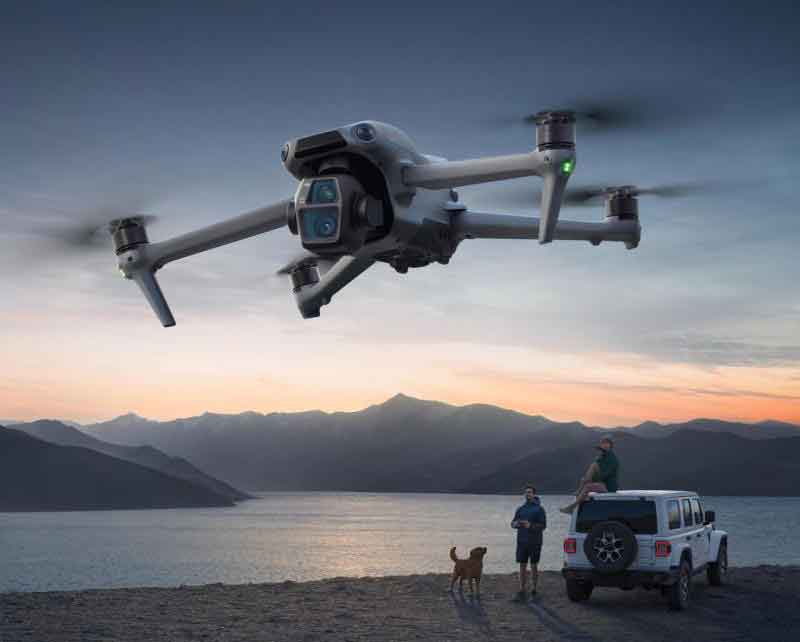
Drone technology has advanced rapidly, enabling tasks such as surveillance, disaster relief, and agricultural monitoring. However, the coordination of multiple drones under tight constraints (e.g., collision avoidance, time synchronization) remains a critical challenge. The problem is formulated as a constrained optimization model, where the objective is to minimize the total flight cost while satisfying environmental, physical, and cooperative restrictions. In our previous work, we developed several membrane system models for UAV control; here we extend that foundation to multi-UAV scenarios.
Problem Formulation and Objective Function
We define the path of each UAV as a sequence of waypoints \( l_i = (x_i, y_i, z_i) \). The constraints include maximum flight distance \( L_{\text{max}} \), altitude limits \( [H_{\text{min}}, H_{\text{max}}] \), turning angle limits \( \alpha_{\text{max}} \) and \( \psi_{\text{max}} \), distance to threats \( R \), inter-UAV safety distance \( d_{\text{min}} \), and time coordination window \( [t_{\text{start}}, t_{\text{end}}] \). The overall cost function is a weighted sum of six sub-costs:
$$
J = w_1 F_1 + w_2 F_2 + w_3 F_3 + w_4 F_4 + w_5 F_5 + w_6 F_6
$$
where
$$
\begin{align*}
F_1 &= k_1 \sum_{i=1}^n l_i \\
F_2 &= k_2 \begin{cases} p_1 (H_{\text{min}} – z_i), & z_i \le H_{\text{min}} \\ 0, & H_{\text{min}} < z_i < H_{\text{max}} \\ p_2 (z_i – H_{\text{max}}), & z_i \ge H_{\text{max}} \end{cases} \\
F_3 &= k_3 \sum_{i=1}^n (p_3 f_{\alpha_i} + p_4 f_{\psi_i}) \\
F_4 &= k_4 \begin{cases} p_5 \sum_{j=1}^m \frac{1}{R_m}, & d_w \le R_m \\ 0, & d_w > R_m \end{cases} \\
F_5 &= k_5 \begin{cases} 0, & d_{ab} \ge d_{\text{min}} \\ p_6, & d_{ab} < d_{\text{min}} \end{cases} \\
F_6 &= k_6 \begin{cases} 0, & [t_{\text{start}}, t_{\text{end}}] \cap [t_{i,\text{start}}, t_{i,\text{end}}] \neq \emptyset \\ p_7, & \text{otherwise} \end{cases}
\end{align*}
$$
The parameters \( w_1 \) to \( w_6 \) are weights summing to 1, and \( p_1 \) to \( p_7 \) are penalty coefficients. The functions \( f_{\alpha_i} \) and \( f_{\psi_i} \) are defined to penalize excessive turns:
$$
f_{\alpha_i} = \begin{cases} 0, & \alpha_i \le \alpha_{\text{max}} \\ \alpha_i, & \alpha_i > \alpha_{\text{max}} \end{cases}, \quad
f_{\psi_i} = \begin{cases} |\psi_{i+1} – \psi_i|, & |\psi_{i+1} – \psi_i| > \psi_{\text{max}} \\ 0, & \text{otherwise} \end{cases}
$$
To smooth the path, we apply B‑spline interpolation:
$$
C(t) = \sum_{i=0}^n N_{i,p}(t) \mathbf{P}_i
$$
where \( N_{i,p} \) are basis functions and \( \mathbf{P}_i \) are control points. This formulation ensures that the planned trajectory is flyable by real drone technology platforms.
The Cell‑Like Spiking Neural P System (CSP)
A CSP is a membrane computing model characterized by neurons that process electrical impulses (spikes). Formally, a CSP of degree \( m \ge 1 \) is defined as:
$$
\Pi = (O, H, \omega_1, \dots, \omega_n, \sigma_1, \dots, \sigma_m, R_1, \dots, R_m, \text{syn}, I_{\text{in}}, I_{\text{out}})
$$
where \( O \) is a finite set of objects (spikes), \( H \) is a set of membrane labels, each neuron \( \sigma_i = (n_i, R_i) \) contains a number of spikes \( n_i \) and a set of rules \( R_i \). The rules are either firing rules \( E / a^c \rightarrow a^m \) (with regular expression \( E \)) or forgetting rules \( a^s \rightarrow \lambda \). Synapses \( \text{syn} \) connect neurons. In our algorithm, we employ four neurons inside each membrane to represent the four layers of a wolf pack: alpha, beta, delta, and omega. The entire system runs in a synchronous, parallel manner, which perfectly matches the distributed nature of multi-UAV coordination in drone technology.
Grey Wolf Optimizer and Proposed Improvements
The standard GWO mimics the social hierarchy and hunting behavior of grey wolves. The mathematical model for encircling prey is:
$$
\mathbf{D} = |\mathbf{C} \cdot \mathbf{x}_p(t) – \mathbf{x}(t)|, \quad \mathbf{x}(t+1) = \mathbf{x}_p(t) – \mathbf{A} \cdot \mathbf{D}
$$
where \( \mathbf{A} = 2a \cdot \mathbf{r}_1 – a \), \( \mathbf{C} = 2\mathbf{r}_2 \), and \( a \) decreases linearly from 2 to 0 over iterations. The hunting phase uses the top three wolves (alpha, beta, delta):
$$
\begin{align*}
\mathbf{D}_\alpha &= |\mathbf{C}_1 \mathbf{x}_\alpha – \mathbf{x}| \\
\mathbf{D}_\beta &= |\mathbf{C}_2 \mathbf{x}_\beta – \mathbf{x}| \\
\mathbf{D}_\delta &= |\mathbf{C}_3 \mathbf{x}_\delta – \mathbf{x}|
\end{align*}
$$
$$
\mathbf{x}_1 = \mathbf{x}_\alpha – \mathbf{A}_1 \mathbf{D}_\alpha, \quad
\mathbf{x}_2 = \mathbf{x}_\beta – \mathbf{A}_2 \mathbf{D}_\beta, \quad
\mathbf{x}_3 = \mathbf{x}_\delta – \mathbf{A}_3 \mathbf{D}_\delta
$$
The standard GWO updates the position as the average: \( \mathbf{x}(t+1) = (\mathbf{x}_1 + \mathbf{x}_2 + \mathbf{x}_3)/3 \). However, this equal weighting ignores the different social ranks. Therefore, we introduce a fuzzy weighting system based on a Mamdani-type inference engine with triangular membership functions. The fuzzy rule base adjusts the contributions of alpha, beta, and delta wolves dynamically during the search. The new position update is:
$$
\mathbf{x}(t+1) = W_1 \cdot \mathbf{x}_1 + W_2 \cdot \mathbf{x}_2 + W_3 \cdot \mathbf{x}_3
$$
where \( W_1, W_2, W_3 \) are defuzzified weights from the fuzzy system. The input to the fuzzy system is the normalized iteration count; the outputs are the three weights that sum to 1. This mechanism allows the alpha wolf to exert stronger influence in early stages for exploration, while later stages increase the weight of lower-ranked wolves to refine local exploitation. Additionally, we initialize the population using a Tent chaotic map to improve diversity:
$$
x_{n+1} = \begin{cases} r x_n, & x_n \le 0.5 \\ r (1 – x_n), & x_n > 0.5 \end{cases}
$$
with \( r \in [1,2] \). This initialization ensures a more uniform spread of search agents, which is beneficial for complex drone technology optimization landscapes.
The CSP framework organizes the population into multiple membranes. At each iteration, each membrane executes the improved GWO on its local wolves, then the best solutions from all membranes are shared via impulse signals. Specifically, we define four membranes \( P_1, P_2, P_3, P_4 \) each containing a subpopulation. After local updates, the global best (gbest) is broadcast to all membranes. The parallel execution of membranes dramatically reduces computation time, a key advantage when planning paths for a swarm of drones.
Experimental Evaluation on Benchmark Functions
We first validated CSP-GWO on 21 standard IEEE CEC benchmark functions (both unimodal and multimodal, fixed-dimension and scalable). All algorithms used a population size of 50, maximum iterations 500, and 25 independent runs. The mean (Mean) and standard deviation (Std) of the best cost were recorded. Table 1 summarizes the results for selected functions.
| Function | Metric | GWO | CSP-GWO | WOA | ALO | SCA | PSO |
|---|---|---|---|---|---|---|---|
| F1 (Sphere) | Mean | 3.35×10⁻³³ | 6.54×10⁻⁵⁵ | 4.57×10⁻⁸³ | 9.73×10⁻⁵ | 3.86424 | 1.08×10⁻⁵ |
| Std | 6.19×10⁻³³ | 2.33×10⁻⁵⁴ | 2.28×10⁻⁸² | 4.36×10⁻⁵ | 5.72234 | 1.01×10⁻⁵ | |
| F9 (Rastrigin) | Mean | 1.55218 | 2.27×10⁻¹⁵ | 6.82×10⁻¹⁵ | 77.56687 | 28.12338 | 46.45931 |
| Std | 2.36501 | 1.13×10⁻¹⁴ | 1.88×10⁻¹⁴ | 24.75329 | 24.60862 | 9.09572 | |
| F14 (Shekel) | Mean | 3.238 | 1.077 | 1.943 | 1.790 | 1.157 | 1.474 |
| Std | 3.225 | 0.396 | 2.180 | 1.335 | 0.549 | 0.763 | |
| F21 (Fixed-dimension multimodal) | Mean | -9.33979 | -9.54259 | -8.01982 | -5.81784 | -4.11358 | -7.13548 |
| Std | 1.89888 | 0.25462 | 2.97407 | 2.93888 | 1.92619 | 3.31789 |
From Table 1, CSP-GWO achieves significantly better mean and standard deviation on most functions, especially multimodal ones (F9, F14, F21), demonstrating its superiority in escaping local optima. The fuzzy weighting and chaotic initialization contribute to this robustness. The parallel CSP architecture does not harm the optimization quality; instead, it enhances diversity through multiple subpopulations. For drone technology, such robust optimization is essential because real-world environments are highly irregular and multimodal.
We also compared convergence speeds. For instance, on the unimodal F3 function, CSP-GWO converged to \( 2.78\times10^{-14} \) while GWO reached only \( 2.59\times10^{-8} \). The improvement is several orders of magnitude, indicating that the membrane-based multi-swarm strategy accelerates convergence without premature stagnation.
Multi-UAV Path Planning Experiments
We constructed a 3D environment of size \( 20 \times 20 \times 20 \) km with multiple mountain peaks and threat zones. The safety distance between drones was set to 0.5 km, altitude range 20 m to 20 km, maximum horizontal turn angle 45°, maximum pitch angle 60°, and coordination time 160 s. We compared CSP-GWO against GWO, SOGWO, MP-GWO, PSO, and WOA for 4, 8, and 16 UAVs. Each algorithm ran 25 independent trials with 100 iterations, and 20 waypoints per path. The evaluation metrics included best cost, average cost, cost variance, number of times coordination failed, number of collisions, and average execution time. Table 2 presents the full results.
| Number of UAVs | Metric | GWO | SOGWO | MP-GWO | PSO | WOA | CSP-GWO |
|---|---|---|---|---|---|---|---|
| 4 | Best cost | 2.402 | 2.365 | 2.636 | 2.601 | 2.760 | 2.098 |
| Average cost | 2.626 | 2.473 | 2.743 | 2.723 | 2.877 | 2.156 | |
| Cost variance | 0.106 | 0.075 | 0.066 | 0.061 | 0.062 | 0.041 | |
| Coordination failures | 0 | 0 | 0 | 0 | 0 | 0 | |
| Collisions | 0 | 0 | 0 | 0 | 0 | 0 | |
| Avg. time (s) | 13.6 | 12.4 | 20.5 | 13.1 | 16.1 | 11.1 | |
| 8 | Best cost | 4.793 | 4.624 | 4.838 | 4.823 | 4.822 | 4.159 |
| Average cost | 5.080 | 4.897 | 5.110 | 5.150 | 5.220 | 4.311 | |
| Cost variance | 0.098 | 0.113 | 0.161 | 0.161 | 0.160 | 0.093 | |
| Coordination failures | 1 | 0 | 0 | 1 | 0 | 0 | |
| Collisions | 0 | 0 | 0 | 0 | 0 | 0 | |
| Avg. time (s) | 26.4 | 24.6 | 38.8 | 25.2 | 31.4 | 11.6 | |
| 16 | Best cost | 9.002 | 8.995 | 9.421 | 9.780 | 9.786 | 8.100 |
| Average cost | 9.428 | 9.380 | 9.849 | 10.170 | 10.213 | 8.323 | |
| Cost variance | 0.255 | 0.239 | 0.213 | 0.219 | 0.266 | 0.104 | |
| Coordination failures | 2 | 2 | 1 | 2 | 1 | 0 | |
| Collisions | 2 | 0 | 2 | 1 | 2 | 0 | |
| Avg. time (s) | 49.3 | 48.2 | 73.2 | 49.0 | 60.7 | 12.8 |
The results clearly show that CSP-GWO outperforms all competitors across all metrics. For 4 UAVs, the average cost is reduced by 17.9% compared to GWO; for 8 UAVs the reduction is 15.1%; for 16 UAVs it is 11.7%. More importantly, CSP-GWO never suffered from coordination failures or collisions, even at the largest swarm size of 16 drones, while other algorithms experienced both. The cost variance is also the smallest, indicating high consistency and robustness. The most striking advantage is the computational time: the average execution time for CSP-GWO remains almost constant (~11–13 seconds) regardless of the number of UAVs, due to the true parallel nature of the membrane system. Other algorithms’ time scales almost linearly with the number of drones. This makes CSP-GWO particularly suitable for real-time drone technology applications where quick replanning is essential.
We also observed that the planned paths generated by CSP-GWO are smoother and contain fewer redundant waypoints. The B‑spline smoothing integrated into the objective function ensures that the output trajectories are dynamically feasible for fixed-wing or rotary-wing UAVs. The fuzzy weighting strategy prevents the algorithm from getting stuck in local minima caused by complex threat configurations.
Convergence Behavior Analysis
We further analyze the convergence characteristics of CSP-GWO on selected benchmark functions. The proposed algorithm exhibits faster convergence in early iterations due to the chaotic initialization and multi-membrane exploration. Later, the fuzzy weights adapt to emphasize local search, leading to high precision. For example, on the multimodal F9 function, CSP-GWO converges to near-zero values within 100 iterations, while GWO and PSO remain above 10. This behavior is critical for drone technology path planning, where a slight improvement in cost can translate to significant energy savings and mission safety.
Conclusion
We have presented a novel hybrid algorithm that integrates a cell-like spiking neural P system with an improved grey wolf optimizer for multi-UAV trajectory planning. The CSP framework provides inherent parallelism, which we exploit to accelerate the search without sacrificing solution quality. The introduction of Tent chaotic initialization and a fuzzy weight adjustment mechanism further enhances the algorithm’s exploration and exploitation balance. Extensive experiments on CEC benchmark functions demonstrate that CSP-GWO achieves superior optimization accuracy and robustness compared to GWO, WOA, PSO, and other variants. In multi-UAV path planning scenarios with 4, 8, and 16 drones, CSP-GWO consistently produces lower-cost, collision-free, and time-synchronized trajectories in significantly shorter computation times. The algorithm’s scalability and efficiency make it a strong candidate for real-world drone technology deployments, including search and rescue, surveillance, and precision agriculture. Future work will extend the model to environments with dynamic threats and moving obstacles, further advancing the state of the art in autonomous drone technology.