
As the use of unmanned aerial vehicles, commonly known as drones, continues to expand across both civilian and military sectors, the need for standardized professional certification for operators has become increasingly critical. In the military domain, the role of the military drone pilot is pivotal for missions ranging from reconnaissance and surveillance to direct combat support. However, unlike their civilian counterparts, military drone pilots often lack a unified, formalized certification framework that aligns with national and international standards. This gap not only affects operational efficiency but also hampers the interoperability and skill portability of personnel. In this article, we explore a comprehensive model for military drone pilot professional qualification certification, drawing insights from civilian practices and integrating them with military-specific requirements. Our goal is to propose a system that enhances the competency and readiness of military drone operators through a blended training approach and a dual-certification mechanism.
The rapid evolution of drone technology has transformed modern warfare, with military drones becoming indispensable assets in today’s battlefield. These systems offer advantages such as reduced risk to human life, cost-effectiveness, and versatility in mission profiles. However, the effectiveness of a military drone is inherently tied to the skill of its pilot. Without proper certification, there is a risk of inconsistent training, operational errors, and compromised mission success. We argue that by adopting a structured certification model, military forces can ensure that their drone pilots meet high standards of proficiency, thereby boosting overall combat effectiveness. This article delves into the components of such a model, emphasizing the integration of civilian certification principles to foster a seamless transition between military and civilian drone operations.
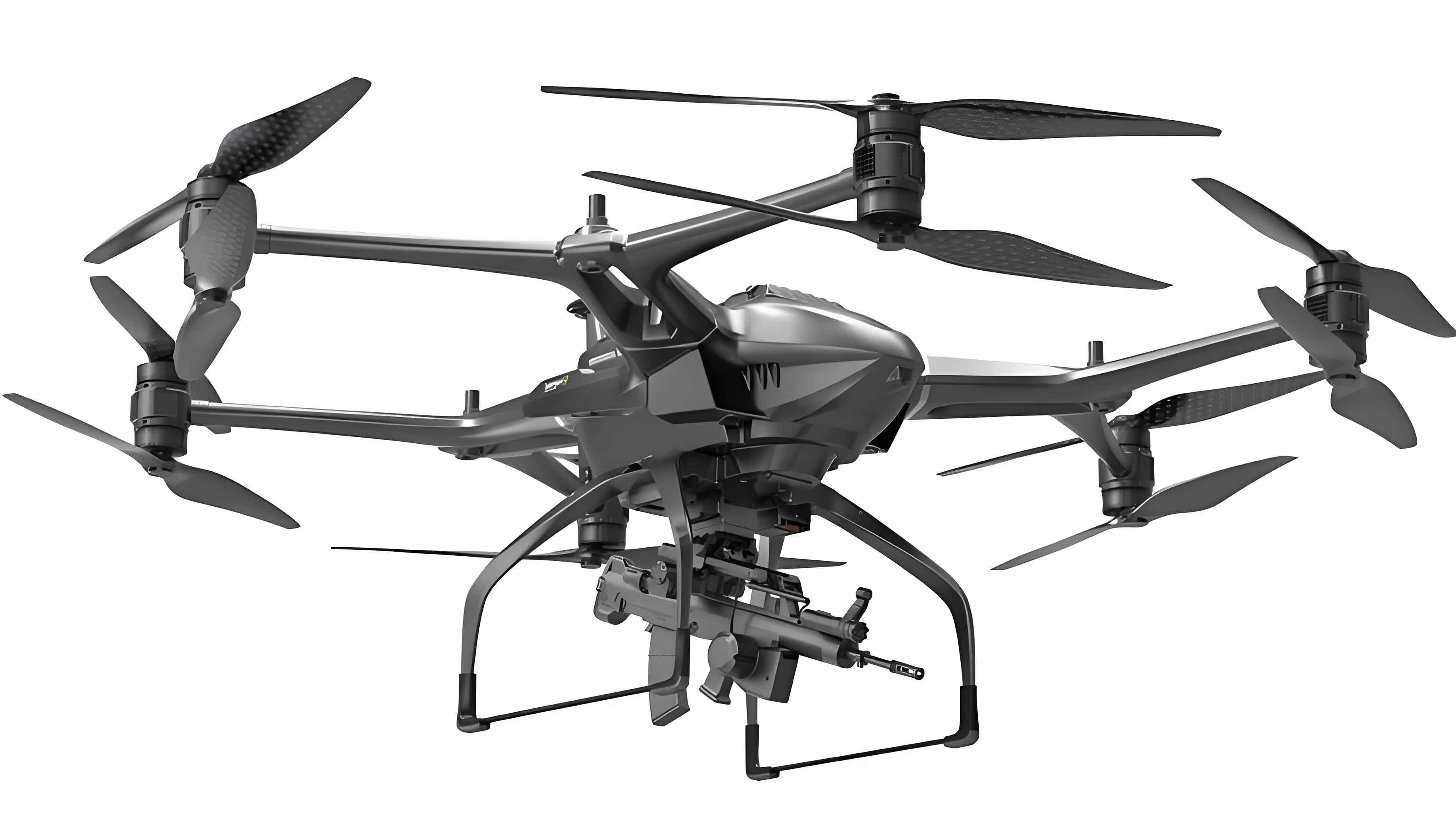
To contextualize our proposal, we first examine the current state of civilian drone pilot certification. In many countries, civilian drone operations are regulated by aviation authorities, such as the Federal Aviation Administration (FAA) in the United States or the Civil Aviation Administration of China (CAAC). These bodies have established frameworks that require drone pilots to obtain licenses or certificates based on the type of drone, its weight, and the airspace in which it operates. For instance, the CAAC’s Advisory Circular AC-61-FS-2018-20R2 mandates that drone pilots operating beyond visual line of sight or in controlled airspace must undergo formal training and assessment. The certification process typically involves theoretical knowledge tests and practical flight evaluations, administered by authorized training organizations. This system ensures that civilian drone pilots possess the necessary skills to operate safely and legally, reducing the risk of accidents and enhancing public safety.
In contrast, military drone pilot certification has historically been less standardized, with variations across different branches and units. While large and medium-sized military drones may fall under aviation regulations similar to manned aircraft, smaller military drones often operate under ad hoc training protocols. This disparity can lead to inconsistencies in skill levels and hinder joint operations. By learning from the civilian sector, we can develop a military drone pilot certification model that is both rigorous and adaptable. Our model focuses on three core pillars: a structured training system, a comprehensive assessment framework, and a dual-certification mechanism that bridges military and civilian domains. Throughout this discussion, we will emphasize the importance of the military drone as a key asset, and the pilot as its critical operator.
The foundation of our proposed certification model lies in defining the target audience. The primary candidates for military drone pilot certification are enlisted soldiers and officers who are actively serving in drone operator roles. Additionally, cadets and trainees in military academies with drone-related curricula can be included. Eligibility criteria should encompass factors such as military service duration, educational background, and demonstrated interest in drone technology. For example, we recommend that candidates have at least three years of experience in military drone operations and a minimum of an associate’s degree or equivalent. This ensures that certification is awarded to individuals with a solid foundation in both practical skills and theoretical knowledge. By focusing on these groups, we aim to create a certification that is relevant and valuable for career advancement within the military.
Next, we outline the training system for military drone pilot certification. This system is designed to be a “trinity” approach, combining in-service training, centralized institutional education, and online self-study. The training content is derived from military training outlines and civilian certification standards, ensuring alignment with both operational requirements and broader aviation norms. We have developed a detailed curriculum that covers essential topics, as summarized in the table below. This curriculum is structured to provide a balanced mix of theoretical instruction and hands-on practice, catering to the diverse learning needs of military personnel.
| 序号 | 课程名称 | 培训方式 | 学时分配 | 备注 |
|---|---|---|---|---|
| 1 | 无人机系统概论 | 在岗培训 | 16 (理论: 16, 实践: 0) | 按纲施训 |
| 2 | 无人机装备构造 | 在岗培训 | 14 (理论: 14, 实践: 0) | 按纲施训 |
| 3 | 无人机飞行准备 | 在岗培训 | 26 (理论: 2, 实践: 24) | 按纲施训 |
| 4 | 无人机飞行操作 | 在岗培训 | 38 (理论: 6, 实践: 32) | 按纲施训 |
| 5 | 航空法规与航空气象 | 集中培训 | 20 (理论: 20, 实践: 0) | 按纲施训 |
The table above illustrates the core courses for military drone pilot training, with a total of 140 hours divided into theoretical and practical components. The “在岗培训” (in-service training) is conducted by military units, focusing on standard operational procedures as per military guidelines. The “集中培训” (centralized training) is organized by military academies in collaboration with civilian entities like the Aircraft Owners and Pilots Association (AOPA). This blended approach allows for flexibility and ensures that training is both context-specific and broadly applicable. For instance, courses like “无人机系统概论” (Introduction to Drone Systems) provide foundational knowledge, while “无人机飞行操作” (Drone Flight Operations) emphasize hands-on skills crucial for mission execution. We believe that this curriculum design effectively addresses the unique demands of military drone operations, while also incorporating civilian best practices.
To further enhance the training system, we propose the integration of online self-study modules. These modules can cover advanced topics or supplementary materials, such as emerging technologies in military drone systems or case studies from recent conflicts. This component leverages military education platforms, allowing personnel to learn at their own pace and reinforce their knowledge. The combination of in-service, centralized, and online training creates a holistic learning environment that adapts to the dynamic nature of military operations. Moreover, by involving civilian partners in the centralized training phase, we foster cross-sector collaboration, which is essential for innovation and skill transfer. The military drone, as a complex system, requires pilots to master not only flight controls but also mission planning, data analysis, and maintenance procedures, all of which are addressed in this integrated approach.
Following training, the certification process includes a rigorous assessment phase. This phase consists of two main components: a theoretical examination and a practical flight evaluation. The theoretical exam tests candidates on a wide range of topics, from aeronautical regulations and meteorology to drone system principles and operational protocols. We recommend using a standardized question bank with over 1000 items, from which 100 questions are randomly selected for each exam. The scoring is based on a percentage system, with a passing threshold of 80%. This ensures that only those with a comprehensive understanding of the material proceed to the practical phase. The exam can be administered via computer-based testing, which allows for efficient scoring and reduces human error. The formula for calculating the theoretical score can be expressed as:
$$ T = \frac{C}{N} \times 100 $$
where \( T \) is the theoretical score (in percentage), \( C \) is the number of correct answers, and \( N \) is the total number of questions (e.g., 100). Candidates must achieve \( T \geq 80\% \) to pass.
The practical assessment evaluates the candidate’s ability to perform real-world military drone missions. This includes tasks such as mission planning, pre-flight checks, takeoff and landing, in-flight maneuvers, payload operation, and emergency response. The assessment is conducted using actual military drone equipment, under the supervision of a panel of experts drawn from military units, academies, and civilian organizations. The panel scores each candidate based on predefined criteria, with a focus on safety, accuracy, and efficiency. The practical score \( P \) is also calculated on a percentage scale, with a minimum passing score of 80%. We propose a weighted scoring model for the overall certification, which combines both theoretical and practical components. The overall score \( S \) can be represented as:
$$ S = w_t \cdot T + w_p \cdot P $$
where \( w_t \) and \( w_p \) are weight factors for the theoretical and practical scores, respectively. Based on military priorities, we suggest \( w_t = 0.4 \) and \( w_p = 0.6 \), reflecting the greater emphasis on hands-on skills in military drone operations. To pass the certification, candidates must have \( S \geq 80\% \) and individually pass both \( T \) and \( P \) with scores of at least 80%. This dual requirement ensures a balanced competency profile.
In addition to the assessment, we introduce a novel “one-test, dual-certification” mechanism. Upon successful completion of the training and assessment, candidates receive two certificates: a military drone pilot qualification issued by the military authorities, and a civilian drone pilot license issued by an authorized civilian body like the AOPA. This approach leverages the similarities between military and civilian drone operations, such as airspace management and safety protocols, while acknowledging the unique aspects of military missions. The dual certification benefits personnel by enhancing their career mobility—allowing them to transition to civilian roles post-service—and promotes interoperability between military and civilian drone sectors. For instance, a military drone pilot certified under this system could contribute to disaster response efforts alongside civilian agencies, using standardized skills. This aligns with the broader concept of civil-military integration, which is crucial for national security and economic development.
To implement this certification model, we outline a step-by-step process. First, candidates apply through their military units, which verify eligibility based on service records and educational background. Second, they undergo the “trinity” training, starting with in-service modules conducted by unit instructors, followed by centralized courses at military academies, supplemented by online self-study. Third, they take the theoretical and practical exams administered by a joint military-civilian assessment board. Finally, upon passing, they receive the dual certificates. We recommend establishing a centralized database to track certified military drone pilots, ensuring ongoing compliance and facilitating skill upgrades as technology evolves. This process is designed to be scalable and adaptable to different military branches and drone types, from small tactical drones to larger strategic systems.
The benefits of this certification model are manifold. For the military, it standardizes training and assessment, leading to more competent and reliable drone pilots. This, in turn, enhances mission success rates and reduces operational risks. For individuals, it provides a recognized qualification that boosts career prospects both within and outside the military. For society, it fosters safer and more efficient drone operations across sectors. However, challenges exist, such as the need for resources to develop training materials, the coordination between military and civilian entities, and the adaptation to rapidly changing drone technologies. We address these by proposing periodic reviews of the curriculum, leveraging simulation tools for training, and fostering partnerships with industry and academia. The military drone, as a key component of modern defense systems, deserves a certification framework that keeps pace with innovation.
In terms of curriculum details, we expand on the courses listed in the table. For example, “无人机系统概论” covers the history, classification, and applications of drones, with a focus on military use cases. “无人机装备构造” delves into the mechanical and electronic components of drones, including propulsion systems, sensors, and communication links. “无人机飞行准备” involves mission planning, weather analysis, and risk assessment, using formulas to calculate flight parameters. For instance, the maximum flight time \( t_{\text{max}} \) of a military drone can be estimated based on battery capacity \( C \) and power consumption \( P \):
$$ t_{\text{max}} = \frac{C}{P} $$
where \( C \) is in ampere-hours (Ah) and \( P \) in amperes (A). This practical knowledge is essential for mission efficiency. “无人机飞行操作” includes hands-on training on takeoff, landing, navigation, and payload deployment, often using simulators before live flights. “航空法规与航空气象” ensures that pilots understand airspace regulations, weather patterns, and emergency procedures, which are critical for safe operations in both military and civilian contexts.
To further illustrate the assessment process, we provide a sample rubric for the practical evaluation. The table below breaks down the key tasks and their weightings in the overall practical score.
| Task | Description | Weight (%) | Scoring Criteria |
|---|---|---|---|
| Mission Planning | Define objectives, route, and contingencies | 20 | Completeness, feasibility, safety |
| Pre-flight Checks | Inspect drone, payload, and control systems | 15 | Thoroughness, compliance with checklist |
| Takeoff and Landing | Execute smooth takeoff and precise landing | 25 | Stability, accuracy, adherence to procedures |
| In-flight Operations | Navigate, adjust to conditions, operate payload | 30 | Control proficiency, mission adaptation, data collection |
| Emergency Response | Handle simulated failures or threats | 10 | Quick thinking, correct actions, safety prioritization |
This rubric ensures that the practical assessment is objective and comprehensive, covering all critical aspects of military drone piloting. Candidates are evaluated on a scale of 0-100 for each task, with the overall practical score \( P \) calculated as the weighted sum. For example, if a candidate scores 85 on Mission Planning, 90 on Pre-flight Checks, 80 on Takeoff and Landing, 85 on In-flight Operations, and 95 on Emergency Response, then:
$$ P = 0.2 \times 85 + 0.15 \times 90 + 0.25 \times 80 + 0.3 \times 85 + 0.1 \times 95 = 85.25 $$
This score meets the passing threshold of 80%, assuming the theoretical score is also sufficient. Such detailed assessment criteria help maintain high standards across the military drone pilot workforce.
Looking ahead, we envision this certification model evolving with advancements in drone technology. For instance, the rise of autonomous military drones may require additional modules on artificial intelligence and human-machine collaboration. Similarly, cybersecurity threats to drone systems necessitate training in encryption and anti-jamming techniques. We propose that the certification be renewable every few years, with continuing education requirements to ensure that pilots stay current with new developments. This proactive approach will help military forces maintain a technological edge in an increasingly contested battlespace. Moreover, by sharing best practices with civilian partners, we can contribute to global standards for drone operations, benefiting both security and commercial applications.
In conclusion, our research presents a robust framework for military drone pilot professional qualification certification. By integrating civilian certification principles with military-specific needs, we have developed a model that emphasizes comprehensive training, rigorous assessment, and dual certification. This model not only enhances the skill levels of military drone operators but also promotes civil-military integration, creating a win-win scenario for national defense and societal progress. The military drone, as a transformative asset, requires pilots who are not just technicians but strategic thinkers, and our certification model aims to cultivate such professionals. We encourage military organizations worldwide to adopt similar approaches, tailoring them to their unique contexts, to build a future where drone operations are safe, effective, and universally recognized.