
In this article, we delve into the intricate problem of controlling a novel class of drone formation systems, specifically focusing on composite unmanned aerial vehicles (UAVs) consisting of a carrier and deployable parasite drones. The synergy in such a drone formation offers extended operational range and enhanced mission flexibility, presenting unique challenges in flight control, particularly during the critical phases of parasite deployment and subsequent coordinated flight. We propose a comprehensive control strategy built upon Model Predictive Control (MPC) frameworks, designed to ensure stability amidst parametric shifts and uncertainty inherent in these operations.
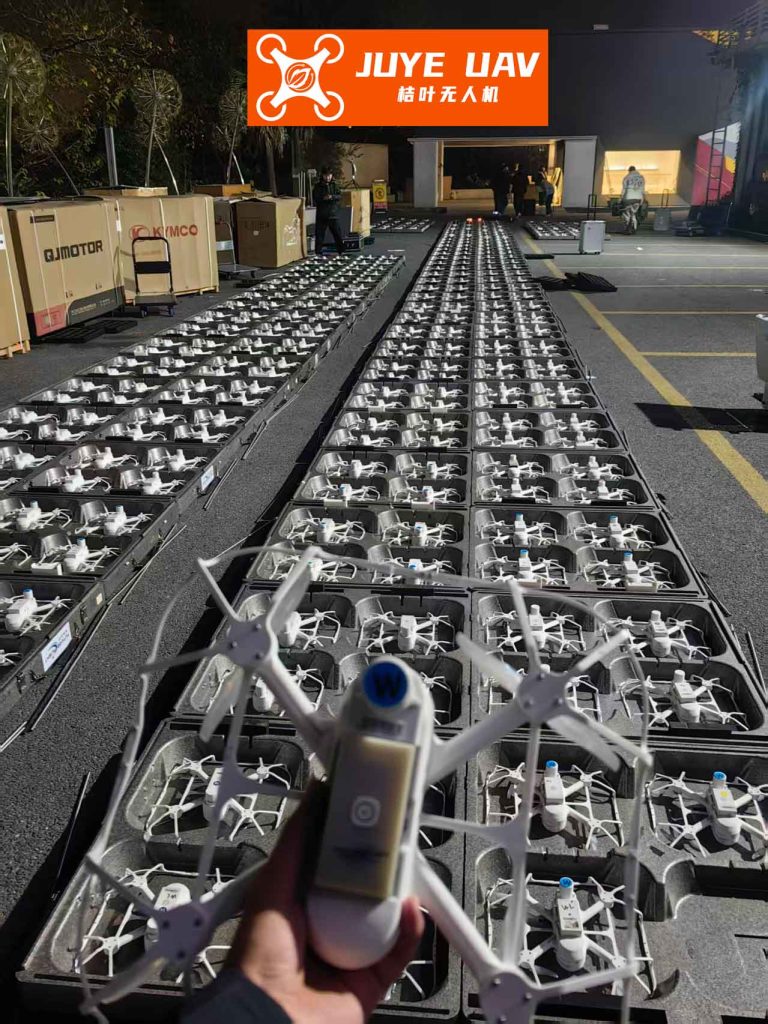
The core challenge in managing a composite drone formation lies in the dynamic reconfiguration of the system. The carrier aircraft experiences abrupt changes in mass, center of gravity, and inertia the moment a parasite drone is released. Concurrently, the deployed parasite must rapidly stabilize from an initial coupled state and accurately track a trajectory to assume its designated position within the drone formation, often while dealing with aerodynamic uncertainties. Traditional control methods can struggle with these discontinuous changes and constraints. Our approach systematically addresses these issues through a dual-controller architecture: a multi-equilibrium switched MPC for the carrier and a robust MPC for the parasites.
1. Dynamic Modeling of the Composite Drone Formation
Accurate modeling is the cornerstone of effective control. We consider a system where a carrier UAV is tasked with transporting and deploying two identical parasite UAVs. We define two primary coordinate frames: the body-fixed frame $F_b$ attached to the composite vehicle’s center of mass (pre-release), and the North-East-Down (NED) inertial frame $F_i$.
1.1 Kinematics
The translational and rotational kinematics for the rigid-body motion of the composite vehicle are given by:
Position Kinematics:
$$ \begin{bmatrix} \dot{p}_n \\ \dot{p}_e \\ \dot{h} \end{bmatrix} = \mathbf{R}_b^i(\phi, \theta, \psi) \begin{bmatrix} u \\ v \\ w \end{bmatrix} $$
where $\mathbf{R}_b^i$ is the rotation matrix from $F_b$ to $F_i$, $(p_n, p_e, h)$ are the NED positions, $(u, v, w)$ are body-frame velocities, and $(\phi, \theta, \psi)$ are the roll, pitch, and yaw Euler angles.
Attitude Kinematics:
$$ \begin{bmatrix} \dot{\phi} \\ \dot{\theta} \\ \dot{\psi} \end{bmatrix} = \begin{bmatrix} 1 & \sin\phi \tan\theta & \cos\phi \tan\theta \\ 0 & \cos\phi & -\sin\phi \\ 0 & \sin\phi \sec\theta & \cos\phi \sec\theta \end{bmatrix} \begin{bmatrix} p \\ q \\ r \end{bmatrix} $$
where $(p, q, r)$ are the body-frame angular rates.
1.2 Dynamics of the Carrier with Variable Mass/Inertia
The total mass $m_i$ of the system depends on the number of attached parasites $i$:
$$ m_i = m_b + i \cdot m_s $$
where $m_b$ is the carrier mass and $m_s$ is the parasite mass. The system’s center of mass $(x_i, y_i, z_i)$ in the body frame shifts accordingly. The inertia tensor $\mathbf{J}_i$ for configuration $i$ is computed using the parallel axis theorem, accounting for the mounted parasites’ point masses at their installation points $(x_s, y_s, z_s)$.
The translational dynamics must account for the coupling between the system’s motion and the shifting center of mass. The effective velocity $\mathbf{v}’_i$ in the body frame is:
$$ \mathbf{v}’_i = \begin{bmatrix} u \\ v \\ w \end{bmatrix} + \begin{bmatrix} q z_i – r y_i \\ r x_i – p z_i \\ p y_i – q x_i \end{bmatrix} $$
Applying Newton’s second law, $\mathbf{F} = m_i \dot{\mathbf{v}}’_i + \boldsymbol{\omega} \times (m_i \mathbf{v}’_i)$, yields the force equations. The total force $\mathbf{F}$ includes aerodynamic forces (lift $L$, drag $D$, side force $Y$), thrust $T$, and gravity $G$.
Aerodynamic & Thrust Models:
$$ \begin{aligned}
L &= \frac{1}{2} \rho V_a^2 S \left( C_{L0} + C_{L\alpha} \alpha + C_{Lq} \frac{c}{2V_a} q + C_{L\delta_e} \delta_e \right) \\
D &= \frac{1}{2} \rho V_a^2 S \left( C_{D0} + C_{D\alpha} \alpha + C_{Dq} \frac{c}{2V_a} q + C_{D\delta_e} \delta_e \right) \\
Y &= \frac{1}{2} \rho V_a^2 S \left( C_{Y0} + C_{Y\beta} \beta + C_{Yp} \frac{b}{2V_a} p + C_{Yr} \frac{b}{2V_a} r + C_{Y\delta_a} \delta_a + C_{Y\delta_r} \delta_r \right) \\
T &= \frac{1}{2} \rho S_{prop} C_{prop} \left( k_{motor}^2 \delta_t^2 – V_a^2 \right)
\end{aligned} $$
where $V_a$ is airspeed, $\rho$ is air density, $S$ is wing area, $b$ is wingspan, $c$ is chord, $\alpha$ is angle of attack, $\beta$ is sideslip, and $\delta_e, \delta_a, \delta_r, \delta_t$ are control surface deflections and throttle command.
The rotational dynamics are derived from Euler’s equation: $\mathbf{M} = \mathbf{J}_i \dot{\boldsymbol{\omega}} + \boldsymbol{\omega} \times (\mathbf{J}_i \boldsymbol{\omega})$. The total moment $\mathbf{M}$ includes contributions from aerodynamics, engine torque, and gravity due to center-of-mass offset.
This model captures the critical effects necessary for controlling the carrier within the drone formation during parasite deployment.
1.3 Dynamics of the Deployed Parasite Drone
For the deployed parasite, a point-mass guidance model is more suitable for trajectory tracking within the drone formation. Its state is defined by $\mathbf{x}_s = [p_n, p_e, h, V_s, \gamma_s, \psi_s]^T$, with controls $\mathbf{u}_s = [T_s, \phi_s, L_s]^T$ (thrust, bank angle, lift). The dynamics are:
$$ \begin{aligned}
\dot{p}_n &= V_s \cos\psi_s \cos\gamma_s \\
\dot{p}_e &= V_s \sin\psi_s \cos\gamma_s \\
\dot{h} &= V_s \sin\gamma_s \\
\dot{V}_s &= \frac{T_s – D_s}{m_s} – g \sin\gamma_s \\
\dot{\gamma}_s &= \frac{L_s}{m_s V_s} \cos\phi_s – \frac{g \cos\gamma_s}{V_s} \\
\dot{\psi}_s &= \frac{L_s \sin\phi_s}{m_s V_s \cos\gamma_s}
\end{aligned} $$
where $D_s = L_s / C_d$, and $C_d$ is the lift-to-drag ratio, a parameter subject to uncertainty post-deployment.
| Parameter | Symbol | Value / Description |
|---|---|---|
| Carrier Mass | $m_b$ | 20 kg |
| Parasite Mass | $m_s$ | 3 kg |
| Parasite Mount Offset | $(x_s, y_s, z_s)$ | (0, ±0.5, 0) m |
| Wing Area | $S$ | Reference value |
| Nominal Airspeed | $V_a$ | 20 m/s |
| Formation Separation | – | 1.5 m (lateral) |
2. Control Strategy for the Drone Formation
The overall control objective for the drone formation is twofold: stabilize the carrier after mass/inertia jumps, and guide the parasites to their precise formation slots despite aerodynamic uncertainty.
2.1 Multi-Equilibrium Switched MPC for the Carrier
The carrier’s dynamics change discretely upon parasite release. We model this as a switched system with multiple equilibria. Let the switching signal $\sigma(k) \in \{1, 2, …, N\}$ denote the active configuration (e.g., 2 parasites, 1 parasite, none). Each mode $i$ has a distinct equilibrium state-control pair $(\mathbf{x}^*_i, \mathbf{u}^*_i)$ found by trimming the nonlinear model.
Linearizing the nonlinear dynamics around each equilibrium yields a set of discrete-time linear models:
$$ \mathbf{x}_{k+1} = \mathbf{A}_i (\mathbf{x}_k – \mathbf{x}^*_i) + \mathbf{B}_i (\mathbf{u}_k – \mathbf{u}^*_i) $$
We design a state-feedback MPC law for the *active* mode:
$$ \mathbf{u}_{k+n|k} = \mathbf{K}_{\sigma(k)} (\mathbf{x}_{k+n|k} – \mathbf{x}^*_i) + \mathbf{u}^*_i $$
The controller at time $k$ solves the following finite-horizon optimization problem online, ensuring stability and constraint satisfaction despite future unknown switches:
Optimization Problem (Carrier MPC):
$$ \begin{aligned}
\min_{\eta, \mathbf{P}_i, \mathbf{W}_i, \mathbf{X}, \mathbf{U}} \quad & \max J_\infty(\mathbf{x}_k, \mathbf{u}_k) \\
\text{subject to} \quad & \text{Linear Matrix Inequalities (LMIs) ensuring:} \\
& 1) \text{ Cost bound and stability decay within mode } i. \\
& 2) \text{ State and control constraint satisfaction: } |\mathbf{x}_{l}| \leq \mathbf{x}_{max}, \, |\mathbf{u}_{l} – \mathbf{u}^*_{i,l}| \leq \mathbf{u}_{max}. \\
& 3) \text{ Dwell-time condition for switched system stability.}
\end{aligned} $$
The key theoretical result guarantees that if the switching signal obeys a minimum dwell time $\tau_d$, the closed-loop switched system is regionally stable. This stability region $\Omega_e$ is defined around a central point $\bar{\mathbf{x}}$ encompassing all equilibria. This framework is crucial for maintaining the integrity of the larger drone formation during disruptive deployment events.
2.2 Polytopic Uncertainty MPC for the Parasite Drone Formation Tracking
After deployment, the parasite must track a reference trajectory $\mathbf{x}_r(k)$ derived from the carrier’s path to achieve the desired drone formation geometry. A major challenge is the uncertainty in its aerodynamic parameter $C_d$ during transients. We model this as a polytopic uncertainty: the linearized error dynamics $\mathbf{e}_{k+1} = \mathbf{A}(k)\mathbf{e}_k + \mathbf{B}(k)\mathbf{u}_{b,k}$ belong to a convex hull (polytope) $\Pi$ of known vertex models $[\mathbf{A}^{(j)}, \mathbf{B}^{(j)}]$.
We design a robust MPC that minimizes the worst-case performance over this set of possible models. The control law is $\mathbf{u}_k = \mathbf{u}_{f}(k) + \mathbf{u}_{b,k}$, where $\mathbf{u}_f$ is a feedforward term and $\mathbf{u}_b$ is the feedback from solving:
Optimization Problem (Parasite MPC):
$$ \begin{aligned}
\min_{\gamma, \mathbf{P}, \mathbf{W}, \mathbf{E}, \mathbf{Y}} \quad & \gamma \\
\text{subject to} \quad & \text{LMIs for all vertices } j = 1,…,M: \\
& 1) \text{ Robust performance: } \max J_N(\mathbf{e}_k, \mathbf{u}_{b,k}) \leq \gamma. \\
& 2) \text{ Robust constraint satisfaction: } |\mathbf{e}_{l}| \leq \mathbf{e}_{max}, \, |\mathbf{u}_{b,l}| \leq \mathbf{u}_{b,max}.
\end{aligned} $$
The resulting state feedback gain $\mathbf{K} = \mathbf{W}\mathbf{P}^{-1}$ stabilizes the system for all possible dynamics within the polytope $\Pi$, enabling reliable tracking for the parasite’s role in the drone formation.
3. Simulation of the Coordinated Drone Formation Flight
We validate our control strategy through a numerical simulation of the full drone formation mission: carrier flight, sequential parasite deployment, and coordinated figure tracking (straight and turning segments).
3.1 Scenario and Controller Setup
The mission profile is: Carrier flies straight at 20m altitude. Parasite 1 is deployed at t=5s. The carrier and Parasite 1 execute a 180-degree coordinated turn (radius 100m) starting at t=10s. Parasite 2 is deployed at t=30.7s after returning to straight flight. The controllers use a sample time of $\Delta t = 0.1$s. The parasite’s $C_d$ varies between 10 and 15 during different flight phases to model uncertainty. Practical constraints on attitudes, rates, and control deflections are enforced for both vehicles.
| Mode ($\sigma$) | Time (s) | Parasites Attached | Flight Segment | Key Equilibrium State |
|---|---|---|---|---|
| I | 0-5 | 1 & 2 | Straight | $h^*=20$m, $\phi^*=0$ |
| II | 5-10 | 2 | Straight | Shifted $C.G., \phi^* \approx -0.03$rad |
| III | 10-25.7 | 2 | Coordinated Turn | $\phi^* \approx 0.35$rad for turn |
| IV | 25.7-30.7 | 2 | Straight | Same as Mode II |
| V | 30.7-40 | None | Straight | Nominal, no offset |
3.2 Results and Analysis
The simulation demonstrates the effectiveness of the proposed MPC framework for the composite drone formation.
Trajectory Tracking: The 3D flight paths show that both the carrier and the parasites successfully follow the prescribed mission profile. The carrier exhibits minor altitude transients after each parasite deployment due to sudden weight loss, but the switched MPC quickly stabilizes it. The parasites accurately converge to and maintain their assigned lateral offset of 1.5m from the carrier, establishing the desired drone formation geometry during both straight and turning flight.
State and Control Responses: All states (velocities, Euler angles, angular rates) remain within prescribed limits. The carrier’s control surfaces (elevator, aileron, rudder) and throttle respond actively to manage the mass/inertia shifts, especially at the moments of deployment (t=5s, t=30.7s) and at the initiation of the turn (t=10s). The constraints are never violated, showcasing the MPC’s inherent constraint-handling capability. The parasite’s control inputs (thrust, bank angle, lift) adjust smoothly to track the reference despite the varying $C_d$, confirming the robustness of the polytopic MPC.
| Metric | Carrier | Parasite 1 | Parasite 2 |
|---|---|---|---|
| Max Altitude Deviation Post-Deployment | < 0.15 m | < 0.3 m | < 0.25 m |
| Settling Time to Formation Offset | N/A | ~ 3 s | ~ 3 s |
| Lateral Tracking Error in Turn | N/A | < 0.1 m | N/A* |
| Control Saturation Events | 0 | 0 | 0 |
*Parasite 2 was not deployed during the turn segment.
The results clearly show that the multi-equilibrium switched MPC ensures the carrier’s stability is maintained throughout the discontinuous changes, providing a stable platform for the drone formation. Simultaneously, the robust polytopic MPC enables each parasite to reliably assume its position, creating a cohesive and adaptable multi-agent drone formation. The synergy between the two controllers successfully manages the complexities of deployment and coordinated flight.
4. Conclusion
This article has presented a unified Model Predictive Control framework for the challenging problem of operating a composite drone formation. We developed a high-fidelity dynamic model that captures the critical mass, inertia, and center-of-gravity shifts during parasite UAV deployment. To address the control challenges stemming from these abrupt changes, we designed a dual MPC strategy. For the carrier aircraft, a multi-equilibrium switched MPC guarantees regional stability under a dwell-time condition, effectively managing the parameter jumps. For the deployed parasites, a polytopic uncertainty MPC provides robust trajectory tracking to achieve the precise drone formation geometry, even in the presence of aerodynamic uncertainties. Extensive numerical simulations validate the approach, demonstrating stable carrier operation, accurate parasite deployment and tracking, and strict adherence to all safety constraints. The proposed methods provide a solid foundation for the reliable control of advanced composite UAV systems, enabling more capable and complex drone formation missions for future applications.