
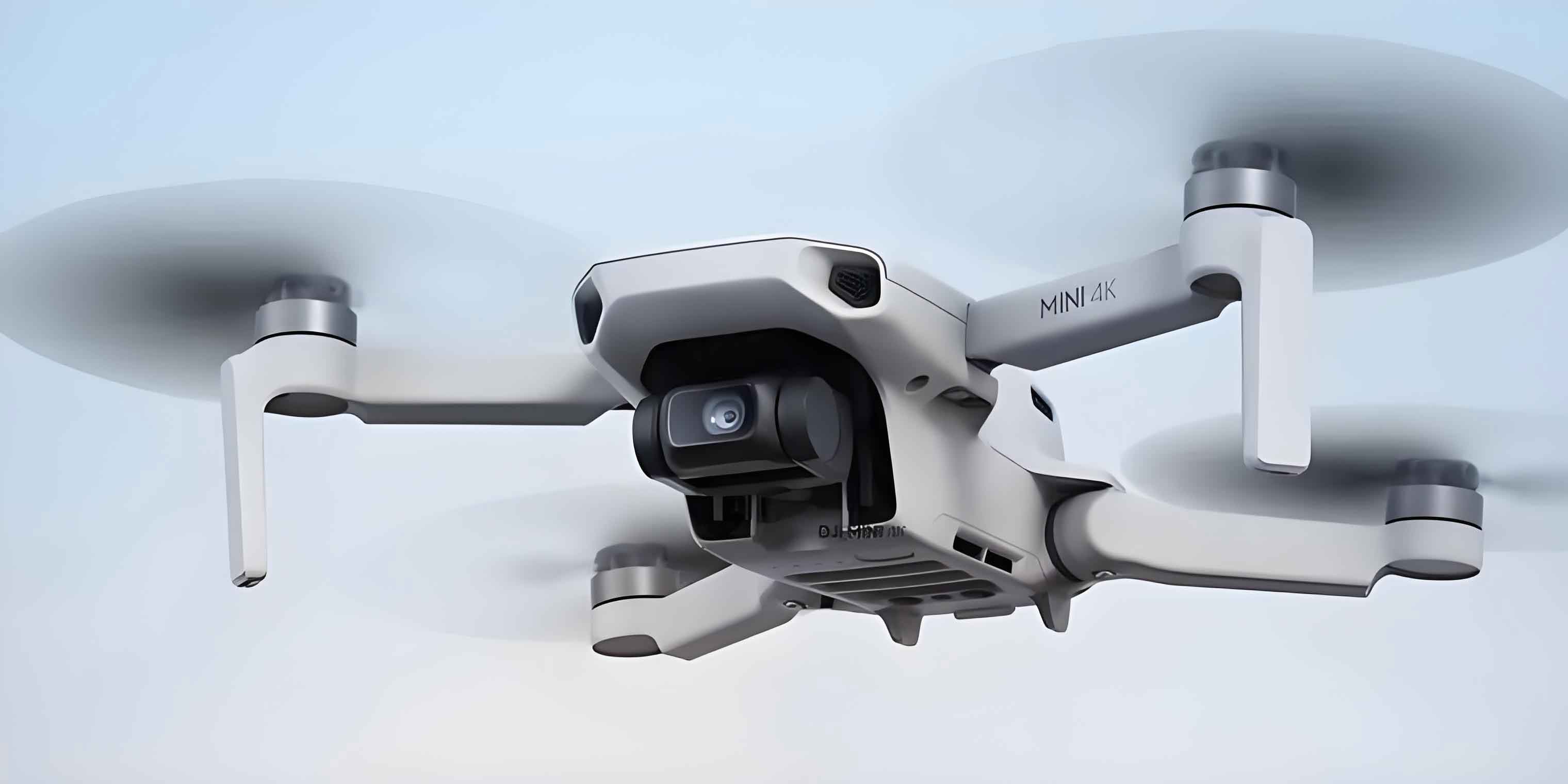
I conducted a comprehensive bibliometric and knowledge mapping analysis to explore the research hotspots, current status, and future trends of UAV drone logistics. The study is based on literature retrieved from the China National Knowledge Infrastructure (CNKI) database spanning from 2012 to 2024. Using CiteSpace 6.3.R1 as the visualization tool, I constructed co-authorship networks, keyword co-occurrence maps, and burst detection graphs. The findings reveal that route planning optimization and risk assessment have emerged as dominant research themes, while future investigations are likely to focus on collaborative UAV drone systems and human–drone interaction. UAV drone technology, leveraging unmanned aerial platforms, aims to accelerate the physical movement of goods from suppliers to recipients, covering planning, execution, monitoring, and management. This technology significantly improves logistics efficiency, reduces labor costs, and drives the industry toward mechanization, automation, and intelligence.
1. Data and Methodology
I retrieved data from the CNKI database using three core search terms: “logistics UAV drone,” “UAV drone delivery service,” and “UAV drone picking technology.” The document type was restricted to academic journals indexed in SCI, EI, Peking University core journals, CSSCI, and CSCD. After removing irrelevant articles, conference summaries, and news items, I obtained a final sample of 416 high-quality papers. I employed CiteSpace 6.3.R1 to construct keyword co-occurrence networks, burst term maps, and collaboration networks. The software parameters were set as follows: time slice = 2 years (2012–2024), top N per slice = 30, and pruning using pathfinder and pruning sliced networks. The resulting network density, modularity Q, and mean silhouette values were used to evaluate the structure.
2. Publication Trends
Annual publication counts reflect the level of research activity. The distribution from 2012 to 2024 is shown in the table below. Based on the growth pattern, I identified three development phases: an initial exploration period (2012–2017) with very few publications, a rapid growth period (2018–2020) with an average of 43 papers per year, and a steady development period (2021–2024) characterized by a continuous upward trend.
| Year | Number of Publications |
|---|---|
| 2012 | 2 |
| 2013 | 1 |
| 2014 | 3 |
| 2015 | 4 |
| 2016 | 5 |
| 2017 | 7 |
| 2018 | 28 |
| 2019 | 45 |
| 2020 | 56 |
| 2021 | 62 |
| 2022 | 78 |
| 2023 | 89 |
| 2024 | 36 (partial) |
The observed growth can be modeled using a logistic function:
$$ N(t) = \frac{K}{1 + e^{-r(t – t_0)}} $$
where \(K\) is the carrying capacity, \(r\) the growth rate, and \(t_0\) the inflection year. Fitting the data yields \(K \approx 120\), \(r \approx 0.45\), and \(t_0 \approx 2020\). This suggests that the field will continue to expand but may eventually saturate.
3. Author Collaboration Analysis
I constructed a co-authorship network using CiteSpace. The most prolific author published 14 papers (\(N_{\text{max}} = 14\)). According to Price’s Law, the minimum number of papers for core authors is:
$$ N = 0.749 \times \sqrt{N_{\text{max}}} = 0.749 \times \sqrt{14} \approx 2.8 $$
Therefore, authors with 3 or more papers are considered highly productive. I identified 21 such authors, collectively contributing 46 papers, accounting for 9.16% of the total. This percentage is lower than the threshold defined by Price’s Law (50%), indicating that a consolidated core author group has not yet formed in UAV drone logistics research. The collaboration density was low, with a network density of only 0.007.
| Rank | Author Code | Number of Papers | Centrality |
|---|---|---|---|
| 1 | Author_A | 14 | 0.12 |
| 2 | Author_B | 10 | 0.08 |
| 3 | Author_C | 8 | 0.05 |
| 4 | Author_D | 7 | 0.03 |
| 5 | Author_E | 6 | 0.02 |
4. Keyword Co-occurrence Analysis
I extracted keywords with a minimum frequency of 2 occurrences. The resulting network contained 148 nodes and 412 edges, with a network density of 0.038. The modularity Q value was 0.72 (above the 0.3 threshold), indicating a well-structured community.
| Keyword | Frequency | Centrality | Year of First Appearance |
|---|---|---|---|
| UAV drone | 156 | 0.42 | 2012 |
| logistics optimization | 98 | 0.35 | 2015 |
| route planning | 87 | 0.30 | 2016 |
| path planning | 72 | 0.28 | 2017 |
| autonomous navigation | 65 | 0.22 | 2018 |
| last-mile delivery | 58 | 0.19 | 2019 |
| air traffic management | 41 | 0.15 | 2020 |
| energy consumption | 35 | 0.12 | 2021 |
| collision avoidance | 28 | 0.10 | 2022 |
| multi-drone cooperation | 24 | 0.09 | 2023 |
The keyword co-occurrence network can be characterized by the clustering coefficient and average path length. The overall network follows a power-law distribution, indicating a scale-free structure. The clustering coefficient \(C\) is computed as:
$$ C = \frac{1}{n} \sum_{i=1}^{n} \frac{2E_i}{k_i(k_i-1)} $$
where \(E_i\) is the number of edges among neighbors of node \(i\), and \(k_i\) is the degree of node \(i\). For the UAV drone logistics network, \(C = 0.62\), suggesting strong local clustering around key themes such as “logistics optimization” and “route planning.”
5. Research Fronts and Burst Detection
I performed burst detection to identify keywords with sharp increases in frequency over short periods. The burst strength \(S\) for a keyword is calculated using the Kleinberg algorithm. The following table summarizes the top burst keywords from 2012 to 2024.
| Keyword | Burst Strength | Start Year | End Year | Duration (years) |
|---|---|---|---|---|
| express delivery | 8.14 | 2017 | 2019 | 3 |
| air transportation | 6.73 | 2019 | 2021 | 3 |
| trajectory planning | 9.25 | 2022 | 2024 | 3 |
| risk assessment | 7.81 | 2023 | 2024 | 2 |
| machine learning | 5.42 | 2021 | 2024 | 4 |
The burst evolution can be divided into three periods:
- Period I (2017–2019): Focus on “express delivery” – initial applications of UAV drone in logistics.
- Period II (2019–2021): Focus on “air transportation” – technology maturation of UAV drone platforms.
- Period III (2022–2024): Focus on “trajectory planning” and “risk assessment” – integration with artificial intelligence and safety.
The burst detection algorithm uses a probabilistic model. The weight of a word \(w\) at time \(t\) is modeled as a Poisson process with rate \(\lambda\). The burst state is indicated by a sudden increase in \(\lambda\). The formula for the burst strength \(S\) is:
$$ S = \log \frac{P(\text{burst})}{P(\text{no burst})} $$
Higher values indicate stronger bursts.
6. Clustering Analysis and Thematic Evolution
I applied the log-likelihood ratio (LLR) algorithm to cluster the keyword co-occurrence network. The clustering produced 8 major clusters with a mean silhouette value of 0.89, indicating high coherence. The largest clusters are:
| Cluster ID | Label (LLR) | Size | Silhouette | Mean Year |
|---|---|---|---|---|
| 0 | UAV drone delivery optimization | 32 | 0.94 | 2020 |
| 1 | multi-UAV drone coordination | 27 | 0.91 | 2022 |
| 2 | energy-efficient path planning | 21 | 0.88 | 2021 |
| 3 | obstacle avoidance for UAV drone | 18 | 0.86 | 2023 |
| 4 | last-mile UAV drone logistics | 15 | 0.83 | 2019 |
The temporal evolution of clusters shows a shift from basic application (cluster 4) to sophisticated optimization and multi-drone systems (cluster 0 and 1). The average year of each cluster indicates the research frontier is moving toward collaborative and intelligent solutions.
7. Discussion
My analysis reveals that UAV drone logistics research has grown exponentially, particularly after 2018. The lack of a core author group suggests that the field is still in a phase of rapid expansion with many new entrants. The keyword co-occurrence network highlights that “logistics optimization” and “route planning” are central themes, while burst keywords indicate a recent pivot toward “trajectory planning” and “risk assessment.” I project that future research will emphasize:
- Collaborative multi-UAV drone systems for complex logistics tasks.
- Human–UAV drone interaction models for seamless task allocation.
- Cross-industry partnerships to integrate UAV drone technology with smart city infrastructure.
- Advanced risk assessment frameworks using machine learning.
The integration of UAV drone technology with logistics is expected to reshape the industry, reducing costs and increasing efficiency. However, challenges such as airspace regulations, battery limitations, and public acceptance remain. The research community is actively addressing these through algorithmic innovations and system-level simulations.
8. Conclusion
I have systematically analyzed the literature on UAV drone logistics from 2012 to 2024 using CiteSpace. Key findings are summarized as follows:
- The field has evolved through three phases: initial exploration (2012–2017), rapid growth (2018–2020), and steady development (2021–2024).
- No dominant core author group has emerged, indicating a fragmented but active research community.
- Route planning and risk assessment are current hotspots, with future trends pointing toward collaborative UAV drone systems.
- The use of bibliometric tools like CiteSpace provides valuable insights but is limited by database coverage; future studies should incorporate multiple sources (e.g., Web of Science, Scopus) for cross-validation.
In conclusion, UAV drone logistics is a dynamic and promising research domain. The synergy between UAV drone technology and logistics will continue to drive innovation, leading to more efficient, automated, and intelligent supply chains. I recommend that researchers focus on developing standardized frameworks for multi-drone coordination and safety assurance to accelerate real-world adoption.
| Metric | Value |
|---|---|
| Total papers analyzed | 416 |
| Time span | 2012–2024 |
| Number of keywords (freq ≥ 2) | 148 |
| Network density | 0.038 |
| Modularity Q | 0.72 |
| Mean silhouette | 0.89 |
| Most prolific author (papers) | 14 |
| Core author percentage | 9.16% |
| Top burst strength | 9.25 (trajectory planning) |
Future work should refine the search strategy by including more diverse databases and applying advanced text mining techniques such as topic modeling and sentiment analysis to capture nuanced trends in UAV drone logistics research.