
From my perspective as an agricultural specialist engaged in plant protection and ecological conservation, the advent of agricultural drones has marked a pivotal shift in modern farming practices, especially in challenging terrains. The integration of these unmanned aerial vehicles into crop management systems represents not just a technological upgrade but a necessary evolution to address labor shortages, enhance environmental sustainability, and ensure food security. In mountainous regions, where fragmented land plots, complex topography, and limited infrastructure pose significant hurdles to traditional farming methods, agricultural drones offer a promising solution. This article delves into the current landscape of agricultural drone adoption, analyzing its growth, operational models, benefits, and hurdles, while providing insights into future promotion strategies. The discussion is grounded in empirical observations and data, aiming to offer a comprehensive reference for stakeholders in similar agricultural settings.
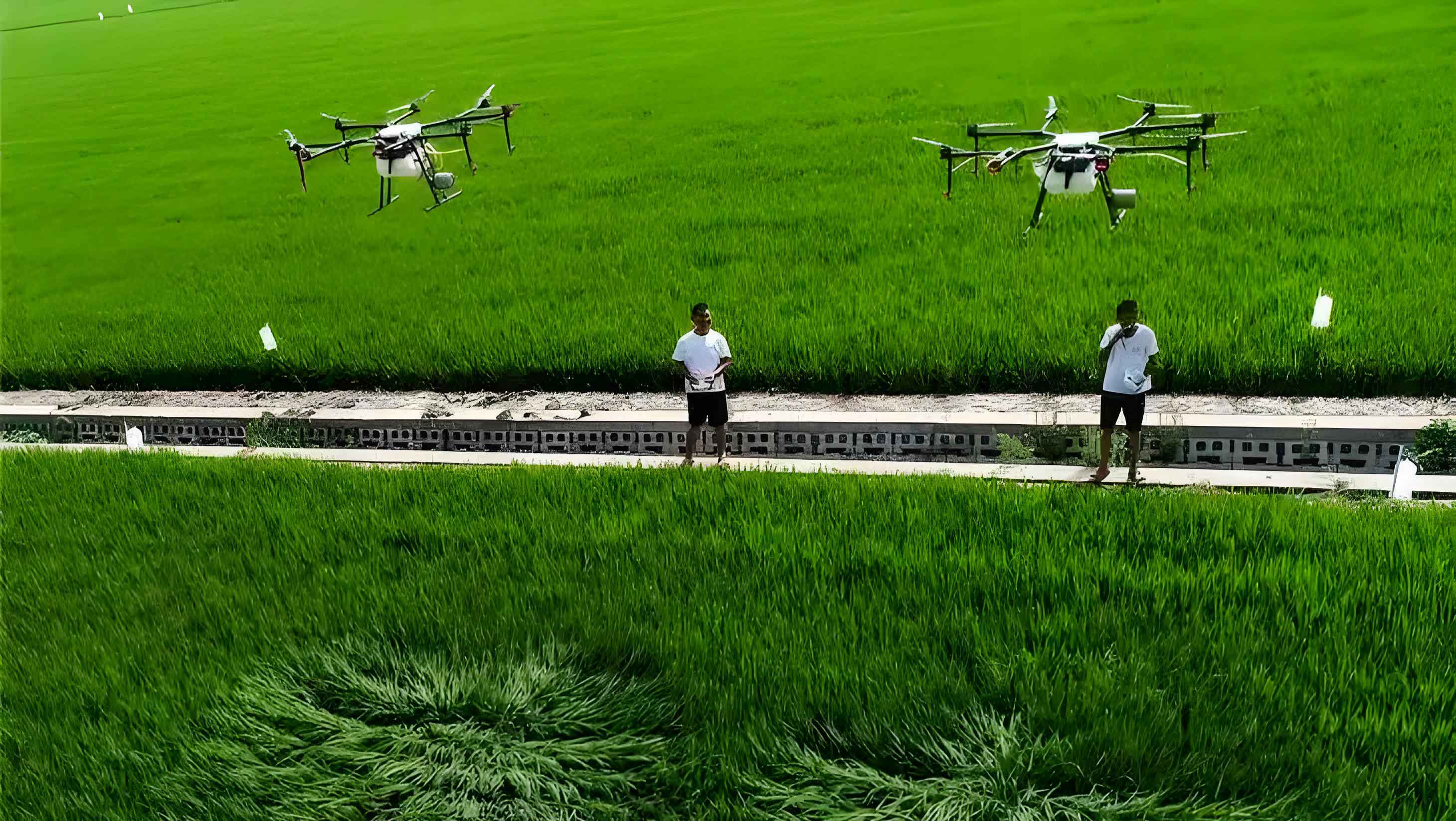
The rise of agricultural drones globally has spurred their gradual incorporation into local farming systems, particularly for staple crops like rice, corn, and rapeseed. In my experience, the demonstration and promotion of these drones are driving agricultural modernization to new heights. The core characteristics of agricultural drones—high efficiency, reduced labor dependency, adaptability to rugged landscapes, and enhanced safety—make them ideal for emergency pest control and routine crop management. However, challenges such as high technical skill requirements, substantial costs, limited battery life, difficult maintenance, and portability issues hinder widespread adoption, especially in mountainous areas where resources are scarce and fields are dispersed. This analysis outlines the development trajectory, assesses current achievements, identifies persistent problems, and proposes actionable recommendations to foster broader application.
In terms of development status, the deepening of unified pest control initiatives has led to a steady annual increase in the operational scope and area covered by agricultural drones. Typically, major crops are cultivated across vast expanses, with grains and oilseeds being predominant. Since the establishment of quality safety standards, there has been a strong push towards green pest control methods, prompting the organized use of agricultural drones by specialized service providers. Awareness and capacity for unified control have grown yearly, resulting in expanded coverage and treatment areas. The number of agricultural drones has surged from a mere handful to dozens, with flight control areas multiplying from minimal coverage to tens of thousands of hectares. Initially focused on rice, the application of agricultural drones has broadened to include corn, rapeseed, tobacco, sorghum, and fruit crops. The coverage rate has jumped from a fraction to over a third, underscoring the widespread adoption of agricultural drones in crop protection. To illustrate this growth, Table 1 summarizes the statistical trends in agricultural drone deployment and treated areas over recent years.
| Year | Number of Agricultural Drones | Operation Area (104 ha) – Rice | Operation Area (104 ha) – Corn | Operation Area (104 ha) – Rapeseed | Operation Area (104 ha) – Tobacco | Operation Area (104 ha) – Sorghum | Operation Area (104 ha) – Others | Total Area (104 ha) | Proportion of Unified Control (%) |
|---|---|---|---|---|---|---|---|---|---|
| 2016 | 2 | 0.020 | — | — | — | — | — | 0.020 | 0.14 |
| 2017 | 5 | 0.035 | — | — | 0.015 | — | 0.015 | 0.065 | 0.45 |
| 2018 | 8 | 0.08 | — | — | 0.040 | 0.060 | — | 0.180 | 1.24 |
| 2019 | 12 | 0.160 | — | — | 0.120 | 0.180 | — | 0.460 | 0.31 |
| 2020 | 20 | 0.330 | — | — | 0.140 | 0.035 | 0.240 | 0.745 | 0.51 |
| 2021 | 31 | 1.530 | 0.050 | 0.035 | 0.150 | 0.080 | 0.300 | 2.145 | 14.81 |
| 2022 | 46 | 3.600 | 0.217 | 0.435 | 0.261 | 0.246 | 0.638 | 5.394 | 37.20 |
To foster the adoption of agricultural drones, efforts have been made to cultivate new types of prevention and management entities, continuously innovating development models. By leveraging central and provincial funds through mechanisms like purchasing social services, providing purchase subsidies, and donating agricultural drones to cooperatives, specialized unified control cooperatives have been guided and supported. Dozens of such organizations have been established, with several operating stably and effectively, laying a solid foundation for drone-based unified control. In socialized professional services, various collaborative models have been innovated based on local conditions. First, the “professional control organization + township/village service points + farmers” model involves植保专业合作s signing agreements with towns and villages to provide socialized services. Second, the “flight control alliance + professional control organization + farmers” model sees cooperatives joining alliances to undertake services across broader regions, organizing pilots uniformly while also renting out agricultural drones to reduce costs. Third, large growers or cooperatives purchase agricultural drones through self-funding or government support, focusing on self-protection while offering services to other communities. Through unified control, diverse forms of socialized professionalism have advanced, enhancing the application level of agricultural drones in agricultural production and supporting green, high-quality development. Table 2 details the operational models and scale of key entities.
| Enterprise Type | Number of Agricultural Drones (2020) | Number of Agricultural Drones (2021) | Number of Agricultural Drones (2022) | Operation Area (104 ha, 2020) | Operation Area (104 ha, 2021) | Operation Area (104 ha, 2022) | Operational Model |
|---|---|---|---|---|---|---|---|
| Agricultural Tech Company | 7 | 12 | 16 | 0.428 | 1.231 | 2.320 | Flight Control Alliance |
| Agricultural Machinery Cooperative | 2 | 3 | 5 | 0.193 | 0.324 | 1.042 | Flight Control Alliance |
| Plant Protection Cooperative | 2 | 4 | 7 | 0.043 | 0.227 | 1.645 | Socialized Service |
| Agri-tech Company | 1 | 3 | 6 | 0.026 | 0.028 | 0.035 | Self-protection + Socialized Service |
| Farming Cooperative | 0 | 3 | 4 | 0.000 | 0.021 | 0.042 | Self-protection + Socialized Service |
| Planting and Breeding Cooperative | 1 | 1 | 2 | 0.041 | 0.125 | 0.036 | Self-protection + Socialized Service |
Strengthening safety fundamentals has driven increasing income for communities. First, ensuring food security: the quantitative and qualitative rise of agricultural drones has provided robust equipment support for stable grain production, promoting farmer income. For instance, drone flight control areas have contributed to reducing grain losses and boosting revenue significantly. Second, stabilizing employment: the agricultural drone service industry, as a new sector derived from modern agriculture, has created broad employment platforms for rural youth. Through training programs, certified drone pilots have been cultivated, ensuring strong talent support for agricultural mechanization. Pilots engaged in socialized services can earn substantial annual incomes. Third, enhancing agricultural safety: agricultural drones spray pesticides with downward airflow from rotors, atomizing liquid into fine droplets with strong penetration, high uniformity, minimal drift, and effective control. Statistics show that traditional manual spraying covers a limited area per day with high liquid usage, whereas agricultural drones achieve much higher efficiency. The efficiency gain can be expressed mathematically. Let \( A_d \) be the area covered per hour by an agricultural drone, and \( A_m \) be the area covered per hour manually. The efficiency ratio \( E \) is:
$$ E = \frac{A_d}{A_m} $$
Typically, \( A_d \approx 6.7-8 \) ha/h and \( A_m \approx 0.07 \) ha/h for one person, so \( E \approx 100 \), indicating at least a 100-fold increase in efficiency. Moreover, pesticide usage with agricultural drones is reduced by approximately 50%, and water consumption by 90%, calculated as:
$$ \text{Pesticide Savings} = \frac{\text{Traditional Usage} – \text{Drone Usage}}{\text{Traditional Usage}} \times 100\% $$
If traditional usage is 15 L/667 m² and drone usage is less than 1 L/667 m², savings exceed 50%. This reduces resource costs and minimizes soil and water pollution. Safety is also improved, as operators control agricultural drones remotely via ground remote or GPS, avoiding direct exposure to pesticides.
Despite progress, the promotion and application of agricultural drones face several issues in mountainous regions. First, low public awareness: some farmers remain skeptical, believing that high-altitude spraying is ineffective due to drift, leading to duplicate applications. Others are cost-averse, preferring traditional self-protection over purchasing social services, often relying on government free services. Inconsistent timing of control measures results in patchy protection, reducing overall efficacy. Environmental consciousness is weak, as traditional methods cause pesticide runoff, contaminating products and ecosystems. Second, portability and endurance limitations: agricultural drones weigh around 20 kg with a payload of 30 L, but remote fields lack supporting infrastructure, making transport difficult and costly. Battery life is short, typically 30 minutes, and even with multiple spare batteries, sustaining all-day operations is challenging. The energy constraint can be modeled as:
$$ \text{Operation Time} = \frac{\text{Battery Capacity} \times \text{Number of Batteries}}{\text{Power Consumption per Hour}} $$
Given limited battery capacity, this often falls short for extensive fieldwork. Third, terrain and safety constraints: complex topography with ridges, ditches, tree lines, and overhead wires poses collision risks, limiting safe flight. Small, sloped plots and dispersed growers increase drift potential and costs, hindering drone use among smallholders. Fourth, inadequate technical training: current training relies heavily on limited sessions, leaving pilots underprepared for complex environments. After certification, lack of practice hampers proficiency. Fifth, operational inefficiencies: for small farmers, purchasing an agricultural drone is uneconomical due to high upfront costs and long payback periods. For enterprises and cooperatives, concentrated service periods lead to idle time, high operational costs, and poor profitability, affecting pilot motivation and service sustainability.
To address these challenges, several strategies are recommended. Intensify publicity to shift public perceptions: through demonstrations and awareness campaigns, highlight the benefits of agricultural drones in saving labor, water, and pesticides, fostering acceptance of unified control and scientific prevention. Conduct trials of small-scale agricultural drones to select models suited for mountainous areas, emphasizing portability, affordability, and ease of operation. This involves testing various prototypes to identify optimal specifications for local conditions. Strengthen pilot training to enhance safety skills: expand programs under professional companies to offer comprehensive, hands-on instruction, ensuring pilots are adept in diverse scenarios. Since inception, training sessions have produced hundreds of certified operators, supporting large-scale unified control without accidents. Further explore mutually beneficial mechanisms for enterprises and farmers to ensure widespread application: increase support for specialized cooperatives, promote models like “company + cooperative + farmer” to extend service ranges, and improve coverage rates for quality and ecological safety. Encourage companies to provide ongoing technical training, boosting pilot expertise. Actively promote the use of agricultural drones and other advanced tools across crops, integrating non-chemical green control methods to reduce chemical reliance. Utilize high-efficiency equipment like agricultural drones for unified control, enhancing pesticide utilization and operational efficiency while cutting application frequency and volume, achieving reduction and synergy.
In conclusion, agricultural drones represent a transformative force in mountainous agriculture, addressing critical issues of labor shortage, environmental sustainability, and productivity. Their development has shown remarkable growth in deployment and application, driven by innovative operational models and tangible benefits in safety, efficiency, and income generation. However, challenges related to awareness, technology, training, and economics persist. By implementing targeted measures—such as enhanced outreach, tailored technology development, robust training systems, and collaborative business models—the potential of agricultural drones can be fully realized. Future efforts should focus on continuous innovation, policy support, and community engagement to integrate agricultural drones seamlessly into farming practices. As the agricultural sector evolves, these unmanned systems will undoubtedly play a central role in shaping a more resilient and sustainable food system, particularly in rugged terrains where traditional methods fall short. The journey of agricultural drones is just beginning, and with concerted action, their impact will only deepen, paving the way for a new era of smart, green agriculture.