
The integration of large military UAVs (Unmanned Aerial Vehicles) with submarine platforms represents a paradigm shift in naval warfare, merging the covert, long-endurance capabilities of submarines with the expansive situational awareness and strike potential of unmanned aerial systems. As a researcher deeply engaged in this field, I view the submarine-launched large military UAV as a transformative, multi-role unmanned combat platform. It is designed for deployment from attack submarines or large underwater vehicles, capable of carrying diverse payloads to execute integrated ISR (Intelligence, Surveillance, and Reconnaissance), target designation, communications relay, kinetic strike, and battle damage assessment missions. This synergy creates a formidable, clandestine tool for power projection and area denial.
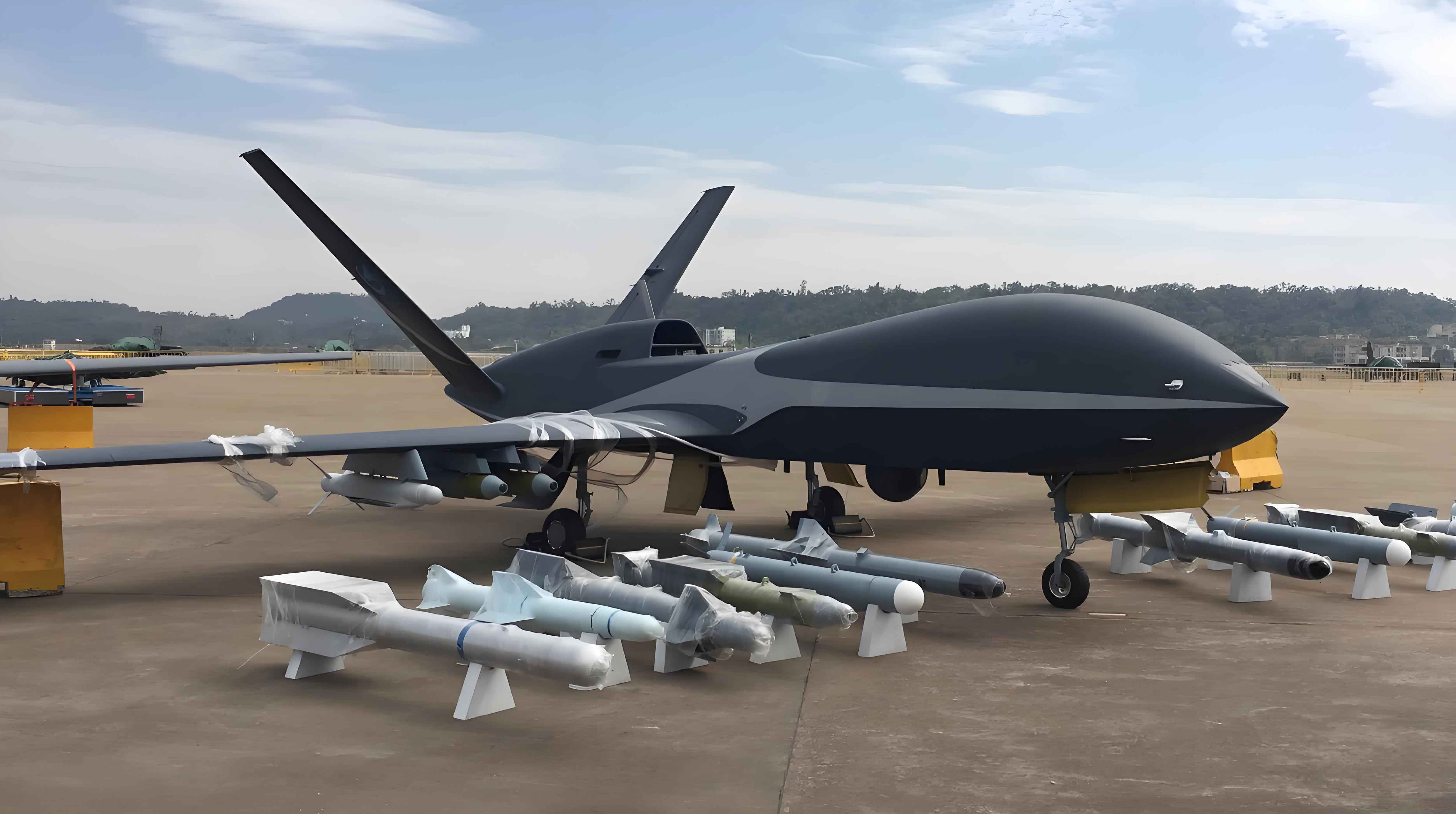
The core technical challenge, which my work focuses on, lies in the launch phase. Unlike smaller drones, a large military UAV is characterized by significant cross-sectional dimensions (typically ≥2 meters) and substantial mass (≥4 tonnes). These attributes preclude launch from standard torpedo tubes or small deployable masts. Consequently, integration is feasible only with large-diameter launch systems, such as ballistic missile launch tubes or future large-caliber universal vertical launch systems (UVLS). Therefore, vertical launch is not merely an option but a necessity for deploying a large military UAV from a submarine. The central problem becomes how to integrate this sizable aerial vehicle into the constrained, hydrodynamic hull of a submarine and ensure a launch sequence that preserves the submarine’s cardinal virtue: stealth.
1. Core Launch Requirements for Submarine-Launched Large Military UAVs
To enhance the operational utility and survivability of the host submarine platform, the launch system for a large military UAV must satisfy several stringent requirements:
- Space Optimization and Payload Fraction: The system must maximize the use of available launch tube volume. The design should aim to carry the maximum possible number of military UAVs or balance the UAV’s size against other munitions in a shared launch system, directly impacting mission flexibility and sortie rate.
- Covert and Acutely Silent Launch Signature: The launch event must minimize detectable signatures—acoustic, hydrodynamic, thermal, and optical. A submarine’s survival depends on its stealth; a launch process that compromises this stealth is operationally unacceptable. The launch of the military UAV must not become a beacon revealing the submarine’s position.
- Commonality and Adaptability: Ideally, the launch system should be co-usable with existing or planned submarine vertical launch infrastructure (e.g., missile tubes). Developing a unique, dedicated launch system solely for a military UAV is economically and spatially inefficient. The solution should leverage and adapt current naval architecture.
2. Analysis of Vertical Launch Methodologies
The launch sequence for a submarine-based military UAV is arguably the most critical and complex phase, encompassing its transition from a stowed, maritime configuration to a free-flying aerial vehicle. It fundamentally influences system mobility, operational flexibility, reusability, and platform survivability. The methodologies can be dissected across three primary axes: launch location, exposure to the marine environment, and source of launch energy.
2.1 Classification by Launch Location
The integration point on the submarine dictates numerous design parameters.
| Launch Location | Description | Advantages | Disadvantages | Suitability for Large Military UAV |
|---|---|---|---|---|
| Ballistic Missile / Large UVLS Tube | Utilizes the large-diameter (≥2m) vertical launch tubes traditionally for missiles. | Ample volume for stowing a large vehicle; utilizes existing high-integrity pressure hull penetrations; potentially allows for deeper submersion launch. | High-opportunity cost (uses strategic asset tubes); may require significant internal handling machinery. | High. Essentially the only viable location for a truly large military UAV due to size constraints. |
| Modular Mast (e.g., Universal Modular Mast) | The UAV is stowed in a watertight canister within a retractable mast on the sail. | Does not consume internal weapon space; relatively simple integration; launch occurs at air-sea interface. | Limited by mast diameter and strength; submarine must be at periscope depth, increasing vulnerability; complex underwater recovery is infeasible. | Low. Only suitable for very small, lightweight UAVs due to severe size/weight limitations. |
| External Pod/Blister (e.g., BUOYANT BUBBLE Launcher) | A conformal or podded launch system attached externally to the hull. | Does not intrude on internal volume; can be retrofitted. | Increases hydrodynamic drag and acoustic signature; vulnerable to damage; complicates underwater handling and likely limits launch depth. | Medium. Possible for medium-sized systems but poses significant hydrodynamic and stealth penalties for a large military UAV. |
2.2 Classification by Exposure: Dry vs. Wet Launch
This distinction concerns the UAV’s direct interaction with seawater during the initial launch phase.
| Launch Type | Description | Advantages | Disadvantages |
|---|---|---|---|
| Dry Launch | The UAV is sealed within a launch canister or capsule. The capsule is ejected from the submarine. The UAV is exposed to air only after the capsule surfaces or opens. | UAV is protected from hydrostatic pressure, corrosion, and flooding during launch; simplifies UAV design (no need for pressure hull); launch dynamics are contained within the capsule. | Capsule adds mass, volume, and complexity; requires capsule separation/jettison mechanism; final launch/ignition occurs outside the submarine, which may create a signature. |
| Wet Launch | The UAV is directly exposed to seawater upon leaving the launch tube. It is either ejected or propelled through the water column. | Potentially more volume-efficient (no separate capsule); can allow for simpler, more direct launch sequences. | UAV must be fully waterproof and pressure-resistant; hydrodynamic forces during water exit are severe and unpredictable; risk of seawater ingress into engines or sensitive components is high. |
The choice here profoundly affects the military UAV airframe design. A dry launch shelters the vehicle, allowing the use of more conventional aerospace materials and systems. A wet launch demands a robust, marinized vehicle, akin to a torpedo or missile, significantly increasing design complexity and cost for a reusable military UAV.
2.3 Classification by Launch Energy Source
The method of imparting the initial kinetic energy to move the UAV from its stowed position is critical for stealth and reliability.
| Energy Source | Description | Physics & Signature | Advantages/Disadvantages |
|---|---|---|---|
| Buoyant Launch | The launch canister or the UAV itself has a net positive buoyancy. It is released and floats to the surface. | Relies on Archimedes’ principle: $$ F_b = \rho_{water} \cdot g \cdot V_{disp} $$ where $F_b$ is buoyant force, $\rho_{water}$ is water density, $g$ is gravity, and $V_{disp}$ is displaced volume. Launch is extremely quiet with minimal hydrodynamic disturbance. | Adv: Very low acoustic signature; simple in concept. Disadv: Slow; susceptible to currents; requires precise buoyancy control; launch kinematics at surface can be complex. |
| External Ejection (Cold Launch) | An external force (e.g., pressurized gas/steam, electromagnetic rail) propels the UAV/canister out of the tube. | Governed by ejection force $F_ej$ vs. water resistance $F_d$: $$ m \frac{dv}{dt} = F_ej – F_d – mg + F_b $$ where $F_d = \frac{1}{2} \rho C_d A v^2$. Can be tuned for rapid egress. | Adv: Fast, positive ejection; depth-independent performance. Disadv: Gas ejection creates a loud acoustic signature and a large bubble pulse; EMALS is complex and energy-intensive. |
| Self-Contained Propulsion (Hot Launch) | The UAV or its capsule uses an onboard rocket motor to push itself out of the tube and through the water. | Involves underwater rocket combustion: high thrust $T$, but also immense back-pressure and gas cavitation. The thrust-to-weight ratio must overcome drag and inertia: $$ T > F_d + m(g – a_b) $$ where $a_b$ is buoyancy acceleration. | Adv: Provides its own power; can work from significant depths. Disadv: Extremely loud and thermally bright; requires complex underwater exhaust management; risks damaging the launch tube. |
The selection of launch energy is a primary driver of the submarine’s detectability during the launch event. For a stealth-focused platform launching a military UAV, buoyant or very low-signature ejection systems are highly desirable.
3. U.S. Technological Benchmarks and Implications
The United States has been the pioneer in exploring the concept of submarine-launched military UAVs, with programs spanning decades that offer valuable lessons.
3.1 The “Sea Sentry” / UAV from Modular Mast: This program involved a small UAV launched from a Universal Modular Mast. It demonstrated the feasibility of mast-based launch but also starkly highlighted the limitations: the small size of the UAV restricted its capability, and the requirement for the submarine to be at periscope depth during launch and recovery posed a significant tactical risk. This path is not viable for a capable, long-range large military UAV.
3.2 The “Cormorant” Program: This remains the most advanced and relevant reference for a large military UAV launch. The Cormorant was designed for the Trident missile tubes of SSGN submarines. Its launch sequence was a sophisticated multi-phase process:
- Dry, Buoyant Launch from Tube: The folded UAV was mounted on a sled inside a sealed launch canister. The canister was released and positively buoyant, floating silently to the surface.
- Surface Preparation: The canister stabilized vertically on the surface.
- Boosted Takeoff: The canister opened, and the UAV, using solid rocket boosters, executed a “zero-length” launch into the air before transitioning to turbojet flight.
The Cormorant’s approach provides critical insights: It leveraged existing large-diameter launch tubes, employed a dry, buoyant launch method for ultimate stealth, and accepted the complexity of a multi-stage ignition process (underwater float, surface rocket boost, airborne jet) to achieve flight. This paradigm effectively balances stealth, platform integration, and technical feasibility for a large military UAV.
3.3 The Buoyant Bubble (BUBL) Concept: An external pod concept, it underscores an alternative integration philosophy but introduces the aforementioned penalties of external fixtures.
Key Implications: The historical trajectory suggests that for a large military UAV, success lies in utilizing major internal launch tubes, prioritizing stealth through buoyant or very-low-signature ejection, and accepting the engineering challenge of a protected (dry) launch sequence. The recovery of such a military UAV back to the submarine remains an unsolved, monumental challenge, pointing towards mission profiles that conclude with land-based or surface-ship recovery, or even sacrificial (one-way) use for certain strike missions.
4. Technical Recommendations and Development Pathway
Based on the analysis of requirements, technological options, and benchmark programs, I propose the following technical development pathway for a submarine-launched large military UAV system.
4.1 Preferred Launch Modality: Dry, Buoyant Launch from Large Tubes
Given the current state of technology and the paramount requirement for stealth, a dry launch system is strongly recommended. The primary rationale is risk management: encapsulating the military UAV protects its complex aeronautical systems from the undersea environment, allowing for the use of more advanced, lighter materials and sensitive payloads that are not fully marinizable. The launch canister serves as a handling, storage, launch, and transport unit.
Buoyancy should be the primary energy source for the underwater phase. The canister’s buoyancy must be carefully engineered:
$$ \Delta B = B – W_{total} = (\rho_{water} \cdot V_{c}) – (m_{c} + m_{UAV}) \cdot g $$
where $\Delta B$ is the net buoyant force, $V_c$ is canister volume, $m_c$ is canister mass, and $m_{UAV}$ is the UAV mass. A positive $\Delta B$ ensures ascent. The ascent velocity $v_{asc}$ can be approximated by balancing buoyancy with drag:
$$ \Delta B = \frac{1}{2} \rho_{water} C_d A_{c} v_{asc}^2 $$
This allows for the tuning of ascent speed—a slower ascent is quieter but more susceptible to currents. This method generates the lowest possible acoustic signature, fulfilling the “silent launch” requirement for the host submarine deploying the military UAV.
4.2 Platform Integration: Strategic Tube Utilization
Integration should focus on the largest available vertical launch tubes on submarines. For near-to-mid-term development, this logically points towards leveraging the launch tubes on strategic submarines (SSBNs) or large-diameter UVLS on next-generation attack submarines. This approach maximizes the possible size, range, and payload of the military UAV. A co-habitation or swap-out strategy with other payloads (e.g., cruise missiles, UUVs) in a multi-purpose tube would provide operational flexibility. The engineering challenge shifts to designing an internal handling system that can move the large, buoyant canister from storage to the launch tube.
4.3 Launch Sequence and UAV Design Consequence
The recommended sequence imposes specific design requirements on the military UAV itself:
- Stowage: The UAV must be foldable (wings, tail) to fit within the diameter-constrained canister. The packing efficiency $\eta_{pack}$ is critical:
$$ \eta_{pack} = \frac{V_{UAV, folded}}{V_{c, internal}} $$
Maximizing $\eta_{pack}$ allows for a larger UAV or more fuel/payload. - Surface Transition and Launch: Upon surfacing, the canister must stabilize and open. The UAV must then perform a rapid, rocket-assisted vertical or near-vertical takeoff (VTO). This requires a high thrust-to-weight ratio at lift-off, provided by integrated rocket boosters (JATO). The thrust required must overcome weight and achieve a minimum climb rate:
$$ \sum T_{boost} > m_{UAV} \cdot g \cdot (1 + \frac{a_{climb}}{g}) $$
where $a_{climb}$ is the desired initial climb acceleration. - In-Flight Transition: After booster burnout and separation, the UAV must transition to sustained aerodynamic flight using its primary propulsion (likely a turbojet or turbofan for a large military UAV), unfolding its wings and control surfaces in the process.
4.4 Stealth and Signature Management
Beyond the silent ascent, the entire surface launch event must be managed for low observability. The rocket plume is a significant infrared and visual signature. Mitigation strategies could include:
- Using low-smoke propellants.
- Scheduling launches during low-light conditions or under cloud cover.
- Designing the canister to act as a partial plume shield.
The electromagnetic signature of the UAV’s datalinks must also use low-probability-of-intercept (LPI) protocols immediately upon activation.
4.5 Suggested Development Formula and Trade-Space
The development can be guided by a multi-objective optimization problem. We seek to maximize operational capability $C_{op}$ (a function of range $R$, payload mass $m_{pl}$, and loiter time $t_{loiter}$) while minimizing launch detectability $D_{launch}$ and integration impact $I_{sub}$ on the submarine.
$$ \text{Maximize: } C_{op} = f(R(m_{fuel}), m_{pl}, t_{loiter}) $$
$$ \text{Minimize: } D_{launch} = g(S_{acoustic}, S_{thermal}, S_{visual}) $$
$$ \text{Subject to: } I_{sub} = h(\Delta V_{tube}, \Delta Mass, \Delta Complexity) \leq I_{max} $$
$$ \text{And: } m_{UAV} + m_{c} \leq m_{max, tube} $$
$$ \text{And: } L_{UAV,folded}, D_{UAV,folded} \leq D_{tube, internal} $$
This trade-space clearly shows that the design of the military UAV and its launch system cannot be decoupled; they are a single, integrated system where advances in compact, high-energy propulsion for the UAV directly relax constraints on launch canister size and buoyancy requirements.
5. Conclusion
The vertical launch of a large military UAV from a submarine is a formidable engineering challenge sitting at the intersection of submarine design, underwater launch ballistics, and aerospace vehicle engineering. The analysis of requirements and existing technological paradigms leads to a clear set of recommendations: the development path should prioritize a dry, buoyant launch system from large-diameter submarine launch tubes. This approach best reconciles the competing demands of platform stealth, vehicle protection, and technical feasibility. The successful realization of such a system will hinge on the integrated design of a foldable, robust UAV and its smart launch canister, managed under a rigorous systems engineering framework that treats the submarine, the canister, and the military UAV as a single weapon system. Mastering this technology will unlock a profound new dimension in naval warfare, providing submarines with an unprecedented, clandestine, long-range “eye in the sky” and “fist from the deep.”