
As the demand for surveying in complex terrains such as mountainous areas and landslide zones continues to rise, the requirements for both accuracy and speed in mapping tasks have become increasingly stringent. Traditional surveying methods often fall short in efficiency and cannot meet practical needs in such environments. In this paper, I present a detailed analysis of the application of UAV drone photogrammetry in topographic mapping. I summarize the key advantages of this technology, describe its system components, and discuss its deployment in fields such as railway engineering, highway construction, and ecological monitoring. Through two engineering case studies, I evaluate the real-world performance of UAV drones in terms of accuracy, efficiency, and cost. The results demonstrate that this technology effectively compensates for the shortcomings of conventional surveying. However, challenges remain, including limited battery endurance, incomplete data in occluded areas, and insufficient real-time processing capabilities. Future development should focus on multi-source data fusion and intelligent processing.
With the continuous advancement of science and technology, photogrammetry has undergone significant evolution. UAV drone aerial photogrammetry has emerged as a vital tool in digital surveying, offering distinct advantages for topographic mapping, such as high surveying efficiency and rapid data acquisition and transmission. This paper focuses on the fundamental principles and system architecture of UAV drone surveying, analyzes its benefits in topographic mapping, and illustrates its applications across various domains. I combine practical case studies to summarize and discuss key technologies and future directions. This technology demonstrates substantial practical value in high-precision, high-efficiency surveying and can serve as a reference for related engineering projects.
1. Advantages of UAV Drone Photogrammetry in Topographic Mapping
1.1 High Accuracy and High Resolution
UAV drones equipped with large-format image sensors and high-quality lenses can achieve centimeter-level ground resolution from aerial imagery. On one hand, the relatively low flight altitude (typically between 50 and 200 m) significantly improves the ground sampling distance (GSD) of individual images, capturing fine details such as small vegetation on slopes and bare rock fractures. On the other hand, by rigorously controlling forward and side overlap—recommended forward overlap of 80%–85% and side overlap of 40%–50%—the three-dimensional reconstruction benefits from richer feature point matching, thereby enhancing point cloud density and model completeness. Experimental results show that under identical flight conditions, the planar accuracy of Digital Elevation Models (DEM) derived from UAV drones can reach ±5 cm or better, while the vertical accuracy can reach ±8 cm or better, outperforming airborne photogrammetry flown above 3,000 m.
1.2 Operational Efficiency and Cost Effectiveness
The operational efficiency of UAV drone photogrammetry is remarkably high. With a simple structure, flexible operation, short preparation time, and low requirements for takeoff and landing sites, UAV drones can fly under cloud cover, making them especially suitable for densely built urban areas, complex terrain, and cloudy regions. This significantly reduces field workload and labor costs. In large-scale mapping tasks, the cost of UAV drone surveying is far lower than that of satellite or manned aircraft surveying. In mountainous landslide areas, for example, a mapping task of the same area typically requires only 1–2 person-days for UAV drones, whereas ground-based surveying often requires 5–6 person-days, and the map generation time can be compressed to within 24 hours.
1.3 Flexibility and Safety
Surveying in complex terrain often involves high risks. The safety of UAV drones enables direct image acquisition in hazardous and harsh environments that are dangerous to human life, such as forest fires, volcanic areas, and toxic gas zones. Even if equipment malfunctions and a crash occurs, there is no personal injury, thereby reducing the danger to survey personnel and effectively improving safety. UAV drone surveying supports real-time information linkage: coordinate and image data can be promptly fed back to design departments, allowing them to perform re-surveys based on specific geological conditions and calibrate the surveying information in real time. UAV drone photogrammetry demonstrates stronger adaptability and better safety assurance in complex environments.
1.4 Multi-Temporal Monitoring Capability
Another clear advantage of UAV drone photogrammetry is its suitability for multi-temporal monitoring. Because deployment is convenient and operational costs are relatively low, technicians can conduct high-frequency, continuous repeated surveys of the same area. By comparing aerial results from different periods with historical models, they can accurately identify surface changes, including landslide volumes, roadbed subsidence, and geomorphological alterations caused by water erosion. In forest conservation areas, combining periodic aerial surveys with vegetation index analysis enables continuous tracking of vegetation growth and pest damage effects.
1.5 Facilitating Multi-Sensor Fusion
UAV drones can be equipped with various sensors—such as visible-light cameras, LiDAR, and thermal infrared—depending on monitoring objectives. This allows multi-angle photography, rapid data processing, application analysis functions, and multi-source data fusion. Visible-light data are suitable for extracting feature shapes, LiDAR excels at acquiring elevation information, while multispectral and thermal infrared data can reflect vegetation, water bodies, and temperature conditions. As a result, surveying outcomes include not only topographic data but also richer surface information.
2. UAV Drone Surveying System Components
2.1 Airborne Flight Control System
To meet safety requirements for cameras and flight control, the UAV drone photogrammetry system incorporates a flight control system that includes a Global Navigation Satellite System (GNSS) positioning module, a flight control computer, and an electronic compass. The primary function of this system is to compute the UAV drone’s position, velocity, and attitude in real time based on GNSS and Inertial Measurement Unit (IMU) data, enabling stable flight along a predefined route. Additionally, the UAV drone’s performance must satisfy certain requirements, such as battery endurance, cruise speed, wind resistance, and the storage capacity for waypoints and exposure points.
2.2 Ground Station Control System
The ground station control system is responsible for mission planning, flight monitoring, data transmission, and emergency handling. Through the digital transmission of the flight control system, images captured during aerial surveys are displayed intuitively on the ground screen. Based on this, along with data collected by the control system, the UAV drone’s route can be optimized. Furthermore, the operator can receive real-time flight status and position information, monitor incoming images and data during the flight, and decide whether to re-plan the route, recall the drone, or remotely control takeoff, landing, route switching, and attitude adjustments—all while ensuring the UAV drone’s safety and completing the mission as fully as possible. In the ground station system, mission planning software can design routes on a digital terrain model or electronic map, input the coordinates of each photography zone into the ground station software, and automatically set flight altitude, flight speed, heading, and route files based on the flight design. Local editing of routes can also be performed as needed.
2.3 Aerial Photography System
The aerial photography system is the core component for data acquisition in UAV drone surveying. It serves as a platform for various cameras and imaging devices, consisting of imaging sensors, camera controllers, and data storage units. Common sensors include high-resolution visible-light cameras, oblique photogrammetry cameras, and LiDAR. The camera controller interfaces with the flight control system to precisely control exposure time and shooting intervals, ensuring synchronization between image data and Position and Orientation System (POS) data. Oblique photogrammetry cameras can capture stereo information from multiple directions, while LiDAR is used to obtain high-density ground point clouds in areas obscured by vegetation. Data storage devices require fast read/write speeds and large capacity to ensure that image and point cloud data captured during long flights are completely preserved. In practice, technicians can install and use different types of cameras according to the specific photographic requirements of each task to achieve optimal results.
3. Application Fields of UAV Drone Surveying in Topographic Mapping
3.1 Environmental and Ecological Monitoring
UAV drones are widely used in environmental and ecological monitoring. Equipped with spectral cameras, they can operate effectively in terrain ranging from undulating mountains to special wetlands. In areas where manual surveys are difficult to carry out, the advantages of UAV drone technology are particularly evident. UAV drones can acquire information on vegetation cover, forest structure, and water body distribution, which can be used for vegetation health monitoring, land use change analysis, and water resource assessment.
3.2 Mountain Railway and Highway Engineering Surveying
Mountain railway and highway projects are often located in areas with large topographic relief, high vegetation coverage, and complex working conditions. Such projects demand high accuracy and completeness in surveying results, and traditional ground-based methods face severe challenges in terms of operational efficiency, data completeness, and personnel safety. UAV drone surveying can achieve high-precision data acquisition along alignments in high-risk areas, support 3D modeling, and facilitate road facility identification. These data support detailed design, construction monitoring, and facility inspection for mountain roads and railways.
3.3 Geological Hazard Monitoring
Geological hazard monitoring is an important application of UAV drone surveying. Landslide, rockfall, and debris flow prone areas are often large in extent and present dangerous ground conditions, making it difficult for conventional monitoring methods to balance speed and coverage. UAV drones can rapidly acquire large-scale terrain change data, and by analyzing images from different periods, technicians can determine landslide displacement, deformation extent, and crack development. After a disaster occurs, UAV drones can quickly complete a survey of the affected area, providing a basis for early warning and damage assessment.
3.4 Urban Infrastructure Monitoring and Planning
In urban areas, UAV drone surveying primarily serves infrastructure such as roads, bridges, and drainage systems, providing fine surveying and health monitoring. UAV drones can quickly capture information on urban terrain, building outlines, and transportation facilities, and generate corresponding 3D models. These results can support municipal facility management, underground pipeline renovation, and drainage and flood control planning. When combined with 3D Geographic Information Systems (GIS), UAV drone survey results can also be used for urban expansion simulation, surface runoff analysis, and emergency evacuation route planning.
3.5 Mining and Quarry Site Monitoring
Mining and quarry sites undergo rapid topographic changes and require frequent monitoring. Conventional surveying methods struggle to achieve high-precision continuous tracking in such scenarios. UAV drone aerial surveying can quickly obtain 3D terrain information for mining areas and generate digital elevation models and surface models, which can be used for resource management, slope analysis, and stockpile volume estimation. Managers can also use periodic aerial surveys to monitor pit slope deformation, mining extent changes, and tailings dam safety.
4. Typical Engineering Case Studies
4.1 Case 1: Large-Scale 1:500 Topographic Survey in a City in Zhejiang Province
In a 30 km² survey area in a city in Zhejiang Province, the terrain was flat in the south but constrained by a 120 m altitude limit from a nearby airport, while the north was hilly with buildings predominantly arranged in a north-south orientation. I employed UAV drone oblique photogrammetry to complete a 1:500 topographic map. By optimizing the control point layout—using a uniformly distributed perimeter pattern combined with four corner groups and a few internal points—the control point density was reduced to 23 points per km² (a 64% reduction from the traditional 64 points per km²). A zoned flight design was implemented: in the south, a flight altitude of 100 m, resolution of 1.4 cm, and forward/side overlaps of 80%/72% were used; in the north, a dual-altitude flight (100–150 m) with resolutions of 1.4–1.8 cm and overlaps of 83%/75% addressed the terrain elevation differences. Using Bentley ContextCapture, a 3D model with a ground resolution of 3.8 cm was constructed. Subsequently, 85% of the features were collected using Southern CASS software, while the remaining 15% in occluded areas were supplemented by total station measurements. Accuracy verification showed a planar RMSE of 6.8 cm (25 checkpoints, max error 9.8 cm) and a vertical RMSE of 5.1 cm (38 points, max error 13.0 cm), both superior to the limits of the local standard (7.5 cm/15 cm). Compared to traditional surveying, the field work duration was reduced from 60 days to 6 days, daily acquisition efficiency reached 0.8 km² (a 48-fold improvement), and overall costs decreased by 41.7%. This case confirms that UAV drone oblique photogrammetry can achieve efficient, high-accuracy, and low-cost large-scale mapping, although occluded areas (15%) still require field supplementary surveys. Future improvements could integrate LiDAR technology.
4.2 Case 2: 1:1,000 Topographic Survey for a Rural Revitalization Project in Fujian Province
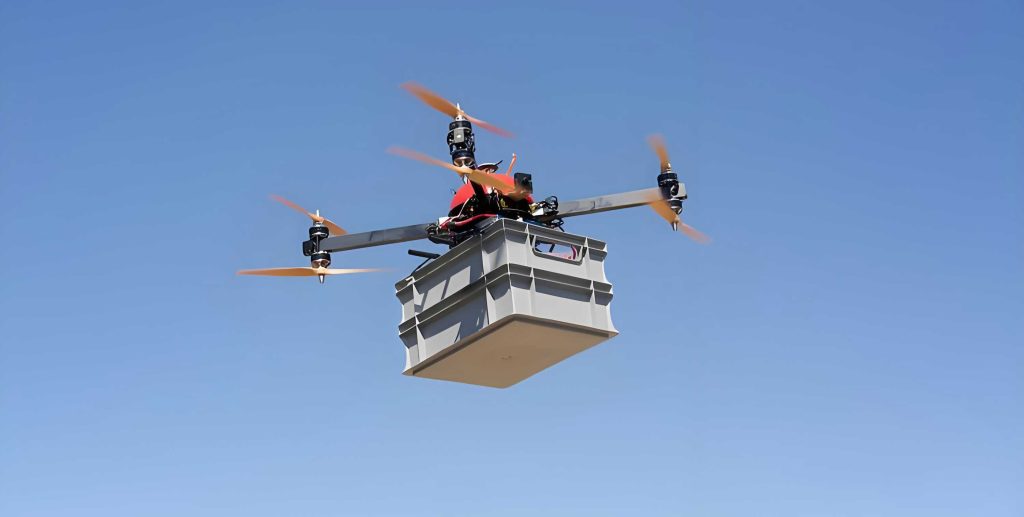
In a rural revitalization project in Fujian Province, my team first conducted a field reconnaissance of a survey area totaling approximately 935.333 hectares. The average elevation was about 550 m, with the highest point at 1,547 m. The village terrain was relatively flat, but the surrounding areas included woodlands, orchards, and rolling hills. According to project requirements, I planned an aerial survey range of 2.2 km² at a scale of 1:1,000, with a final mapping area of 1.93 km². I evenly distributed three real-time kinematic (RTK) control points—M635, M636, and M637—and used the Fujian FJ-CORS system for GPS-RTK measurements averaged over multiple observations. The resulting planar RMSE was no more than 30 mm, and vertical RMSE no more than 50 mm, meeting mapping standards. For the aerial photography phase, I selected a Cloud Sky Clear GW-20RTK multi-rotor UAV drone with a wheelbase of 700 mm, equipped with an AIRTOPB-24 dual-lens rotary oblique gimbal and a Sony RGB camera (24.3 megapixels per sensor). Flight parameters were: altitude 120 m, forward overlap 80%, side overlap 75%, speed 12 m/s, ground resolution 2 cm/pixel, and shooting interval 16.9 m, with a total flight time of about 140 minutes. Compared to traditional five-lens oblique cameras, this scheme reduced the number of images by 60% under the same accuracy conditions. In post-processing, I first eliminated poor-quality images and then performed differential processing on POS data. Using PIX4D software, I completed aerial triangulation and 3D real-scene modeling, strictly controlling point adjustment to sub-pixel accuracy, generating a Digital Orthophoto Map (DOM) and Digital Surface Model (DSM). Subsequently, I used Tsinghua Shanwei EPS 3D photogrammetry software to export CAD-format topographic maps, and supplemented important features and elevation annotations using GNSS-RTK field measurements and field annotation. To verify quality, I measured 45 planar checkpoints and 30 elevation checkpoints. The comparison showed a planar RMSE of 0.167 m and a vertical RMSE of 0.166 m, significantly better than the national standard limits for 1:1,000 scale (0.6 m for planimetry and 0.4 m for elevation). The final DOM, DSM, and CAD topographic maps all met the requirements for large-scale mapping.
5. Summary of Key Performance Metrics from Case Studies
| Parameter | Case 1 (Zhejiang City – 1:500) | Case 2 (Fujian Village – 1:1,000) | Improvement / Comparison |
|---|---|---|---|
| Survey area | 30 km² | 2.2 km² (mapped 1.93 km²) | — |
| Control point density | 23 pts/km² | 3 control points (uniform) | 64% reduction vs traditional |
| Flight altitude | South: 100 m; North: 100–150 m | 120 m | — |
| Ground resolution (GSD) | 1.4–1.8 cm/pixel | 2 cm/pixel | — |
| Forward overlap / Side overlap | 80%–83% / 72%–75% | 80% / 75% | — |
| Planar RMSE | 6.8 cm (max 9.8 cm) | 16.7 cm | Compliant with standards |
| Vertical RMSE | 5.1 cm (max 13.0 cm) | 16.6 cm | Compliant with standards |
| Fieldwork duration | 6 days (vs 60 days traditional) | ~140 min flight + field annotation | 90% time reduction |
| Daily acquisition efficiency | 0.8 km²/day | — | 48× improvement over ground |
| Cost reduction | 41.7% | Not explicitly quantified | Significant savings |
| Occluded area coverage | 15% required total station | Supplemented by GNSS-RTK | Needs improvement via LiDAR |
6. Conclusions and Future Outlook
In this paper, I have analyzed the application of UAV drone photogrammetry in topographic mapping, summarized its main advantages over traditional methods, outlined the basic components of a UAV drone surveying system, and described its deployment in various scenarios. Through the analysis of two engineering cases, I have demonstrated that UAV drone photogrammetry can improve surveying efficiency, shorten project schedules, and reduce costs, providing a valuable reference for topographic mapping projects.
1. High accuracy and resolution: UAV drones achieve centimeter-level GSD and high-precision DEMs.
2. Efficiency and cost: Field work time can be reduced by 90% or more, and costs can be cut by over 40%.
3. Safety and flexibility: Hazardous environments can be surveyed without risk to personnel.
4. Multi-temporal and multi-sensor capabilities: Repeated surveys and data fusion enrich topographic information.
However, UAV drone technology currently faces limitations in battery endurance, data completeness in occluded areas, and real-time processing capabilities. Future development should focus on advancing multi-sensor fusion, improving intelligent processing algorithms, and enhancing positioning accuracy. Specifically, integrating LiDAR with photogrammetry can effectively fill gaps in dense vegetation or shadowed areas. Onboard edge computing and AI-based real-time feature extraction will enable faster data processing and decision-making. Furthermore, improvements in battery technology and wireless charging will extend flight endurance, allowing larger areas to be covered in a single mission. These advancements will further solidify the role of UAV drones in high-precision, high-efficiency topographic mapping and expand their applications in disaster monitoring, infrastructure management, and environmental assessment.
$$ \text{Planar RMSE} = \sqrt{\frac{1}{n}\sum_{i=1}^{n} (x_i – x_{i,\text{ref}})^2 + (y_i – y_{i,\text{ref}})^2} $$
$$ \text{Vertical RMSE} = \sqrt{\frac{1}{n}\sum_{i=1}^{n} (z_i – z_{i,\text{ref}})^2} $$
$$ \text{GSD} = \frac{\text{Sensor pixel pitch} \times \text{Flight altitude}}{\text{Focal length}} $$
$$ \text{Forward overlap} = 1 – \frac{\text{Baseline}}{\text{Image footprint length}} $$
$$ \text{Side overlap} = 1 – \frac{\text{Swath width separation}}{\text{Image footprint width}} $$