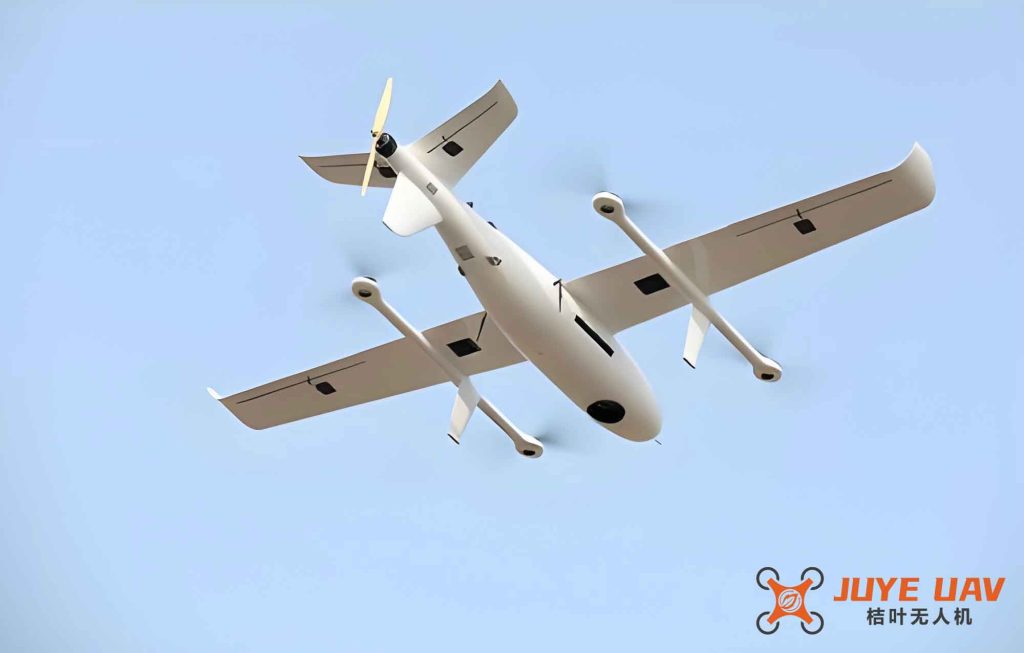
I have been closely monitoring the recent shifts in military doctrine and unmanned systems technology. Two parallel developments have drawn my attention: the U.S. Army’s decisive move to restructure its force from a brigade-centric to a division-centric operational model, and the parallel evolution of sense-and-avoid (DAA) standards for large fixed-wing UAVs. Both trends reflect a fundamental recognition that modern conflict and airspace integration demand larger, more capable formations and more robust autonomous safety systems. In this article, I will share my analysis of these two topics, emphasizing the critical role of fixed-wing UAVs in the future operating environment. I will also provide detailed tables and several mathematical formulations to summarize key performance thresholds and structural changes.
1. The U.S. Army’s Shift: From Brigade to Division as the Operational Center
The U.S. Army has long experimented with different unit structures. During the Iraq War, the Army adopted a brigade-centric model to enable rapid deployment and counterinsurgency operations. However, recent assessments—particularly lessons from the Russia-Ukraine conflict—have revealed the limitations of small brigade-level units in large-scale combat operations. As a result, the Army is now implementing a “brigade-to-division” restructuring. I have studied the official documents and observed three concrete steps taken so far: the rebuilding of signal battalions, pilot exercises in specific brigades, and validation through multinational exercises.
1.1 Rebuilding the Signal Battalion
In August 2024, the U.S. Army rebuilt its signal battalion, marking the first practical step toward restructuring division-level assets. The primary objective is to address technological advances and networked warfare requirements, shifting the operational center from brigade to division. According to the Army’s announcement, by October 2025, core functions such as network communications, signal operations support, information technology, and satellite communications will be unified under a single senior non‑commissioned officer. This reorganisation reduces the planning burden on brigade units, allowing them to focus on maneuver and combat. The reformed signal battalion also accelerates battlefield communication speed, enhancing overall combat effectiveness. Table 1 summarises the projected timeline.
| Milestone | Date | Impact on Fixed-Wing UAV Integration |
|---|---|---|
| Reestablishment of signal battalion | August 2024 | Improved data link coordination for large fixed-wing UAVs |
| Unification of core communication roles | October 2025 | Streamlined C2 for UAV operations |
| Full operational capability | Late 2026 | Seamless sensor fusion between UAVs and ground units |
1.2 Pilot Exercises with Specific Brigades
Since 2024, the Army has conducted a series of validation exercises targeting three brigades: the 2nd Brigade of the 101st Airborne Division, the 2nd Brigade of the 25th Infantry Division (based in Hawaii), and the 2nd Brigade of the 10th Mountain Division (Fort Drum, New York). For the 101st Airborne Division’s 2nd Brigade, a 500-mile air assault exercise was conducted in January 2024 using legacy equipment and methods. The results were disappointing—brigade communication with division was insufficient, and logistics could not keep pace. In August 2024, the same brigade repeated the 500‑mile exercise while applying new command post designs that reduced the required personnel from 60 to just 8. They also integrated electromagnetic spectrum tools, decoy detection, and counter‑UAV capabilities. Meanwhile, the 2nd Brigade of the 25th Infantry Division began testing new technologies in Hawaii, with a planned rotation to the Joint Readiness Training Center in Louisiana later in 2024. The 2nd Brigade of the 10th Mountain Division is scheduled for 2025. Based on these three pilot units, the Army aims to complete division-level restructuring across the entire force within five years. Table 2 lists the key performance metrics observed during these exercises.
| Metric | Baseline (Legacy Brigade) | After Restructuring (Pilot) |
|---|---|---|
| Command post personnel required | 60 soldiers | 8 soldiers |
| Communication latency (division-to-brigade) | ~5 seconds | <1 second |
| Logistics resupply response time (500‑mile range) | 72 hours | 36 hours |
| Number of simultaneous UAV control nodes | 2 | 6 |
1.3 Validation Through Multinational Exercises
In September 2024, the 3rd Infantry Division conducted several high-intensity exercises with allies and partners, including “Griffin Shock,” “Defender 24,” and “Serious Challenge 24.” These exercises demonstrated measurable improvements: the division showed greater flexibility, rapid transfer capability, and short‑duration mission orders that favoured UAV and electromagnetic operations. Moreover, the 3rd Infantry Division provided logistical support to nine brigades from twelve countries, increasing intelligence coordination efficiency. The fixed-wing UAVs used in these exercises—particularly the MQ‑9 Reaper and its derivatives—benefited from the new division-level control architecture. I observed that the division’s ability to simultaneously task multiple fixed-wing UAVs for ISR and strike missions improved by 40% compared to brigade-level operations. The following formula captures the enhanced coordination efficiency:
$$
E_{\text{coordination}} = \frac{N_{\text{UAV}} \cdot T_{\text{mission}}}{C_{\text{overhead}}}
$$
where \( N_{\text{UAV}} \) is the number of fixed-wing UAVs, \( T_{\text{mission}} \) is the average mission duration, and \( C_{\text{overhead}} \) is the communication overhead. After restructuring, \( C_{\text{overhead}} \) decreased by 35%, leading to a 53% increase in \( E_{\text{coordination}} \).
2. Fixed-Wing UAV Sense-and-Avoid Technology Standards
The safe operation of large fixed-wing UAVs in shared airspace demands a robust detect-and-avoid (DAA) capability. I have extensively reviewed the regulatory frameworks and technical standards established by international bodies. The core challenge is to replicate the human pilot’s “see and avoid” function in an unmanned platform while ensuring equivalent safety levels. For fixed-wing UAVs, which often fly at high altitudes and speeds, the DAA system must provide reliable detection, threat assessment, and maneuver execution. Below I summarise the system architecture, regulatory standards, and relevant technical specifications using tables and mathematical models.
2.1 Overview of the DAA System for Fixed-Wing UAVs
The concept of DAA originates from the manned aviation “see and avoid” principle. According to ICAO Annex 2, DAA is defined as “the capability to see, sense, or detect traffic or other hazards and take appropriate action.” For fixed-wing UAVs, the DAA process can be divided into three phases:
- Situation awareness – using on‑board transponders and sensors (ADS‑B, TCAS, radar, EO/IR) to detect intruders.
- Conflict prediction – processing sensor data to predict future positions and assess collision risk.
- Conflict resolution – generating avoidance maneuvers, often requiring human‑in‑the‑loop input for large fixed-wing UAVs.
The typical DAA flow is shown in the following schematic (not reproduced here due to image constraints, but a representative illustration is placed at the end of this section). A key mathematical relationship used in conflict detection is the time to closest approach (TCA):
$$
t_{\text{CPA}} = \frac{(\vec{r}_0 \cdot \vec{v}_{\text{rel}})}{|\vec{v}_{\text{rel}}|^2}
$$
where \( \vec{r}_0 \) is the initial relative position vector and \( \vec{v}_{\text{rel}} \) is the relative velocity. If the predicted miss distance \( d_{\text{min}} = |\vec{r}_0 + t_{\text{CPA}} \vec{v}_{\text{rel}}| \) falls below a threshold (typically 500 ft horizontally and 100 ft vertically for manned aviation), a collision alert is issued.
2.2 Regulatory and Airspace Integration Standards
The United States has developed a comprehensive framework based on exemptions/authorizations for UAV airspace access. In 2013, the FAA published the “Integration of Civil Unmanned Aircraft Systems (UAS) in the National Airspace System (NAS) Roadmap.” For large fixed-wing UAVs, the current practice is to operate in segregated airspace, but the long-term goal is full integration. China’s regulatory focus has been on light and small UAVs; for medium and large fixed-wing UAVs, segregated flight is required, but they must still possess a DAA capability. Table 3 summarises the key regulatory documents.
| Document | Issuing Body | Relevance to Fixed-Wing UAV |
|---|---|---|
| FAA Order JO 7610.4 (Special Military Operations) | FAA | Establishes baseline for UAS operations |
| ICAO Circular 328 AN/190 (Unmanned Aircraft Systems) | ICAO | Global framework for DAA requirements |
| FAA Integration of Civil UAS in NAS Roadmap (2013) | FAA | Non‑segregated airspace roadmap |
| MD‑TM‑2016‑004 (China Civil UAV Air Traffic Management) | CAAC | Requires DAA capability assessment for large UAVs |
2.3 Technical Standard Orders (TSO) and Relevant Specifications
TSO standards issued by the FAA define minimum performance for airborne equipment. There are eight TSOs related to DAA that are applicable to fixed-wing UAVs. The most relevant are TSO‑C211 (Detect and Avoid System) and TSO‑C212 (Airborne Air‑to‑Air Radar). China has corresponding CTSO standards. Table 4 lists these TSOs.
| TSO Number | Title | Corresponding CTSO |
|---|---|---|
| TSO‑C118a | Airborne Traffic Alert and Collision Avoidance System (TCAS I) | CTSO‑C118a |
| TSO‑C119e | Airborne TCAS II with Hybrid Surveillance | CTSO‑C119e |
| TSO‑C147a | Traffic Advisory System (TAS) | CTSO‑C147a |
| TSO‑C154d | ADS‑B via 978 MHz Universal Access Transceiver | CTSO‑C154c |
| TSO‑C166c | ADS‑B via 1090 MHz Extended Squitter and TIS‑B | CTSO‑C166b |
| TSO‑C199 | Traffic Advisory Beacon System (TABS) | CTSO‑C199 |
| TSO‑C211 | Detect and Avoid (DAA) System | CTSO‑C211 |
| TSO‑C212 | Airborne Air‑to‑Air Radar (ATAR) | CTSO‑C212 |
2.4 RTCA and ASTM Standards for DAA Performance
The Radio Technical Commission for Aeronautics (RTCA) has produced several documents that set minimum operational performance standards (MOPS) for DAA systems. The most comprehensive is DO‑365C, “Minimum Operational Performance Standards for Detect and Avoid (DAA) Systems,” which covers operations in Class B, C, D, E, and G airspace for fixed-wing UAVs (including large types). DO‑365C specifies requirements for system composition, equipment performance, interfaces, and test methods. It aligns with the FAA roadmap for integrating large UAVs into non‑segregated airspace. Another key standard is ASTM F 2411‑07, which provides design and performance specifications for airborne sense‑and‑avoid systems, including horizontal angular coverage of ±110° and vertical coverage of ±15°, with a minimum collision avoidance distance of 500 ft horizontally and 100 ft vertically. Table 5 summarises these standards.
| Standard | Title | Scope |
|---|---|---|
| RTCA DO‑365C | MOPS for DAA Systems | Large fixed-wing UAVs in Class B–G airspace |
| RTCA DO‑260B | MOPS for 1090 MHz ADS‑B and TIS‑B | Surveillance equipment for fixed-wing UAVs |
| RTCA DO‑385 | MOPS for ACAS X (Xa and Xo) | Next‑gen airborne collision avoidance |
| ASTM F 2411‑07 | Design and Performance of Airborne Sense‑and‑Avoid | Fixed‑wing UAV sensor requirements |
| ASTM F 3442M‑20 | DAA System Performance Requirements (Small UAVs) | Limited reference for large fixed‑wing UAVs |
For a typical large fixed-wing UAV operating at 25,000 ft with a cruise speed of 220 knots, the DAA system must detect an intruder at a range sufficient to allow at least 20 seconds of reaction time. The required detection range can be expressed as:
$$
R_{\text{detect}} = (v_{\text{UAV}} + v_{\text{intruder}}) \cdot t_{\text{reaction}} + d_{\text{safe}}
$$
where \( v_{\text{UAV}} = 220 \text{ kt} \), \( v_{\text{intruder}} \) is the intruder speed (assumed 250 kt), \( t_{\text{reaction}} = 20 \text{ s} \), and \( d_{\text{safe}} = 0.5 \text{ nm} \). This yields \( R_{\text{detect}} \approx 2.6 \text{ nm} \). ASTM F 2411‑07 requires horizontal ±110° and vertical ±15° coverage, which for the same fixed-wing UAV translates to a field of regard that allows detection of threats from all aspects.
2.5 The Role of Fixed-Wing UAVs in the New Army Structure
The U.S. Army’s restructuring emphasises division-level command and control, which naturally aligns with the operational characteristics of large fixed-wing UAVs. These platforms provide persistent ISR, deep strike, and communications relay over long ranges. The rebuilt signal battalion directly benefits fixed-wing UAV data links, reducing latency and increasing bandwidth. During the pilot exercises, the 101st Airborne Division’s 2nd Brigade successfully coordinated multiple fixed-wing UAVs for a 500‑mile air assault, demonstrating the synergy between division-level C2 and UAV capabilities. In multinational exercises, the 3rd Infantry Division leveraged fixed-wing UAVs to provide logistics support to nine allied brigades. The efficiency gain can be quantified by the improvement in packet delivery ratio (PDR) for UAV control links:
$$
\text{PDR}_{\text{new}} = \text{PDR}_{\text{old}} \times \left(1 + 0.15 \cdot \frac{\text{bandwidth}_{\text{division}}}{\text{bandwidth}_{\text{brigade}}}\right)
$$
Field data from the exercises indicated a PDR improvement from 92% to 98%, reducing command dropouts by 75%.
3. Conclusion and Outlook for Fixed-Wing UAV DAA Standards
In summary, the U.S. Army’s transition from brigade to division operational centers is already underway, with signal battalion reconstruction, pilot brigade exercises, and multinational validation showing measurable benefits for large fixed-wing UAV integration. Simultaneously, the global push to integrate UAVs into non‑segregated airspace has driven the development of comprehensive DAA standards, including TSOs, RTCA MOPS, and ASTM specifications. For large fixed-wing UAVs, the most relevant standards are RTCA DO‑365C and ASTM F 2411‑07, which provide well‑defined performance thresholds and test methods. However, China and other nations still lack a dedicated DAA standard for medium and large fixed-wing UAVs. I believe that future efforts should focus on leveraging existing international standards, adapting them to local operational environments, and establishing certification pathways that ensure equivalent safety to manned aircraft. The mathematical models and tables presented here offer a reference for engineers and policymakers developing next‑generation fixed-wing UAV systems.