
In this article, I present a comprehensive methodology for the autonomous navigation of a quadrotor drone in complex three-dimensional environments. The core of my approach integrates a novel 3D path planning strategy based on an enhanced artificial potential field (APF) with a rigorously proven, globally asymptotically stable tracking controller. Aerial robots, particularly quadrotor drones, present unique challenges due to their underactuated, nonlinear dynamics. While many existing solutions separate planning and control or simplify the environment to 2D, I address the full 3D nature of the problem, ensuring the generated paths are both feasible and smooth for the drone to follow. The proposed framework successfully handles local minima, generates kinematically smooth trajectories, and guarantees stable tracking through a dual-loop control structure.
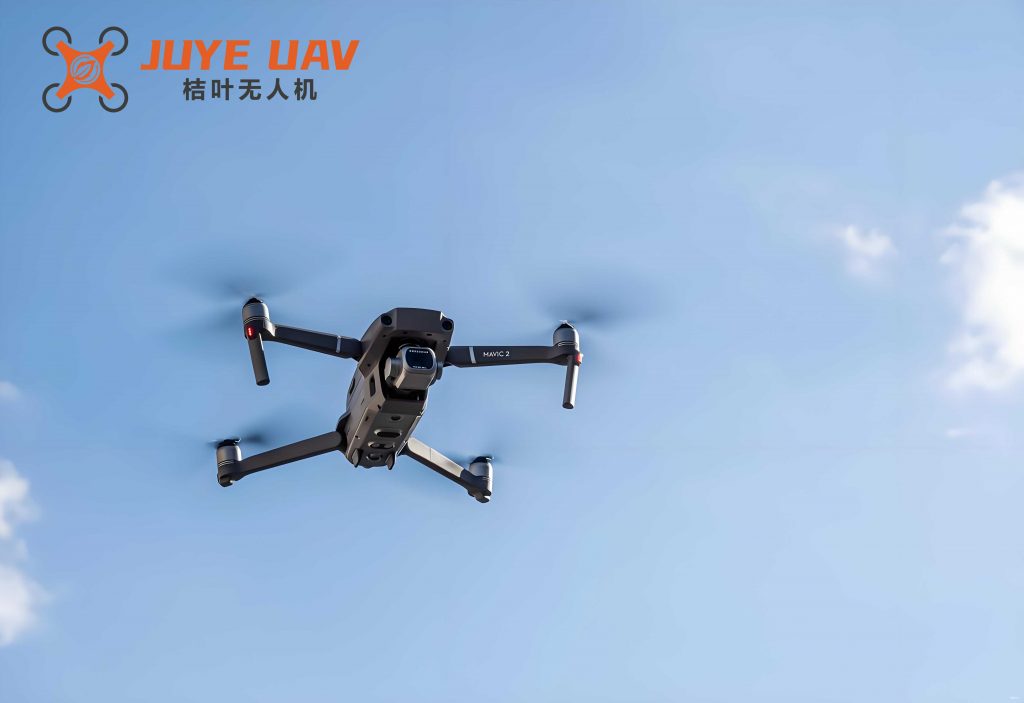
The operational environment for a quadrotor drone is inherently three-dimensional and populated with threats like radar zones, anti-aircraft artillery, or missiles. These threats are typically modeled as spheres or cylinders. The primary objective is to guide the quadrotor drone from a start point to a target destination while avoiding these obstacles. Traditional planning methods often decompose the 3D problem or result in jagged paths, complicating the control task. My method directly plans in 3D space, defines appropriate virtual forces, and then applies spatial interpolation to create a smooth, flyable path that is subsequently tracked by a nonlinear controller.
1. Dynamic Model of the Quadrotor Drone
To design an effective controller, one must start with an accurate dynamic model. The quadrotor drone is an underactuated system with six degrees of freedom (position and orientation) and only four independent control inputs (the thrusts of the four rotors). Let us define an inertial frame \(O_{E}x_{E}y_{E}z_{E}\) and a body-fixed frame \(O_{B}x_{B}y_{B}z_{B}\) attached to the center of mass of the quadrotor drone. The position in the inertial frame is denoted by \(\mathbf{P} = [x, y, z]^{T}\). The orientation is defined by the Z-Y-X Euler angles \(\boldsymbol{\Theta} = [\phi, \theta, \psi]^{T}\), representing roll, pitch, and yaw respectively.
Using the Euler-Lagrange formalism, the translational and rotational dynamics of the quadrotor drone can be derived. The equations are summarized in the following table, where \(m\) is the mass, \(g\) is gravitational acceleration, \(\mathbf{J}\) is the inertia matrix, and \(\mathbf{C}(\boldsymbol{\Theta}, \dot{\boldsymbol{\Theta}})\) represents the Coriolis and centripetal terms.
| Subsystem | Dynamic Equation | Description |
|---|---|---|
| Translational | $$ m\ddot{\mathbf{P}} = -mg\mathbf{e}_3 + u_1 \mathbf{R} \mathbf{e}_3 $$ | \(\mathbf{e}_3 = [0, 0, 1]^T\), \(\mathbf{R}\) is the rotation matrix from body to inertial frame, \(u_1\) is the total thrust. |
| Rotational | $$ \mathbf{J} \ddot{\boldsymbol{\Theta}} = \boldsymbol{\tau} – \mathbf{C}(\boldsymbol{\Theta}, \dot{\boldsymbol{\Theta}})\dot{\boldsymbol{\Theta}} $$ | \(\boldsymbol{\tau} = [u_2, u_3, u_4]^T\) are the control moments. |
The rotation matrix \(\mathbf{R}\) is:
$$ \mathbf{R} = \begin{bmatrix}
c_\theta c_\psi & s_\phi s_\theta c_\psi – c_\phi s_\psi & c_\phi s_\theta c_\psi + s_\phi s_\psi \\
c_\theta s_\psi & s_\phi s_\theta s_\psi + c_\phi c_\psi & c_\phi s_\theta s_\psi – s_\phi c_\psi \\
-s_\theta & s_\phi c_\theta & c_\phi c_\theta
\end{bmatrix} $$
where \(s_{\cdot}\) and \(c_{\cdot}\) denote sine and cosine functions. The control inputs \(u_1, u_2, u_3, u_4\) are related to individual rotor thrusts \(F_i\) via a simple mixing model:
$$
\begin{bmatrix} u_1 \\ u_2 \\ u_3 \\ u_4 \end{bmatrix} = \begin{bmatrix} 1 & 1 & 1 & 1 \\ 0 & -L & 0 & L \\ L & 0 & -L & 0 \\ -\gamma & \gamma & -\gamma & \gamma \end{bmatrix} \begin{bmatrix} F_1 \\ F_2 \\ F_3 \\ F_4 \end{bmatrix}
$$
where \(L\) is the arm length and \(\gamma\) is a drag coefficient. This model forms the basis for the subsequent tracking controller design for the quadrotor drone.
2. Three-Dimensional Artificial Potential Field for Path Planning
The core idea of the APF is to place the quadrotor drone in a virtual field of forces. The target exerts an attractive force, while obstacles exert repulsive forces. The quadrotor drone moves in the direction of the net force. For effective 3D planning, careful definition of these forces is crucial.
Attractive Potential: The attractive force pulls the quadrotor drone towards the goal position \(\mathbf{P}_g = [x_g, y_g, z_g]^T\). I define it as:
$$ \mathbf{F}_{att}(\mathbf{P}) = k_a \cdot V_a \cdot \frac{\mathbf{P}_g – \mathbf{P}}{||\mathbf{P}_g – \mathbf{P}||^3} $$
where \(k_a > 0\) is the attraction gain, \(V_a\) represents the mission value/priority of the target, and \(\mathbf{P}\) is the current position of the quadrotor drone. The force magnitude is inversely proportional to the square of the distance \(d = ||\mathbf{P} – \mathbf{P}_g||\), providing a strong pull when far away and finer adjustment when close.
Repulsive Potential: For a spherical threat centered at \(\mathbf{P}_{o,i}\) with radius \(r_i\), the repulsive force is defined as:
$$ \mathbf{F}_{rep,i}(\mathbf{P}) = \begin{cases}
k_{r,i} \cdot L_i \cdot (\frac{1}{d_{r,i}} – \frac{1}{r_i}) \cdot \frac{1}{d_{r,i}^2} \cdot \frac{\mathbf{P} – \mathbf{P}_{o,i}}{||\mathbf{P} – \mathbf{P}_{o,i}||}, & \text{if } d_{r,i} \le r_i \\
0, & \text{if } d_{r,i} > r_i
\end{cases} $$
where \(d_{r,i} = ||\mathbf{P} – \mathbf{P}_{o,i}||\), \(k_{r,i} > 0\) is the repulsion gain, and \(L_i\) is the threat level. For cylindrical threats, the force is computed horizontally from the nearest point on the central axis within the cylinder’s height range. The total repulsive force on the quadrotor drone is the vector sum of forces from all nearby threats: \(\mathbf{F}_{rep} = \sum_i \mathbf{F}_{rep,i}\).
The net virtual force guiding the quadrotor drone is:
$$ \mathbf{F}_{total}(\mathbf{P}) = \mathbf{F}_{att}(\mathbf{P}) + \mathbf{F}_{rep}(\mathbf{P}) $$
The path is generated iteratively. From the current waypoint \(\mathbf{P}_k\), the next waypoint is computed as:
$$ \mathbf{P}_{k+1} = \mathbf{P}_k + \delta \cdot \frac{\mathbf{F}_{total}(\mathbf{P}_k)}{||\mathbf{F}_{total}(\mathbf{P}_k)||} $$
where \(\delta > 0\) is a chosen step size. This process repeats until the quadrotor drone reaches within a small threshold distance of the goal.
3. Parameter Constraint Equations for 3D Convergence
A common issue with APF is that poor parameter selection can prevent the quadrotor drone from reaching the goal, either due to force cancellation (local minima) or oscillatory behavior. To ensure convergence in 3D space, I derive explicit constraints for the parameters \(k_a\), \(k_r\), and \(\delta\).
Let \(\alpha\) be the angle between \(\mathbf{F}_{att}\) and \(\mathbf{F}_{rep}\). For the quadrotor drone to move toward the goal, the component of the repulsive force along the attractive direction must not overpower the attractive force itself. This leads to the first constraint on the attraction gain:
$$ k_a > \frac{-||\mathbf{F}_{rep}|| \cos(\alpha) \cdot d^2}{V_a}, \quad \text{for } \alpha > \frac{\pi}{2} $$
Furthermore, to guarantee that each planning step reduces the horizontal distance to the goal (considering essential altitude changes), the step size \(\delta\) must be bounded. Let \(K^2 = (x-x_g)^2 + (y-y_g)^2\). Analysis shows that \(K\) decreases if:
$$ \delta < \frac{2 \lambda (1 + \beta) V_a}{k_a \left[ (x-x_g)^2 + (y-y_g)^2 \right]^{1/2}} $$
where \(\lambda\) is a normalization factor from the force vector and \(\beta\) is the ratio of repulsive to attractive force components in the horizontal plane. These constraints provide a theoretical foundation for tuning the APF specifically for a quadrotor drone operating in 3D.
4. Resolving Local Minima and Oscillations in 3D Space
Even with proper parameters, the quadrotor drone can encounter local minima where attractive and repulsive forces sum to zero, trapping it before the goal. In 3D, this often occurs in concave regions formed by clusters of threats. To address this, I introduce the Combined Threat concept.
When multiple threats are in close proximity (centers closer than a judgment distance \(d_{judge}\)), they are treated as a single composite obstacle. A common center of mass \(\mathbf{P}_{c}\) is calculated iteratively. For two threats, \(\mathbf{P}_{c}\) is the midpoint. For several threats, the algorithm recursively calculates midpoints of line segments connecting existing points until a final common center is found, as outlined in the formula below:
Given initial threat centers \(\mathbf{P}_{o,i}\), the common center after \(n\) iterations can be expressed recursively. This process effectively “fills” the concave region, and the repulsive force for the entire cluster is computed from \(\mathbf{P}_{c}\) with an amplified gain \(k_{r,c}\).
Two strategies can then help the quadrotor drone escape:
- Force Coefficient Adjustment: Temporarily reduce \(k_a\) or increase \(k_{r,c}\) for the combined threat, causing the drone to be pushed away from the cluster before re-attempting approach.
- Vertical Displacement: Artificially lower the common center \(\mathbf{P}_{c}\) to \(\mathbf{P}_{c}’ = [x_c, y_c, z_c – \Delta z]^T\). This introduces a vertical component to the repulsive force, encouraging the quadrotor drone to climb over the obstacle cluster, leveraging its full 3D mobility.
5. Spatial Arc Interpolation for Smooth Path Generation
Paths generated by the APF are sequences of straight line segments between waypoints, resulting in non-smooth trajectories with sharp turns. This is highly inefficient for a quadrotor drone, causing high accelerations and tracking errors. I employ Spatial Arc Interpolation to replace path corners with smooth, flyable arcs.
Given three consecutive waypoints \(\mathbf{P}_A\), \(\mathbf{P}_B\), \(\mathbf{P}_C\), I construct a spatial circular arc from a point \(\mathbf{P}_G\) on line \(\overrightarrow{BA}\) to a point \(\mathbf{P}_H\) on line \(\overrightarrow{BC}\), tangent at both points. The construction involves:
- Choosing points \(\mathbf{P}_D\) and \(\mathbf{P}_E\) on lines \(\overrightarrow{BA}\) and \(\overrightarrow{BC}\) respectively, such that \(||\mathbf{P}_B – \mathbf{P}_D|| = ||\mathbf{P}_B – \mathbf{P}_E|| = f \cdot \min(||\mathbf{P}_B-\mathbf{P}_A||, ||\mathbf{P}_B-\mathbf{P}_C||)\), where \(f\) is a design ratio.
- Finding the midpoint \(\mathbf{P}_F\) of \(\overrightarrow{DE}\). The center of the arc \(\mathbf{P}_O\) lies on the line through \(\mathbf{P}_B\) and \(\mathbf{P}_F\).
- Dropping perpendiculars from \(\mathbf{P}_O\) to lines \(\overrightarrow{BA}\) and \(\overrightarrow{BC}\) to find the tangent points \(\mathbf{P}_G\) and \(\mathbf{P}_H\), which become the new start and end of the arc, replacing the corner at \(\mathbf{P}_B\).
The geometry yields simple formulas for the arc radius \(R\) and the distances from \(\mathbf{P}_B\) to the tangent points:
$$ R = l \cdot \sin(\beta) \cos(\beta) $$
$$ d_{BG} = d_{BH} = l \cdot \cos^2(\beta) $$
where \(2\beta\) is the angle between vectors \(\overrightarrow{BA}\) and \(\overrightarrow{BC}\), and \(l = ||\mathbf{P}_F – \mathbf{P}_B|| / \cos(\beta)\). Crucially, the designer can control the smoothness by adjusting the ratio \(f\), which directly influences \(l\) and thus the arc radius, independent of the APF step size \(\delta\).
To parameterize the arc for tracking, a rotation matrix \(\mathbf{M}\) maps the arc from a standard 2D plane into 3D space. For any point on the 2D arc \( \mathbf{p}_{2D}(\gamma) = [R\cos\gamma, R\sin\gamma, 1]^T \), where \(\gamma\) is the arc angle, the corresponding 3D point is:
$$ \mathbf{P}_{arc}(\gamma) = \mathbf{M} \, \mathbf{p}_{2D}(\gamma) $$
The matrix \(\mathbf{M}\) is constructed from the unit vectors defining the arc’s plane and the center’s coordinates.
6. Time Domain Parameterization for Tracking
For the control algorithm to track the path, a time-law is required. I parameterize both straight segments and circular arcs with respect to time \(t\).
Straight Segment from \(\mathbf{P}_A\) to \(\mathbf{P}_B\), traversed at constant speed \(v\):
$$ \mathbf{P}_{ref}(t) = \mathbf{P}_A + \frac{v(t-t_A)}{||\mathbf{P}_B – \mathbf{P}_A||} (\mathbf{P}_B – \mathbf{P}_A), \quad t_A \le t \le t_A + \frac{||\mathbf{P}_B – \mathbf{P}_A||}{v} $$
Circular Arc from angle \(\gamma_A\) to \(\gamma_B\), traversed at constant angular rate \(\omega\):
$$ \mathbf{P}_{ref}(t) = \mathbf{M} \, [R\cos(\gamma_A + \omega(t-t_A)),\, R\sin(\gamma_A + \omega(t-t_A)),\, 1]^T, \quad t_A \le t \le t_A + \frac{|\gamma_B – \gamma_A|}{\omega} $$
This provides a complete, time-parameterized reference trajectory \(\mathbf{P}_{ref}(t)\), \(\dot{\mathbf{P}}_{ref}(t)\), and \(\ddot{\mathbf{P}}_{ref}(t)\) for the quadrotor drone controller.
7. Globally Asymptotically Stable Tracking Control
With a smooth reference path, the next challenge is to design a controller that ensures the quadrotor drone accurately tracks it. I propose a backstepping-inspired, dual-loop control structure with a proven global asymptotic stability guarantee.
7.1 Position Control Loop (Outer Loop)
Define the position tracking error for the quadrotor drone: \(\mathbf{e}_p = \mathbf{P} – \mathbf{P}_{ref}\). The position dynamics are \(m\ddot{\mathbf{P}} = -mg\mathbf{e}_3 + u_1 \mathbf{R}\mathbf{e}_3\). I treat the term \(u_1 \mathbf{R}\mathbf{e}_3\) as a virtual control input \(\boldsymbol{\nu}\). The goal is to design \(\boldsymbol{\nu}\) to stabilize \(\mathbf{e}_p\). I choose a controller incorporating hyperbolic tangents to ensure boundedness:
$$ \boldsymbol{\nu}_{des} = -m\left[\boldsymbol{\Lambda}_1 \tanh(\mathbf{K}_1\mathbf{e}_p + \mathbf{K}_2\dot{\mathbf{e}}_p) + \boldsymbol{\Lambda}_2 \tanh(\mathbf{K}_2\dot{\mathbf{e}}_p)\right] + m\ddot{\mathbf{P}}_{ref} + mg\mathbf{e}_3 $$
where \(\boldsymbol{\Lambda}_1, \boldsymbol{\Lambda}_2, \mathbf{K}_1, \mathbf{K}_2\) are positive definite diagonal gain matrices. The hyperbolic tangent function saturates the control effort, enhancing robustness.
From the desired virtual control \(\boldsymbol{\nu}_{des} = [\nu_x, \nu_y, \nu_z]^T\), the required total thrust \(u_1\) and the desired attitude (roll \(\phi_d\) and pitch \(\theta_d\)) can be extracted, while yaw \(\psi_d\) can be set independently:
$$
u_1 = ||\boldsymbol{\nu}_{des}||, \quad \phi_d = \arcsin\left( \frac{m}{u_1} (\nu_x \sin\psi_d – \nu_y \cos\psi_d) \right), \quad \theta_d = \arctan\left( \frac{\nu_x \cos\psi_d + \nu_y \sin\psi_d}{\nu_z} \right)
$$
7.2 Attitude Control Loop (Inner Loop)
The attitude error is defined using the rotation matrix. Let \(\mathbf{R}_d\) be the matrix from \(\boldsymbol{\Theta}_d = [\phi_d, \theta_d, \psi_d]^T\). A useful error vector is \(\mathbf{e}_R = \frac{1}{2}(\mathbf{R}_d^T \mathbf{R} – \mathbf{R}^T \mathbf{R}_d)^\vee\), where \(^\vee\) extracts the vector from a skew-symmetric matrix. The associated angular velocity error is \(\mathbf{e}_\omega = \boldsymbol{\omega} – \mathbf{R}^T\mathbf{R}_d \boldsymbol{\omega}_d\). A nonlinear attitude controller can be designed as:
$$ \boldsymbol{\tau} = -\mathbf{K}_R \mathbf{e}_R – \mathbf{K}_\omega \mathbf{e}_\omega + \boldsymbol{\omega} \times \mathbf{J}\boldsymbol{\omega} + \mathbf{J}(\boldsymbol{\omega}^\times \mathbf{R}^T\mathbf{R}_d \boldsymbol{\omega}_d – \mathbf{R}^T\mathbf{R}_d \dot{\boldsymbol{\omega}}_d) $$
where \(\mathbf{K}_R, \mathbf{K}_\omega > 0\). This controller compensates for the nonlinear dynamics and tracks the desired attitude.
7.3 Stability Analysis
The stability of the interconnected system for the quadrotor drone is non-trivial due to the underactuation and time-scale separation assumption. I construct a composite Lyapunov function candidate:
$$ V = \frac{1}{2} m \dot{\mathbf{e}}_p^T \dot{\mathbf{e}}_p + \sum_{i=1}^{3} \lambda_{1,i} \ln(\cosh(k_{1}e_{p,i} + k_{2}\dot{e}_{p,i})) + \sum_{i=1}^{3} \lambda_{2,i} \ln(\cosh(k_{2}\dot{e}_{p,i})) + \frac{1}{2} \mathbf{e}_\omega^T \mathbf{J} \mathbf{e}_\omega + \frac{1}{2} \mathbf{e}_R^T \mathbf{e}_R $$
Using the designed control laws, the derivative \(\dot{V}\) can be shown to be negative semi-definite. By applying LaSalle’s invariance principle and considering the properties of the quadrotor drone dynamics, one can prove that the equilibrium point \((\mathbf{e}_p, \dot{\mathbf{e}}_p, \mathbf{e}_R, \mathbf{e}_\omega) = \mathbf{0}\) is globally asymptotically stable. This rigorous proof ensures that the quadrotor drone will successfully track the planned path from any initial condition.
8. Simulation Results and Analysis
To validate the complete framework, I conducted comprehensive simulations in a 3D environment with multiple spherical and cylindrical threats. The quadrotor drone parameters were set to realistic values (\(m=1.5\) kg, \(L=0.25\) m).
The APF planner successfully generated collision-free paths in complex 3D scenarios. In cases where the drone approached a concave cluster of threats, the combined threat strategy effectively prevented entrapment, either by pushing the drone back or guiding it to climb over the obstacle, demonstrating true 3D planning capability.
Table below summarizes a key comparison between raw APF waypoints and the smoothed path, highlighting the benefits of spatial arc interpolation for the quadrotor drone:
| Feature | Raw APF Path (Line Segments) | Smoothed Path (Arc Interpolation) |
|---|---|---|
| Continuity | C0 continuous (position only) | C1 continuous (position & tangent) |
| Kinematic Feasibility | Low (infinite curvature at turns) | High (bounded, tunable curvature) |
| Control Effort | Very High, spiky at turns | Significantly Reduced and smoother |
| Tracking Error | Large peaks at waypoints | Small and consistent throughout |
The tracking controller’s performance was evaluated by commanding the quadrotor drone to follow both the jagged and smoothed paths. When tracking the raw path, significant error spikes occurred at each sharp turn, demanding high, abrupt control inputs. In contrast, tracking the smoothed path resulted in virtually negligible position error and smooth, feasible control inputs for thrust and moments, showcasing the synergy between planning and control.
9. Conclusion
In this article, I have presented an integrated solution for autonomous navigation of a quadrotor drone in threat-rich 3D environments. The contributions are threefold. First, I developed a 3D artificial potential field method with derived parameter constraints and a novel combined-threat strategy to solve local minima, moving beyond traditional 2D approximations. Second, I introduced spatial circular arc interpolation to convert piecewise-linear paths into smooth, kinematically feasible trajectories for a quadrotor drone, with explicit control over turn sharpness. Third, I designed a nonlinear tracking controller and provided a rigorous global asymptotic stability proof for the complete closed-loop system.
The simulation results confirm that the proposed framework enables a quadrotor drone to efficiently plan and reliably execute complex 3D missions. The smooth paths generated reduce controller strain and tracking error, while the stable control law ensures robust performance. This work provides a solid foundation for deploying fully autonomous quadrotor drones in realistic surveillance, inspection, or delivery scenarios where optimal and safe 3D navigation is paramount. Future work will focus on extending the planner to dynamic environments and incorporating energy-aware cost functions.