
The global onslaught of COVID-19 precipitated an unprecedented public health crisis, compelling over 60 nations and regions to declare states of emergency through constitutional measures, international conventions, or special legislation by April 2020. Many resorted to nationwide lockdowns. In this maelstrom, law enforcement agencies worldwide faced exponentially heightened risks and operational pressures. The police UAV emerged as a pivotal “new recruit,” enabling rapid response and efficient, standardized, non-contact law enforcement across diverse scenarios. This paradigm shift showcases the power of cutting-edge technology to reconstruct policing methodologies in the artificial intelligence era, turning crisis into an opportunity for enhanced efficacy.
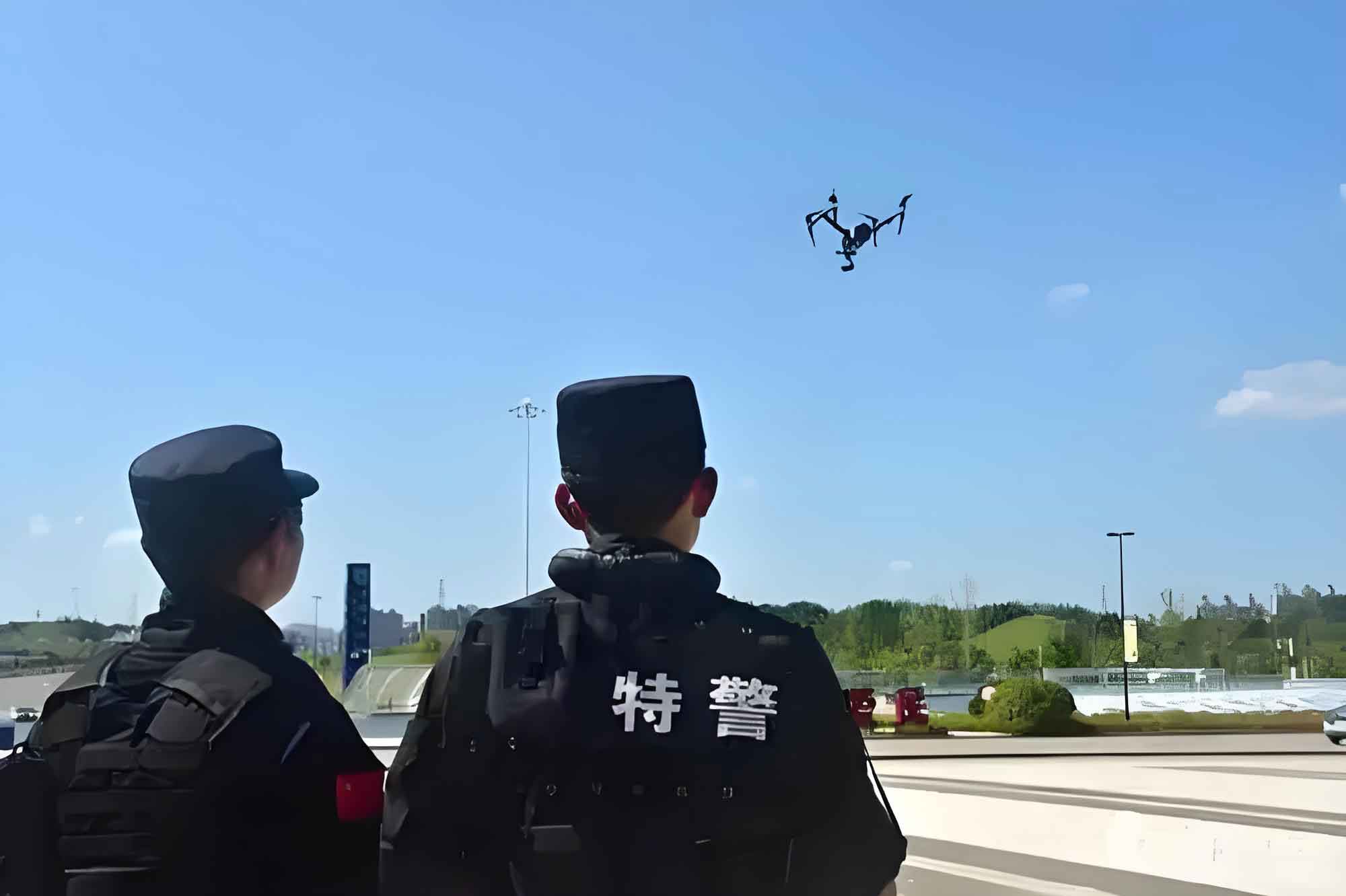
Operating under emergency mandates, police forces were tasked with imposing necessary restrictions on fundamental freedoms, such as free movement, to curb viral transmission. Concurrently, expanded police powers were deployed to manage public order and essential services. This dual burden led to a surge in operational tasks and a parallel escalation in infection risk, presenting stark practical challenges.
I. The Pains of Traditional Policing in a Pandemic
Traditional law enforcement methods revealed critical vulnerabilities when confronted by the unique demands of the pandemic.
| Pain Point | Description | Operational Consequence |
|---|---|---|
| Slow Mobility & Response | Reliance on foot and vehicle patrols creates delays in reaching dispersed or transient incidents (e.g., mask-less individuals, unlawful gatherings). | Loss of critical intervention window; preventive actions become logistically unfeasible. |
| Narrow Surveillance Range | Fixed CCTV cameras, despite wide coverage, have inherent blind spots and lack mobility for aerial perspectives or dynamic tracking. | Incomplete situational awareness; high cost of alternatives like helicopters for persistent wide-area monitoring. |
| High Environmental Vulnerability | Officers and equipment are constrained by complex terrains (urban, rural, mountainous, aquatic) and adverse weather conditions. | Compromised mission safety and efficiency, especially for urgent tasks like emergency supply delivery. |
| High Risk of Viral Transmission | Essential face-to-face interactions for communication, persuasion, and enforcement create multiple vectors for virus spread between officers and the public. | Depletion of active duty personnel due to infection and quarantine, exacerbating staffing shortages amid increased workload. |
The infection toll within forces, such as the 608 officers in the New York City Police Department infected by late March 2020, starkly highlighted this vulnerability, threatening operational continuity.
II. The Capabilities of the “New Recruit”: Police UAVs
An Unmanned Aerial Vehicle (UAV) is a pilotless aircraft controlled remotely or autonomously. Compared to manned aircraft, police UAV platforms offer significant advantages: small size, lower cost, modularity, and robust environmental resilience. Operated via control stations or mobile apps, modern police UAV systems enable remote piloting, AI-powered recognition, route planning, and one-touch take-off/landing. They can be equipped with loudspeakers, payload release mechanisms, and real-time video links, becoming versatile “all-round assistants.” Their capabilities directly address the identified pain points.
1. Rapid Deployment and Agile Operation. A typical police UAV can achieve response times orders of magnitude faster than ground units. Its operational efficiency can be modeled by comparing effective area coverage per unit time. Let \( C_{UAV} \) represent the coverage capacity of a UAV and \( C_{Ground} \) that of a ground unit. For a given area \( A \):
$$ C_{UAV} = \frac{A}{t_{UAV} + t_{deploy}} $$
$$ C_{Ground} = \frac{A}{t_{drive} + t_{patrol}} $$
where \( t_{UAV} \) is flight time to the area, \( t_{deploy} \) is setup time (negligible), \( t_{drive} \) is ground travel time, and \( t_{patrol} \) is ground patrol time for the same area. Given a police UAV speed \( v_{UAV} \approx 60 \) km/h and direct aerial path versus ground vehicle speed \( v_{Ground} \) with circuitous route, \( t_{UAV} \ll t_{drive} \). Furthermore, a UAV’s panoramic view reduces \( t_{patrol} \) significantly. Thus:
$$ \frac{C_{UAV}}{C_{Ground}} \gg 1 $$
This ratio demonstrates the profound mobility advantage. Their portability and ease of payload integration (e.g., camera, gripper) also enable single-officer operations.
2. Multi-Dimensional Surveillance and Digital Law Enforcement. Police UAV units provide dynamic, aerial vantage points, eliminating the blind spots of fixed cameras. High-definition and thermal imaging payloads stream real-time data to command centers or mobile terminals, enabling:
$$ S_{UAV}(t) = \int_{0}^{t} [V_{hd}(\tau) + I_{thermal}(\tau) + \nabla P(\tau)] \, d\tau $$
Where \( S_{UAV}(t) \) is the comprehensive situational awareness over time \( t \), synthesized from HD video \( V_{hd} \), thermal imagery \( I_{thermal} \), and positional data gradient \( \nabla P \). This supports flattened, cross-level command structures with direct, reliable data.
3. Environmental Adaptability and Anti-Fragility. Designed for wind, water, and temperature resistance with advanced obstacle avoidance, police UAV platforms exhibit strong environmental survivability. Their modular design allows for cost-effective, rapid deployment of specialized capabilities (e.g., loudspeakers, delivery hooks, disinfectant sprayers) tailored to the mission.
4. Non-Contact Law Enforcement and Officer Safety. This is the paramount benefit. By executing tasks from the air, police UAV systems virtually eliminate pathogen transmission risk during enforcement. The “contact risk function” \( R_{contact} \) for an operation can be reduced dramatically:
$$ R_{contact}(UAV) = \lim_{\Delta d \to \infty} f(N, \Delta d, t_{exp}) \approx 0 $$
$$ R_{contact}(Traditional) = k \cdot N \cdot t_{exp} \cdot \frac{1}{\Delta d} $$
where \( N \) is the number of person-to-person interactions, \( \Delta d \) is interpersonal distance, \( t_{exp} \) is exposure time, and \( k \) is a transmission constant. For police UAV operations, \( \Delta d \) is effectively infinite, driving risk to near zero.
| Policing Pain Point | Police UAV Solution | Key Performance Metric Enhancement |
|---|---|---|
| Slow Mobility | Direct aerial response at 60+ km/h | Response Time ↓ by 70-90% |
| Narrow Surveillance | Dynamic aerial panorama & zoom | Area Coverage ↑ by 300-500% per unit time |
| Environmental Limits | All-weather, multi-terrain operation | Mission Feasibility ↑ in adverse conditions |
| Infection Risk | Remote, non-contact operation | Officer Exposure Risk ↓ to ~0% |
III. Pandemic Policing Applications in the State of Emergency
Inspired by early adopters, global law enforcement rapidly integrated police UAV assets into their COVID-19 strategies.
A. Patrol, Dissemination, and Scientific Law Enforcement.
The most widespread use was aerial patrol and public address. Police UAV units, equipped with loudspeakers, flew over streets, intersections, and parks, broadcasting stay-at-home orders, mask mandates, and public health information. This served as a force multiplier, extending reach without proportionally increasing officer workload or exposure. European nations heavily impacted in the initial wave, such as Italy, Spain, and France, rapidly deployed their police UAV fleets—often repurposed from counter-terrorism operations—to monitor public spaces and disperse gatherings. In Malaysia, police UAV units were concentrated in identified hotspots during the Movement Control Order (MCO) to maximize their advisory and dissuasive impact.
B. Evidence Gathering, Advisory Warnings, and Targeted Enforcement.
Police UAV systems proved invaluable for discreet surveillance and evidence collection in large, open areas like beaches and parks where lockdown violations occurred. In the United States, agencies in California deployed police UAV units for high-altitude observation and video documentation of illegal gatherings before officers moved in. The aerial platform allowed for comprehensive evidence collection and subsequent authoritative loudspeaker announcements, fulfilling legal notification requirements while maintaining a safe distance. In the United Kingdom, forces used police UAV footage to publicly identify and admonish individuals undertaking “non-essential” travel to scenic areas, framing compliance as a life-saving duty. The operational flow for this application can be summarized as:
$$ \text{UAV Deployment} \to \text{Covert Reconnaissance} \to \text{Evidence Locking } (E_{video}) \to $$
$$ \text{Remote Announcement} \to \text{Ground Team Dispatch} \to \text{UAV-Assisted Arrest/Resolution} $$
This process ensured officer safety during the initial, potentially volatile contact phase.
C. Emergency Delivery and Crisis Response.
Beyond enforcement, the police UAV demonstrated its utility in humanitarian and logistical support. Agencies recognized its potential for contactless transport of critical supplies. The efficiency gain for medical sample or supply delivery is quantifiable. Let \( T_{ground} \) be the ground transport time for a distance \( d \) at average speed \( v_{ground} \) with traffic factor \( \phi > 1 \), and \( T_{UAV} \) be the UAV flight time at speed \( v_{UAV} \) via direct route:
$$ \text{Efficiency Gain} = \frac{T_{ground}}{T_{UAV}} = \frac{ \frac{\phi \cdot d}{v_{ground}} }{ \frac{d}{v_{UAV}} } = \phi \cdot \frac{v_{UAV}}{v_{ground}} $$
With \( \phi \) often between 1.5 and 3 in urban/rural settings and \( v_{UAV} \) comparable or greater than \( v_{ground} \), significant time savings of 50-80% are achievable. Indian police documented an 80-fold speed increase in test deliveries. Italian authorities expanded police UAV authorization to include transporting medical samples and supplies, directly supporting healthcare infrastructure.
D. Disinfection Spraying and Preventive Policing.
A direct public health intervention involved modifying police UAV platforms for large-area disinfection. Adapted from agricultural sprayer drones, these systems could carry tanks of disinfectant and cover vast areas efficiently and safely. The productivity compared to manual spraying is immense:
$$ \text{Area per UAV per hour} = \text{Swath Width} \times \text{Flight Speed} \times \text{Operational Efficiency} $$
For a police UAV with a 5-meter swath flying at 6 m/s (21.6 km/h) with 70% efficiency, it covers:
$$ A_{UAV/hour} = 5 \, \text{m} \times 6 \, \text{m/s} \times 3600 \, \text{s/hour} \times 0.7 \approx 75,600 \, \text{m}^2/\text{hour} \approx 7.56 \, \text{hectares/hour} $$
A manual sprayer covering 1 hectare/day results in a productivity ratio \( \rho \):
$$ \rho = \frac{A_{UAV/hour} \times 8 \, \text{hours}}{A_{manual/day}} \approx \frac{7.56 \times 8}{1} \approx 60 $$
This 60x efficiency gain, coupled with the ability to spray hard-to-reach areas and eliminate worker exposure, made police UAV disinfection a critical tool in regions from the United Arab Emirates and India to the United Kingdom, where forces collaborated with technology providers to deploy large-scale aerial sanitization programs.
| Application Domain | Primary Police UAV Function | Key Benefit | Example Regions of Use |
|---|---|---|---|
| Public Order Patrol | Aerial Broadcasting & Monitoring | Non-contact public persuasion, wide-area deterrence | Italy, Spain, France, Malaysia |
| Targeted Enforcement | Covert Surveillance & Evidence Collection | Safe evidence gathering, procedural compliance | United States (California), United Kingdom |
| Logistical Support | Contactless Cargo Transport | Rapid delivery of critical medical supplies | Italy, India |
| Public Health Direct Action | Aerial Disinfection Spraying | Large-scale, efficient sanitization; protects personnel | UAE, India, United Kingdom |
In conclusion, the COVID-19 pandemic served as a profound stress test and catalyst for the integration of police UAV technology into mainstream law enforcement operations. Faced with acute challenges in mobility, safety, and scope, agencies globally turned to these versatile aerial platforms. The police UAV demonstrated its multifaceted value not only as a surveillance tool but as a dynamic platform for communication, delivery, and direct public health intervention. By enabling effective non-contact law enforcement, the police UAV protected officers and citizens alike, maintained operational continuity despite personnel shortages, and enhanced the efficiency and reach of pandemic response measures. This crisis has undoubtedly cemented the role of the police UAV as an indispensable asset, proving that technological innovation is crucial for building resilient, adaptive, and effective policing capabilities for the 21st century and beyond. The era of the police UAV as a fundamental tool for public safety and order maintenance has unequivocally arrived.