
The rise of the China drone industry represents a significant achievement in modern advanced manufacturing and technological innovation. In recent years, its development velocity has been remarkable, granting it substantial influence within the global market. However, beneath this rapid expansion lie considerable systemic challenges. The core difficulty stems from the inherent complexity and high degree of difficulty in achieving synergistic coordination both within the industry itself and between the drone sector and numerous other industrial domains. This paper aims to dissect the composition of the China drone industrial ecosystem, analyze the roles of its key stakeholders, elucidate the root causes of its developmental dilemmas, and propose a framework for sustained, healthy growth. The central thesis posits that for the China drone industry to maintain its competitive edge and innovative momentum, its major actors—government bodies, research institutions, and market enterprises—must operate under a model of guided synergy. Specifically, governmental leadership should establish the foundational rules and strategic direction, market forces should act as the dynamic adhesive and testing ground, and research entities should engage in collaborative innovation. This tripartite interaction is crucial to prevent the industry from stagnating into monopolistic rent-seeking and to ensure its continued evolution across military, enterprise, and consumer domains.
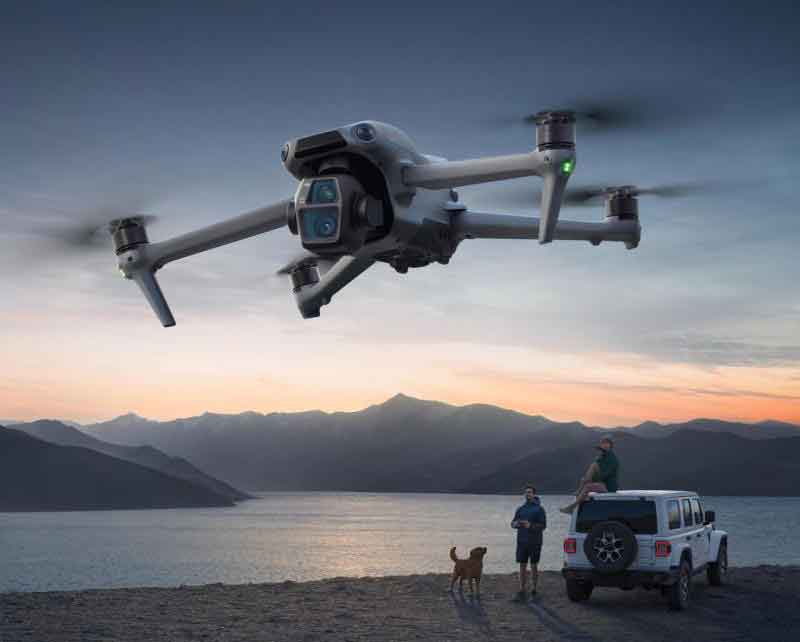
The ecosystem of the China drone industry is notably intricate, primarily due to the high degree of segmentation in its end-use applications. Unlike many standardized products, drones are not a monolithic category but a spectrum of highly specialized tools. This segmentation is the first layer of complexity in understanding the China drone industrial chain.
At the highest level, drones bifurcate into military and civilian applications, each with distinct drivers and characteristics. Military drones are paramount for national defense, altering the fundamental mechanisms of modern warfare. Their development is characterized by strategic necessity and exceptionally high technological content, often incorporating the latest advancements in hardware and software. Civilian drones, conversely, exhibit traits of diversity and rapid market evolution. Their applications span from established sectors like agricultural plant protection and infrastructure inspection to burgeoning fields such as logistics, aerial photography, and personal recreation. The pace of new application discovery is swift, with adoption cycles shortening dramatically. Within the civilian sphere, a further subdivision exists between enterprise-grade and consumer-grade drones. While enterprise drones focus on operational efficiency and cost-saving for businesses, consumer drones have seen explosive growth, with their market share in China rivaling or even surpassing that of enterprise applications. Market data indicates that while the global drone market maintains a larger military segment, the civilian market in China has grown disproportionately, recently accounting for over 70% of the domestic market scale, highlighting the unique demand dynamics within the China drone landscape.
| Domain | Primary Segments | Key Characteristics | Demand Driver |
|---|---|---|---|
| Military | Reconnaissance, Combat, Logistics | Strategic necessity, Highest tech threshold, Classified R&D | National Security & Defense Strategy |
| Civilian | Enterprise-grade (e.g., Agriculture, Energy, Public Safety) | Focus on ROI, Operational efficiency, Regulatory compliance | Business Process Optimization |
| Consumer-grade (e.g., Photography, Recreation) | Mass market, Rapid iteration, User experience focus | Personal Utility & Entertainment |
The value chain of the China drone industry encompasses both production and application layers. The production layer focuses on hardware manufacturing, with the flight control system and core chips as the pivotal components. These areas present high technical barriers to entry. Chinese manufacturers have made significant strides in flight control systems, with leading companies possessing standard-setting capabilities. For chips, the current computational requirements for many civilian drones are met by mature process nodes (e.g., 60nm), which domestic foundries can reliably produce, mitigating risks of foreign technological blockade. Other critical components like airframe materials (requiring high strength-to-weight ratios) and batteries are also supported by a robust domestic manufacturing base in regions like the Pearl River Delta and leading battery producers. The application layer, or the “software” side, involves system integration and scenario-specific solutions. This includes vital systems like image transmission and ground control software, where a vibrant ecosystem of specialized Chinese software companies provides competitive products.
| Value Chain Layer | Core Components/Activities | Chinese Industry Status | Competitive Nature |
|---|---|---|---|
| Production (Hardware) | Flight Control Systems, Core Chips | Strong in flight control; Capable in chip manufacturing for current needs | High barrier, Oligopolistic tendencies |
| Airframe Materials & Manufacturing | Strong manufacturing cluster, especially in Guangdong | Cost and quality competition | |
| Battery & Power Systems | World-leading battery manufacturers (e.g., CATL) | Advanced, Cost-effective | |
| Application (Software/Services) | Mission Planning, Data Processing, Image Transmission | Fragmented, innovative ecosystem of software firms | Rapid innovation, Niche competition |
| Operational Services (e.g., Agri-spraying, Surveying) | Growing service provider network | Localized, Service-quality competition |
Market dynamics for the China drone sector are defined by a stable, improving supply side and a demand side with high potential volatility driven by new application discovery. The supply chain has matured, ensuring component availability. Demand, however, is less predictable. While established applications in agriculture and public safety see steady growth, the potential in areas like urban air mobility and widespread logistics is immense but uncertain. The market structure reflects this: after a period of consolidation spurred by government regulation (e.g., the “Unmanned Aircraft Manufacturing Enterprise Specification Conditions” which set R&D and patent thresholds), the number of consumer-grade drone firms shrank significantly. Today, the market is characterized by a dominant leader with standard-setting power and a long tail of smaller, often niche, competitors. This structure poses both stability and innovation risks.
Developing a coherent strategy for the China drone industry is paramount. As one of the few high-tech industries where China can claim near-complete supply chain coverage, its healthy progression impacts national security, economic vitality, and daily life. The central challenge is to foster a synergistic, orderly development mechanism that avoids the pitfall of value extraction over innovation. A major risk is that firms, upon achieving monopoly power in a segment, may engage in rent-seeking behavior—prioritizing monopoly profits over R&D—leading to industry stagnation and a loss of national competitiveness. Therefore, the development logic must actively counteract this tendency.
A stakeholder analysis reveals three critical forces shaping the China drone industrial ecosystem. First, the government plays an irreplaceable role. Its power is evident in market-shaping regulations, as seen in the industry consolidation following the 2018 specifications. Beyond regulation, the government’s role should be proactive: guiding R&D direction, facilitating military-to-civilian technology transfer, and building foundational infrastructure (like low-altitude airspace management systems) to enable new applications. It is the ultimate guardian against systemic failure due to market monopolization.
Second, research institutions, primarily universities and specialized academies, are the engines of innovation. The technological scope required is vast, spanning aeronautics, control theory, navigation, computer science, and AI. While pioneering institutions have formed deep ties with leading enterprises, a multitude of newer entrants struggle with limited core IP. If innovation becomes overly concentrated within a few established firm-institution dyads, the entire ecosystem risks technological lock-in and diminished dynamism. Therefore, collaborative research networks among smaller or newer research actors, supported by policy and market signals, are vital to maintain a competitive and innovative research landscape for the China drone sector.
Third, market forces are the ultimate validator and driver of civilian applications. For consumer drones, user experience is king. For enterprise drones, the value proposition is tied to efficiency gains in sectors like logistics, agriculture, and energy. The market’s unique characteristic here is its rapid evolution and capacity to uncover new application scenarios faster than planners or researchers can predict. This makes market feedback an essential, real-time input for the entire ecosystem. The success of the China drone industry in civilian domains hinges on its ability to listen and adapt to these market signals.
The primary difficulty in developing the China drone industry, therefore, is synergistic complexity. This manifests in two dimensions:
1. Intra-industry Coordination: Balancing the competing needs and different development logics of military vs. civilian drones, and enterprise vs. consumer drones, is a constant challenge. Resources, technology flows, and regulatory approaches must be carefully managed across these sub-domains.
2. Inter-industry Coordination: The China drone industry does not exist in isolation. Its growth is deeply intertwined with defense, agriculture, logistics, telecommunications (e.g., 5G/6G integration), and entertainment. Effective development requires aligning goals and creating interoperability standards across these diverse sectors.
A systemic, ecosystem-level approach is necessary. The innovation chain, industrial chain, and value chain must be fused together. The binding agent for this fusion is not a single stakeholder but the concerted action of government, research institutions, and market forces. We can model this required synergy with the following conceptual equation, where the health of the ecosystem (H) is a function of the balanced input and interaction of these three forces:
$$ H_{ecosystem} = \alpha \cdot G_{gov}(S, D, I) + \beta \cdot \sum_{i=1}^{n} R_i^{collab}(M, G) + \gamma \cdot M_{market}(\psi, \epsilon) $$
Where:
– $G_{gov}$ represents Government Function, dependent on Standard-setting $(S)$, Directing development $(D)$, and building Infrastructure $(I)$.
– $\sum R_i^{collab}$ represents the sum of Collaborative Research from multiple institutions $(i…n)$, influenced by Market signals $(M)$ and Government policy $(G)$.
– $M_{market}$ represents Market Force, a function of application scenario innovation $(\psi)$ and consumer/business adoption efficiency $(\epsilon)$.
– The coefficients $\alpha$, $\beta$, $\gamma$ represent the relative weight or influence of each force, which must be contextually balanced for optimal ecosystem health.
For the China drone industry to thrive, each stakeholder must leverage its unique strength within this synergistic model.
Government’s Leading Role: The government must act as the strategic architect and referee.
1. It should incentivize broad participation in core technology R&D (e.g., next-generation chips, advanced flight controls) to avoid over-concentration.
2. It must continuously evolve regulatory frameworks for safety, security, and privacy to keep pace with the technology, managing the low-altitude airspace as a critical national resource.
3. It should institutionalize and streamline pathways for dual-use technology transfer, ensuring civilian innovation benefits from defense advancements where appropriate.
Research Institutions’ Collaborative Imperative: To counter the risk of innovation stagnation under monopolistic conditions, research entities must pursue strategic collaboration. Later-entering or smaller research groups should form consortia or networks, pooling resources to tackle specific challenges or explore niche applications. Government grants and industry challenges can be designed to encourage such collaboration rather than single-winner outcomes. This creates a more resilient and diverse innovation base for the long-term benefit of the China drone industry.
Market’s Evolutionary Push: The market’s role is to provide unforgiving, rapid feedback on utility, cost, and user experience. Enterprises must remain obsessively customer-centric. The market also serves as the best laboratory for discovering viable new application scenarios (the variable $\psi$ in our model). Industry players and investors should actively fund and test new use cases, from drone delivery in complex urban environments to automated inspection routines for renewable energy farms. The market’s “invisible hand” will select and scale the most promising innovations.
| Stakeholder | Primary Role | Key Actions for Synergy | Desired Outcome |
|---|---|---|---|
| Government | Strategic Architect & Referee | Set dynamic standards; Guide core-tech investment; Facilitate dual-use transfer; Manage airspace. | Stable, fair, and forward-looking playing field that prevents monopolistic stagnation. |
| Research Institutions | Innovation Engine & Collaborator | Form research consortia; Focus on niche/applied R&D Engage with multiple industry partners. | Diverse, resilient, and continuous innovation pipeline that challenges incumbents. |
| Market (Enterprises & Consumers) | Value Validator & Scenario Discoverer | Demand high utility/cost ratio; Rapidly prototype new applications; Provide granular user feedback. | Efficient selection of winning technologies and business models; Discovery of scalable new uses. |
In conclusion, the China drone industry, with its unique product segmentation and complex value web, faces a developmental challenge rooted in synergistic complexity. Its continued success cannot be left to market forces alone nor dictated solely by administrative planning. The path forward requires a consciously managed tripartite model. The government must provide strong, enlightened leadership to set the rules and direction. Research institutions must engage in collaborative, network-based innovation to maintain technological vitality. The market must be empowered to act as the dynamic, testing adhesive that binds technology to real-world value. Only through this balanced, interactive synergy can the China drone industry avoid the traps of rent-seeking and complacency, ensuring its healthy and rapid development continues to bolster national strength and drive global technological progress in this critical field.