
The rapid evolution of agricultural UAV technology has fundamentally transformed plant protection practices, emerging as a pivotal force in advancing agricultural modernization. These systems offer unparalleled efficiency, superior maneuverability, and exceptional adaptability to complex terrains, addressing critical challenges such as labor shortages and the urgent need for rapid response to pest and disease outbreaks. The operational efficiency of a modern agricultural UAV can exceed that of traditional backpack sprayers by more than twentyfold. Following a period of intense market competition and technological maturation, the industry entered a phase of large-scale application around 2018. This analysis details the current landscape of the agricultural UAV sector and proposes strategic recommendations for its sustainable advancement.
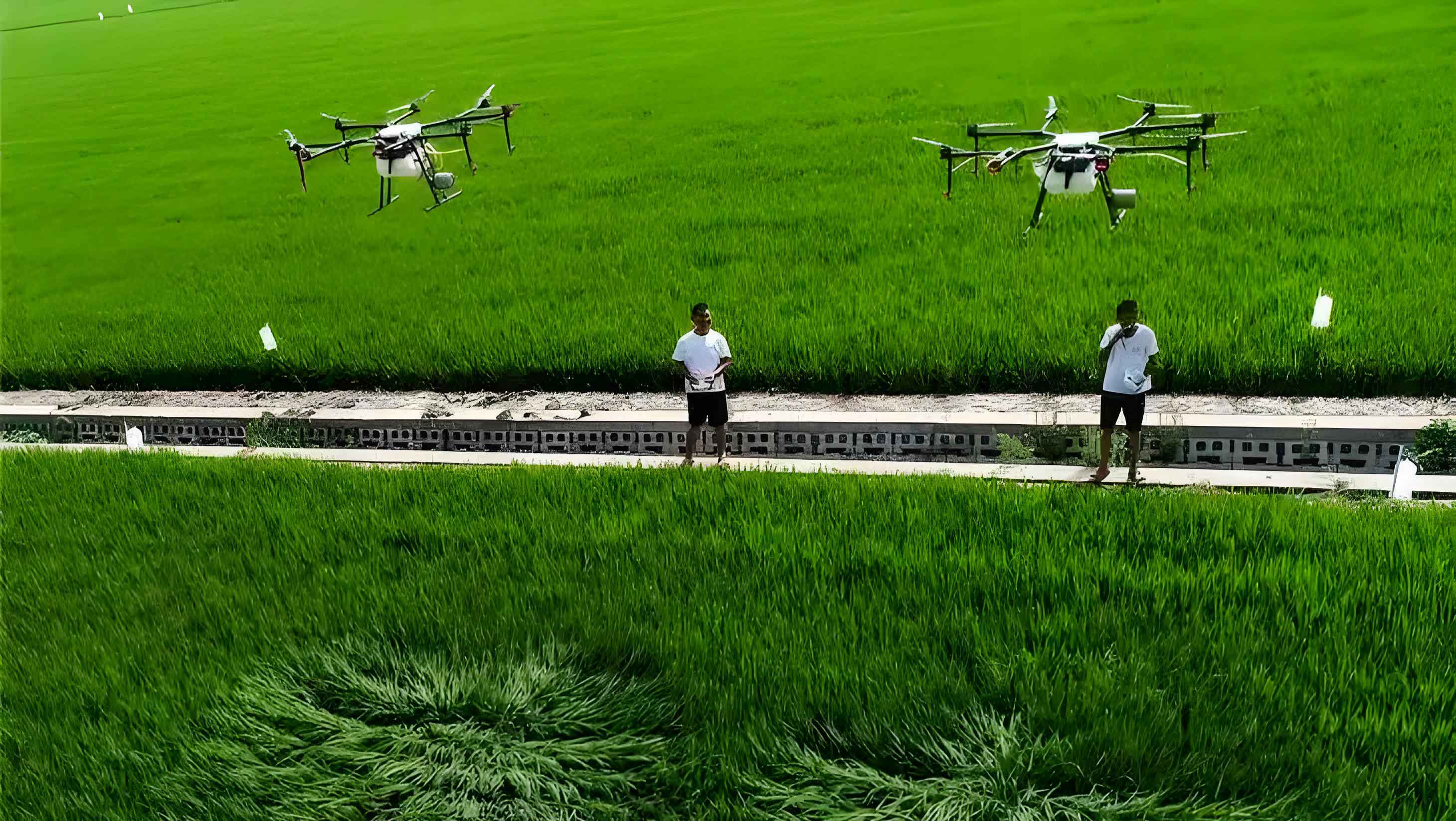
The proliferation of agricultural UAV units and their application scope has experienced exponential growth. Based on comprehensive industry surveys, the national operational footprint has reliably reached significant scales. The dominant platform type is the electric multi-rotor agricultural UAV, favored for its operational simplicity and cost-effectiveness, though electric and gasoline-powered single-rotor helicopters also hold specific market niches. The original application focus on paddy fields has broadened substantially to include major crops like wheat, corn, and cotton, demonstrating the versatility and widespread acceptance of this technology.
| Year | Estimated Fleet Size | Estimated Operational Area (Million Hectares * Passes) | Key Notes |
|---|---|---|---|
| 2017 | ~14,000 | ~6.67 | Rapid growth phase initiation. |
| 2018 | ~31,000 | ~20.00 | Entry into large-scale application phase. |
| Annual Growth | >120% | >200% | Indicating explosive market expansion. |
The expansion of the pilot workforce has progressed in lockstep with the hardware deployment. It is estimated that enterprise-based training programs certified approximately 20,000 new operators in 2018 alone, bringing the cumulative total to around 30,000. This one-to-one approximate ratio of certified pilots to active agricultural UAV units is crucial for safe and efficient operations. The training paradigm has shifted dramatically due to increased automation; modern, intelligent agricultural UAV systems require significantly less hands-on flight training compared to earlier manual-control models, lowering the barrier to entry.
Effective fleet management has become a cornerstone of regulatory and operational strategy. Policy directives emphasize the necessity for intelligent control platforms capable of remote, real-time monitoring and safety management. While leading manufacturers have developed proprietary systems, the lack of interoperability between these platforms poses challenges for service providers using multiple brands and for unified governmental oversight. Consequently, third-party cloud management systems have gained approval. A dedicated, neutral regulatory cloud platform for agricultural UAV operations is widely recognized as essential for standardized management, data aggregation, and service traceability.
| Cloud System ID | Name | Status / Focus |
|---|---|---|
| 01R1, 02R2, etc. | U-Cloud, U-Care, others | General-purpose UAV cloud systems. |
| 09 | Specific Agri-Cloud | Dedicated to a single manufacturer’s plant protection fleet. |
The standardization framework for agricultural UAV is being systematically constructed. The inaugural industry standard, focusing on quality evaluation, was pivotal in establishing baseline technical requirements for safety and performance, directly influencing subsidy qualification. To build a complete ecosystem, a suite of complementary group standards has been developed, covering terminology, technical testing, field application protocols, and management norms. These standards collectively guide production, operation, and service, driving innovation and enhancing the global competitiveness of the agricultural UAV industry.
| Standard Category | Example Content | Purpose |
|---|---|---|
| Technical Specification | Flight performance, spraying system metrics, safety features. | Ensure product reliability and efficacy. |
| Application Protocol | Operation quality assessment, pesticide use norms, safe操作规程. | Standardize field operations for optimal results and safety. |
| Management Norm | Operator requirements, pilot training specifications. | Regulate industry entities and human resources. |
Technological sophistication in agricultural UAV design has increased remarkably. The widespread integration of Real-Time Kinematic (RTK) positioning systems has become commonplace, enabling centimeter-level accuracy for precise swath alignment and significantly improved application uniformity. This can be quantified by the reduction in swath overlap error variance, $\sigma_{overlap}^2$. Intelligent features such as terrain-following flight and environmental perception for obstacle avoidance are now deployed in advanced models. Terrain-following maintains a constant spray height $H_{spray}$ above the crop canopy, often as low as 0.5 meters, optimizing droplet deposition. Obstacle avoidance systems enhance safety during autonomous operations.
The core function of chemical application has also seen major advances. Intelligent flow control synchronized with flight speed is now standard:
$$ Q_{actual}(t) = k \cdot v_{ground}(t) $$
where $Q_{actual}$ is the real-time flow rate and $v_{ground}$ is the ground speed, ensuring consistent spray volume per unit area. Research is advancing towards prescription map-based variable rate application (VRA) and canopy sensing-based VRA:
$$ Q_{prescription}(x,y) = f( Z_{map}(x,y) ) $$
$$ Q_{canopy}(t) = g( \rho_{sensor}(t) ) $$
where $Z_{map}$ is a spatially referenced need index and $\rho_{sensor}$ is a real-time canopy density measurement. Furthermore, extensive research on droplet transport, drift mitigation, and field efficacy has established that well-operated agricultural UAV systems can achieve control efficacy comparable to conventional ground equipment. The drift behavior can be modeled considering downwash airflow $V_{downwash}$ and meteorological conditions:
$$ D_{deposition}(r) = \int \Psi(Q, V_{downwash}, U_{wind}, \phi_{droplet}) \, dt $$
where $D_{deposition}$ is the deposition at distance $r$, and $\Psi$ represents the complex function of operational and environmental parameters.
A persistent challenge has been the availability of purpose-formulated pesticides for ultra-low volume (ULV) aerial application. Conventional formulations often require high dilution rates (e.g., 200-fold), whereas ULV application for agricultural UAV uses much lower dilution ratios (2-5 fold) or none. The registration of dedicated ULV formulations is accelerating but starts from a low base. Adjuvants that modify droplet properties to reduce drift and evaporation are critical for improving the performance of conventional chemicals in agricultural UAV applications, enhancing droplet deposition $D_{deposition}$ and biological efficacy $E_{bio}$.
| Agent Type | Typical Dilution Ratio | Primary Challenge in UAV Use | Mitigation Strategy |
|---|---|---|---|
| Conventional Formulation (WP, SC, etc.) | ~200:1 | Nozzle clogging, potential phytotoxicity, high drift risk. | Use of anti-drift adjuvants, careful parameter selection. |
| ULV Formulation (Registered) | ~2-5:1 or neat | Limited number of registered products. | Accelerated R&D and registration processes. |
To consolidate the growth and enhance the sector’s robustness, strategic development recommendations are proposed across several domains. Regarding pilot qualification, regulatory bodies should expedite the formulation of specific policies for agricultural UAV operators, clarifying certification requirements, standardizing training curricula, and accrediting training institutions. The curriculum must strongly emphasize agronomy and plant protection knowledge alongside flight operation to ensure scientifically sound applications.
For fleet management, industry associations, supported by authorities and enterprises, should promote the adoption of a unified, public regulatory cloud platform. This system would streamline management for all stakeholders, ensure operational safety, provide macro-level industry insights, and reduce the logistical and financial burden on end-users who operate diverse equipment.
In the realm of standardization, continuous attention to technological trends is necessary. Standards development organizations should prioritize the revision and creation of standards addressing emerging needs, such as for fully autonomous swarming systems or new sensor integration. Collaboration among different standards bodies is encouraged to avoid duplication and to construct a coherent, comprehensive standards framework for the agricultural UAV ecosystem.
For product innovation, manufacturers and research institutions must continue to push the boundaries of intelligence and autonomy, further simplifying operation while relentlessly pursuing higher application quality and demonstrable field efficacy. Research should deepen the understanding of spray physics in diverse crop and weather conditions to refine operational guidelines for the agricultural UAV.
Finally, concerning chemical solutions, agrochemical companies and researchers need to intensify efforts in developing and registering ULV-specific formulations. Concurrently, systematic screening and evaluation programs for compatible conventional pesticides and effective adjuvants are essential to guide current best practices in agricultural UAV spraying until a wider range of dedicated products becomes available.
In conclusion, the agricultural UAV industry is on a trajectory of robust expansion and technological deepening. Its role in enhancing labor productivity, ensuring food security, and promoting sustainable farming practices is already significant and continues to grow. By addressing the outlined areas for development—pilot training, unified management, standards evolution, technological innovation, and chemical adaptation—the sector can solidify its foundations and realize its full potential as a cornerstone of modern precision agriculture. The scientific and strategic development of agricultural UAV technology is paramount for improving application quality, reducing environmental impact, and safeguarding agricultural productivity.