
In my research, I focus on the problem of spectrum allocation and spectrum decision-making for multiple unmanned aerial vehicle drones, which I refer to as UAV drones, operating inside cognitive wireless networks. The rapid growth of wireless services, dense user devices, and dynamic spectrum environments has made static spectrum assignment increasingly inadequate. Cognitive radio provides a promising foundation because it allows secondary networks to sense, share, and reuse spectrum opportunities while protecting primary network users. When UAV drones are introduced as aerial base stations or aerial relays, the design space becomes richer but also more challenging, because spectrum scarcity, mixed interference, user density, fairness, and time-varying channel states all interact with one another.
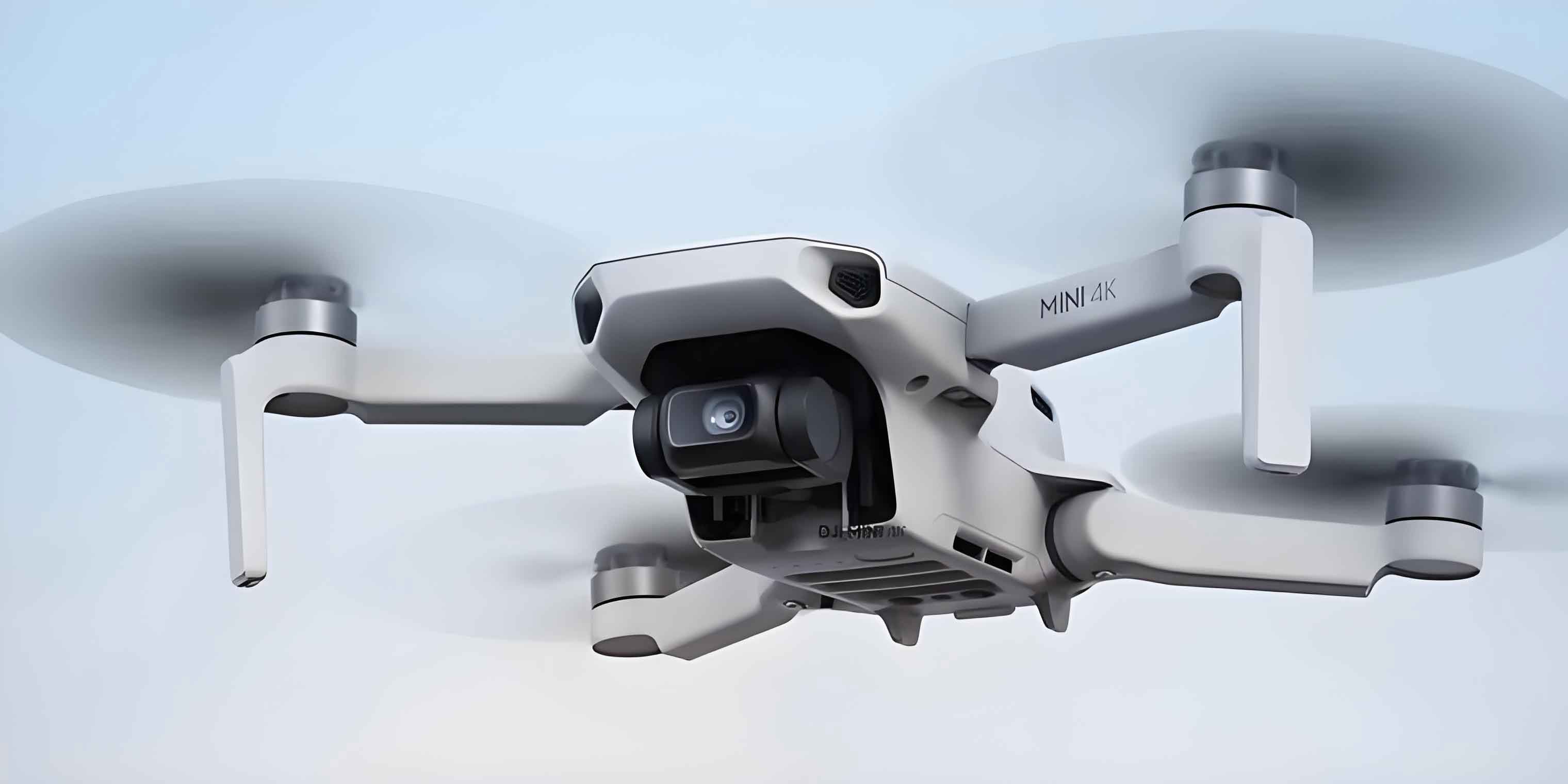
My work is organized around three representative scenarios. The first scenario considers mixed interference, including co-channel interference and adjacent-channel interference, in a multi-UAV drone assisted communication system. The second scenario considers high-density users, where UAV drones serve as aerial relays and bandwidth fairness becomes critical. The third scenario considers time-varying channel states, where primary network occupancy changes over time and UAV drones must learn dynamic spectrum access policies without complete prior information. Across all three scenarios, I use mathematical modeling, decomposition, heuristic methods, clustering, linear programming, and multi-agent reinforcement learning to improve spectrum efficiency, transmission rate, fairness, and robustness.
Research Background and Motivation
The motivation for my work comes from the contradiction between exploding wireless traffic and limited spectrum resources. Traditional static spectrum policies often leave authorized bands underutilized while unlicensed bands become congested. Cognitive radio networks solve part of this problem by allowing secondary users to access spectrum holes dynamically. However, in cognitive networks with multiple UAV drones, the problem becomes significantly harder. UAV drones move in three-dimensional space, their air-to-ground links may be line-of-sight or non-line-of-sight, and their transmissions can interfere with primary users. In addition, multiple UAV drones may reuse the same spectrum, causing mutual interference. If adjacent channels are not perfectly filtered, adjacent-channel interference further degrades performance.
I summarize the main challenges in the following table.
| Challenge | Description | Impact on UAV drones |
|---|---|---|
| Mixed interference | Co-channel and adjacent-channel interference coexist | Reduced signal-to-interference-plus-noise ratio and rate |
| High user density | Many ground users compete for limited bandwidth | Unfair allocation and low minimum throughput |
| Time-varying channels | Primary user occupancy changes over time | Difficulty in dynamic spectrum access and collision control |
| Spectrum scarcity | Authorized spectrum is limited and expensive | Need for reuse, sharing, and intelligent decision-making |
| Fairness requirements | Users expect balanced quality of service | Maximum sum rate may ignore weak users |
The key notation I use throughout my models is listed below.
| Symbol | Meaning |
|---|---|
| \(M\) | Number of UAV drones |
| \(K\) | Number of ground users |
| \(N\) | Number of available channels or subchannels |
| \(w_{m,k}\) | Binary association between UAV drone \(m\) and user \(k\) |
| \(a_{k,n}\) | Binary channel assignment between user \(k\) and channel \(n\) |
| \(p_{m,n}\) | Transmit power of UAV drone \(m\) on channel \(n\) |
| \(g_{m,k}\) | Channel gain from UAV drone \(m\) to user \(k\) |
| \(\gamma_k\) | Received signal-to-interference-plus-noise ratio of user \(k\) |
| \(T_k\) | Throughput of user \(k\) |
| \(B\) | Bandwidth |
Scenario One: Mixed Interference in Multi-UAV Drone Spectrum Allocation
In the first scenario, I consider a cognitive wireless network in which multiple UAV drones provide downlink communication service to ground users while a primary network operates nearby. The secondary network reuses spectrum in an underlay mode, so interference between the primary and secondary networks is unavoidable. I explicitly model both co-channel interference and adjacent-channel interference. Co-channel interference arises when primary and secondary transmissions use the same channel. Adjacent-channel interference arises when the receiver filter is imperfect and energy leaks from neighboring channels. My objective is to maximize the minimum signal-to-interference-plus-noise ratio among secondary users, which improves fairness while maintaining reliable communication.
Air-to-Ground Channel Model
I use an air-to-ground channel model that combines line-of-sight and non-line-of-sight propagation. For a UAV drone \(m\) and a ground user \(k\), the channel gain is
$$g_{m,k}=P_{\mathrm{LoS}}d_{U,m,k}^{-\alpha_u}+\eta P_{\mathrm{NLoS}}d_{U,m,k}^{-\alpha_u}.$$
The line-of-sight probability is modeled as
$$P_{\mathrm{LoS}}=\frac{1}{1+a\exp[-b(\theta-a)]},$$
where the elevation angle is
$$\theta=\frac{180}{\pi}\arctan\left(\frac{H}{d_{U,m,k}}\right).$$
Here, \(H\) is the UAV drone altitude, \(d_{U,m,k}\) is the distance between the UAV drone and the user, \(\alpha_u\) is the path loss exponent, and \(\eta\) is the non-line-of-sight attenuation factor. This model is important because UAV drones can exploit altitude and position to improve line-of-sight connectivity.
Interference and Rate Expressions
The received signal-to-interference-plus-noise ratio of user \(k\) served by UAV drone \(m\) on channel \(n\) is
$$\gamma_{m,k}=\frac{w_{m,k}a_{k,n}p_{m,n}g_{m,k}}{\sigma_n^2+I_{\mathrm{CCI}}+I_{\mathrm{ACI}}}.$$
The co-channel interference \(I_{\mathrm{CCI}}\) from the primary network is
$$I_{\mathrm{CCI}}=a_{k,n}p_m g_1,$$
where \(p_m\) is the primary transmitter power and \(g_1\) is the channel gain from the primary transmitter to the secondary user. The adjacent-channel interference \(I_{\mathrm{ACI}}\) is
$$I_{\mathrm{ACI}}=\sum_{n=1}^{N}\sum_{z=1,z\neq n}^{N}\sum_{j=1,j\neq k}^{K}a_{k,n}a_{j,z}p_{m,z}g_{m,k}\mu_{k,j},$$
where \(\mu_{k,j}\) represents the adjacent-channel interference coefficient between the channels selected by user \(k\) and user \(j\). This term captures the practical effect of imperfect filtering.
Joint Optimization Problem
I define the user association matrix \(\mathbf{W}=\{w_{m,k}\}\), the channel assignment matrix \(\mathbf{A}=\{a_{k,n}\}\), and the power allocation matrix \(\mathbf{P}=\{p_{m,n}\}\). The optimization problem is
$$\max_{\mathbf{W},\mathbf{A},\mathbf{P}}\min_k \gamma_k(\mathbf{W},\mathbf{A},\mathbf{P})$$
$$\text{s.t. } \sum_{m=1}^{M}w_{m,k}=1,\quad \forall k,$$
$$\sum_{n=1}^{N}a_{k,n}=1,\quad \forall k,$$
$$\sum_{k=1}^{K}w_{m,k}a_{k,n}\leq 1,\quad \forall m,n,$$
$$p_{m,n}\geq 0,\quad \forall m,n,$$
$$\sum_{n=1}^{N}\sum_{k=1}^{K}w_{m,k}a_{k,n}p_{m,n}\leq P_m^{\max},\quad \forall m,$$
$$\sum_{m=1}^{M}\sum_{n=1}^{N}w_{m,k}a_{k,n}p_{m,n}g_{m,n}\leq \delta,$$
$$w_{m,k}\in\{0,1\},\quad a_{k,n}\in\{0,1\}.$$
This is a mixed-integer nonlinear optimization problem. The binary variables make it non-convex, and the power variables are coupled with the channel assignment variables. Therefore, I decompose the problem into tractable subproblems.
Solution Strategy: Clustering, Genetic Algorithm, Particle Swarm, and Block Coordinate Descent
I first optimize the association between UAV drones and ground users by using a K-Means clustering method. Each cluster is served by one UAV drone, and the UAV drone position is updated to reduce the average distance to its associated users. The position update is
$$(X_{U,m}^*,Y_{U,m}^*)=\frac{1}{|\mathcal{C}_m|}\sum_{k\in\mathcal{C}_m}(X_k,Y_k),$$
where \(\mathcal{C}_m\) is the set of users in cluster \(m\). This step reduces path loss and improves the air-to-ground link quality.
After association, I optimize channel assignment while keeping power fixed. Because the channel assignment variables are binary, I use a genetic algorithm. The fitness function is the minimum user signal-to-interference-plus-noise ratio. The genetic algorithm performs selection, crossover, and mutation. The key operations are summarized below.
| Step | Operation | Purpose |
|---|---|---|
| Encoding | Represent \(\mathbf{A}\) as a binary vector | Convert channel assignment into a chromosome |
| Initialization | Generate a population of feasible assignments | Explore multiple allocation patterns |
| Crossover | Single-point crossover with probability \(p_c\) | Combine promising parent solutions |
| Mutation | Bit flip with probability \(p_m\) | Maintain diversity and avoid premature convergence |
| Selection | Roulette wheel selection | Keep high-fitness individuals |
Then I optimize power allocation while keeping channel assignment fixed. Since the power variables are continuous and the objective is still non-convex, I use particle swarm optimization. Each particle represents a candidate power vector. The velocity and position updates are
$$v_i^{(r+1)}=\omega v_i^{(r)}+c_1r_1(p_i^{\mathrm{best}}-x_i^{(r)})+c_2r_2(g^{\mathrm{best}}-x_i^{(r)}),$$
$$x_i^{(r+1)}=x_i^{(r)}+v_i^{(r+1)}.$$
Finally, I combine channel assignment and power allocation through block coordinate descent. At each iteration, I fix one block and optimize the other, alternating until convergence. The overall algorithm is
| Algorithm 1: Joint Spectrum Resource Optimization |
|---|
| Input: \(M\), \(K\), \(N\), user coordinates, and primary network parameters |
| 1. Initialize feasible \(\mathbf{A}^{(0)}\) and \(\mathbf{P}^{(0)}\) |
| 2. Deploy UAV drones using K-Means clustering |
| 3. Repeat |
| 4. Update \(\mathbf{A}^{(r)}\) using the genetic algorithm with \(\mathbf{P}^{(r)}\) fixed |
| 5. Update \(\mathbf{P}^{(r)}\) using particle swarm optimization with \(\mathbf{A}^{(r)}\) fixed |
| 6. Set \(r=r+1\) |
| 7. Until convergence or maximum iterations |
| Output: optimized \(\mathbf{W}\), \(\mathbf{A}\), and \(\mathbf{P}\) |
Simulation Observations for Mixed Interference
I evaluated the proposed method with different numbers of UAV drones and ground users. The simulation area was large, and the UAV drones operated at a fixed altitude. The primary network was placed outside the secondary area, but its interference was still significant. The adjacent-channel interference coefficient was set according to practical measurement ranges. The key parameter settings are summarized below.
| Parameter | Value |
|---|---|
| Number of UAV drones \(M\) | 5 |
| Number of secondary users \(K\) | 20 |
| UAV drone altitude \(H\) | 100 m |
| Path loss exponent \(\alpha_u\) | 3 |
| Primary base station location | (700, 700) |
| Background noise \(N_0\) | -90 dBm |
| Primary transmit power \(P_m\) | 5 W |
| UAV drone maximum power \(P_m^{\max}\) | 1 W |
| Number of channels \(N\) | 20 |
The results showed that increasing the number of UAV drones improves the minimum signal-to-interference-plus-noise ratio, because more spatial degrees of freedom become available. However, increasing the number of ground users reduces the minimum signal-to-interference-plus-noise ratio, because more users compete for the same spectrum and adjacent-channel interference becomes stronger. The genetic algorithm with a larger population converged faster and achieved a higher minimum signal-to-interference-plus-noise ratio than a smaller population. The joint optimization method outperformed random channel assignment and fixed channel assignment, especially when the number of users was moderate. When the receiver filter was ideal, the performance was better than in the adjacent-channel interference case, which confirms that adjacent-channel interference is a practical limiting factor.
Scenario Two: High-Density Users and Multi-UAV Drone Relay Spectrum Allocation
In the second scenario, I study a cognitive wireless network with high-density ground users. Urban buildings, terrain, and other obstacles may block direct links between a temporary node and ground users. Therefore, I deploy multiple UAV drones as aerial relays. The temporary node transmits to UAV drones, and each UAV drone forwards data to its associated ground users. The secondary network shares spectrum with a primary cellular network in an underlay mode. My objective is to maximize the minimum throughput among secondary users while respecting primary network interference constraints and backhaul limitations. This objective emphasizes fairness in high-density scenarios.
Relay System Model
I denote the temporary node as \(g\), the relay UAV drones as \(m\in\{1,\dots,M\}\), and the ground users as \(k\in\{1,\dots,K\}\). The channel gain from UAV drone \(m\) to user \(k\) follows the same air-to-ground model:
$$g_{m,k}=P_{\mathrm{NLoS}}d_{U,m,k}^{-\alpha_u}+\eta P_{\mathrm{LoS}}d_{U,m,k}^{-\alpha_u}.$$
The signal-to-interference-plus-noise ratio of user \(k\) served by UAV drone \(m\) is
$$\gamma_{m,k}=\frac{w_{m,k}p_m g_{m,k}}{\sigma_n^2+I_{\mathrm{CCI}}}.$$
The co-channel interference from the primary base station \(G\) is
$$I_{\mathrm{CCI}}=p_G g_1,$$
where \(p_G\) is the primary base station transmit power and \(g_1\) is the channel gain from the primary base station to user \(k\). The throughput of user \(k\) is
$$T_k=W_k\log_2(1+\gamma_{m,k}),$$
where \(W_k\) is the bandwidth allocated to user \(k\). The relay UAV drone \(m\) has bandwidth \(W_{m,\mathrm{relay}}\), and the temporary node has total bandwidth \(W_g\). The constraints are
$$W_{m,\mathrm{relay}}\geq W_{\min},$$
$$W_k\geq W_{\min,\mathrm{user}},$$
$$\sum_{m=1}^{M}W_{m,\mathrm{relay}}=W_g,$$
$$\sum_{k=1}^{K}w_{m,k}W_k=W_{m,\mathrm{relay}},$$
$$\sum_{k=1}^{K}w_{m,k}T_k\leq T_m,$$
$$\sum_{m=1}^{M}T_m\leq \tau,$$
$$p_m g_{m,k}^*\leq \delta.$$
The last constraint protects the primary user from excessive interference. The backhaul constraint \(\sum_m T_m\leq \tau\) captures the fact that the relay network cannot forward more data than the backhaul link can support.
Problem Formulation
The joint optimization problem is
$$\max_{\mathbf{W},\mathbf{W}_{\mathrm{relay}}}\min_k T_k$$
$$\text{s.t. } \sum_{m=1}^{M}w_{m,k}=1,\quad \forall k,$$
$$W_{m,\mathrm{relay}}\geq W_{\min},\quad \forall m,$$
$$W_k\geq W_{\min,\mathrm{user}},\quad \forall k,$$
$$\sum_{m=1}^{M}W_{m,\mathrm{relay}}=W_g,$$
$$\sum_{k=1}^{K}w_{m,k}W_k=W_{m,\mathrm{relay}},\quad \forall m,$$
$$\sum_{k=1}^{K}w_{m,k}T_k\leq T_m,\quad \forall m,$$
$$\sum_{m=1}^{M}T_m\leq \tau,$$
$$p_m g_{m,k}^*\leq \delta,\quad \forall m.$$
This problem is also mixed-integer because of the association variables. I solve it in two stages: first, I deploy the UAV drones using K-Means clustering; second, I allocate bandwidth using a linear precision algorithm that repeatedly increases the bandwidth of the minimum-throughput user.
K-Means Deployment for Relay UAV Drones
I use K-Means to divide ground users into \(M\) clusters. Each cluster is served by one relay UAV drone. The cluster center is updated as the mean position of the users in the cluster. The distance measure is
$$d_{k,m}=\sqrt{(X_k-X_{U,m})^2+(Y_k-Y_{U,m})^2}.$$
The algorithm repeats until the cluster centers change by less than a threshold \(\epsilon\):
$$\Delta=\sqrt{\sum_{m=1}^{M}\left[(X_{U,m}^*-X_{U,m})^2+(Y_{U,m}^*-Y_{U,m})^2\right]}<\epsilon.$$
After clustering, I adjust each UAV drone position to satisfy the primary interference constraint. If the interference toward the primary user exceeds the threshold, I move the UAV drone away from the primary user until the constraint is met.
Linear Precision Bandwidth Allocation
I initialize each relay UAV drone with the minimum bandwidth and distribute it equally among its associated users. Then I compute the initial throughput of every user. At each iteration, I find the minimum throughput \(T_{\min}\) and the second minimum throughput \(T_M\). I increase the throughput of the minimum-throughput users by an amount
$$\Delta T=\beta(T_M-T_{\min}),$$
where \(\beta\) is an adjustment coefficient. To determine the required additional bandwidth, I use the Shannon formula. The total additional throughput is
$$\Delta T\sum_{m=1}^{M}W_m^+=\sum_{m=1}^{M}W_m^+\log_2(1+\gamma_{g,m}),$$
where \(\gamma_{g,m}\) is the signal-to-noise ratio between the temporary node and UAV drone \(m\). The adjustment coefficient is computed as
$$\beta=\min\left(1,\frac{W_g-\sum_{m=1}^{M}W_m}{\sum_{m=1}^{M}W_m^+}\right).$$
If \(\beta<0\), the total bandwidth demand exceeds the available bandwidth, so I stop and keep the previous allocation. If the total throughput exceeds the backhaul limit \(\tau\), I reduce the bandwidth of the highest-throughput users until the total throughput is below the backhaul limit. This preserves fairness while respecting the relay bottleneck.
| Algorithm 2: Clustering and Bandwidth Allocation for Relay UAV Drones |
|---|
| Input: \(K\), \(M\), user positions, backhaul limit \(\tau\) |
| 1. Initialize each relay UAV drone with minimum bandwidth |
| 2. Compute each user’s throughput \(T_k^0\) |
| 3. Repeat |
| 4. Find \(T_{\min}\) and \(T_M\) |
| 5. Increase the throughput of minimum-throughput users by \(\beta(T_M-T_{\min})\) |
| 6. Compute \(\beta\) from the available bandwidth and Shannon capacity |
| 7. If \(\beta<0\), stop |
| 8. If total throughput exceeds \(\tau\), reduce the highest-throughput users |
| 9. Until convergence |
| Output: bandwidth allocation and throughput vector |
Simulation Observations for High-Density Users
I simulated a dense deployment with \(M=5\) relay UAV drones and \(K=100\) ground users. The UAV drones flew at an altitude of \(100\) m. The primary base station was located outside the secondary area. The parameters are summarized below.
| Parameter | Value |
|---|---|
| Number of relay UAV drones \(M\) | 5 |
| Number of ground users \(K\) | 100 |
| UAV drone altitude \(H\) | 100 m |
| Path loss exponent \(\alpha_u\) | 3 |
| Primary base station location | (700, 700) |
| Background noise \(N_0\) | -90 dBm |
| Primary transmit power \(P_m\) | 5 W |
| UAV drone transmit power \(P_m^{\max}\) | 1 W |
The results showed that the proposed method significantly improved the throughput of low-throughput users. Before optimization, many users at the edge of clusters suffered from weak links and low bandwidth. After optimization, those users received more bandwidth, so the minimum throughput increased. Some high-throughput users experienced a slight reduction because the total throughput had to remain below the backhaul limit. This tradeoff is acceptable because the overall fairness improved. Increasing the total available bandwidth improved the minimum throughput, but also increased the number of iterations required for convergence. The primary interference threshold affected UAV drone placement: a stricter threshold forced UAV drones farther from the primary user, which reduced the achievable throughput but protected primary communication. The proposed method outperformed genetic algorithm and particle swarm optimization in terms of minimum user throughput, because it explicitly targets the weakest users and combines this with K-Means deployment. The particle swarm method converged faster initially, but its final fairness was lower. The genetic algorithm explored a larger space but consumed more computation and still produced a lower minimum throughput.
Scenario Three: Time-Varying Channels and Multi-UAV Drone Spectrum Decision-Making
In the third scenario, I consider a cognitive wireless network where the primary network channel occupancy changes over time. Multiple UAV drones provide downlink service to a secondary base station using frequency division multiple access. Each UAV drone selects one channel per time slot. Because the primary user activity is time-varying, the available spectrum holes change dynamically. The secondary UAV drones must decide which channel to access based only on partial observations. I formulate this as a partially observable Markov decision process and solve it with multi-agent proximal policy optimization. I also introduce a temporary memory mechanism that retains previous sensing results and uses them to improve current channel selection.
Time-Varying Channel Model
I denote the set of UAV drones as \(\mathcal{M}=\{1,\dots,M\}\), the set of channels as \(\mathcal{N}=\{1,\dots,N\}\), and the set of time slots as \(\mathcal{T}=\{1,\dots,T\}\). The channel state in time slot \(t\) is
$$X_{n,t}=
\begin{cases}
+1, & \text{if channel } n \text{ is idle},\\
-1, & \text{if channel } n \text{ is busy}.
\end{cases}$$
The channel selection indicator is
$$\phi_{m,n,t}=
\begin{cases}
1, & \text{if UAV drone } m \text{ selects channel } n,\\
0, & \text{otherwise}.
\end{cases}$$
The local observation of UAV drone \(m\) is
$$O_{m,n,t}=
\begin{cases}
X_{n,t}, & \text{if } \phi_{m,n,t}=1,\\
0, & \text{if } \phi_{m,n,t}=0.
\end{cases}$$
Thus, each UAV drone only observes the state of the channel it selects. Unselected channels are treated as unknown. The received signal-to-interference-plus-noise ratio at the secondary base station for UAV drone \(m\) on channel \(n\) is
$$\gamma_{m}(n,t)=\frac{p_m g_{m,g}}{\sum_{i\in\mathcal{M},i\neq m}p_i g_{i,g}\phi_{i,n,t}+p_G g_{G,g}\chi(n,t)+\sigma^2},$$
where \(p_m\) is the UAV drone transmit power, \(g_{m,g}\) is the channel gain from UAV drone \(m\) to the secondary base station, \(p_G\) is the primary base station power, \(g_{G,g}\) is the channel gain from the primary base station to the secondary base station, and \(\chi(n,t)\) indicates whether the primary user occupies channel \(n\). The achievable rate is
$$R_m(n,t)=B\log_2\left(1+\gamma_m(n,t)\right).$$
POMDP Formulation
I model the dynamic spectrum decision process as a POMDP with tuple \((\mathcal{S},\mathcal{O},\mathcal{A},P,r,\gamma)\). The global state is
$$s_t=\left[o_t^1,o_t^2,\dots,o_t^M\right],$$
where \(o_t^m\) is the local observation of UAV drone \(m\). The action of UAV drone \(m\) is the selected channel \(a_t^m\in\mathcal{N}\). The joint action is
$$a_t=\left[a_t^1,a_t^2,\dots,a_t^M\right].$$
The reward is the sum rate of all UAV drones:
$$r_t=\sum_{m=1}^{M}\sum_{n=1}^{N}R_m(n,t).$$
The objective is to maximize the expected cumulative discounted reward:
$$J(\theta)=\mathbb{E}\left[\sum_{t=0}^{T}\gamma^t r_t\right],\quad 0<\gamma<1.$$
Multi-Agent Proximal Policy Optimization
I use MAPPO because it is a centralized-training and decentralized-execution method. Each UAV drone has an actor network \(\pi_{\theta_m}\) and a critic network \(V_{\phi_m}\). The actor generates a channel selection policy from the local observation. The critic estimates the value function from the global state. The actor loss is
$$L^{\mathrm{actor}}(\theta)=\frac{1}{DM}\sum_{i=1}^{D}\sum_{m=1}^{M}\min\left(\rho_i^m A_i^m,\mathrm{clip}(\rho_i^m,1-\epsilon,1+\epsilon)A_i^m\right),$$
where
$$\rho_i^m=\frac{\pi_{\theta_m}(a_i^m|o_i^m)}{\pi_{\theta_m^{\mathrm{old}}}(a_i^m|o_i^m)}.$$
The advantage is computed using generalized advantage estimation:
$$A_i^m=\sum_{l=0}^{\infty}(\gamma\lambda)^l\delta_{i+l}^m,$$
$$\delta_i^m=r_i+\gamma V_{\phi_m}(s_{i+1})-V_{\phi_m}(s_i).$$
The critic loss is
$$L^{\mathrm{critic}}(\phi)=\frac{1}{DM}\sum_{i=1}^{D}\sum_{m=1}^{M}\left(V_{\phi_m}(s_i)-\hat{R}_i\right)^2,$$
where \(\hat{R}_i\) is the discounted return. The parameters are updated by gradient descent:
$$\theta_m\leftarrow \theta_m+\alpha_a\nabla_{\theta_m}L^{\mathrm{actor}}(\theta),$$
$$\phi_m\leftarrow \phi_m-\alpha_c\nabla_{\phi_m}L^{\mathrm{critic}}(\phi).$$
Temporary Memory Mechanism
Because the channel state is time-varying, the current observation alone may not be sufficient for accurate spectrum decision-making. I introduce a temporary memory mechanism that stores the previous \(L\) sensing results. The memory-augmented observation is
$$\tilde{o}_t^m=\left[o_t^m,o_{t-1}^m,\dots,o_{t-L+1}^m\right].$$
The actor network then selects the current channel according to
$$a_t^m\sim\pi_{\theta_m}\left(a_t^m|\tilde{o}_t^m\right).$$
This mechanism allows each UAV drone to infer the primary user’s channel switching pattern and reduces collisions. It is especially useful when the primary network follows a round-robin or probabilistic channel switching process.
| Algorithm 3: MAPPO-Based Spectrum Decision for UAV Drones |
|---|
| Input: learning rates \(\alpha_a,\alpha_c\), discount \(\gamma\), clip \(\epsilon\), GAE parameter \(\lambda\), number of channels \(N\), number of UAV drones \(M\) |
| 1. Initialize actor and critic networks for each UAV drone |
| 2. For each episode |
| 3. Obtain initial observations |
| 4. For each time step |
| 5. For each UAV drone |
| 6. Measure received signal strength and form local observation |
| 7. Select channel using actor network with temporary memory |
| 8. Evaluate global state with critic network |
| 9. End for |
| 10. Compute team reward and store transition |
| 11. End for |
| 12. Compute advantages with GAE |
| 13. Update actor and critic networks |
| 14. Clear experience buffer |
| 15. End for |
| Output: trained spectrum decision policies for all UAV drones |
Simulation Observations for Time-Varying Channels
I simulated a cognitive network with 16 channels, a secondary base station at the origin, and a primary base station far away. The number of idle channels changed over time. I varied the total number of channels and the number of UAV drones. The key parameters are listed below.
| Parameter | Value |
|---|---|
| Secondary base station location | (0, 0) |
| Primary base station location | (7000, 3500) |
| Number of channels \(N\) | 16 |
| Channel bandwidth \(B\) | 1 MHz |
| UAV drone power \(p_m\) | 23 dBm |
| Primary base station power \(p_G\) | 60 dBm |
| Noise power spectral density \(\sigma^2\) | -100 dBm/MHz |
| GAE parameter \(\lambda\) | 0.95 |
| Discount factor \(\gamma\) | 0.99 |
| Clip parameter \(\epsilon\) | 0.2 |
| Actor and critic learning rates | 5e-4 |
The results showed that the reward increased over iterations and converged after approximately 600 iterations. When the total number of channels was small, UAV drones initially experienced more collisions and lower rewards because fewer idle channels were available. As training progressed, the MAPPO agents learned to avoid busy channels and to coordinate their selections, so the reward approached the same level as in scenarios with more channels. The number of spectrum conflicts first increased and then decreased. This reflects the exploration phase of reinforcement learning: early in training, agents try different channels and collide more often; later, they exploit learned policies and reduce conflicts. A larger number of idle channels reduced the average number of collisions, because UAV drones had more choices. When the number of UAV drones exceeded the number of idle channels, total throughput decreased because multiple UAV drones shared the same channel, increasing co-channel interference. The temporary memory mechanism improved performance by allowing agents to use previous sensing results, which helped them track the primary user’s switching behavior. Overall, the proposed MAPPO-based method reduced spectrum conflicts to fewer than 10 per episode after convergence and maintained high secondary network throughput even without full prior information.
Comparative Synthesis of the Three Scenarios
To clarify the relationship among the three scenarios, I compare their models, objectives, constraints, and solution methods in the following table.
| Scenario | Network Role of UAV Drones | Main Interference | Objective | Key Solution Method |
|---|---|---|---|---|
| Mixed interference | Aerial base stations | Co-channel and adjacent-channel interference | Maximize minimum SINR | K-Means, genetic algorithm, particle swarm, block coordinate descent |
| High-density users | Aerial relays | Primary-secondary co-channel interference and backhaul bottleneck | Maximize minimum throughput | K-Means and linear precision bandwidth allocation |
| Time-varying channels | Secondary network transmitters | Dynamic primary user occupancy and mutual UAV drone interference | Maximize cumulative sum rate and reduce collisions | MAPPO with temporary memory |
I also compare the performance tradeoffs among the proposed methods.
| Method | Convergence Speed | Fairness | Spectrum Efficiency | Robustness to Dynamics |
|---|---|---|---|---|
| Genetic algorithm for channel assignment | Moderate | Good when combined with power optimization | High | Limited in time-varying channels |
| Particle swarm for power allocation | Fast | Moderate | High | Limited in discrete decisions |
| Block coordinate descent | Moderate | High | High | Good for static or slow-varying environments |
| K-Means with linear precision allocation | Moderate | Very high | Moderate to high | Good for high-density static users |
| MAPPO with temporary memory | Slow initially, then stable | High through team reward | High after convergence | Excellent for time-varying channels |
Across all scenarios, I observed that the joint consideration of physical layer variables and network layer decisions is essential. For example, power allocation alone cannot compensate for poor channel assignment, and channel assignment alone cannot guarantee fairness when user density is high. Similarly, in time-varying environments, static optimization cannot adapt to primary user activity. The proposed methods address these issues by decomposing the original problems into smaller subproblems, using domain-specific algorithms, and exploiting learning-based decision-making when prior information is unavailable.
Key Mathematical Insights
The following equations summarize the main optimization structures I used.
For mixed interference, the minimum SINR maximization is
$$\max_{\mathbf{W},\mathbf{A},\mathbf{P}}\min_k \frac{w_{m,k}a_{k,n}p_{m,n}g_{m,k}}{\sigma_n^2+I_{\mathrm{CCI}}+I_{\mathrm{ACI}}}.$$
For high-density users, the minimum throughput maximization is
$$\max_{\mathbf{W},\mathbf{W}_{\mathrm{relay}}}\min_k W_k\log_2\left(1+\frac{w_{m,k}p_m g_{m,k}}{\sigma_n^2+I_{\mathrm{CCI}}}\right).$$
For time-varying channels, the cumulative reward maximization is
$$\max_{\theta}\mathbb{E}\left[\sum_{t=0}^{T}\gamma^t\sum_{m=1}^{M}\sum_{n=1}^{N}B\log_2\left(1+\gamma_m(n,t)\right)\right].$$
These three formulations share a common theme: the variables are coupled, the feasible sets are constrained, and the objectives require balancing efficiency and fairness. My approach is to exploit structure. In the first scenario, the structure comes from the separation between association, channel assignment, and power control. In the second scenario, the structure comes from clustering and the linear relationship between bandwidth and throughput. In the third scenario, the structure comes from the Markov property and the centralized critic in multi-agent reinforcement learning.
Implications for Cognitive Network Design
My findings have several implications. First, adjacent-channel interference should not be ignored in cognitive radio networks with UAV drones, because imperfect filters are common and can significantly reduce the minimum user rate. Second, fairness-oriented objectives such as maximizing the minimum SINR or minimum throughput are more suitable for dense user scenarios than sum-rate maximization, because they prevent weak users from being starved. Third, dynamic spectrum decision-making requires learning-based methods when the primary user activity is unknown. The MAPPO method with temporary memory provides a practical way to handle partial observability. Fourth, UAV drone deployment and spectrum allocation are tightly coupled. A good deployment reduces path loss and interference, which in turn makes spectrum allocation easier. Conversely, a poor deployment may make it impossible to satisfy primary interference constraints.
Conclusion and Future Directions
In this work, I studied spectrum allocation and decision-making for multiple UAV drones in cognitive wireless networks. I addressed three important scenarios: mixed interference, high-density users, and time-varying channels. For mixed interference, I proposed a joint optimization method that combines K-Means clustering, genetic algorithm for channel assignment, particle swarm optimization for power allocation, and block coordinate descent for alternating optimization. For high-density users, I proposed a relay deployment and bandwidth allocation method based on K-Means clustering and linear precision allocation, with the objective of maximizing the minimum user throughput under primary interference and backhaul constraints. For time-varying channels, I proposed a MAPPO-based spectrum decision method with a temporary memory mechanism, which enables UAV drones to learn dynamic access policies from partial observations. The simulation results showed improvements in minimum SINR, minimum throughput, fairness, convergence, and collision reduction.
In future work, I plan to extend the current models in three directions. First, I will consider the tradeoff between resource consumption and mission benefit. UAV drones consume energy, and their deployment and transmission decisions affect mission duration. I will introduce an energy consumption coefficient and formulate a comprehensive objective that balances throughput and energy cost. Second, I will incorporate three-dimensional trajectory optimization into spectrum decision-making. The current work focuses on spectrum decisions, but the spatial position of each UAV drone affects channel gain, interference, and primary user protection. I will jointly optimize trajectory and channel selection over time. Third, I will study defense against external malicious interference. Cognitive networks with UAV drones may face jamming and adversarial spectrum attacks. I will develop anti-jamming spectrum allocation methods that combine reinforcement learning, game theory, and robust optimization. These extensions will make the proposed framework more practical for real-world cognitive networks with multiple UAV drones.
| Future Direction | Research Question | Potential Method |
|---|---|---|
| Energy-aware spectrum allocation | How to balance throughput and UAV drone energy consumption? | Multi-objective optimization and weighted reward design |
| 3D trajectory and spectrum co-design | How does UAV drone position affect dynamic spectrum decisions? | Deep reinforcement learning with continuous action space |
| Anti-jamming spectrum access | How can UAV drones resist external malicious interference? | Robust reinforcement learning and game theory |
| Large-scale network scalability | How to reduce complexity when the number of UAV drones is large? | Federated learning and hierarchical control |
Overall, my research shows that cognitive radio and multi-UAV drone cooperation can significantly improve spectrum utilization and communication fairness. By combining optimization theory, clustering, heuristic search, and multi-agent reinforcement learning, I provide a set of methods that address different practical challenges in cognitive wireless networks. I believe these methods can support future aerial communication systems, emergency networks, dense urban coverage, and dynamic spectrum sharing scenarios in which UAV drones play a central role.