
In the face of increasing resource pressures, traditional agricultural production models struggle to meet market demands. A rapid, efficient, and precise emerging technology—the agricultural UAV—has become a “new engine” for agricultural development. From my perspective as a researcher and advocate in this field, I will delve into how agricultural UAVs leverage digital technologies to empower the transformation and upgrading of modern agriculture. This involves an in-depth exploration of flight control systems, sensor technologies, and image recognition algorithms that enhance the intelligence and autonomy of agricultural UAVs, enabling more precise plant protection operations. Furthermore, I emphasize the need to engage with relevant authorities to promote the formulation and improvement of regulations, ensuring the legal use of agricultural UAVs. By aligning with market needs, we can explore service models tailored to different regions and crops, offering customized solutions to gain market and user acceptance. A critical focus is on strengthening the cultivation and introduction of professionals in agricultural UAV-related fields to drive technological innovation and application. Through continuous exploration and practice, we aim to provide efficient solutions for agricultural production and foster the development and adoption of agricultural UAV technology.
The integration of digital technologies into agricultural UAVs represents a paradigm shift in farming practices. In this article, I will analyze the advantages, current status, bottlenecks, and promotion pathways for digital-enabled agricultural UAVs, incorporating tables and formulas to summarize key points. The goal is to present a comprehensive guide that underscores the transformative potential of agricultural UAVs in achieving sustainable agriculture.
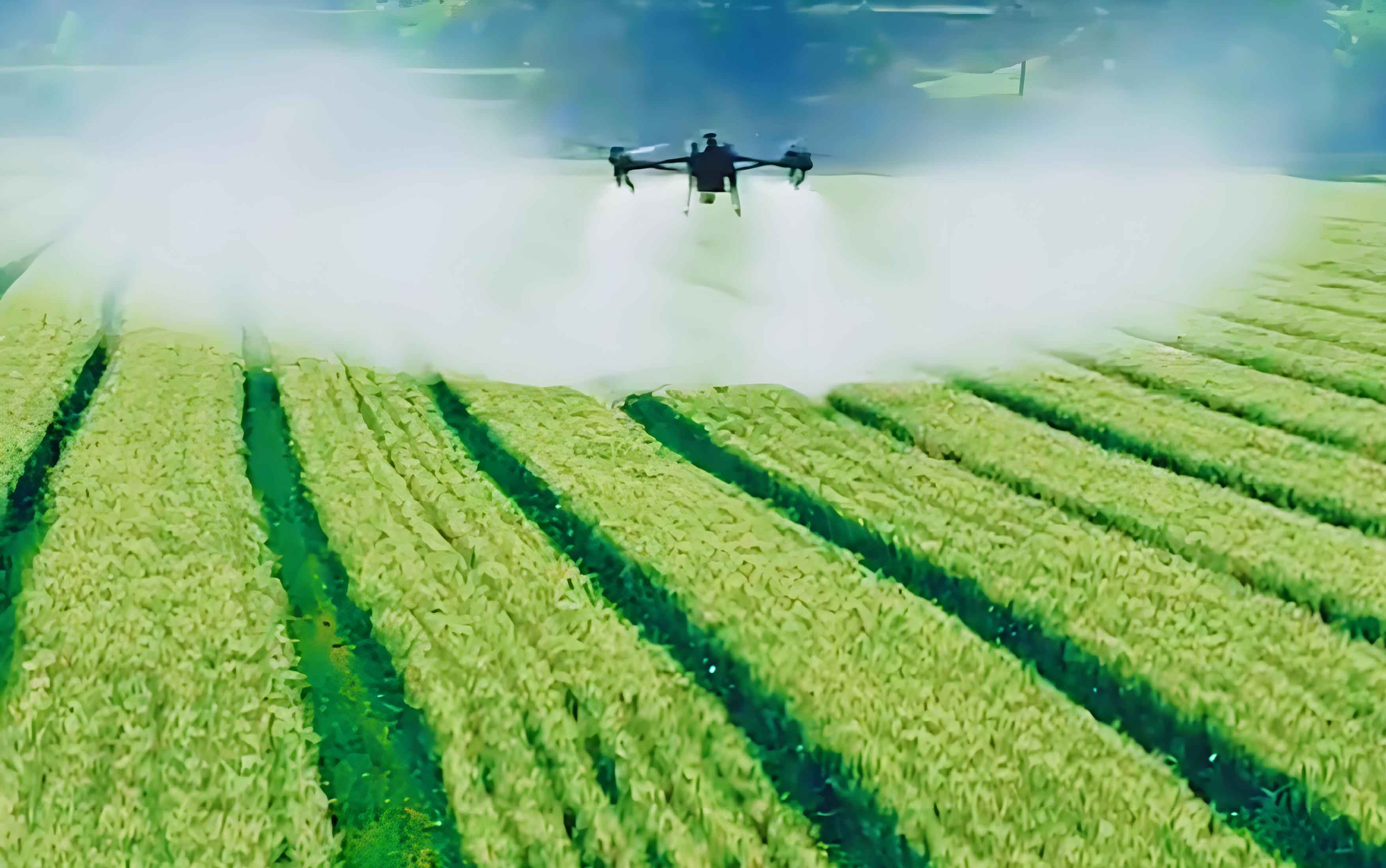
Agricultural UAVs, or unmanned aerial vehicles, are revolutionizing plant protection by leveraging digital tools such as GPS, IoT, and AI. As I examine their role, it becomes clear that these devices are not merely tools but integral components of a smart agricultural ecosystem. The core of this transformation lies in the digital empowerment of agricultural UAVs, which enhances their capability to perform tasks autonomously and efficiently.
Advantages of Digital-Enabled Agricultural UAVs
Digital-enabled agricultural UAVs offer multiple benefits that address critical challenges in modern agriculture. From my analysis, these advantages can be categorized into labor savings, cost reduction, and safety improvements. Traditional plant protection operations require significant manual labor, often involving farmers operating sprayers in fields for extended periods. In contrast, agricultural UAVs automate spraying through autonomous flight and precise control, drastically reducing human effort and increasing operational efficiency.
To quantify these benefits, consider the following table comparing traditional methods with agricultural UAVs:
| Aspect | Traditional Plant Protection | Digital-Enabled Agricultural UAV |
|---|---|---|
| Labor Input | High: Requires multiple workers for spraying | Low: Automated operation with minimal supervision |
| Cost per Hectare | $50-$100 (including labor and chemical waste) | $20-$40 (optimized chemical usage and reduced labor) |
| Safety Risks | High: Exposure to toxic chemicals and physical strain | Low: Remote operation minimizes direct contact |
| Precision | Moderate: Uniform spraying often leads to over-application | High: Targeted spraying based on sensor data reduces waste |
Moreover, the precision of agricultural UAVs can be mathematically expressed through spraying efficiency formulas. For instance, the effective coverage area \(A_e\) of an agricultural UAV can be modeled as:
$$A_e = \frac{V \times \rho \times \eta}{d}$$
where \(V\) is the spray volume, \(\rho\) is the chemical concentration, \(\eta\) is the nozzle efficiency, and \(d\) is the droplet density. This formula highlights how digital control optimizes each parameter, enhancing the overall performance of the agricultural UAV.
In terms of safety, agricultural UAVs eliminate the need for farmers to enter fields during spraying, thereby reducing health hazards. This aligns with global trends toward sustainable and eco-friendly farming practices, where the agricultural UAV serves as a key enabler.
Current Status of Digital-Enabled Agricultural UAV Applications
The adoption of digital-enabled agricultural UAVs has gained momentum, driven by technological advancements and growing awareness. From my observations, there is a solid foundation of recognition among stakeholders, including farmers, researchers, and policymakers. Society increasingly acknowledges the limitations of traditional methods, leading to greater acceptance of innovative technologies like the agricultural UAV.
Platform and model diversity have expanded significantly. Initially, agricultural UAVs were limited to basic spraying functions, but now they incorporate multifunctional capabilities such as seeding, fertilization, field surveying, pest identification, and crop monitoring. This evolution is supported by advancements in AI and big data, enabling agricultural UAVs to perform complex tasks autonomously. The table below summarizes the key features of popular agricultural UAV models:
| Model Type | Key Features | Typical Applications | Digital Integration Level |
|---|---|---|---|
| Multi-rotor UAV | High maneuverability, precise hovering | Spot spraying, small-scale fields | High: Integrated GPS and AI for path planning |
| Fixed-wing UAV | Long flight time, large coverage area | Large-scale crop monitoring and spraying | Medium: Relies on pre-programmed routes |
| Hybrid UAV | Combines VTOL and forward flight | Versatile operations in diverse terrains | High: Advanced sensors and real-time data processing |
Government support has also intensified. Authorities at various levels have introduced policies to promote agricultural UAVs, addressing issues like labor shortages and environmental sustainability. These policies include subsidies for purchasing agricultural UAVs, funding for R&D, and streamlined regulations for flight operations. This institutional backing is crucial for scaling the use of agricultural UAVs across different regions.
However, the effectiveness of these agricultural UAVs depends on digital infrastructure. For example, the integration of 5G networks enhances real-time data transmission, allowing agricultural UAVs to adjust operations based on live field conditions. This connectivity is a cornerstone of the digital empowerment of agricultural UAVs.
Bottlenecks in Promoting Agricultural UAVs
Despite the progress, several bottlenecks hinder the widespread adoption of agricultural UAVs. From my assessment, the primary challenges include high costs, inconsistent quality, and lack of standardized technical protocols.
The price of agricultural UAVs remains prohibitive for many small-scale farmers. While long-term benefits are clear, the initial investment—often ranging from $10,000 to $50,000 per unit—deters adoption. This cost barrier is compounded by limited market maturity, where users may lack awareness or trust in agricultural UAV technology. To illustrate, the cost-benefit analysis can be expressed through a formula:
$$ROI = \frac{S – C}{C} \times 100\%$$
where \(ROI\) is the return on investment, \(S\) is the savings from reduced labor and chemical use, and \(C\) is the initial cost of the agricultural UAV. For many farmers, achieving a positive ROI requires scaling operations, which is not always feasible.
Quality variability among agricultural UAVs leads to fluctuating plant protection outcomes. Some manufacturers compromise on materials and technology to cut costs, resulting in unreliable performance. This issue is exacerbated by inadequate operator training and weak after-sales support. The table below highlights common quality issues in agricultural UAVs:
| Quality Aspect | Impact on Plant Protection | Potential Solutions |
|---|---|---|
| Flight Stability | Uneven spray distribution, reduced coverage | Use of advanced gyroscopes and flight controllers |
| Spraying Accuracy | Over- or under-application of chemicals | Integration of precision nozzles and flow sensors |
| Sensor Reliability | Incorrect pest detection, wasted resources | Calibration and use of multispectral imaging |
Furthermore, the absence of standardized technical standards for aerial spraying complicates operations. Without uniform guidelines, agricultural UAV operations may vary in safety and efficacy, posing risks to crops and the environment. This regulatory gap underscores the need for coordinated efforts to establish norms for agricultural UAV usage.
Pathways for Promoting Digital-Enabled Agricultural UAVs
To overcome these bottlenecks, I propose a multifaceted promotion strategy centered on digital empowerment. This involves strengthening developmental理念, enhancing policy support, advancing technology R&D, adopting service-oriented models, selecting appropriate UAV models, and improving ancillary services.
1. Strengthening the Digital Empowerment Development Philosophy
Embracing a digital-first mindset is essential for scaling agricultural UAV adoption. This entails integrating cutting-edge technologies like AI, machine learning, and IoT into agricultural UAV systems. For instance, image recognition algorithms can be optimized for pest detection using convolutional neural networks (CNNs). The accuracy \(Acc\) of such a system can be modeled as:
$$Acc = \frac{TP + TN}{TP + TN + FP + FN}$$
where \(TP\) is true positives, \(TN\) is true negatives, \(FP\) is false positives, and \(FN\) is false negatives. By improving \(Acc\), agricultural UAVs can make more informed spraying decisions, reducing chemical usage.
Collaboration across industries and academia is vital. Establishing partnerships between governments, enterprises, and research institutions can accelerate innovation in agricultural UAV technology. These alliances should focus on developing open-source platforms for agricultural UAV data sharing, fostering a collaborative ecosystem.
2. Enhancing Policy Guarantees
Policy frameworks must evolve to support agricultural UAV integration. I recommend forming dedicated regulatory bodies to oversee agricultural UAV operations, ensuring compliance with safety and environmental standards. Subsidies should be expanded to cover not only hardware purchases but also digital upgrades, such as smart modules for agricultural UAVs. Policies should incentivize network coverage in rural areas, enabling seamless data exchange for agricultural UAV fleets.
A key policy lever is to prioritize R&D in digital technologies for agricultural UAVs, shifting focus from payload capacity to intelligent functionalities. This can be encouraged through tax breaks and grants for companies developing AI-driven agricultural UAV solutions.
3. Advancing Digital Empowerment Technology R&D
Investment in R&D is crucial for unlocking the full potential of agricultural UAVs. This includes fundamental research in sensor fusion, autonomous navigation, and data analytics. For example, path planning for agricultural UAVs can be optimized using algorithms like the Traveling Salesman Problem (TSP) formulation:
$$\min \sum_{i=1}^{n} \sum_{j=1}^{n} c_{ij} x_{ij}$$
subject to constraints ensuring coverage of all field segments, where \(c_{ij}\) represents the cost of moving between points \(i\) and \(j\), and \(x_{ij}\) is a binary decision variable. Such optimization reduces flight time and energy consumption for agricultural UAVs.
Practical trials are equally important. Collaborating with farmers to test agricultural UAVs in real-world conditions helps refine technologies and build user confidence. These trials should document performance metrics, such as spray drift reduction, which can be quantified as:
$$D_r = \frac{D_t – D_u}{D_t} \times 100\%$$
where \(D_r\) is the drift reduction percentage, \(D_t\) is drift from traditional methods, and \(D_u\) is drift from agricultural UAVs. Demonstrating tangible benefits through data will drive adoption.
4. Establishing a Professional Service-Oriented Promotion Model
Moving beyond product sales, agricultural UAV promotion should emphasize service-based models. This involves creating professional teams that offer end-to-end solutions, from crop assessment to post-spray monitoring. For instance, service providers can charge per-hectare fees, leveraging agricultural UAV fleets to serve multiple farms efficiently. This approach lowers entry barriers for farmers and ensures consistent service quality.
The economics of such a model can be summarized in the table below:
| Service Component | Description | Impact on Agricultural UAV Adoption |
|---|---|---|
| Customized Plans | Tailored spraying schedules based on crop data | Increases relevance and effectiveness of agricultural UAV use |
| Training Programs | Hands-on instruction for farmers and operators | Builds local capacity and trust in agricultural UAV technology |
| Maintenance Support | Regular check-ups and repair services | Ensures longevity and reliability of agricultural UAV systems |
By focusing on services, agricultural UAV providers can address specific regional needs, such as pest outbreaks in rice paddies or drought monitoring in arid zones, enhancing the versatility of agricultural UAV applications.
5. Scientifically Selecting Agricultural UAV Models
Choosing the right agricultural UAV model is critical for success. Decision-making should consider factors like field size, crop type, and terrain. For example, in hilly areas, agricultural UAVs with advanced stabilization systems are preferable. The selection process can be guided by a weighted scoring model:
$$S = \sum_{i=1}^{n} w_i \times s_i$$
where \(S\) is the total score for an agricultural UAV model, \(w_i\) is the weight for criterion \(i\) (e.g., cost, durability), and \(s_i\) is the score for that criterion. This quantitative approach helps farmers make informed choices.
Moreover, opting for reputable brands ensures better after-sales support and compliance with regulations. As agricultural UAV technology matures, standardization of key performance indicators (KPIs) will further simplify model selection.
6. Improving Ancillary Services for Agricultural UAVs
Comprehensive support services are the backbone of agricultural UAV ecosystems. This includes training programs for operators, covering topics from basic flight mechanics to data interpretation. Regular workshops led by experts can upskill users, maximizing the utility of agricultural UAVs.
Additionally, robust after-sales networks—featuring hotlines, spare parts availability, and remote diagnostics—are essential. These services reduce downtime for agricultural UAVs, ensuring continuous operation during critical farming seasons. The integration of blockchain technology for maintenance logs could enhance transparency and trust in agricultural UAV servicing.
Conclusion
In summary, the promotion of digital-enabled agricultural UAVs requires a holistic approach that combines technological innovation, policy alignment, and stakeholder engagement. As I have outlined, the advantages of agricultural UAVs in terms of efficiency, cost savings, and safety are substantial, but realizing these benefits demands addressing existing bottlenecks through targeted pathways. By strengthening digital philosophies, advancing R&D, and fostering service-oriented models, we can unlock the full potential of agricultural UAVs.
The future of agriculture hinges on smart technologies, and agricultural UAVs are at the forefront of this transformation. Through persistent effort and collaboration, agricultural UAVs will become indispensable tools for sustainable farming, contributing to food security and environmental stewardship. I am confident that with the right strategies, the adoption of agricultural UAVs will accelerate, paving the way for a more resilient and productive agricultural sector.
Ultimately, the journey toward widespread agricultural UAV integration is a collective endeavor. By embracing digital empowerment, we can ensure that agricultural UAVs not only meet current challenges but also adapt to future demands, solidifying their role as the new engine of agricultural progress.