
The rapid proliferation of unmanned aircraft, commonly known as drones, has ushered in a transformative era for aviation. As an aircraft category, unmanned aircraft possess unique characteristics while sharing fundamental commonalities with their manned counterparts. My examination of the global regulatory landscape reveals a complex, evolving effort to integrate these systems safely into our shared airspace. The determination of their legal status, the establishment of robust safety and security regimes, the definition of operational airspace, and the ultimate goal of integrated airspace management constitute the critical challenges that must be resolved for the sustainable development of this technology. Currently, nations are accelerating the construction of regulatory frameworks encompassing registration, airworthiness, safety, security, and air traffic management. This article provides a holistic analysis of these developments, with a particular focus on air traffic management practices in the United States and the European Union, the legal consequences of illicit operations, and the distinctive path of regulatory development in China. Throughout this analysis, the specific and complex case of the military UAV will be considered, as it often operates at the intersection of national sovereignty, security, and evolving civilian rules.
The foundational step in any regulatory framework is defining the subject. An unmanned aircraft (UA) is, broadly, any aircraft intended to be flown without a pilot on board. It can be remotely controlled or fly autonomously based on pre-programmed plans. The system required for its operation, including the control station and communication links, is termed an Unmanned Aircraft System (UAS). The colloquial term “drone” is widely used, though in legal and technical documents, “unmanned aircraft” or “remotely piloted aircraft” (RPA) are preferred for precision. The legal definition is crucial, as it triggers the application of specific rules. For instance, many jurisdictions now explicitly include UAS within the scope of their existing aviation laws, amending the definition of “aircraft” to encompass pilotless vehicles. A significant distinction persists between civil, state (e.g., police, customs), and military UAV operations, with the latter typically falling outside the purview of civil aviation authorities and governed by separate national security protocols.
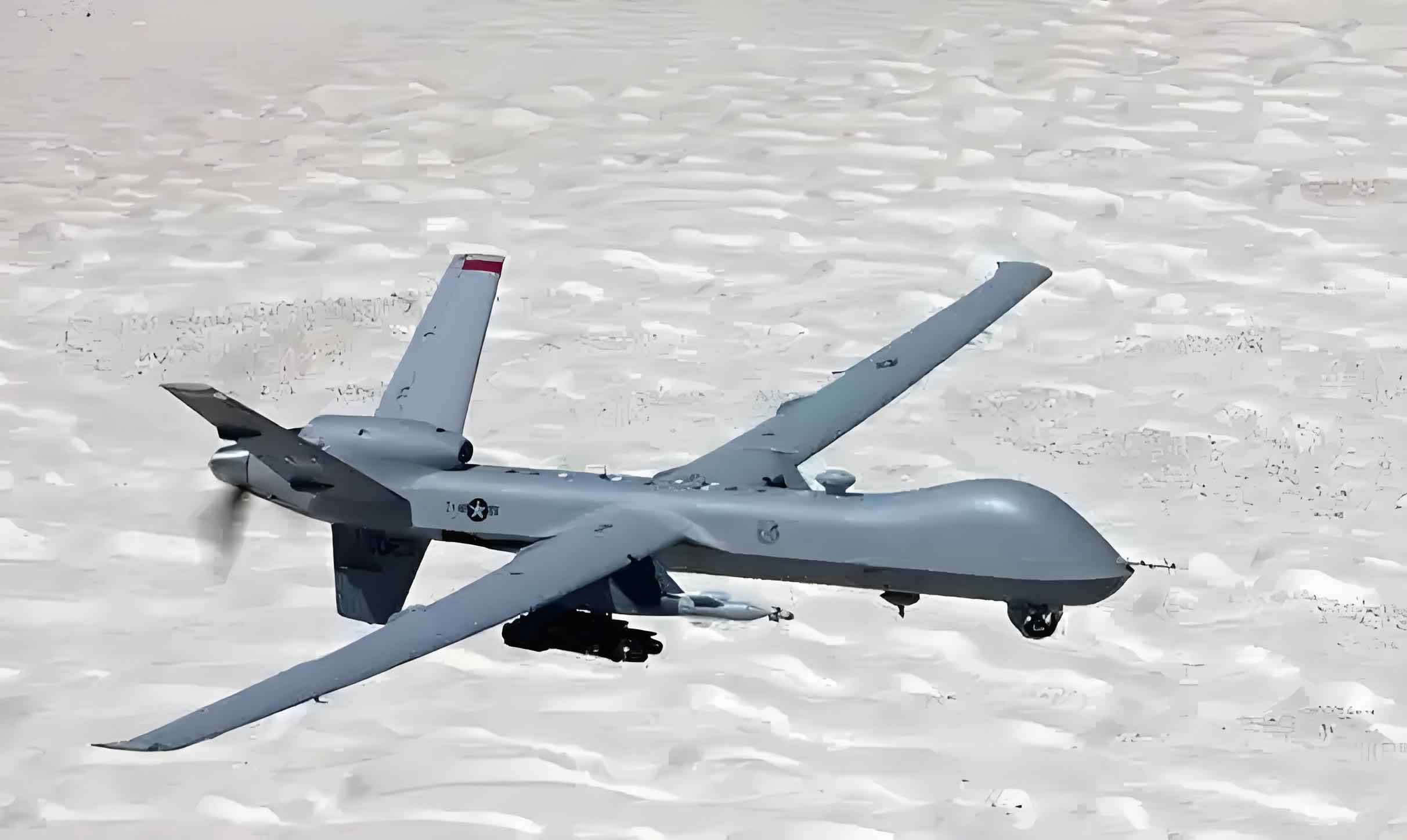
Categorization is essential for risk-based regulation. Authorities classify UAS based on parameters like mass, kinetic energy, operational capabilities, and intended use. This allows for proportionate rules, where a small recreational model faces simpler requirements than a large cargo-carrying military UAV or an urban air mobility vehicle. The following table summarizes common categorization criteria across major jurisdictions:
| Criterion | Categories & Examples | Regulatory Implication |
|---|---|---|
| Mass | Micro (<250g), Small (<25 kg), Large (>25 kg). | Registration, operator licensing, and operational limits often hinge on mass thresholds. |
| Operation Risk | Open (low risk), Specific (medium risk), Certified (high risk) – EU model. | Determines if operations are allowed, require prior authorization, or require full aircraft certification. |
| Use Case | Recreational, Commercial, Institutional (Gov’t), Military UAV. | Dictates applicable ruleset (civil vs. state/military aviation law). |
| Performance | Visual Line of Sight (VLOS), Beyond Visual Line of Sight (BVLOS), Over People. | Directly tied to operational authorization and required technology (e.g., Detect-and-Avoid). |
Core regulatory pillars for civil UAS are being established globally, though at varying paces. These pillars mirror traditional aviation safety but are adapted for the UAS context.
Registration and Identification: Mandatory registration of UAS above a certain mass (e.g., 250g) is now commonplace. This creates a link between the aircraft and its owner/operator, fundamental for accountability and oversight. Electronic identification and remote ID standards are the next frontier, allowing authorities and other airspace users to identify UAS in flight.
Airworthiness: For larger or more complex UAS, particularly those carrying passengers or flying over populated areas, demonstrating airworthiness—proving the aircraft is in a condition for safe flight—is required. This involves type certification of the design and production. The process for a large commercial or specialized military UAV is rigorous, while for mass-produced small UAS, compliance with declared manufacturer standards may suffice under the “open” category.
Operator and Pilot Competency: Regulations define requirements for remote pilots, from basic online training for low-risk operations to full pilot licenses for complex ones. Entities conducting commercial or specific operations often need an operational authorization, demonstrating robust procedures and risk assessments.
Security and Privacy: Beyond safety, regulations address malicious use, such as deploying UAS for illicit surveillance or as weapons platforms. Geo-fencing—software that prevents flight into restricted zones like airports—is a key technological safeguard. Privacy protections are increasingly being legislated, limiting data collection and surveillance capabilities, though these rules are distinct from aviation law and vary widely.
The integration of UAS into non-segregated airspace is the paramount challenge. Two pioneering concepts are Unmanned Traffic Management (UTM) and U-Space.
U.S. – Unmanned Traffic Management (UTM): The FAA, in collaboration with NASA, is developing a UTM ecosystem for low-altitude operations (primarily under 400 feet). UTM is a distributed and largely automated network of services, contrasting with the centralized Air Traffic Control for manned aviation. It facilitates communication of flight intent, airspace constraints, and dynamic restrictions between UAS operators and authorities via Application Programming Interfaces (APIs). The Low Altitude Authorization and Notification Capability (LAANC) is a live component, providing near-real-time automated authorizations for flights near airports. A conceptual model for UTM service layers can be represented as a functional stack:
$$ \text{UTM Ecosystem} = \mathcal{F}(\text{Discovery}, \text{Authorization}, \text{Monitoring}, \text{Security}) $$
Where $\mathcal{F}$ integrates services for:
- Discovery: Publishing operational intent.
- Authorization: Ensuring conflict-free flight plans (LAANC).
- Monitoring: Conformance and contingency management.
- Security: Authentication and cyber-resilience.
European Union – U-Space: The EU’s U-Space is a regulatory framework for managing UAS traffic in designated airspace volumes. It mandates a set of services to ensure safe, efficient, and secure operations. The foundational services, now being implemented, are:
- e-Registration: Mandatory digital registration of UAS and operators.
- e-Identification: In-flight remote identification of UAS.
- Geo-awareness: Dynamic information on airspace restrictions.
U-Space will evolve to include more advanced services like flight planning assistance, traffic information, and conflict resolution. The framework categorizes operations into ‘Open’, ‘Specific’, and ‘Certified’, with corresponding access requirements to U-Space services.
The following table contrasts these two major approaches to airspace integration:
| Feature | U.S. UTM | EU U-Space |
|---|---|---|
| Primary Driver | Industry & Research partnership (FAA, NASA). | Regulatory framework (EASA, EU Commission). |
| Architecture | Distributed, federated system of service suppliers. | Structured set of regulated services. |
| Initial Focus | Automated authorization & notification (LAANC). | Mandatory e-Identification and operator registration. |
| Integration with ATM | Information exchange interfaces between UTM and ATM systems. | Defined roles for Air Navigation Service Providers within U-Space. |
It is critical to note that these systems are designed for civil airspace. A military UAV operating in national airspace would typically do so under specific protocols, often requiring deconfliction with civil air traffic management through dedicated military liaison or the use of segregated corridors, especially during training or domestic deployment.
Illegal or negligent UAS operations can lead to serious legal consequences spanning tort law and criminal liability.
Tort Liability (Civil Wrongs):
- Privacy Violations: Using a UAS with a camera to surveil private property or individuals can lead to lawsuits for intrusion upon seclusion or public disclosure of private facts.
- Negligence & Personal Injury: A UAS crashing due to operator error or mechanical failure, causing bodily harm or property damage, establishes grounds for a negligence claim. The plaintiff must prove duty of care, breach, causation, and damages. The standard of care is evolving but would likely reference compliance with aviation regulations and industry standards. The liability risk extends to manufacturers for product defects.
- Trespass: Repeatedly flying a UAS at low altitude over another’s land may constitute trespass in some jurisdictions.
A simplified model for assessing negligence risk ($R_n$) could consider:
$$ R_n = P_f \cdot (C_i + C_p + C_d) $$
Where $P_f$ is the probability of a failure/incident, $C_i$ is the cost of personal injury, $C_p$ is property damage cost, and $C_d$ represents consequential damages (e.g., disruption of public services).
Criminal Liability: Authorities are increasingly using criminal statutes to prosecute severe misconduct.
- Endangering Aviation Safety: Flying a UAS near airports or manned aircraft, causing hazard or disruption, has led to convictions for “endangering the safety of an aircraft” or “reckless endangerment.” Penalties can include significant fines and imprisonment.
- Weaponization or Illicit Transport: Using a UAS to deliver contraband (drugs, weapons) into prisons or to conduct attacks transforms the UAS into a tool for established crimes like smuggling or attempted murder. The 2018 alleged assassination attempt on Venezuela’s president using explosive-laden drones is a stark example.
- Violation of Specific UAS Laws: Operating without a required license, in prohibited airspace (e.g., over critical infrastructure, large public events), or with an unregistered UAS can result in criminal misdemeanor charges.
The legal response to a military UAV incident in domestic or international airspace would be vastly more complex, involving laws of armed conflict, state sovereignty, and diplomatic channels, rather than domestic criminal codes.
China’s approach to UAS regulation reflects its status as a leading manufacturer and user. The framework is currently built on administrative rules and standards from the Civil Aviation Administration of China (CAAC), with a comprehensive national law under development.
Key Existing Measures:
- Real-Name Registration: Mandatory for civil UAS over 250 grams via an online CAAC system.
- Operational Rules: The “Light and Small Unmanned Aircraft Operation Regulations” classify UAS and impose requirements based on risk, mandating electronic fence compliance and connection to UAS cloud systems for data reporting for certain categories.
- Pilot Certification: The CAAC issues licenses for remote pilots, with a rapidly growing number of certificated individuals.
Future Direction: A draft “Unmanned Aircraft Flight Management Interim Regulation” has been circulated, signaling a move towards a higher-level, integrated legal instrument. Expected features include:
- Clear classification of airspace (no-fly zones, restricted zones, flying zones) for UAS.
- A unified management system potentially involving multiple government agencies.
- Emphasis on technological compliance (e.g., remote ID, monitoring).
China is also active in international fora, contributing to the global dialogue on standards. Its regulatory evolution is particularly watched given the scale of its industry and operations, which include both civil applications and advanced military UAV programs.
In conclusion, the global regulatory landscape for unmanned aircraft is in a state of dynamic construction. The overarching trend is towards a risk-based, performance-oriented approach that seeks to enable innovation while safeguarding public safety, security, and privacy. The development of sophisticated air traffic management ecosystems like UTM and U-Space is pivotal for scalable integration. However, the path for a military UAV to routinely share densely used civil airspace remains fraught with technical and procedural hurdles, underscoring the need for clear international and domestic protocols. As nations like China solidify their regulatory frameworks, the importance of international harmonization through bodies like ICAO becomes ever more critical to ensure safe and seamless global operations. The future of unmanned aviation hinges not just on technological advancement, but on the careful, collaborative, and continuous development of the legal and operational rules that will govern it.