
In recent years, I have witnessed a transformative shift in agriculture driven by technological advancements, with unmanned aerial vehicles (UAVs), commonly known as drones, emerging as a cornerstone of modern farming practices. As an enthusiast and practitioner in this field, I believe that drones are not merely tools but catalysts for precision agriculture, efficiency gains, and sustainable development. The integration of drones into agricultural systems addresses critical challenges such as labor shortages, environmental constraints, and the need for data-driven decision-making. This article explores the multifaceted applications, current industry landscape, growth potential, and strategic measures to foster the agricultural drone sector, with a particular emphasis on drone training as a pivotal element for success. Through detailed analysis, including tables and mathematical models, I aim to provide a comprehensive perspective on how drones can revolutionize farming, especially in regions with unique geographical features like mountainous areas.
The adoption of drones in agriculture spans a wide array of scenarios, each leveraging aerial capabilities to enhance productivity and reduce costs. From my experience, these applications can be categorized into core operational areas and innovative potential uses, all of which benefit from rigorous drone training programs to ensure proficiency and safety. Below, I summarize key application scenarios in a table to illustrate their scope and impact.
| Application Scenario | Key Technologies | Benefits | Role of Drone Training |
|---|---|---|---|
| Precision Monitoring of Farmland | High-resolution cameras, multispectral sensors, thermal imaging | Early pest detection, optimized irrigation, growth assessment | Ensures operators can interpret sensor data accurately and conduct safe flights. |
| Agricultural Insurance Assessment | GIS integration, image processing algorithms | Rapid damage evaluation, accurate claim processing | Trains personnel in data collection and analysis for insurance purposes. |
| Specialized Harvesting (e.g., Pine Cones) | Robotic arms, vibration mechanisms on drones | Reduced labor costs, enhanced safety in rugged terrain | Critical for mastering complex manipulation and navigation skills. |
| Mountainous Transportation | Heavy-lift cargo drones, advanced GPS navigation | Efficient logistics in inaccessible areas, minimal environmental impact | Prepares pilots for challenging flight conditions and load management. |
Mathematically, the efficiency of drone-based monitoring can be expressed using a formula for area coverage rate. Let \( E \) represent the efficiency in hectares per hour, \( A \) be the total area covered, \( t \) the time spent, and \( n \) the number of drones deployed. Assuming uniform performance, we have:
$$E = \frac{A}{t} = n \cdot v \cdot w$$
where \( v \) is the drone’s speed in meters per second, and \( w \) is the effective swath width in meters. For instance, if a drone operates at \( v = 5 \, \text{m/s} \) with \( w = 10 \, \text{m} \), a single drone can cover \( E = 5 \times 10 \times 3600 / 10000 = 18 \, \text{hectares per hour} \) (since 1 hectare = 10,000 m²). This highlights how drone training in optimal flight patterns can maximize \( E \) by improving \( v \) and \( w \) through skilled piloting.
Turning to the current state of the agricultural drone industry, I have observed significant growth in adoption, yet challenges persist that hinder full potential. In many regions, the market is characterized by a mix of local service providers and external players, often due to capacity constraints during peak seasons like pest outbreaks. The following table outlines typical industry metrics based on aggregated data from various areas, emphasizing the need for enhanced drone training to build local expertise.
| Aspect | Current Status | Challenges |
|---|---|---|
| Number of Service Providers | Limited local entities, often relying on external support | Insufficient skilled operators and maintenance crews |
| Drone Models in Use | Predominantly large payload models (e.g., 40-100 kg capacity) | High upfront costs and technical complexity require advanced training. |
| Application Areas | Primarily crop protection, forest monitoring, and fertilization | Underutilization in niche sectors like harvesting and transport |
| Operational Capacity | Seasonal demand spikes lead to outsourcing | Lack of continuous drone training to scale local teams. |
The cost-effectiveness of drone operations can be modeled to justify investment in drone training. Let \( C_{\text{total}} \) denote the total cost per hectare, comprising fixed costs \( C_f \) (e.g., drone purchase, insurance) and variable costs \( C_v \) (e.g., labor, energy). With training, variable costs decrease due to higher efficiency and fewer errors. Formally:
$$C_{\text{total}} = C_f + C_v \cdot A^{-1}$$
where \( A \) is the area serviced. Training reduces \( C_v \) by a factor \( \alpha \) (0 < \alpha < 1), so \( C_v’ = \alpha C_v \). For example, if drone training cuts variable costs by 20% (\( \alpha = 0.8 \)), the savings accumulate over large areas, making drones more competitive against traditional methods. This economic rationale underscores why policymakers should prioritize drone training initiatives.
Regarding growth potential, I am optimistic about the future of agricultural drones, driven by inherent advantages in certain regions. These areas often possess strategic location benefits, robust industrial bases, and expanding market demands. A table below summarizes these potentials, with drone training acting as a multiplier for realizing them.
| Potential Factor | Description | Impact on Drone Industry |
|---|---|---|
| Geographic Locational Advantage | Proximity to urban hubs and transport networks facilitates logistics and collaboration. | Enables efficient deployment of drones and access to drone training centers. |
| Industrial Support | Existing manufacturing capabilities in machinery and electronics allow for local drone production. | Reduces costs and fosters innovation, requiring skilled labor through training. |
| Market Demand | Growing needs in agriculture, forestry, and eco-tourism create diverse application opportunities. | Expands job markets, necessitating continuous drone training for new niches. |
To quantify the market expansion, consider a demand growth model. Let \( D(t) \) represent demand for drone services at time \( t \), with an initial demand \( D_0 \) and growth rate \( r \) influenced by training-led innovation. The equation can be:
$$D(t) = D_0 e^{rt}$$
where \( r = k \cdot T \), with \( k \) as a constant and \( T \) representing the level of drone training investment. Higher \( T \) boosts \( r \), accelerating adoption. This model illustrates why integrating drone training into development strategies is crucial for sustained growth.
To accelerate the agricultural drone industry, I propose several measures based on practical insights and collaborative efforts. These strategies focus on policy support, research integration, and human capital development, with drone training at the core. The following table outlines key actions and their expected outcomes.
| Measure | Specific Actions | Role of Drone Training |
|---|---|---|
| Policy Support | Implement subsidies, tax incentives, and streamlined flight regulations. | Training ensures compliance and maximizes benefits from policies. |
| Industry-Academia Collaboration | Foster partnerships for R&D, from basic research to commercialization. | Training bridges gaps between theory and practice, enhancing innovation. |
| Talent Development | Establish curricula, certification programs, and hands-on workshops. | Directly enhances drone training to build a skilled workforce. |
In policy design, a subsidy model can be formulated. Let \( S \) be the subsidy amount, \( P \) the drone price, and \( \beta \) the subsidy rate (e.g., 30-50%). For users, the effective cost becomes \( P’ = P – S = P(1 – \beta) \). To optimize this, drone training should be included as a subsidizable component, reducing long-term operational risks. Mathematically, if training costs \( C_t \) are covered, the net benefit increases by \( \Delta B = \gamma C_t \), where \( \gamma > 1 \) represents the efficiency gain from training. Hence, subsidies should target both hardware and drone training to amplify impact.
Deepening industry-academia collaboration is another vital step. From my perspective, a synergistic ecosystem where universities, research institutes, and companies co-create solutions can drive technological breakthroughs. For example, research on autonomous navigation algorithms can be translated into practical modules for drone training, ensuring that operators are adept at using advanced features. The collaboration efficiency \( \eta \) can be expressed as:
$$\eta = \frac{I_{\text{output}}}{I_{\text{input}}} = \frac{\sum \text{Innovations}}{\text{Funding} + \text{Training Efforts}}$$
where higher drone training efforts boost \( I_{\text{output}} \) by accelerating adoption. This formula underscores that investing in drone training within collaborative frameworks yields compounded returns.
Most importantly, establishing a comprehensive professional人才培养 system is imperative. I cannot overstate the value of drone training in this context—it is the backbone of industry sustainability. Effective training encompasses both operational skills and broader competencies, as detailed below with an emphasis on continuous learning.
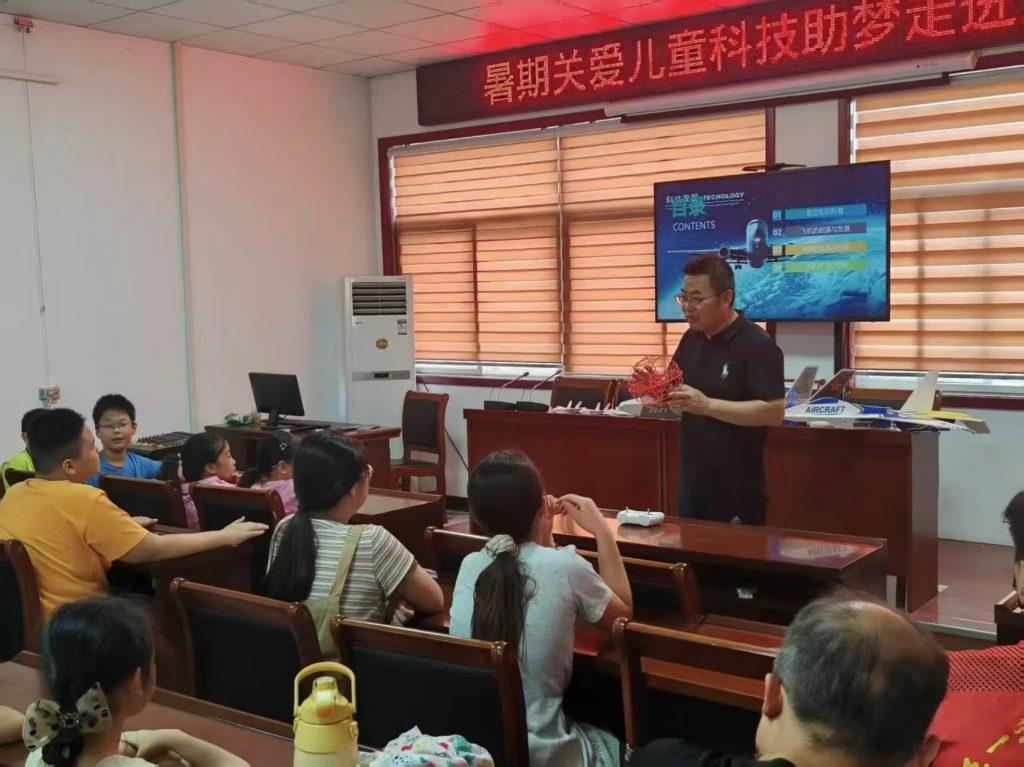
As shown in the image above, hands-on drone training sessions are essential for building proficiency. Structurally, training programs should include:
- Basic Operations and Maintenance: Covering flight controls, safety protocols, and routine checks. This reduces failure rates and extends drone lifespans.
- Advanced Applications: Such as data analysis for crop health or logistics planning for mountain transport. These require specialized drone training to interpret multispectral data or manage payloads.
- Regulatory Compliance: Educating pilots on airspace laws and certification processes, which vary by region and are critical for legal operations.
A mathematical approach to training effectiveness involves a competency score \( C_s \). Let \( C_s = f(T_h, E_p) \), where \( T_h \) is hours of drone training and \( E_p \) is practical experience. Assuming a logarithmic improvement, we can model:
$$C_s = \log(1 + T_h) + \sqrt{E_p}$$
This indicates that initial training yields rapid gains, but ongoing practice is vital for mastery. Hence, drone training should be iterative, with refresher courses to keep skills current amid technological evolutions.
Furthermore, integrating drone training into educational institutions is key. By offering degree programs or vocational courses in drone technology, we can cultivate a pipeline of talent. For instance, curricula might include modules on aerodynamics, sensor integration, and agronomy, all reinforced through practical drone training. The workforce capacity \( W \) can be estimated as:
$$W = N \cdot \sigma \cdot \tau$$
where \( N \) is the number of trained individuals, \( \sigma \) is the skill retention rate (enhanced by quality training), and \( \tau \) is the technology adoption factor. Investing in drone training increases \( N \) and \( \sigma \), directly boosting \( W \) to meet industry demands.
In conclusion, the agricultural drone industry stands at a pivotal juncture, with immense opportunities to enhance farming efficiency, sustainability, and economic resilience. Through my analysis, I have highlighted how diverse applications, from precision monitoring to innovative transport, can transform agriculture, especially in challenging terrains. The current industry landscape shows promise but requires bolstering through local capacity building, where drone training plays a central role. By leveraging geographic and industrial advantages, and implementing targeted measures like policy incentives and collaborative R&D, we can unlock this potential. Ultimately, a robust drone training ecosystem—encompassing operators, technicians, and innovators—will be the driving force behind a thriving agricultural drone sector. As we move forward, I advocate for a holistic approach that prioritizes education and skill development, ensuring that drones not only fly high in the skies but also root deeply into the fabric of modern agriculture.
To encapsulate the economic impact, consider a final formula for return on investment (ROI) in drone training. Let \( R \) be the revenue generated from drone services, \( C_i \) the initial investment in training, and \( O \) ongoing costs. Over time \( t \), the ROI is:
$$\text{ROI} = \frac{R(t) – C_i – O(t)}{C_i} \times 100\%$$
With effective drone training, \( R(t) \) grows faster due to higher service quality and expanded offerings, while \( O(t) \) diminishes from reduced errors and downtime. This financial perspective solidifies the case for making drone training a cornerstone of agricultural drone industry strategies, paving the way for a future where technology and tradition harmonize to feed the world sustainably.