
The concept of “Next-Generation Police Capability” represents a paradigm shift in law enforcement, moving beyond traditional manpower and equipment towards a system defined by high technology, integration, and data-driven precision. At the heart of this transformation lies the police UAV (Unmanned Aerial Vehicle). A police UAV is far more than a simple flying camera; it is a sophisticated, intelligent sensor platform comprising the aerial vehicle, mission payloads, ground control stations, and data links. This system’s true power is unlocked not in isolation, but through its deep integration into the broader police information ecosystem, enabling real-time intelligence, command, and action. I argue that the strategic, standardized, and synergistic application of police UAV systems is the critical catalyst for actualizing Next-Generation Police Capability.
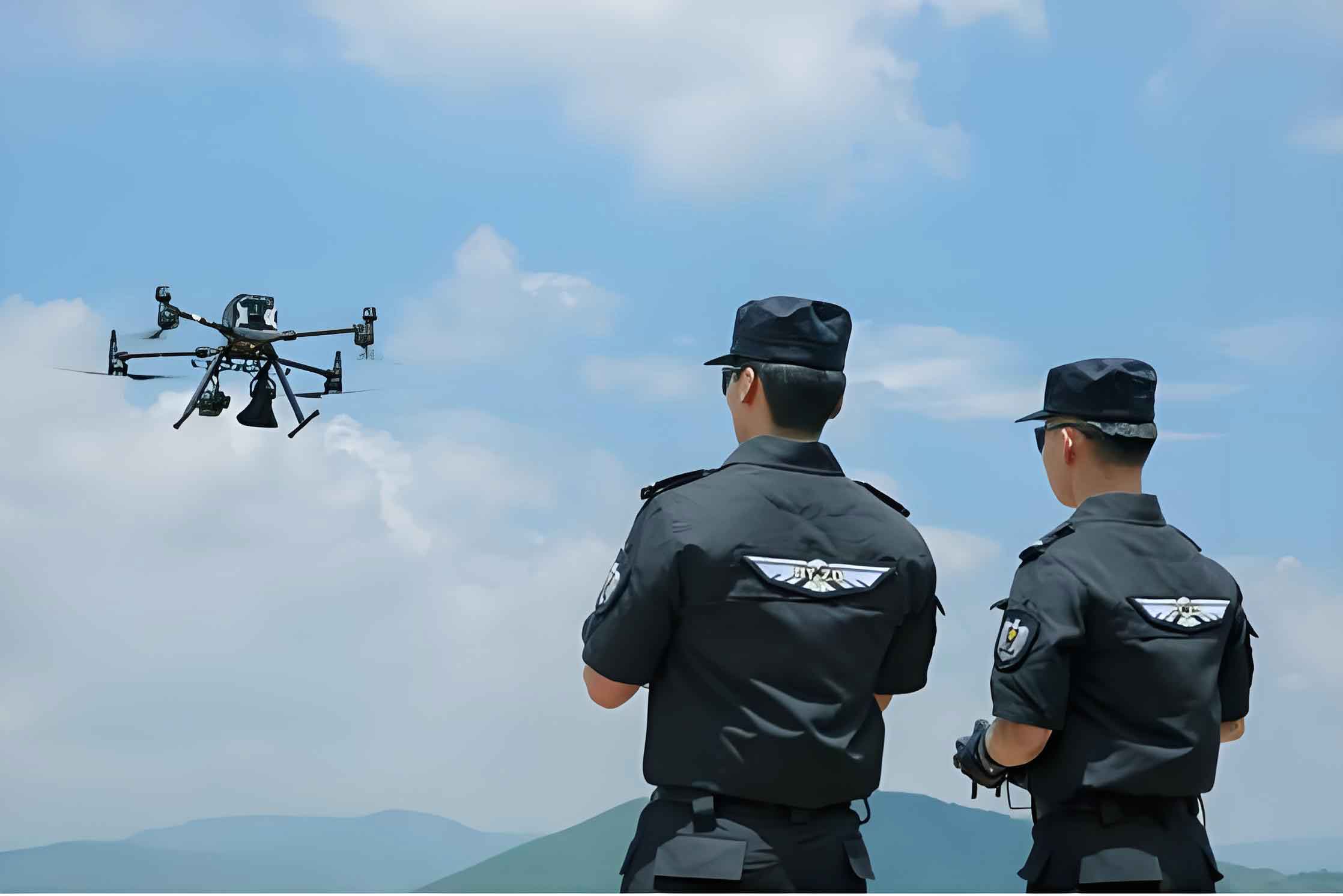
The core value proposition of the police UAV within this new framework can be mathematically conceptualized as a function of its key attributes. We can model the contribution of a police UAV system to situational awareness, a precursor to effective action, with the following simplified relation:
$$A_{UAV} = \int_{t_0}^{t_1} \left( R_{spatial}(t) \times R_{temporal}(t) \times F_{data}(t) \right) dt$$
Where:
$A_{UAV}$ = Situational Awareness gained from the UAV platform.
$R_{spatial}$ = Spatial Resolution (coverage area, detail level).
$R_{temporal}$ = Temporal Resolution (refresh rate, real-time capability).
$F_{data}$ = Data Fidelity (sensor accuracy, information richness).
$t_0, t_1$ = Operational time window.
This formula underscores that a police UAV is a dynamic, multi-dimensional source of high-fidelity information over extended spatial and temporal domains, a capability unattainable by most fixed or ground-based assets.
The Multidimensional Application Matrix of Police UAVs
The operational deployment of police UAV units spans the entire spectrum of public security and traffic management missions. Their applications can be systematically categorized as shown in the table below, which highlights the specific capability enhancement provided by the police UAV in each scenario.
| Operational Domain | Primary Applications | Key Capabilities Leveraged | Contribution to Next-Gen Capability |
|---|---|---|---|
| Traffic Management & Control | Congestion monitoring, accident scene documentation, highway patrol, traffic flow analysis, illegal parking detection. | Aerial perspective, real-time video downlink, 3D mapping, photo/video capture. | Enhances efficiency and scope of monitoring; enables rapid, evidence-based response and dynamic resource allocation. |
| Emergency Response & Public Safety | Search and Rescue (SAR), disaster assessment (flood, earthquake), major fire oversight, hazardous material incident monitoring. | Access to inaccessible areas, thermal imaging, live broadcast to command center. | Drastically reduces response time and risk to human responders; provides critical intelligence for command decisions. |
| Major Event Security & Crowd Control | Pre-event venue scanning, real-time crowd monitoring during events, tracking of suspicious movement, post-event clearing. | Wide-area surveillance, persistent stare, intelligent tracking, real-time data feed to command. | Enables proactive, intelligence-led security posture and rapid, coordinated intervention. |
| Criminal Investigation & Apprehension | Surveillance of suspects, crime scene mapping and preservation, pursuit assistance, fugitive tracking in complex terrain. | Stealthy observation, high-resolution imaging, evidence collection from unique angles. | Provides decisive tactical advantage and preserves crucial forensic evidence, increasing case closure rates. |
The efficacy of a police UAV in these roles, particularly in complex scenarios like dynamic perimeter control, can be further analyzed. For instance, the time required for a police UAV to establish surveillance over an incident area compared to ground units is governed by factors of deployment speed and coverage. The comparative advantage in area coverage speed can be expressed as:
$$v_{cov} = \frac{A_{UAV}}{t_{deploy} + \frac{d_{slant}}{v_{cruise}}} \quad \text{vs.} \quad v_{cov_{ground}} = \frac{n \cdot A_{officer}}{t_{dispatch} + \frac{d_{perimeter}}{v_{patrol}}}$$
Where $v_{cov}$ is the effective area coverage rate. The police UAV typically has a superior $v_{cov}$ due to a high $A_{UAV}$ (area covered per orbit) and direct line-of-sight travel ($d_{slant}$), overcoming ground obstacles.
Systemic Bottlenecks: The Gap Between Potential and Practice
Despite the clear potential, the integration of police UAV systems into the core of police work faces significant, interconnected bottlenecks that hinder the realization of true Next-Generation Capability. These issues often stem from a fragmented, tool-centric view rather than a strategic, system-centric one.
1. Emphasis on Form Over Foundation: A prevalent issue is the procurement of advanced police UAV hardware without concomitant investment in the human and institutional software. This manifests as a lack of standardized, continuous training programs. Operators are often ad-hoc, without certified expertise, leading to underutilization of platform capabilities and elevated operational risks. The knowledge transfer is informal, and a sustainable talent pipeline is absent. The competency of a police UAV unit is not a function of hardware cost alone, but of trained personnel and institutional knowledge:
$$C_{unit} = \alpha \cdot Q_{hardware} + \beta \cdot (S_{pilots} \cdot E_{pilots}) + \gamma \cdot I_{doctrine}$$
Where $C_{unit}$ is overall unit capability, $Q_{hardware}$ is hardware quality, $S_{pilots}$ and $E_{pilots}$ are the skill and experience levels of pilots, $I_{doctrine}$ is the robustness of institutional protocols, and $\alpha, \beta, \gamma$ are weighting coefficients. Currently, $\alpha$ is often overweighted at the expense of $\beta$ and $\gamma$.
2. Isolated Deployments Over Networked Integration: The most critical bottleneck is the treatment of the police UAV as a standalone tool rather than a node in a networked “sensor-to-shooter” chain. The real-time data from a police UAV frequently fails to seamlessly integrate with computer-aided dispatch (CAD), real-time crime centers, or geographic information systems (GIS). This creates an “information island,” where the tactical advantage of the police UAV is not translated into strategic command advantage or direct action. The data fusion potential remains untapped. The ideal flow, where a police UAV acts as a primary sensor, is hampered.
3. Focus on Tactical Use Over Strategic Management: There is a strong focus on deploying the police UAV for immediate tasks but a neglect of the lifecycle management required for a sustainable fleet. This includes standardized maintenance schedules, battery management, software updates, airworthiness tracking, and centralized accountability. Decentralized procurement and management lead to a fragmented fleet (“ghost drones”), unclear responsibility, and wasted resources. The total cost of ownership and operational readiness suffer.
| Bottleneck Category | Manifestation | Impact on Next-Gen Capability |
|---|---|---|
| Strategic & Structural | Lack of unified command, unclear regulatory ownership, no long-term development roadmap. | Fragmented effort, inconsistent standards, inability to scale effectively. |
| Human Capital & Training | Ad-hoc operators, lack of certified trainers, no career progression path for pilots/technicians. | Low skill ceiling, high operational risk, inability to execute complex missions. |
| Technological & Integration | Proprietary data links, non-standard video feeds, lack of API integration with command platforms. | Information silos, delayed decision-making, reduced situational awareness for commanders. |
| Logistical & Managerial | Decentralized procurement, absent maintenance logs, poor inventory management of batteries/parts. | High downtime, unpredictable reliability, increased long-term costs. |
The Optimization Pathway: Building a Next-Generation Police UAV Ecosystem
To overcome these bottlenecks and harness the full power of the police UAV for Next-Generation Capability, a holistic, three-pillar approach is necessary, focusing on governance, human capital, and technological fusion.
Pillar 1: Optimize Top-Level Design and Institutionalize Standards. The first step is establishing clear, centralized governance. A dedicated Police Aviation Office (or Directorate), even if initially a cell within a larger logistics or operations department, is essential. This office must be empowered to own the entire police UAV ecosystem. Its mandate should be defined by a clear formula of responsibility:
$$M_{office} = \{ P_{policy}, S_{std}, F_{training}, R_{registry}, O_{ops\_sup} \}$$
Where the Mission $M_{office}$ is the set of functions: creating Policy $P_{policy}$, setting Standards $S_{std}$, managing Training curriculums $F_{training}$, maintaining a central Registry $R_{registry}$ of all platforms and pilots, and providing Operations Support $O_{ops\_sup}$. This office develops the rulebooks for flight operations, airspace coordination, data management, and safety protocols, transforming ad-hoc use into a standardized, accountable discipline.
Pillar 2: Cultivate Human Capital and Ensure Sustainable Development. The most advanced police UAV is useless without a skilled operator. Investment must shift decisively towards building a professional cadre. This requires a dual-track system: 1) Foundation Training by certified academies leading to national licensure, and 2) Continuous Tactical Training (“train as you fight”) within the department. A talent management matrix should be implemented:
| Personnel Tier | Selection & Training | Core Responsibilities | Career Path |
|---|---|---|---|
| Tactical Operator | Basic flight certification; unit-specific tactical drills. | Execute pre-planned and dynamic flight missions. | Senior Operator, Mission Coordinator. |
| Instructor/Evaluator | Advanced certification; instructor training course. | Train and certify new operators; develop unit tactics. | Lead Instructor, Tactics Development Officer. |
| Technician/Manager | Technical training on specific platforms; logistics management. | Fleet maintenance, logistics, mission planning support. | Senior Technician, Fleet Manager. |
Furthermore, establishing a “train-the-trainer” model and creating a dedicated police UAV training and research center, potentially in partnership with academic institutions, will ensure a perpetual engine for skill and doctrinal advancement.
Pillar 3: Champion Fusion for Next-Generation Operational Outcomes. This is the most transformative pillar. The police UAV must cease to be an island and become a primary data feeder for the “Command, Control, Communications, Computers, Intelligence, Surveillance, and Reconnaissance” (C4ISR) system. The technical goal is seamless data fusion, represented by the integration function:
$$D_{fusion}(t) = \Phi( D_{UAV}(t), D_{CCTV}(t), D_{CAD}(t), D_{GIS}(t), D_{Biometric}(t) )$$
Where $D_{fusion}$ is the fused, actionable intelligence picture at time $t$, generated by the fusion process $\Phi$ acting on data streams from the police UAV, closed-circuit TV, computer-aided dispatch, geographic information systems, and biometric databases. Achieving this requires mandating open API standards for all new police UAV procurements, developing secure, high-bandwidth data pipelines (leveraging 5G), and creating unified dashboards for command centers.
Operationally, this fusion enables true “mosaic warfare” at the tactical level. For example, a police UAV with Automatic License Plate Recognition (ALPR) can identify a vehicle of interest. Its data is instantly fused with the CAD and GIS, triggering alerts to nearby ground units whose positions are tracked in real-time, while simultaneously pulling up associated records. The command decision cycle, represented by Boyd’s OODA Loop (Observe, Orient, Decide, Act), is radically compressed:
$$ \Delta T_{OODA} \propto \frac{1}{Fidelity(D_{fusion}) \cdot Speed(D_{fusion})} $$
The higher the fidelity and speed of fused data $D_{fusion}$, the shorter the decision cycle time $\Delta T_{OODA}$, leading to overwhelming operational tempo.
Finally, this fusion extends beyond internal police work. A police UAV unit should act as a node in a whole-of-government sensor network. Inter-agency protocols with fire, emergency medical services, environmental protection, and transportation departments can be established. A shared, on-demand police UAV support model for major public emergencies multiplies the return on investment and solidifies the platform’s role as a critical public safety asset.
In conclusion, the journey towards Next-Generation Police Capability is inextricably linked to the maturation of the police UAV from a novel gadget into a core, integrated component of modern policing. This requires a deliberate shift in mindset—from viewing the police UAV as a cost to viewing it as a capability multiplier; from managing it as equipment to cultivating it as a discipline. By architecting robust governance ($Pillar\ 1$), investing relentlessly in human capital ($Pillar\ 2$), and driving ruthless technological and operational fusion ($Pillar\ 3$), police agencies can unlock the transformative potential of the police UAV. This will forge a future where policing is more proactive, precise, protective, and ultimately, more effective in its sacred duty to serve and secure.